

China's New Internet Healthcare Regulations Spark Industry Shake-up, Benefiting Serious Medical Platforms like WeDoctor
Recently, the National Health Commission released the “Detailed Rules for the Supervision of Internet-Based Diagnosis and Treatment (Draft for Comments)” (hereinafter referred to as the “Draft”), which sets forth detailed provisions on the supervision of medical institutions, personnel, business operations, quality and safety, and regulatory responsibilities.
Analyst reports from multiple securities firms and media analysis articles have pointed out that the release of the Draft Opinion clearly defines the previously ambiguous and confused concept of internet healthcare, delineating the boundaries between medical services, pharmaceuticals, and technical services. This establishes a framework where “medical care remains medical care, pharmaceuticals remain pharmaceuticals, and AI remains technology,” thereby driving the internet healthcare industry to develop along three distinct sub-sectors.
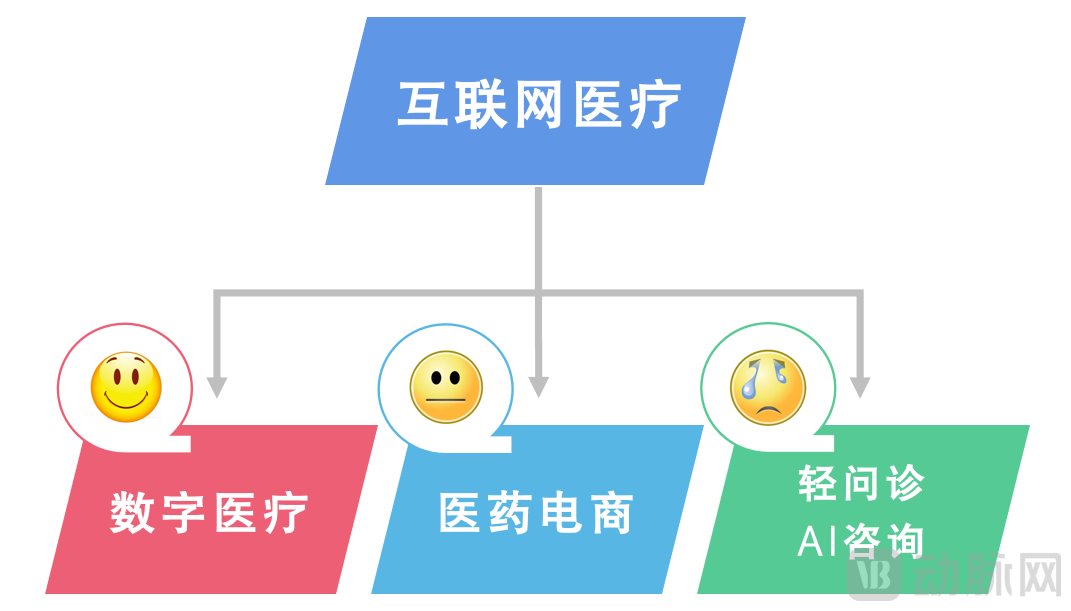
Meanwhile, the industry has taken note of the requirement in the Draft Opinion that internet-based diagnosis and treatment services must achieve maximum “homogeneity” with those provided by physical medical institutions, as well as its value orientation toward returning to “serious medical care.” It is believed that this value orientation will have varying degrees of impact on various platforms offering internet-based diagnosis and treatment services.
For companies operating in the serious healthcare sector, the implementation of new regulatory rules will put an end to the prevalence of “shoddy products passing off as genuine” and the phenomenon of “bad money driving out good.” A research report issued by CICC suggests that this development is a long-term positive for leading companies that already possess robust compliance and regulatory systems, as well as comprehensive processes for diagnosis, treatment, and medication procurement. According to Bloomberg, China’s new regulations on internet-based medical consultations will benefit serious healthcare service platforms such as WeDoctor.
The Draft Opinion proposes requirements such as “electronic prescriptions, prescription review records, and prescription evaluation records in medical institutions shall be traceable, and data interfaces shall be opened to the provincial-level regulatory platform,” and “medical institutions shall designate specific departments to manage the quality of care, patient safety, pharmaceutical services, information technology, and other aspects of internet-based diagnosis and treatment, and establish corresponding management systems.”
Analysts point out that the Guidelines impose higher requirements on the digital capabilities of entities providing internet-based diagnosis and treatment services, as well as their professional competence in delivering medical care. An internet hospital is a prerequisite for offering such services; on this basis, integration with medical insurance serves as the “gold standard” for further assessing the “value” of internet-based diagnosis and treatment services. Moreover, internet-based medical consortia require relevant enterprises to possess the capability to connect and empower multiple stakeholders across the healthcare value chain.
Taking WeDoctor as an example, public data shows that it operates 31 internet hospitals in China, 18 of which are integrated with medical insurance payment systems. Meanwhile, its online medical services have become part of local healthcare reforms. The internet-based medical consortia implemented in regions such as Shandong and Tianjin have alleviated pressure on large tertiary hospitals, enhanced the capabilities of primary care institutions, and improved efficiency for payers like medical insurance funds, thereby empowering the regional healthcare service system as a whole.
The Draft Opinion further advances the improvement of China’s internet-based medical consultation system, fully taking into account the unique characteristics of such consultations and the management principles applicable to physical medical institutions, thereby serving as a rigorous screening process for the industry. Furthermore, the Draft Opinion signifies that internet-based medical consultations will become more standardized and regulated, facilitating payers’ assessment of their effectiveness and helping to expand timely coverage of these services under payment protection schemes.
Goldman Sachs’ research report suggests that the draft opinion does not exceed market expectations and broadly aligns with the direction of policy evolution. The business model of internet hospitals continues to develop, with recent market focus on prescription outflow from hospitals, and long-term attention directed toward chronic disease management, medical consortia, and insurance-related value-added services.
Industry practice indicates that whether a company can benefit from regulatory policy dividends depends on its possession of corresponding internet healthcare infrastructure, as well as related technical capabilities and operational management expertise, to ensure “consistent quality between online and offline services.” Meanwhile, alignment with the national strategy of “shifting from treatment-centered to health-centered care,” and achieving integrated development with the existing medical service system, are also key reasons why digital healthcare platforms are viewed favorably by the industry.
The Draft Opinion proposes requirements such as “prohibiting the occurrence of issues like unified prescription compilation and supplementary prescribing,” “ensuring that the personal income of healthcare professionals is not linked to revenue from pharmaceuticals and medical tests,” and “forbidding doctors from designating specific locations for the purchase of medicines and consumables,” thereby establishing a “firewall” between internet-based diagnosis and treatment services and pharmaceutical sales activities.
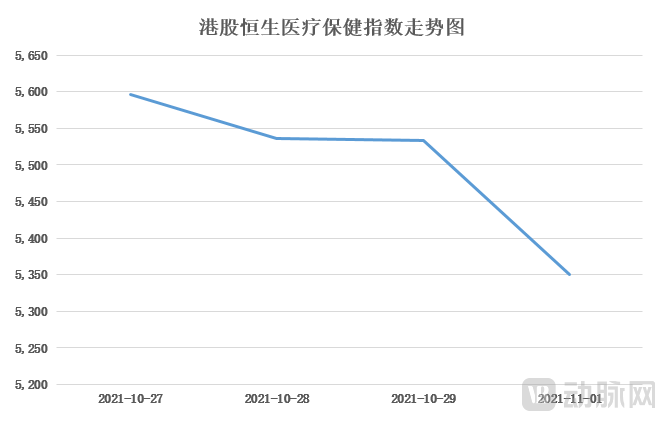
CICC’s research report pointed out that the introduction of detailed implementation rules will clear out certain non-compliant online consultation practices in the industry, which may hinder the volume growth of prescription drug sales in the short term. Affected by policy changes, concerns about the development prospects of pharmaceutical e-commerce have begun to ferment in the capital market. In recent days, the stock prices of pharmaceutical e-commerce companies, including Alibaba Health and JD Health, have generally come under pressure and declined.
According to the latest financial reports from various companies, Alibaba Health’s revenue for the fiscal year ending March 31, 2021, amounted to RMB 15.52 billion. In terms of specific revenue composition, pharmaceutical-related business accounted for 97.8% of the total. JD Health’s interim results announcement for 2021 showed that its total revenue in the first half of the year reached RMB 13.64 billion, with JD Pharmacy contributing 86.2% of this figure.
According to the latest data, the price-to-sales (P/S) ratios of Ali Health and JD Health remain at approximately 7.5x. In contrast, companies engaged in pharmaceutical sales, such as Yifeng Pharmacy, Laobaixing Pharmacy, and Dashenlin Pharmacy, maintain P/S ratios of around 2x. This indicates that although both are platforms for pharmaceutical product trading, internet-enabled platforms command significantly higher P/S multiples than traditional chain pharmacies.
The release of the Draft Guidelines has steered pharmaceutical e-commerce back to its fundamental role in drug distribution. While this return to core value may appear detrimental in the short term, it ultimately opens up new prospects for the industry’s healthy long-term development by exposing how pharmaceutical e-commerce platforms have inflated their valuations through the provision of diagnosis and treatment services.
Regarding the issues and regulatory directions in the internet healthcare industry reflected in the Draft Opinion, Wang Hang, founder of Haodf Online, stated that since the beginning of this year, media outlets have focused on several key issues in the internet healthcare sector, including AI bots simulating consultations and issuing prescriptions, selling medications before retroactively issuing prescriptions, and the digitization of pharmaceutical kickbacks, which has sparked widespread public concern.
The Draft Opinion explicitly states that “physicians must undergo real-name authentication before conducting consultations to ensure that they personally attend to patients. Other personnel, artificial intelligence software, or similar entities are prohibited from impersonating or replacing physicians in providing consultation services.” This provision establishes regulatory boundaries for the application of AI technology in internet-based healthcare, restricting AI to physician-assistance roles such as patient triage and diagnostic support, rather than allowing it to replace human-led medical services.
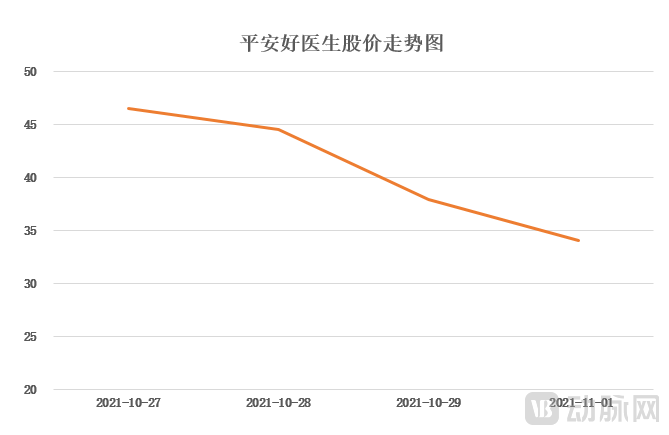
Since the release of the Draft Opinion, the share price of Ping An Good Doctor, listed on the Hong Kong Stock Exchange as the “world’s first AI healthcare technology stock,” has continued to fall. From October 27 to November 1, its cumulative decline reached nearly 27%, while compared with the beginning of the year, the drop approached 64%. According to Ping An Good Doctor’s 2020 annual report, the company provides medical services through a dual-engine model of “in-house medical team + AI-enabled healthcare.” In 2020, its in-house medical team comprised 2,247 members, and the average daily consultation volume reached 903,000. The financial report indicated that Ping An Good Doctor’s “accuracy rates for auxiliary diagnosis and medication recommendations both exceeded 90%.”
In light of the detailed regulatory provisions, AI-assisted software still has a long way to go before it can be used for actual diagnosis, as its current applications are limited to triage, patient guidance, and auxiliary clinical decision support. These regulations specifically target industry irregularities where certain platforms, under the guise of internet-based medical consultations, exploit AI technology merely as a tool to reduce labor costs, drive traffic, and conduct marketing. For companies with ambiguous positioning that deviate from the “health-centric” orientation, this will undoubtedly lead to a market shakeout.
Li Tiantian, Chairman of DXY, stated in a recent interview that the draft guidelines now include provisions on how physicians can practice legally online and how to ensure the quality of care. Additionally, the draft incorporates assessments of physicians’ medical ethics and professional conduct, as well as patient satisfaction. He affirmed that the overall regulatory approach is sound. From an industry-wide perspective, if implemented, the draft guidelines will provide positive guidance for sector development. The regulatory intent is clear: to mitigate various risks arising during diagnosis and treatment, and to steer clinical practice back toward scientific rigor and a patient-centered orientation.