

Breaking Through Barriers: Data, Approval, and Implementation of AI in Medical Imaging – Insights from the Yangtze River Delta Forum
AI medical imaging is undoubtedly a major hotspot for artificial intelligence in the healthcare sector. According to forecasts by Frost & Sullivan, the market size of China’s AI medical imaging industry will reach approximately RMB 13.7 billion in 2025.
On October 28, the Yangtze River Delta Medical Imaging AI Innovation and Development Forum was successfully held at the Shanghai International Convention Center.Guided by the Shanghai Federation of Modern Service Industry and the Shanghai Science and Technology Exchange Center, this forum was co-hosted by the Medical Services Professional Committee of the Shanghai Federation of Modern Service Industry and the Shanghai Artificial Intelligence Technology Association, and jointly organized by Shanghai Zhiyu Software Information Co., Ltd. and Shanghai Jiading District Economic Development Service Co., Ltd.
At this conference, Zheng Huiqiang, Standing Committee Member of the National Committee of the Chinese People’s Political Consultative Conference, former Deputy Director of the Standing Committee of the Shanghai Municipal People’s Congress, and President of the Shanghai Federation of Modern Service Industries, and Zhu Tongyu, Director of the Medical Services Special Committee of the Shanghai Federation of Modern Service Industries, Vice Dean of Shanghai Medical College of Fudan University, and Vice President of Zhongshan Hospital Affiliated to Fudan University, delivered opening remarks. Guests from institutions including Zhongshan Hospital Affiliated to Fudan University, the Second Affiliated Hospital of Naval Medical University, Longhua Hospital Affiliated to Shanghai University of Traditional Chinese Medicine, KPMG China, Siemens Healthineers, Zhiyu Technology, and SenseTime delivered keynote speeches.
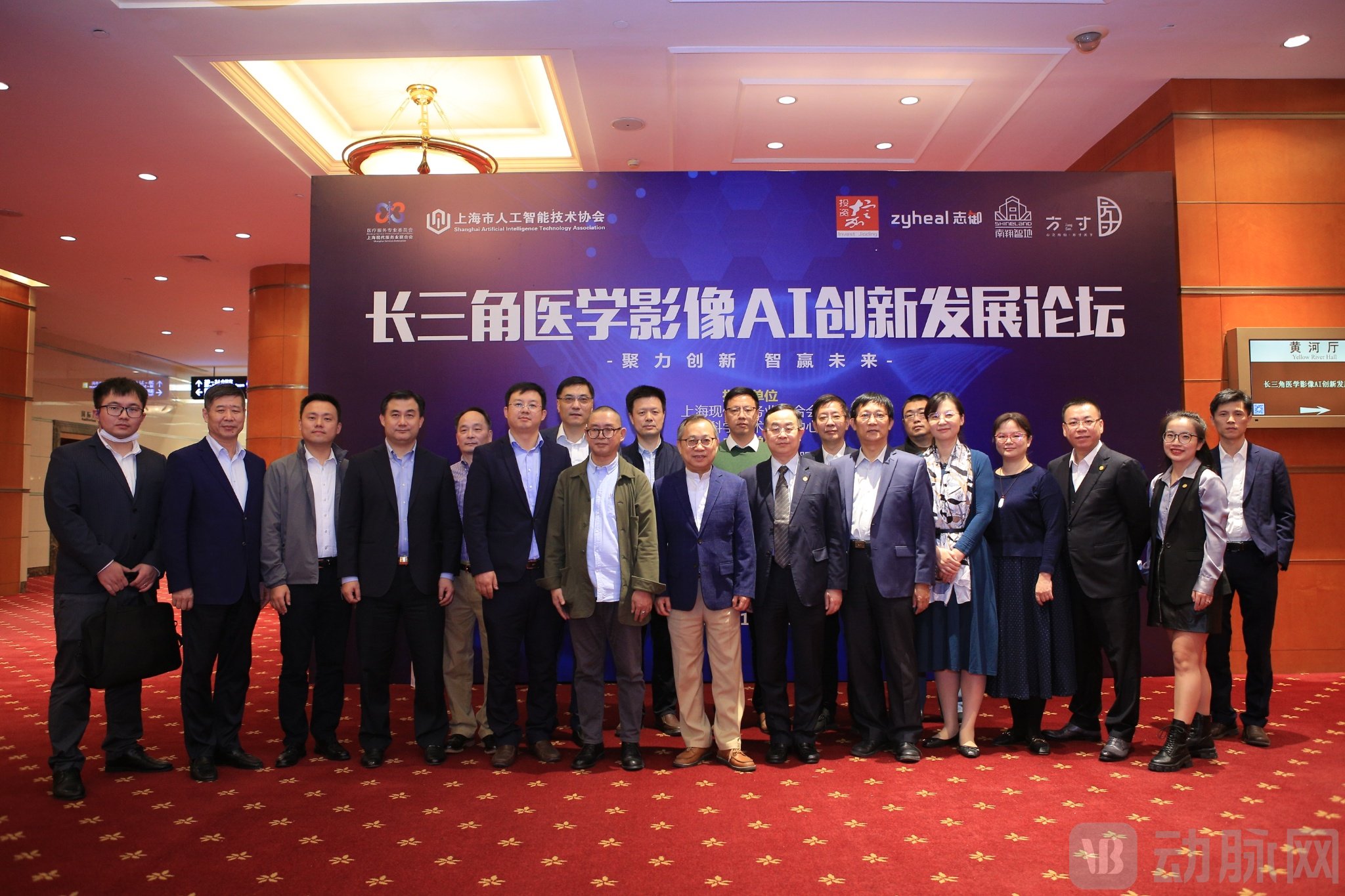
Group Photo of Attendees Source: Zhiyu Technology
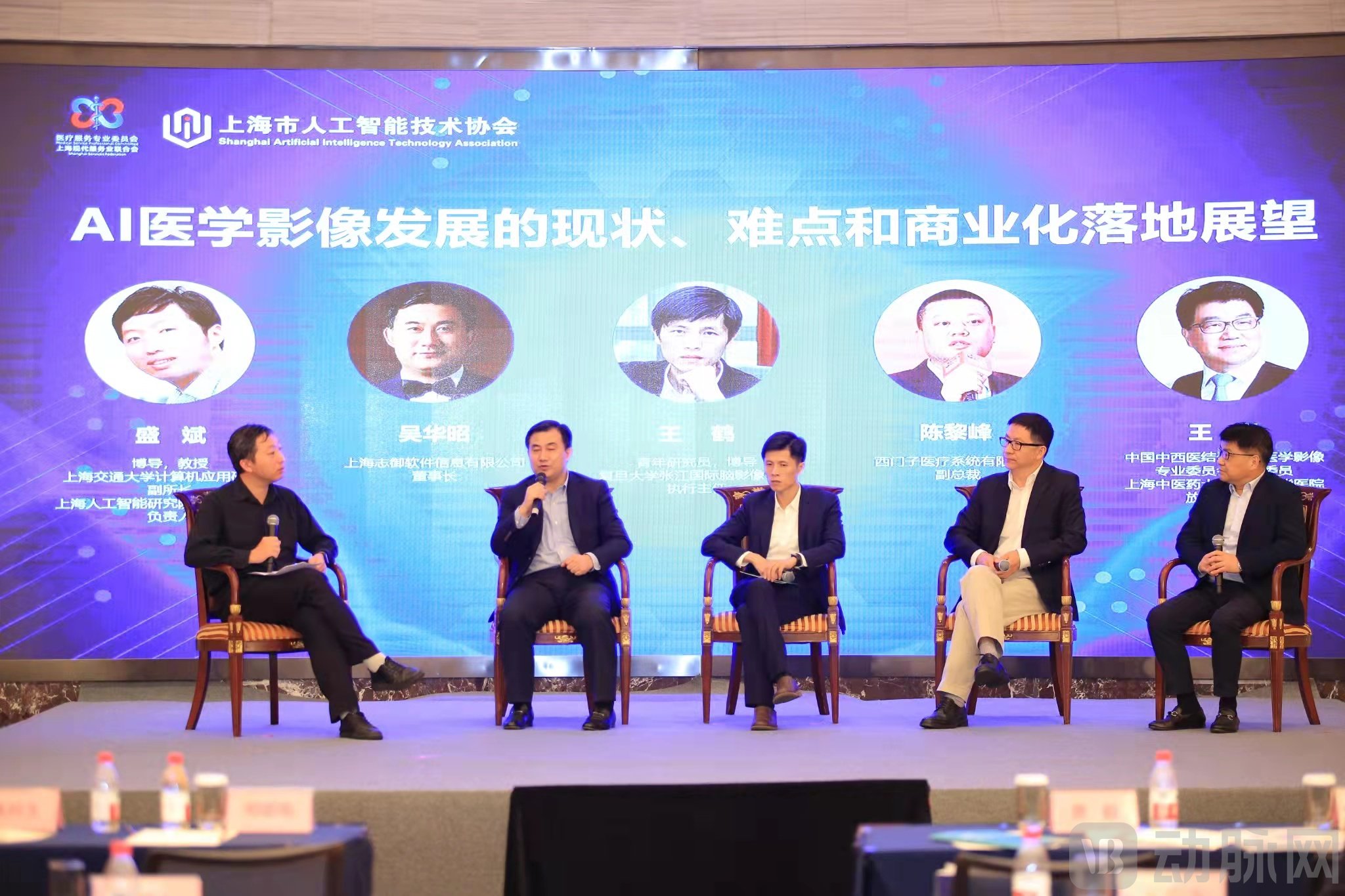
Photo of the Conference Venue Source: Zhiyu Technology
During the conference, VCBeat conducted exclusive interviews with Wu Huazhao, Chairman of Shanghai Zhiyu Software Information Co., Ltd.; Chen Lifeng, Vice President of Siemens Healthineers; and Wang He, Executive Director of the Zhangjiang International Brain Imaging Center at Fudan University, focusing on the application, implementation, and future of artificial intelligence in medical imaging.
In China, radiology has been one of the fastest-growing disciplines in recent years.
The market size of China’s medical imaging industry grew from $8.9 billion in 2016 to $13.6 billion in 2019, representing a compound annual growth rate (CAGR) of 15.2%. Magnetic Resonance Imaging (MRI), which does not involve X-rays or ionizing radiation and offers high soft-tissue contrast with superior image quality, has gradually become a common modality for diagnostic imaging.
Wu Huazhao stated, “In the past, people considered MRI scans to be expensive, often costing thousands of yuan. Currently, the cost of a CT scan with contrast media is approximately RMB 300, while the fees for certain MRI procedures have also decreased to around RMB 500. Price is no longer the primary factor constraining the widespread adoption of magnetic resonance imaging.”
Generally, an MRI scan takes 10–20 minutes. During prolonged examinations, patient voluntary motion can generate artifacts. Moreover, given the uneven distribution of medical resources in China, patients flock to top-tier tertiary hospitals in Beijing, Shanghai, and Guangzhou. Radiologists at these institutions may need to review nearly 10,000 images for 60–80 patients per day, leading to heavy workloads and tight schedules that can result in misdiagnosis or missed diagnoses. In contrast, primary care hospitals suffer from inconsistent physician quality, a shortage of radiologists, and variable imaging quality and diagnostic accuracy.
The advent of artificial intelligence has, to some extent, promoted the widespread adoption of MRI and the homogenization of medical care standards.
Wang He stated, “Artificial intelligence covers three major aspects of MRI. First, in image acquisition: not all data acquired during magnetic resonance imaging is meaningful; as much as one-third may be useless. AI can assist physicians in performing rapid and precise acquisitions. Second, in image reconstruction: AI can accelerate imaging speed by reconstructing 100% of the images from only 10% of the acquired data, thereby shortening the acquisition time while also improving image quality through noise reduction. Third, in post-processing of MRI: AI enables automatic image segmentation, lesion detection, and quantitative diagnosis, generating imaging modalities that are more intuitive for clinicians.”
Chen Lifeng summarized the clinical value of AI medical imaging into two concepts—Cost Reduction and Efficiency Enhancement。
“AI helps doctors save time in image interpretation and diagnosis, improves the overall operational efficiency of hospitals, enhances the diagnostic and treatment capabilities of primary care hospitals, and facilitates the decentralization of medical resources. Suppose patients undergo blood tests, blood glucose monitoring, and blood pressure measurements in primary care settings, thereby obtaining certain medical information; if physicians can leverage artificial intelligence for on-site diagnosis, this would be beneficial to the entire course of disease progression.”
AI medical imaging is highly data-dependent; strictly speaking, it has a high demand for high-quality data.
Wang He stated, “There is a lack of standardized protocols for data collection in China, leading to”The Data Appears to Be Massive, but Its Usability Is Actually Low“Although data can be processed algorithmically at a later stage, standardized data collection in the early phase holds greater value from a clinical benefit perspective. Data acquisition must be standardized; for instance, MRI slice thickness and resolution should remain consistent. Furthermore, post-processing procedures, such as 3D image reconstruction and data export workflows, must also be standardized. Personalized adjustments should be avoided during the acquisition and processing of medical images, as minor variations at each step may multiplicatively impact the final diagnostic outcomes.”
Data is the core of AI medical imaging. China places great emphasis on the security and control of personal information, making data security a fundamental baseline that AI enterprises must prioritize and comply with. Since November 1, 2021, China’s first Personal Information Protection Law has been in effect. Medical data circulates exclusively within hospitals, which serve as the ultimate “destination” for AI medical software.
Zhiyu Technology regards data security as an inviolable red line. Chairman Wu Huazhao stated, “In the course of collaborating with clinical institutions to develop products, Zhiyu Technology will absolutely not remove any data from hospital premises. All data de-identification and cleaning processes strictly comply with hospital regulations and national laws concerning data security and personal information protection.”
Furthermore, physician resources are a crucial component of AI medical imaging teams. During the development of AI products, enterprises should maintain close collaboration with clinical practitioners, making the integration of medicine and engineering a common approach. Physicians and enterprises need to reach a consensus on clinical needs, as well as the type of data and imaging required by the enterprise. Taking Zhiyu Technology as an example, the company collaborates with leading Grade 3A hospitals, such as Zhongshan Hospital and Huashan Hospital affiliated with Fudan University, to develop AI-based medical imaging products for liver and brain applications.
Having Surmounted the Mountain of R&D, Regulatory Approval Remains a Daunting Challenge for AI Enterprises.
In 2019, artificial intelligence set off a “fever” in the field of medical imaging, igniting strong investor interest in the AI medical imaging market. However, it was not until January 2020 that the National Medical Products Administration (NMPA) approved the first Class III medical device registration certificate for an AI-based product.
Wang He pointed out, “China has been relatively slow in terms of policy development, but this slowness is not a problem. It demonstrates the country’s rigorous approach to ‘AI + Healthcare.’ If an AI-based medical imaging software deployed in hospitals leads to a misdiagnosis, it would be difficult to assign liability.”
In 2020, a total of nine AI medical imaging products in China were approved by the NMPA.The AI medical imaging industry appears to have cracked the long-standing regulatory approval challenge. However, in terms of practical implementation and commercialization, AI medical imaging still has a long way to go.
In the AI medical imaging market, many companies remain unprofitable. Significant capital has been consumed by upfront R&D and marketing efforts. AI enterprises primarily adopt two revenue models: one involves partnering with medical device manufacturers to sell integrated hardware-software solutions; the other entails selling software on a pay-per-use basis.
Zhiyu Technology has adopted this commercialization model, partnering with Siemens Healthineers to market integrated hardware and software solutions. As a global leader in medical imaging, Siemens boasts unquestionable strength in hardware, and the company has also been actively advancing digital and intelligent applications in recent years.
Chen Lifeng stated, “As a foreign enterprise, we strive to collaborate with domestic universities, hospitals, and business partners—such as medical imaging AI companies represented by Zhiyu Technology—to leverage each other’s strengths. On one hand, this allows us to introduce advanced technologies and co-develop products with our local commercial partners. On the other hand, it is not necessarily cost-effective for us to invest in developing products that are already well-established and heavily funded in the market. It is more advantageous for all parties to focus on their respective areas of expertise and jointly deliver superior value to customers.”
Generally, the development of AI medical imaging has progressed from tertiary hospitals to grassroots institutions. Zhiyu Technology’s products have been deployed in central and western regions of China. Wu Huazhao, Chairman of the company, explained, “Doctors in Beijing, Shanghai, and Guangzhou are already highly experienced, whereas healthcare standards in central and western regions require significant improvement. We aim to leverage our AI solutions to deliver premium medical resources directly to the grassroots medical institutions and clinicians who need them most, thereby reducing missed diagnoses and misdiagnoses, and continuously enhancing overall healthcare quality.”
In the market, some AI medical imaging products have already gained recognition from experts. “Currently, if you visit hospitals at Level II or above, the vast majority of physicians consider AI to be helpful. Some hospitals have already integrated AI into their diagnostic workflows, making it an integral part of daily practice.”
And all along, the clinical and corporate sectors have been discussing this topic:Will AI Replace Doctors??
Wang He stated, “In certain respects, AI will undoubtedly surpass physicians due to its superior efficiency, extensive data access, and greater stability. However, this will not lead to unemployment among physicians, as computers lack emotions and cannot replicate the complexity of human feelings; humans should remain the ultimate decision-makers.”Physicians’ developmental goal should be to master and effectively utilize AI, fully integrate it into their practice, and become digital-savvy professionals.。”
AI will serve as both an assistant and a teacher to physicians. The application of artificial intelligence in healthcare extends far beyond medical imaging; the future of AI-driven healthcare lies in integrating data across the entire human lifespan. As humans are complex organisms, factors such as individual lifestyle habits and genetics significantly influence disease progression, with imaging data representing only a small fraction of the overall picture.
“We should integrate the entire healthcare process into a single pathway,” proposed Chen Lifeng. “For instance, I found my way here today using navigation. Twenty years ago, if I couldn’t locate a place, I would pull out a map and search through it; if I still couldn’t find it, I simply wouldn’t go. The advent of navigation has significantly expanded people’s range of activity. Similarly, if we consolidate all data—including complete blood count results, blood glucose monitoring records, and CT scan data—we can clearly determine at what stage of the disease a patient is and what measures should be taken.”