

China's Aesthetic Medicine Industry Faces Comprehensive Regulatory Crackdown: Navigating the Path Forward
The medical aesthetics industry is undergoing its most stringent test.
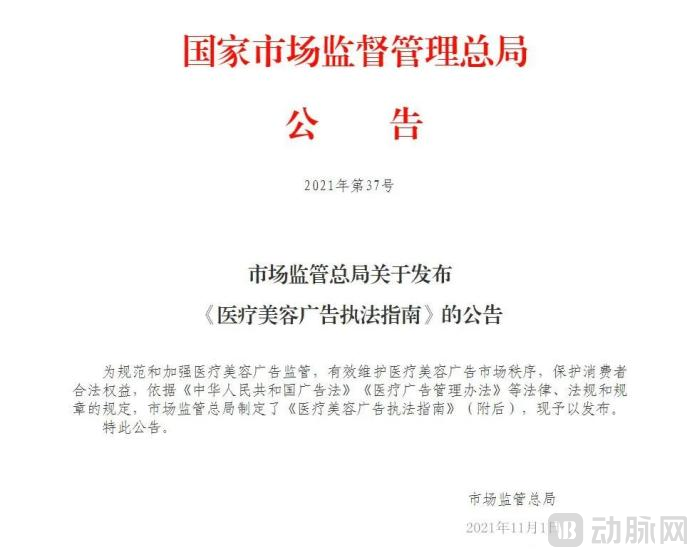
Since the beginning of this year, the state has frequently taken strong measures to regulate the medical aesthetics industry.On November 1, the State Administration for Market Regulation (SAMR) officially released the “Guidelines for Law Enforcement on Medical Aesthetics Advertising.” Regarded by the industry as the strictest regulatory framework for medical aesthetics advertising, the Guidelines prioritize crackdowns on nine major violations, including the creation of “appearance anxiety,” set forth detailed requirements for the dissemination of medical aesthetics advertisements, and clarified regulatory responsibilities.
Moreover, in mid-year, eight ministries and commissions—including the National Health Commission, the Cyberspace Administration of China, the Ministry of Public Security, the General Administration of Customs, the State Administration for Market Regulation, the State Post Bureau, the National Medical Products Administration, and the National Administration of Traditional Chinese Medicine—jointly launched a six-month special campaign to crack down on illegal medical aesthetic services. Concurrently, they issued the Work Plan for the Special Campaign to Crack Down on Illegal Medical Aesthetic Services, which covers multiple aspects of the medical aesthetics industry.Judging from this year’s regulatory actions, policies have been introduced covering advertising, qualifications, and services, ushering in comprehensive oversight of the medical aesthetics industry.
Central state media have recently spoken out repeatedly, emphasizing that “medical aesthetics should strive for optimal outcomes while also preventing adverse consequences.”For a time, the medical aesthetics industry has found itself at the forefront of regulatory scrutiny and public opinion.
In fact, relevant national authorities have long taken action to regulate the medical aesthetics industry. For instance, in 2019, the National Health Commission required localities to conduct “follow-up reviews” on prominent issues such as illegal medical aesthetic procedures, incorporating medical aesthetics into national supervisory spot checks and special rectification campaigns against medical irregularities jointly carried out by multiple departments. In other words,Regulation of the medical aesthetics industry has been ongoing and is becoming increasingly stringent.
Where Is the Future of the Medical Aesthetics Industry Headed Amidst the Government’s Crackdown?
Riding the tailwinds of the beauty economy, medical aesthetics has emerged as one of the hottest sectors today.
According to the data from the "2020 China Medical Aesthetics White Paper," the cumulative financing or fundraising amount in China's medical aesthetics industry last year (excluding undisclosed events) reached 80.23 billion yuan.
In terms of market size, calculations by research firm Frost & Sullivan show that the compound annual growth rate (CAGR) of China's medical aesthetics market was 22.5% from 2014 to 2019, and the market size is expected to exceed RMB 360 billion in 2023, making China one of the fastest-growing countries globally in this sector. Additionally, the medical aesthetics industry maintains a high gross profit margin, ranging between 50% and 70%.From a business perspective, medical aesthetics is indeed a lucrative industry.
It is precisely the optimism of capital, the expansion of market space, and the high gross profit margin that are attracting an increasing number of institutions to enter the medical aesthetics industry.A search for “medical aesthetic clinics” on Qichacha reveals that over 2,000 such establishments were founded this year alone, excluding medical aesthetic hospitals that are expanding annually.
Yet, beneath the fervor, the medical aesthetics industry also faces public skepticism.For instance, recent incidents such as the death of a social media influencer from systemic infection two months after undergoing liposuction, and a young woman’s permanent inability to stand for prolonged periods following calf muscle denervation surgery for slimming purposes, have sparked widespread public discussion on “illegal aesthetic medicine.”
An even more brutal fact is that, according to the "White Paper on Insights into China's Medical Aesthetics Industry (2020)," approximately 100,000 people suffer injuries or disabilities each year due to illegal medical aesthetic practices.Not only that, but the medical aesthetics market is also flooded with smuggled and counterfeit products, which severely infringe upon consumer rights and interests while simultaneously hindering the healthy development of China’s medical aesthetics industry.
Behind this lies the intensification of cutthroat market competition, driven by a massive influx of enterprises and fierce rivalry. According to data from iResearch, there are approximately 13,000 institutions in China qualified to provide medical aesthetic services. Among these legally authorized medical aesthetic institutions, about 15% engage in business activities beyond their approved scope, while the number of illegally operating medical aesthetic clinics exceeds 80,000.Legitimate medical aesthetic institutions account for only 14% of the industry.
It is worth noting that although medical aesthetic institutions have high gross profit margins, their net profit margins are typically between 0% and 10%. Why?The reason lies in the high customer acquisition costs for medical aesthetics institutions.To attract more customers, some illicit medical aesthetic clinics allocate the vast majority of their costs to marketing, while controlling expenses by compromising medical quality or boosting profits by offering unnecessary or even illegal procedures.
Additionally,The proliferation of misleading medical aesthetics advertisements is also a significant factor contributing to many beauty seekers being deceived.Some drugs and medical devices that have not been approved or filed with the drug regulatory authorities use misleading advertisements to make guaranteed promises regarding diagnostic and treatment efficacy, safety, or effectiveness, thereby luring consumers into traps.
It is precisely due to the above factors that illegal medical aesthetic practices continue to emerge. In response to the chaotic state of the industry, regulators have taken decisive action, slamming the brakes on the medical aesthetics sector’s reckless, unguided expansion.
In addition to increasingly stringent regulations, the medical aesthetics industry has also begun to take proactive measures, such as launching self-regulatory initiatives and establishing corresponding frameworks.As an industry association, the Chinese Association of Plastics and Aesthetics has been collaborating with upstream and midstream enterprises as well as downstream medical aesthetic platforms to strengthen the promotion of industry self-discipline through organized activities. In May last year, the association launched a self-discipline initiative for the medical aesthetics industry, which has continued into this year.
The strategic positioning of platform enterprises is also critical across the entire medical aesthetics value chain. As bridges connecting manufacturers and institutions with aesthetic seekers, these platforms can reduce information asymmetry and exercise control over multiple aspects, including advertising, qualifications, and services.
As a key platform in the industry, Alibaba has been strategically positioning itself to promote standardized development within the sector. At yesterday’s Forum on the Standardized Development of the Medical Aesthetics Industry and the launch event for the “Mei Wuyou” (Beauty Worry-Free) standards, Alibaba presented its solution for providing consumers with safe and reliable medical aesthetic services: the release of the “Mei Wuyou” standards. These standards rigorously evaluate institutional qualifications, physician credentials, and service guarantees across four dimensions—“Preferred Institutions, Certified Physicians, Authentic Product Traceability, and Service Assurance”—thereby enhancing and optimizing the consumer experience in medical aesthetics.

(“Mei Wuyou” interface, screenshot from VCBeat)
Specifically, “Preferred Institutions” refers to institutions with publicly transparent and verifiable qualifications, thereby eliminating consumer selection risks; “Certified Physicians” denotes physicians certified by the National Health Commission who provide in-person consultations, helping to avoid misleading inducements and promotional claims by unqualified or fraudulent practitioners; “Authentic Product Traceability” helps consumers avoid issues such as gray-market or counterfeit products; and “Service Guarantee” means that merchants sign a letter of commitment to fulfill services in accordance with the MeiWuyou service protocol, ensuring a satisfactory experience for users receiving care at the facility.The four-pronged framework standardizes and improves upon the key issues underlying the chaotic practices in the medical aesthetics industry.
How can these four dimensions be effectively implemented? This requires a return to product design. “Mei Wuyou” screens merchants and categories based on entry qualifications, safety, and service fulfillment. The standards cover dimensions such as procurement credentials for devices or pharmaceuticals, physicians’ professional qualifications, and offline service delivery. Meanwhile, Alibaba also requires merchants to sign letters of commitment to ensure in-hospital services for users in accordance with standardized service protocols.
Taking intense pulsed light (IPL) skin rejuvenation, a photoelectric-based procedure, as an example, Meiwuyou’s screening criteria break down safety and reliability into multiple dimensions. These include requirements for holding official instrument authorization certificates, providing equipment procurement records, and supporting QR code-based authenticity verification. Additionally, certified physicians must not only possess valid medical qualification and practice licenses but also have at least six years of clinical experience, and adhere to standardized timelines for the initial post-treatment follow-up. All these criteria are standardized and quantifiable.
To better serve users, Alibaba is also proactively partnering with high-quality institutions.At the launch event, Hangzhou Yestar Medical Aesthetic Hospital and Hangzhou Yan Shu Medical Aesthetics participated in the joint unveiling ceremony for “Mei Wuyou” as its first batch of premium partner institutions. Meanwhile, Alibaba officially established partnerships with the first cohort of upstream “Mei Wuyou” brand partners, including Allergan, Lumenis, LG Life Sciences, Alma Lasers, Philips, Galderma, Efacec, and Sihuan Pharmaceutical. These partners will support the development of “Mei Wuyou” standards through product authentication and traceability via QR code verification, jointly establishing the “Mei Wuyou” service standards.
As can be seen, Alibaba’s “Mei Wuyou” (Beauty Without Worries) standard can be effectively implemented through the refinement of audit dimensions and the integration of high-quality partners. Moreover, end-to-end coverage—from admission to fulfillment—helps optimize the platform experience for aesthetic seekers and ensures that merchants safely fulfill their obligations to users.
Notably, products meeting the “Mei Wuyou” (Beauty Worry-Free) standards are displayed with a special badge to users across platforms such as Taobao Mobile, Koubei, Ele.me, and Alipay. These badges appear in various contexts, including search results pages, product detail pages, store detail pages, and channel pages (e.g., Tmall Medical Aesthetics, Ele.me “Zhen Haokan,” and Koubei Medical Aesthetics). In other words, Alibaba not only upholds stringent standards for qualifications and compliance but also incentivizes high-quality merchants through preferential traffic allocation.
It is not difficult to see that, as a leading platform in the industry, Alibaba’s meticulous control over standards and its strategic approach not only strictly uphold the quality of medical aesthetics products and services but also, to a certain extent, guide and promote the implementation of industry standardization.
Why? This is because, supported by the “Mei Wuyou” standards and the Alibaba ecosystem, high-quality brands and service providers in the medical aesthetics industry chain can reach beauty seekers more efficiently and precisely, manage channels effectively, and facilitate communication and matching between brands and compliant medical aesthetics institutions, thereby enhancing operational efficiency.
Crucially, the platform enables a broad base of aesthetic seekers to more intuitively screen for high-quality medical aesthetic institutions and understand the functions and benefits of aesthetic products, thereby capturing user mindshare and achieving a multi-party win-win outcome for manufacturers, institutions, users, and the platform.
Of course, it is also crucial to establish a sound talent development mechanism for the medical aesthetics industry.In the medical aesthetics industry, physician resources are core. Therefore, to promote the sustainable development of the medical aesthetics industry, it is necessary to establish a talent cultivation mechanism as soon as possible and do a good job in cultivating and reserving high-quality talents.
On the policy front, the Ministry of Education proposed this year that degree-granting institutions with the necessary conditions should be encouraged to autonomously establish secondary disciplines related to aesthetic medicine under primary disciplines such as Clinical Medicine, based on their own development needs and social demand. This is undoubtedly a positive start, opening up new channels for the training of professionals in the medical aesthetics industry. In particular, it provides young physicians with high-quality learning opportunities by integrating the specialty of aesthetic medicine into university education.
In summary, with the implementation of industry self-regulation initiatives led by associations and medical aesthetic institutions, the promotion and strategic deployment by leading platform-based enterprises, and the improvement of training mechanisms for medical aesthetic practitioners, a more sustainable and healthy ecosystem for the medical aesthetics industry is gradually taking shape.
Amid increasingly stringent regulatory oversight, the medical aesthetics industry is evolving toward greater standardization. In this process, VCBeat identifies four key trends worthy of attention.
First, under stringent regulatory enforcement, an increasing number of illicit aesthetic medicine providers and smaller, less competitive institutions will be phased out, while leading institutions, leveraging their superior governance systems, will attract a larger share of aesthetic seekers.As a high-growth, long-term sector driven by consumption upgrades, the medical aesthetics industry remains in a phase of rising demand. The current challenge lies in the high costs for consumers to verify the authenticity of products and institutions. Therefore, improvements on the supply side will help legitimate institutions and compliant products solidify their market position and expand their market share, thereby driving out inferior competitors through the "good money drives out bad" effect.
Second, medical aesthetic institutions will evolve toward refined operations, such as focusing on distinctive product and service categories.From the perspective of the current market landscape, the vast majority of medical aesthetics institutions are comprehensive in nature, while those with specialized service categories account for less than 10%.
It is important to recognize that the medical aesthetics industry sits at the intersection of healthcare and consumer sectors. While product manufacturing and medical services are subject to stringent regulation, channel development and market expansion follow consumer-oriented logic. Therefore, medical aesthetics institutions should start from vertically segmented niches, develop distinctive products, and deepen their expertise in these areas to better capture consumer mindshare, thereby enhancing user stickiness. For instance, they can pursue a specialized path by focusing on niche segments such as anti-aging treatments, oral care, and hair transplantation.
Third, the personal IP brand effect of physicians will gradually become a pivotal factor enabling medical aesthetic institutions to stand out.Medical aesthetic institutions face persistently high customer acquisition costs, primarily due to heavy advertising expenditures on platforms such as out-of-home media, automotive channels, and online video services, which yield low traffic retention. An analysis of operational strategies employed by leading institutions reveals that having one or two star physicians can generate sustained and substantial patient inflow.
Fourth, the industrial system will become more comprehensive. For instance, various segments across the value chain—such as medical aesthetics distribution channels, live streaming, professional training, and service provision—are becoming increasingly specialized, with ample market space and opportunities available in each area.As the medical aesthetics market expands, the industry chain will also extend; for instance, medical aesthetics marketing alone can give rise to niche segments such as medical aesthetics SaaS and live-streaming commerce.
Taking Alibaba as an example, last September, Alibaba’s Local Services division announced that China’s first “Demonstration Center for the Medical Aesthetics Live-Streaming Industry” had been established in the Wuhou Shezhuang Town in Chengdu, Sichuan Province. This move reflects Alibaba’s recognition, amid the current surge in live-streaming popularity, of the growing demand among medical aesthetics institutions for talent skilled in live-streaming guided sales. To encourage more medical aesthetics institutions to fully commit (“All in”) to live-streaming, it is essential to cultivate new talent and build a more comprehensive ecosystem.
Certainly, as the industry continues to improve overall, numerous niche trends are emerging. However, by recognizing how to identify methods for cost reduction and efficiency enhancement across all segments of the medical aesthetics sector, stakeholders can seize the opportunity to benefit from this wave of growth in the industry.
Regulatory Crackdown Focuses on “Illegal Medical Aesthetics,” Non-Compliant Products, and Illicit Marketing. These rectification efforts not only help eliminate industry chaos and safeguard consumers’ legitimate rights and interests, but also facilitate the exit of companies merely capitalizing on the medical aesthetics concept.
Therefore, although the medical aesthetics industry will be affected in the short term, from a long-term perspective, it will usher in more sustainable and healthy development.On the upstream side, due to high barriers in R&D and regulatory approvals, leading companies have gained market recognition for their product technology, safety, and efficacy, positioning them for sustained growth. On the midstream and downstream sides, as advertising regulations in the medical aesthetics sector tighten, the brand value of institutions will become more prominent, benefiting leading medical aesthetics providers and further increasing industry concentration.
Importantly, the improvement of medical service quality, as the core of long-term development for all enterprises in the medical aesthetics industry, has also been placed as a top priority.: Whether through policy guidance, collective action by industry organizations, or support from platform enterprises represented by Alibaba, the standardization and innovation of the medical aesthetics industry have received greater support, which will serve as a driving force for its continuous advancement.
It is believed that with the joint efforts of regulators, enterprises, and users, the medical aesthetics industry will also become more beautiful.