

Silicon Biosensing's First Domestic 14-Day Finger-Prick-Free CGM Receives Class III Medical Device Approval in China

Sibionics
Medical Device R&D and Manufacturing Company
According to the public announcement by the National Medical Products Administration (NMPA), on November 4, China’s first real-time continuous glucose monitoring (CGM) system with independent intellectual property rights and a 14-day calibration-free feature was approved for a Class III medical device registration certificate. Independently developed by Shenzhen Sibionics Sensing Technology Co., Ltd., a wholly-owned subsidiary of Shenzhen Sibionics Co., Ltd., this product utilizes a subcutaneously implanted micro-flexible sensor to continuously monitor interstitial fluid glucose levels in real time over 14 days, generating various blood glucose monitoring profiles and other glucose-related data. This product will help comprehensively display patients’ real-time blood glucose levels, glucose variability, glucose trends, Time in Range (TIR), and instances of hyperglycemia and hypoglycemia, thereby assisting clinicians and patients in timely intervention and adjustment of glycemic management strategies.
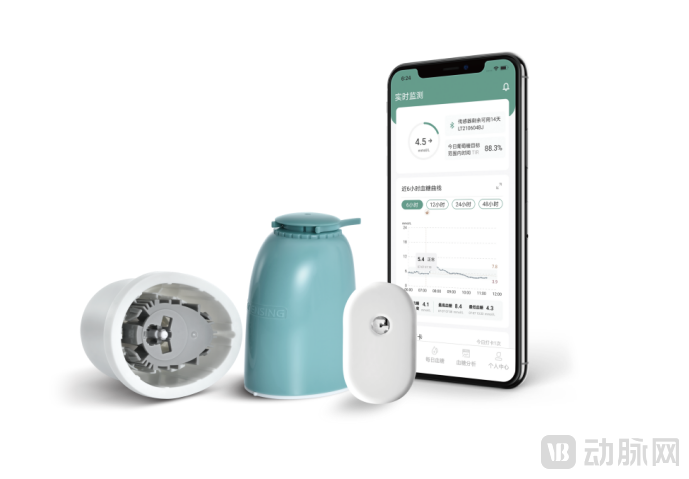
It is understood that CGM products have been widely used in clinical settings, with multiple domestic and international guidelines recommending their clinical use. Sibionics’ CGM product, through various technological innovations, has overcome issues present in existing CGM products, such as hard needles, short monitoring durations, the need for fingerstick blood calibration, and the requirement for scanning. This significantly enhances the accuracy, safety, comfort, and ease of use during users’ blood glucose monitoring processes.
In December 2020, the product completed a multicenter prospective clinical trial led by Shandong Provincial Hospital, with participation from Sun Yat-sen Memorial Hospital of Sun Yat-sen University and Shenzhen University General Hospital. The trial enrolled a total of 70 patients. Key performance indicators of the product were as follows: Mean Absolute Relative Difference (MARD) of 8.83%, and 99.9% of results falling within Zones A and B of the Consensus Error Grid Analysis, reaching internationally advanced levels. Thirty-seven invention patents have been filed for the related core technologies, of which 12 have been granted.
In terms of sensors, Sibionics employs its second-generation sensor technology, featuring a self-designed synthetic metal redox polymer that replaces oxygen as an electron mediator to support in vivo redox reactions. This design shields product performance from interference by various factors, significantly enhancing the accuracy, stability, and anti-interference capability of blood glucose monitoring.
Regarding the applicator, Sibionics employs a patented split-type pickup mechanism and a dual-spring structure to achieve automatic sensor insertion and automatic stylet retraction. The ejection speed is stable and reliable, significantly reducing subcutaneous pain during sensor application and enabling painless implantation.
Furthermore, Sibionics ensures sensor quality through precision manufacturing.Production Consistency, enabling factory calibration and overcoming the challenge that current CGM products require multiple fingerstick blood glucose calibrations.

It is reported that after the product launch, Shenzhen Sibionics will simultaneously introduce it in clinical professional settings and the personal retail market.In personal use scenarios, users can view blood glucose levels and trends in real time via a mobile app and receive alerts for hyperglycemia and hypoglycemia. Leveraging its self-built Sibionics Yinchuan Internet Hospital and a professional service team comprising endocrinologists and physician assistants, Shenzhen Sibionics Co., Ltd. provides expert interpretation of professional reports based on Ambulatory Glucose Profile (AGP) charts, along with personalized guidance on diet, exercise, and medical care. For clinical applicationsApplication scenarios,Shenzhen Sibionics Co., Ltd. has developed a hospital-wide dynamic blood glucose management system, enabling real-time, dynamic, and continuous glucose monitoring for inpatients across multiple departments. This system helps improve the work efficiency of medical staff, increase the rate of blood glucose target attainment among hospitalized patients, reduce the incidence of hypoglycemia, and ultimately enhance patient prognosis.
According to statistics, the number of people with diabetes in China exceeds 129.8 million, among whom only 15.8% have achieved target blood glucose control. Due to inadequate blood glucose monitoring and management, various complications result in annual expenditures in China approaching one trillion yuan. The successful approval and market launch of this product will provide superior solutions and pathways for comprehensive diabetes management, marking the advent of a new era of digitalization in blood glucose management.
Publicly available information indicates that Shenzhen Sibionics Co., Ltd., founded in 2015, is a company dedicated to the research, development, and commercialization of active medical implants and medical artificial intelligence. Its independently developed “AI-Assisted Diagnostic Software for Fundus Images in Diabetic Retinopathy” obtained China’s first Class III medical device registration certificate for AI-assisted fundus image diagnosis last August, and has achieved large-scale commercial deployment in settings such as health examination centers, primary healthcare institutions, and optometry centers.