

Medable, the U.S. DCT Unicorn Backed by GSR Ventures Across Four Rounds, Files IPO Prospectus

Tiger Global Management
Private Equity Fund

GSR Ventures
Early-Stage Technology Venture Capital Firms

Medable
Patient Data Storage Platform Provider

Sapphire Ventures
An Investment Company

Blackstone Growth
Private Equity Investment Firms
The spread of the COVID-19 pandemic has not only accelerated capital investment in healthcare and related industries, but also heightened global awareness of the importance of clinical drug development, creating opportunities for Decentralized Clinical Trials (DCTs).
DCT is the abbreviation for Decentralized Clinical Trials. In China, it has various translations, such as “Decentralized Clinical Trial Platform” and “Remote Intelligent Clinical Trials.” In September 2020, the State Council’s *Overall Plan for the China (Beijing) Pilot Free Trade Zone* first proposed “exploring pilot programs for decentralized clinical trials (DCT).”
Thus, DCT has entered the public eye.
Clinical research is an indispensable step in drug development. Throughout the process of elucidating disease mechanisms, discovering drug candidates, and delivering therapeutics, robust data support is essential. Data with large sample sizes and high granularity are required to substantiate drug safety, efficacy, and reliability.
Given the unique nature of the pharmaceutical industry, with its distinct industrial characteristics and professional requirements, there are high standards for data collection, data management, and data statistics.
With the development of IT and internet technologies, DCT has emerged.
For patients,DCTs offer a more streamlined experience, allowing patients to remotely register for clinical trials, complete informed consent questionnaires online, submit patient-reported data via data capture tools, wearable devices, and sensors, participate in visits through video conferencing, and regularly discuss adverse events with investigators. This approach not only saves patients travel expenses but also reduces the burden of time-consuming clinic visits, thereby improving patient compliance. Furthermore, as patients generate data within their daily lives rather than at medical centers, the submitted data better reflect real-world usage scenarios.
For the sponsor,DCTs not only reduce costs such as recruitment expenses and shorten study timelines, but also enable access to a broader patient population. This enhances the speed and quality of recruitment while improving the generalizability and representativeness of clinical trial results across diverse populations. Furthermore, DCTs improve compliance, reduce dropout rates, and facilitate more centralized operational management of studies.
For DCT companies,As data feedback from both patients and sponsors continues to accumulate, technical models can be refined, ultimately creating a snowball effect that drives progress in clinical trials and healthcare.
In some remote intelligence studies, drugs can be supplied directly to patients (DTP: Direct To Patient),To some extent, it will also drive the development of drug supply and logistics.。
However, it should be noted thatDCTs Are Not Applicable to All Clinical Trial Scenarios for Any Disease. For example, DCTs are more suitable for drugs with known safety profiles and for trials in which key study endpoints can be assessed remotely.
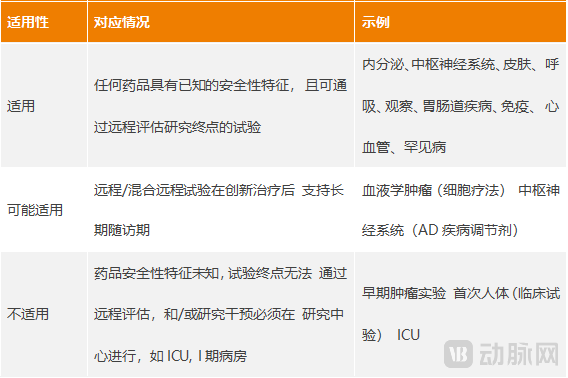
Source: Taimei Medical Technology; graphic by VCBeat
Industry insiders told VCBeat that, at the current stage, decentralized clinical trials (DCTs) are not implemented in a “one-size-fits-all” manner in real-world settings; instead, they typically require a combination of online and offline approaches. Furthermore, when implementing hybrid models, sponsors should balance operational differences in clinical trial conduct with unnecessary or even confounding variability in the generated data.
Currently, the protection of enrolled patients' privacy, the authenticity of data, and the virtualization of interactions between clinicians and patients are key points of contention regarding Decentralized Clinical Trials (DCTs).
Medable, which recently secured $304 million in Series D financing, is a notable unicorn in the U.S. decentralized clinical trials (DCT) sector.
This funding round was co-led by new investors Blackstone Growth (BXG) and Tiger Global, along with existing investors GSR Ventures, Sapphire Ventures, and WTI.
As of now, Medable has cumulatively raised over $500 million in funding, with a valuation of approximately $2.1 billion.
According to Medable, the funding will be used to address long-standing “barriers in drug development,” invest in remote patient technologies and tools that enable sites to leverage patient care and research technologies to lead decentralized studies, expand its global operations, and deepen investment in its SaaS technology platform and partner ecosystem.
Medable, headquartered in California, is a patient-centric clinical research cloud platform provider that helps drug researchers extend clinical trials beyond hospital settings. The company’s SaaS platform has been deployed in more than 150 decentralized and hybrid clinical trials across over 60 countries, serving more than 1 million patients and research participants worldwide.
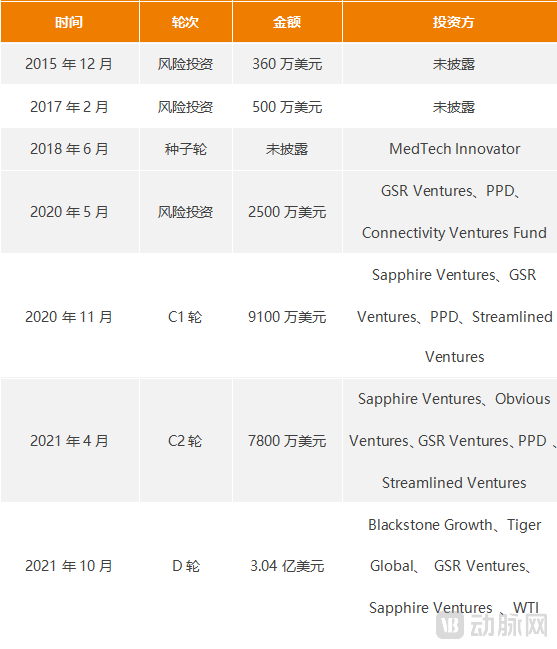
Data source: Crunchbase; chart by VCBeat
Why Did Medable Secure Massive Funding in Just Two Years? What Magic Enabled GSR Ventures, Which Has Backed Internet Giants Like Didi, Ele.me, and Xiaohongshu, to Invest in Four Consecutive Rounds? What Is the Allure of This Company, and What Lessons Does It Hold for Domestic DCT Enterprises? VCBeat Provides an Analysis.
Medable’s team is composed of seasoned professionals who have served in various capacities within the life sciences industry.
Notably, despite its modest size, the company has four co-founders.
Among them, Michelle Longmire (far left) and Tim Smith (second from left) have been deeply engaged in the medical and health sector for over 10 years.
The other two also have over 10 years of extensive experience in their respective areas of professional expertise.
The four founders, each excelling in their respective domains, have enabled Medable to pursue steady and sustainable growth.

Among the four co-founders, Michelle Longmire is the only woman and also the lead organizer of the team.

Medable CEO and Co-Founder Michelle Longmire
This blonde beauty, who favors a side part, holds a doctorate from Stanford University.
Prior to founding Medable, Michelle Longmire was deeply engaged in the medical field, primarily focusing on medical research. She served as a researcher at the National Cancer Institute of the U.S. National Institutes of Health, the Howard Hughes Medical Institute, and Stanford University School of Medicine. During this period, she published more than 20 academic papers in prestigious journals such as CELL, JAMA, and CLINICAL CANCER RESEARCH.
When discussing the reasons for founding Medable, Michelle Longmire stated that she had always been passionate about science, influenced by her scientist parents since childhood. Later, while working at Stanford University’s research institute, she began to recognize the shortcomings of clinical research and reflect on the limitations of patient data acquisition, which led her to spearhead the establishment of Medable.
For Medable, Michelle Longmire hopes it will “become the strongest teammate and the fiercest competitor.”
How to Solve the “Last Mile” Problem Between Patients and Sponsors? Medable’s Solution Is a Comprehensive Product Suite.
In 2020, the company launched three new applications: TeleVisit, which connects patients with site coordinators and investigators; TeleConsent, which enables patients to sign and re-sign clinical trial documents online; and TeleCOA, which integrates electronic Clinical Outcome Assessments (eCOA) with TeleVisits.
TeleVisit It can be used for various decentralized trials and hybrid trials, virtually connecting patients with their clinical trial sites. Patients and clinical trial sites can download the TeleVisit APP from app stores on mobile devices such as smartphones and tablets, register identity information and contact details, and provide other data.
TeleVisit is easy to operate and features a user-friendly interface, enablingProvide highly configurable screening assessments,In particular, it matches patient cohorts that meet the criteria for precision medicine and targeted therapy. Applicants can not only send enrollment links to patients they have already recruited but also leverage resources to invite eligible patients on Medable to participate, enabling them to join clinical trials without leaving home.
Meanwhile, the programDiverse and Flexible Models, the applicant can not only screen patients anytime and anywhere but also create protocol-compliant patient workflows based on actual needs. For example, physicians can develop care plans tailored to individual patient needs; these instructions can be deployed to patients’ mobile devices, enabling the physician to receive real-time information on patient health and adjust care based on the patient’s real-world performance.
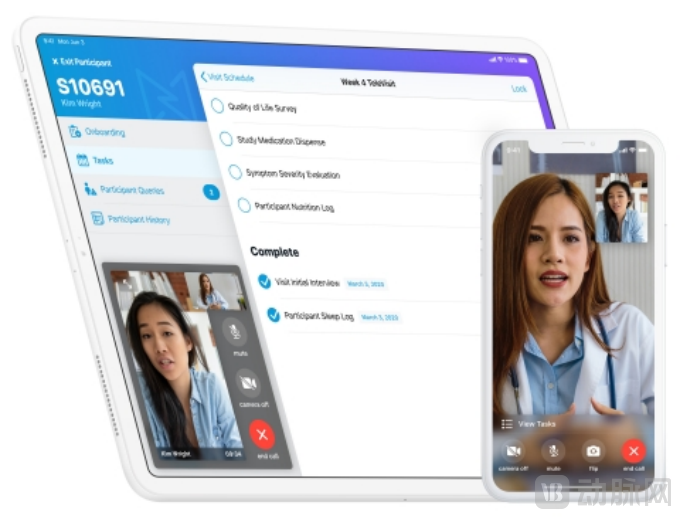
Medable TeleVisit Solution, Image source: businesswire
Of course, the prerequisite for conducting any trial is patient consent.TeleConsentIt was born for this purpose.
TeleConsent enhances patients’ knowledge and understanding by delivering medical information in visual and multimedia formats. Patients can review this information in depth with family members and caregivers, and provide digital consent. Sites and sponsors can also remotely screen, enroll, and obtain consent from study participants.
Access to digital records is valuable for all stakeholders and lays the foundation for ongoing digital interactions between sites and patients.
By eliminating the need for in-person visits, TeleConsent enhances participant diversity and retention, ultimately improving research quality and speed, thereby benefiting patients, sponsors, and Medable.
Unlike traditional eCOA (electronic Clinical Outcome Assessment) solutions, TeleCOA connects previously siloed data. It not only integrates eCOA with TeleVisits conducted via web and mobile devices, overcoming physical barriers to capture key clinical trial outcomes from patients at home, but also enables clinicians to simultaneously assess and guide patients, thereby facilitating fully remote, real-time interaction between patients and clinicians.
It is this relentless pursuit of excellence in products and services that earned Medable the top ranking among 15 DCT providers in the Everest Group PEAK Matrix® 2021.
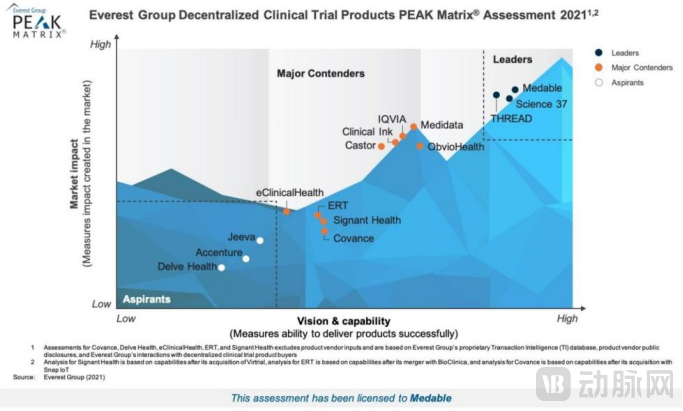
Image Source: Everest Group PEAK Matrix®
In addition to consecutively launching blockbuster products, Medable also established a Patient Advisory Committee (PAC) in February of the same year.
PAC is an organization composed of medical experts, patient advocates, consultants, and caregivers who possess a profound understanding of patient preferences. They bring patient perspectives and unique insights to the design and implementation of every product. When addressing the same issue, they also provide recommendations from diverse viewpoints.
A patient-led committee is dedicated to enhancing the accessibility and efficiency of clinical trials by integrating patient voices and perspectives into all aspects of trial design and execution, with the goal of delivering innovative, life-improving therapies to more patients at a faster pace.
“No matter how a trial is conducted, patient practicality must be considered from the very beginning,” said Jennifer McNary, Chair of the Medable Patient Advisory Council (PAC) and a long-time patient advocate with 15 years of clinical trial experience. “How does the trial fit into patients’ lives? Is it useful for their caregivers? What would improve their access and experience? Each of us brings personal patient connections to every study, even as patients may now be using technology to participate in trials remotely from home.”
The Patient Advisory Council (PAC) plays a pivotal role throughout Medable’s entire service lifecycle. It provides the Medable team with recommendations on product development, patient preferences, and key performance indicators. Additionally, it advises Medable’s pharmaceutical and biotechnology clients on clinical trial deployment, evaluates workflows, reviews communications, tests usability, and enhances retention rates for specific trials, thereby improving patient accessibility, experience, and outcomes in clinical trials.
For example, the Patient Advisory Council (PAC) collects and prioritizes barriers encountered by patients during clinical trials, particularly with regard to trial burden, quality of life, and treatment outcomes. Medable then incorporates these perspectives into its digital platform for decentralized trials and shares patient insights with key stakeholders, including healthcare providers, biopharmaceutical companies, and contract research organizations.
Furthermore, PAC recruitment is ongoing, with a continuous influx of specialized healthcare professionals and experienced patient advocates joining to enhance Medable’s products and services, thereby facilitating faster and more robust growth for the company.
Policy support is a significant boon to industry development. In recent years, the state has successively issued multiple policies to support the development of DCT.
In April 2020, the National Medical Products Administration (NMPA) issued the *Announcement of the National Health Commission on the Release of the Good Clinical Practice for Drug Trials (No. 57 of 2020)*, which updated the responsibilities and operational procedures for sponsors, investigators, clinical trial institutions, and ethics committees in safety information management, and established higher requirements for data analysis and management.
In September 2020, the State Council issued the Overall Plan for the China (Beijing) Pilot Free Trade Zone, which for the first time proposed “exploring pilot programs for decentralized clinical trials (DCTs),” aiming to enhance the efficiency and data quality of clinical trials with a participant-centric approach.
In July 2021, the Center for Drug Evaluation (CDE) of China issued the “Guiding Principles for Clinical Development of Antineoplastic Drugs with a Focus on Clinical Value (Draft for Comment),” suggesting that design elements of Decentralized Clinical Trials (DCTs) could be incorporated into the design of clinical trials for antineoplastic drugs.
As China emerges as the world’s second-largest innovator in novel drugs, its domestic biopharmaceutical sector is entering a golden age of development. Surging demand, combined with the era-specific dividends of China’s unique internet ecosystem and digital infrastructure, along with policy support, has created uniquely favorable conditions for the growth of Decentralized Clinical Trials (DCTs) in the country. Meanwhile, these factors have also raised the bar for Chinese pharmaceutical companies, demanding faster update cycles and superior product performance from their Customer Relationship Management (CRM) systems.
DCT requires more than just technology; in addition to a “patient-centric” design philosophy, it also demands that relevant companies possess clinical operational expertise, therapeutic specialization, and global influence to ensure that sponsors derive maximum value from technological solutions.
So, which companies in China are currently making strategic moves in this space? VCBeat has provided a brief overview. If you are also deeply engaged in the DCT field, feel free to add the author’s WeChat account listed at the end of the article.
Taimei Medical Technology,Founded in 2013, the company specializes in applying information technology to the healthcare sector, providing SaaS solutions to the medical industry to accelerate pharmaceutical R&D and reduce costs. In its latest funding round in 2020, it secured over RMB 1.2 billion in Series F financing.
Medidata,Founded in 1999, it is a leading global provider of cloud solutions for life sciences clinical research. Although it is a technology company headquartered in the United States, it has long been an established player in China’s decentralized clinical trials (DCT) sector. Medidata began providing localized support for the Chinese market in 2005, with Medidata Rave serving as its flagship product.
Happy Life Tech (HLT), established in 2017, is the division of Yidu Tech Group that provides life science solutions. Its HLT-iCD (iClinical Development, Intelligent Clinical Development Services) is an intelligent platform serving innovative pharmaceutical companies both domestically and internationally. In 2019, HLT partnered with PPD to create AI-powered clinical solutions, committed to enhancing global pharmaceutical R&D capabilities.
In summary, decentralized clinical trials (DCTs) in China are still in their nascent stages. Although the path ahead is challenging and long, the prospects are broad; with persistent effort, success is attainable, and the future holds great promise.
References:
1. REDOX <Badass Women in Health Tech: Michelle Longmire, CEO of Medable>
2. Dai Luyan, “Remote Intelligent Clinical Research: Past and Present (Part I)”
3. Industrywired<Medable Launches TeleConsent for Clinical Trials, Dramatically Improving Patient Access and Experience>