

Building China's Pharmaceutical Innovation Ecosystem (2021–2025): Advancing Toward a Global Innovation Powerhouse
Beijing, October 29, 2021 – The launch event for the report “Building China’s Pharmaceutical Innovation Ecosystem (2021–2025)” was held in Beijing. The report was jointly compiled by the China Association for the Promotion of Pharmaceutical Innovation (hereinafter referred to as “CAPPI”) and the Research, Development and Manufacturing Committee of the China Association of Enterprises with Foreign Investment (RDPAC). At the launch event, Feng Lan, Secretary-General of CAPPI, shared the key findings of the report. Song Ruilin, Executive President of CAPPI, and Kang Wei, Executive President of RDPAC, offered their insights and outlook on building China’s pharmaceutical innovation ecosystem from domestic and international perspectives, respectively, contributing to China’s endeavor to become a global leader in pharmaceutical innovation.
During the 13th Five-Year Plan period, the construction of China’s pharmaceutical innovation ecosystem underwent a significant historical turning point. New vitality was injected into pharmaceutical innovation in China, the innovation ecosystem was initially established, and remarkable achievements were made. The Outline of the 14th Five-Year Plan for National Economic and Social Development of the People's Republic of China and the Long-Range Objectives Through the Year 2035 (hereinafter referred to as the “14th Five-Year Plan”), released this year, further emphasizes the core role of innovation in modernization development. It explicitly calls for strengthening breakthroughs in frontier biomedical technologies, which brings development dividends to the pharmaceutical industry—already driven by innovation—and simultaneously boosts industry confidence.
In response to the demands of the times, the China Pharmaceutical Innovation Promotion Association (PhIRDA) and the RDPAC initiated the compilation of four reports in early 2021. These reports provide detailed and in-depth analyses focusing on the following specialized areas: “Review of Development from 2015 to 2020 and Future Prospects,” “Promoting Basic Research to Activate the Source of Innovation,” “A Multi-tiered Medical Security System to Support Public Health and High-quality Industry Development,” and “Advancing Synchronous R&D, Registration, and Review of Innovative Drugs.” The project aims to offer multi-dimensional, constructive recommendations for the long-term development of China’s innovative pharmaceutical ecosystem, centered around three main themes: “Competitiveness of the Innovative Industry,” “Accessibility of Innovative Drugs,” and “Sustainability of the Innovative Pharmaceutical Industry,” thereby empowering the high-quality development of pharmaceutical innovation in China. Since its inception, the project has received careful guidance from the Advisory Committee and input and support from more than thirty experts across government, industry, academia, research, and investment sectors.
The press conference highlighted that over the past five years, China has built a vibrant pharmaceutical innovation industry, driven by advanced concepts within its innovation ecosystem, strong top-down strategic planning, and innovative enterprises operating in a fair and highly integrated competitive environment. However, what weak links and challenges still exist across the entire industry chain? How can China’s pharmaceutical innovation achieve genuine original innovation? How can R&D efficiency and quality meet international standards? What kind of payment system for innovative drugs should be established to enhance coverage and affordability? And where lies the future path for China’s pharmaceutical innovation development? The report provides directions and recommendations addressing these key issues, aiming to guide practical implementation and exploration in China’s pharmaceutical innovation over the next five years.
Activate the sources of innovation and build systems and capabilities for translating basic research into industrial applications. Currently, China’s pharmaceutical innovation is advancing in both quality and quantity, with its R&D pipeline contributing 13.9% of the global total, propelling the country into the second tier of global R&D leaders. However, capacities for original innovation and basic research remain to be strengthened. An assessment of China’s current basic research capabilities reveals several challenges that hinder the large-scale translation of basic research findings: a low proportion of high-quality, pioneering studies; serious homogenization in pharmaceutical innovation; imbalances in funding stages and allocation efficiency; and the need to optimize mechanisms and evaluation orientations for innovation entities, as well as talent competency structures and evaluation systems. The report points out that basic research is the source of pharmaceutical innovation, and the state should guide the direction of innovation through financial support and research system reforms.
Achieve synchronized R&D to enhance the scientific rigor of regulatory registration and the efficiency of clinical research.Previously, the average approval time for new drugs in China lagged behind that in the United States by 5–7 years. With reforms and optimizations to the review and approval mechanisms, the number of innovative drugs approved for marketing in China in 2020 was nine times that of 2016, gradually achieving synchronized R&D, registration, and review both domestically and internationally. However, a “time lag” still exists between China’s regulatory approval process and global standards, with only 9.4% of clinical trials participating in international multi-center studies, indicating significant room for improvement. The report recommends that, to more comprehensively achieve synchronized R&D, various regulatory authorities—including the National Medical Products Administration (NMPA), the Ministry of Science and Technology, the National Health Commission, the China National Intellectual Property Administration, the National Healthcare Security Administration, and the General Administration of Customs—along with enterprises and researchers, must collaborate closely. Efforts should focus on optimizing communication mechanisms, transparency, and predictability across all policy stages, establishing a management system that encourages long-term innovation, fully aligning regulatory procedures with international systems, and strengthening the capacity and professionalism of clinical research.
Meet Accessible Needs and Weave a Multi-Tiered Payment Safety Net.The report analysis points out that in the future, enhancing the prevention and control of three major disease categories—cancer, chronic diseases, and infectious diseases—will substantially improve the overall health status of the population in China. Ensuring that innovative drugs reach more patients more quickly and improving therapeutic outcomes are also urgent priorities for China’s pharmaceutical innovation ecosystem. From 2015 to 2020, China’s basic medical insurance funding grew from RMB 1.4 trillion to RMB 2.3 trillion, while the frequency of updates to the National Reimbursement Drug List (NRDL) continued to increase. Support from medical insurance for reimbursement of innovative drugs has improved their accessibility. To enhance protection levels, advancing the development of a multi-tiered medical security system has become a key policy focus. However, coverage provided by both basic medical insurance and commercial health insurance remains limited. There is a need to further alleviate individuals’ out-of-pocket expenditure burdens and expand the market share of innovative drugs in line with economic development goals. Based on the current situation, the report recommends strengthening the top-level design of the multi-tiered security framework, promoting the sustainable development of commercial health insurance, optimizing the efficient use of medical insurance funds, and fostering integration and synergy between basic medical insurance and commercial insurance, ultimately contributing to improved public health and high-quality industry development.
Fostering Innovative Thinking with a Core Focus on Clinical ValueThe report emphasizes that clinical value is the core of drug development evaluation, and drug development must be guided by clinical value. Preventive measures, therapeutic methods, and technological breakthroughs with high clinical value will effectively reduce the overall disease burden in China. On one hand, this requires innovative enterprises to shift their mindset, comprehensively and dynamically address clinical needs, and provide comprehensive and scientific evidence for the assessment of clinical value through high-standard, high-quality, and efficient clinical development. On the other hand, it requires regulatory authorities to keep pace with the times, continuously strengthen communication and collaboration with industry and academia, establish robust R&D and review standards, increase the application of new tools, methods, and standards, and promote Chinese pharmaceutical innovation to achieve internationally recognized “global first-in-class” status.
China’s pharmaceutical industry is facing a prime opportunity to achieve leapfrog, high-quality development. The strategic direction and planning for the next five years are crucial to building China into a global powerhouse in pharmaceutical innovation. The goal of constructing China’s pharmaceutical innovation ecosystem will center on four key areas—scientific frontiers, innovation systems, innovative industries, and public health—to achieve breakthrough progress toward overall objectives.
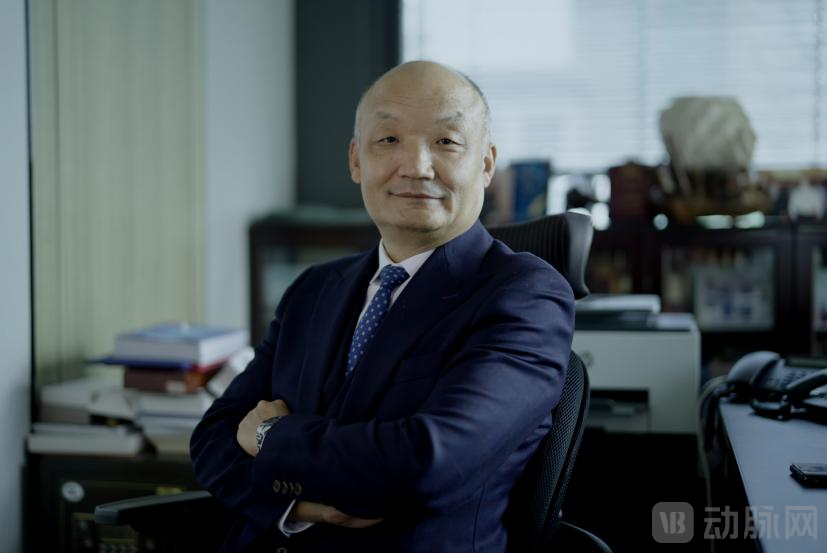
Song Ruilin, Executive President of the China Pharmaceutical Innovation Promotion Association
Song Ruilin, Executive President of the China Pharmaceutical Innovation Promotion AssociationIt states: “At present, the new round of technological revolution and industrial transformation is advancing in depth. Having been tempered by the global pandemic and its containment efforts, the pivotal role of pharmaceutical innovation in controlling the epidemic and revitalizing the economy has become even more prominent. China is at a critical historical juncture in its transition from a major pharmaceutical manufacturing nation to a leading power in pharmaceutical innovation, requiring us to take a long-term view and capitalize on this momentum. Through this report, we aim to foster higher-quality development of pharmaceutical innovation in China, thereby advancing the establishment of a global community of health for all, with China positioned as a leading power in pharmaceutical innovation.”

Kang Wei, Executive President of the RDPAC Committee of the China Association of Enterprises with Foreign Investment
Conway, Executive President of RDPACIt stated: “The series of research reports on ‘Building China’s Pharmaceutical Innovation Ecosystem’ took nearly a year to complete, drawing support and contributions from multiple domestic and international stakeholders. We anticipate that this report will empower the medium- to long-term development of China’s pharmaceutical innovation ecosystem. Currently, China’s pharmaceutical innovation ecosystem is taking shape; however, breakthroughs in original innovation still require sustained accumulation and development over time. Looking ahead, we aim to establish a multi-tiered medical security system with shared responsibilities between the government and the market economy, promote China’s integration into global early-stage clinical development layouts and mutual recognition of international clinical trial data, and ultimately enable patients to access innovative, high-quality medicines sooner and more rapidly. RDPAC and its member companies also look forward to continuing to inject sustained momentum into China’s pharmaceutical innovation by sharing and providing globally leading experience in pharmaceutical innovation, thereby bringing well-being to Chinese patients.”
The China Pharmaceutical Innovation Promotion Association (CPIPA), established in 1988, is a non-profit national social organization rated 4A and registered with the Ministry of Civil Affairs of China. Adhering to its mission of “innovation, industrialization, and internationalization” and guided by clinical needs, CPIPA has long been committed to the close integration of industry, academia, research, application, and capital to foster innovative development in the pharmaceutical industry. It has evolved into a platform promoting the industrialization of pharmaceutical innovations, comprising pharmaceutical R&D enterprises, scientific research institutions, clinical research organizations, innovation service providers, and pharmaceutical investment firms, currently with 157 member units.CPIPA has established specialized committees for drug R&D, clinical trials, pharmaceutical policy, pharmaceutical innovation investment, innovative R&D services, cardiovascular drug clinical research, international regulatory affairs for innovative drugs, anti-tumor drug clinical research, neuropsychiatric drug clinical research, pharmaceutical compliance, and clinical research on drugs for diabetes and metabolic diseases. This has formed a comprehensive organizational framework centered on innovation and aimed at promoting it, covering the entire chain of drug R&D, manufacturing, utilization, and investment/financing. As a member of the International Federation of Pharmaceutical Manufacturers & Associations (IFPMA), CPIPA continues to expand its channels for international exchange.
The R&D-Based Pharmaceutical Association Committee (RDPAC) of the China Association of Enterprises with Foreign Investment is a non-profit organization composed of 45 multinational pharmaceutical companies with research and development capabilities. Established in 1999, it operates under the auspices of the China Association of Enterprises with Foreign Investment. As of June 2020, RDPAC member companies had established 47 manufacturing facilities and 25 R&D centers in mainland China. RDPAC members share a common aspiration with the Chinese government and domestic pharmaceutical enterprises: to transform China into a major power in pharmaceutical innovation. RDPAC looks forward to collaborating with the Chinese government to realize this vision through coordinated development, ensuring that innovative medicines benefit more patients in China and around the world.
Click the link below to access the full report:http://www.phirda.com/upload/file/2110/289213.pdf
Click the link below to access the published series of reports: