

Investing Smartly in the Biggest Opportunity: How to Unlock the Standard Model for Brain Science Industrialization?
Historical experience has continually demonstrated to us that:The development of any niche sector within the life and health industry must be integrated with a region that boasts industrial cluster advantages and deep collaborative capabilities.
However, such “integration” is by no means easy; it requires a “prerequisite,” namely, havingA comprehensive innovation incubation system with long-term application value.
withBoston Life Science Cityas an example. As a typical representative of the integration of industry and urban development in the life and health sector, Boston’s Life Sciences Hub has gathered nearly all of the world’s top pharmaceutical companies. These industry leaders have brought substantial industrial dividends to Boston. According to statistical data, venture capital investment in the life sciences sector in the Boston area reached in 2019$4.7 billion, vibrant venture capital has not only generated tens of billions of U.S. dollars in gross output value but also created more than 110,000 jobs.
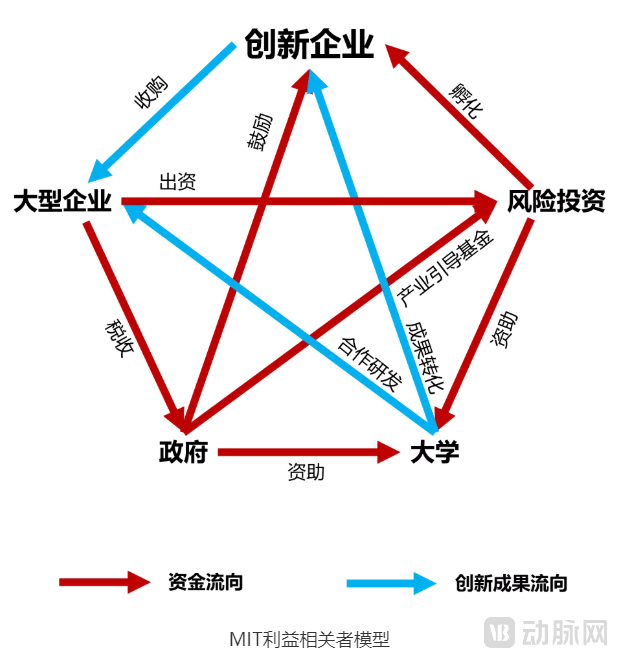
“Detailed Diagram of the ‘Boston Model’,” image source: Zhongfu Health
All this has been made possible thanks to“The Boston Model”, this is a comprehensive and mature innovation ecosystem for life and health. Specifically, the “Boston Model” fully integratesGovernment, Universities, Venture Capital, Large Enterprises, and Innovative CompaniesFive Major Innovation Entities: Building an Innovation Ecosystem Network Through Interest-Based Mechanisms to Form a Collaborative and Symbiotic Industrial Innovation Ecosystem
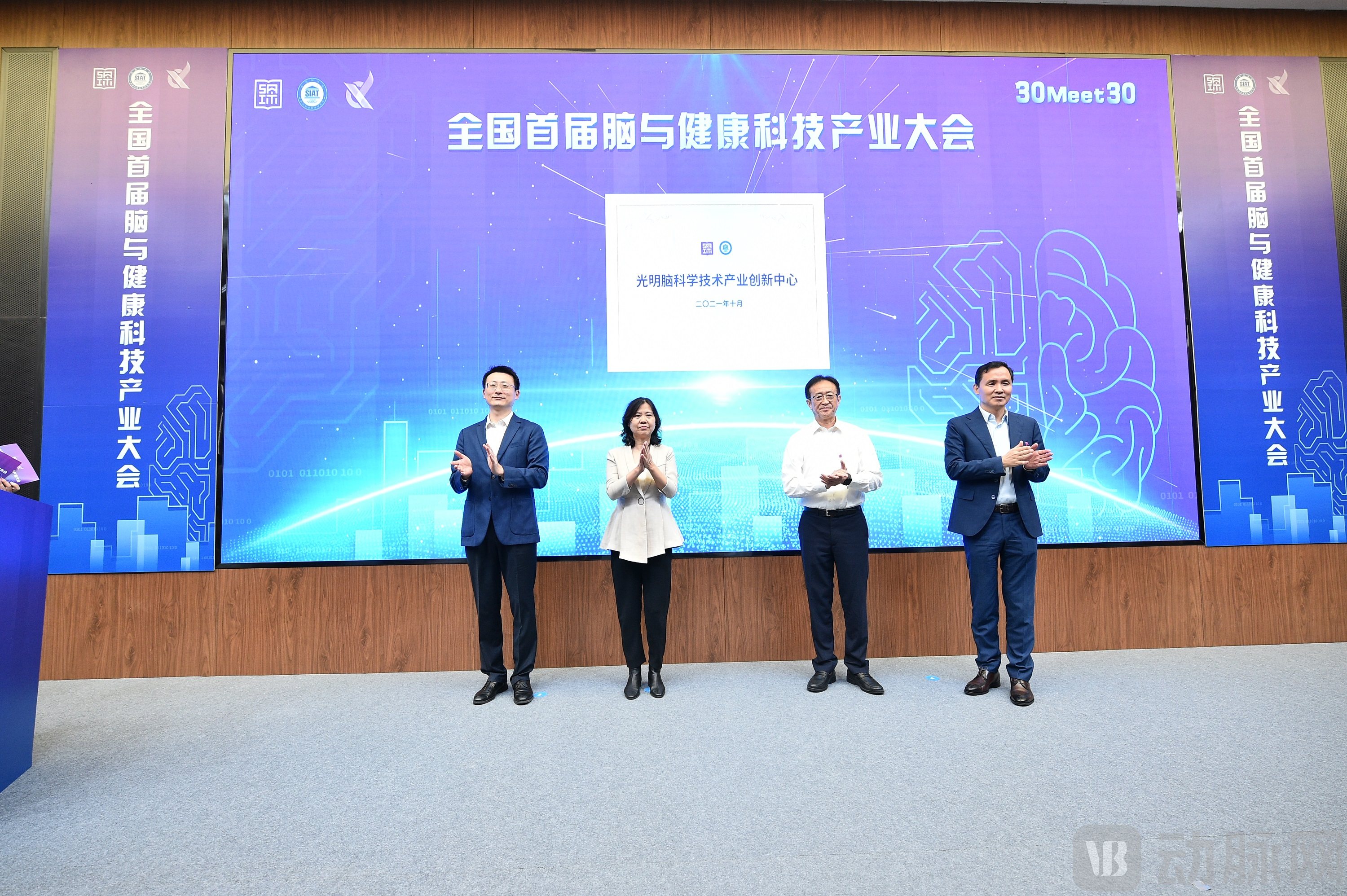
Unveiling Ceremony of the Guangming Brain Science and Technology Industry Innovation Center
There is no doubt that the “Boston Model” has been successful, as evidenced by its validation around the world. Yet history continues to march forward, and now another highly representative “innovation model” is poised to emerge—this is the newly unveiledShenzhen Guangming Brain Science and Technology Industry Innovation Center(hereinafter referred to as the "Brain Innovation Center").
Similar to the “Boston Model,” the “Brain Innovation Center” has also built a platform tailored to the characteristics of the industryAn innovation ecosystem spanning from source innovation to technology incubation, and from technology incubation to commercialization.This is undoubtedly key to both the sustainable development of emerging industries and the cultivation of innovative talent who can integrate technology with industry. This epochal move will once again send shockwaves through the healthcare sector, unlocking the full potential of the trillion-dollar brain health and wellness industry.
The Brain Innovation Center with Three “Keywords”
The “Brain Innovation Center” is jointly established by the Shenzhen Municipal Development and Reform Commission, the Guangming District People’s Government, and the Shenzhen Institute of Advanced Technology, Chinese Academy of Sciences (hereinafter referred to as “Shenzhen Advanced Institute”),The total project investment exceeds RMB 100 million, providing over 10,000 square meters of incubation space., focusing on the key pain points in the industrial translation of brain science and brain-inspired intelligence, we will comprehensively build China's first common technology service platform for the brain science industry.
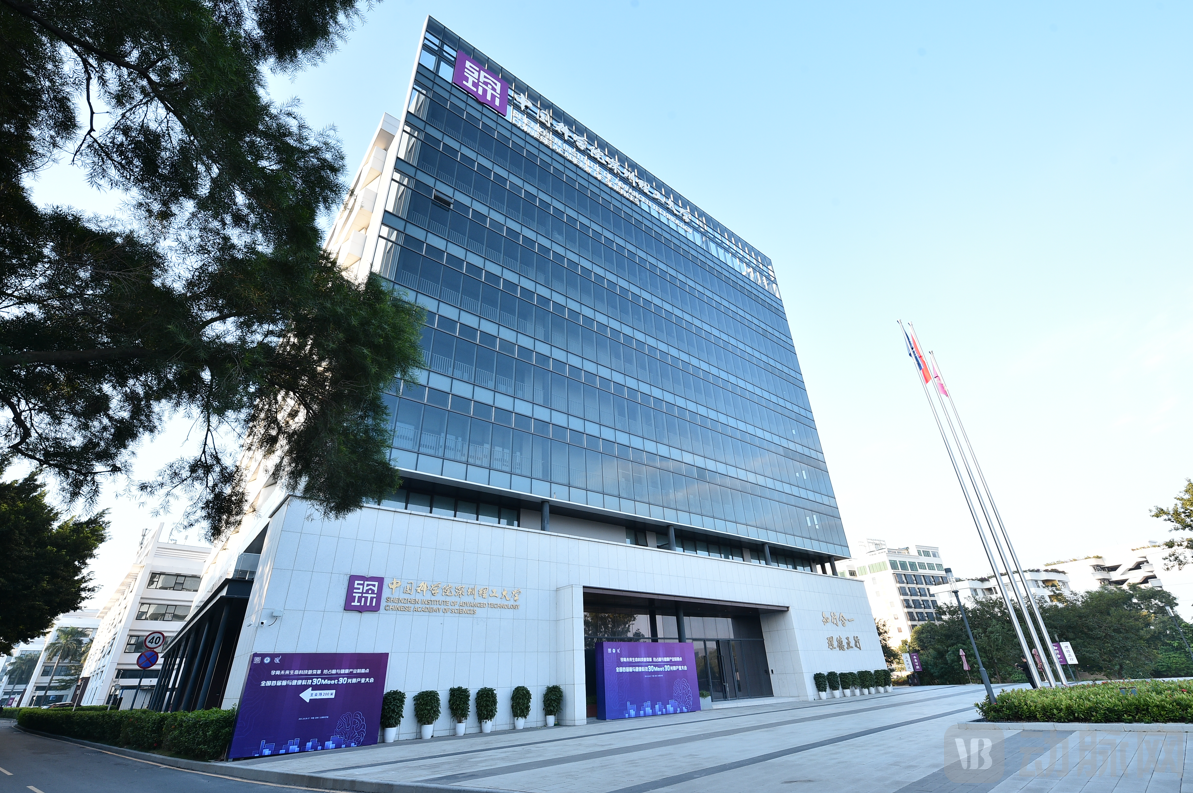
Shenzhen Institute of Advanced Technology, Chinese Academy of Sciences (Preparatory), Guangming District, Shenzhen City
The reason for emphasizing this lies in the three inherent “keywords” of the “Brain Innovation Center.”
First is its “starting point,” namely the new service model of “demand-side posing questions, and the scientific and technological community providing answers.”“The establishment of the ‘Brain Innovation Center’ aims to forge a novel pathway from source innovation to industrial development. This necessitates model innovation, requiring continuous alignment with public livelihood needs, cutting-edge industry demands, and market dynamics, coupled with rapid and precise feedback.”
Specifically, “demand-side problem posing” primarily refers to industrial needs and industry pain points, while “the scientific community providing solutions” refers to the consortium composed of the Institute of Neuroscience, the Shenzhen-Hong Kong Institute of Brain Science (hereinafter referred to as the “Shenzhen-Hong Kong Brain Institute”), and the Major Scientific and Technological Infrastructure for Brain Analysis and Simulation (hereinafter referred to as the “Brain Facility”).“Think Tank”, providing efficient and feasible solutions to drive the rapid development of the industry.
Second is its “foundation,” namely, to build a new industrial development ecosystem characterized by “continuous monetization along the way + agglomeration effects.”Throughout the entire industry chain, the “Brain Innovation Center” essentially serves as a “binding agent and catalyst.” By leveraging a technology innovation service mechanism, it deeply integrates various stakeholders across the value chain. Under the enterprise incubation model of “research—translation—industry—talent—capital,” it accelerates the implementation of innovative projects, thereby fostering industrial agglomeration effects.
During this process,“Guangming Science City Brain and Brain-Inspired Intelligence Industry Accelerator”will play a significant role. According to reports, this industry accelerator will support the rapid mid-to-late stage growth of start-up technology teams at the “Brain Innovation Center” and enterprises that require ongoing technical R&D support from the Guangming Brain Science Team, primarily by providing infrastructure such as office space and shared laboratories.
Data shows that,Over 100 Million People in China Suffer from Various Mental Disorders, a certain proportion of the population remains unaware that they are suffering from various mental and psychological disorders, such as insomnia, depression, and anxiety. The sustained development of the high-tech industry, which is committed to addressing these public livelihood needs, derives its momentum from the convergence of cutting-edge international technologies in this field. To continuously monitor the development trends of top-tier international technical teams in the realm of brain and mental health, and to introduce leading domestic and foreign technical teams in the field of mental health to Guangming, a collaboration between the Brain Cognition and Brain Disease Institute (BCBDI) of the Shenzhen Institute of Advanced Technology and the Yi Tou Program has been established.“Yitou Mental Health Technology Laboratory”By incubating new technologies for early diagnosis and optimized treatment in the field of mental health, both domestically and internationally, and through deep collaboration with capital, we will jointly promote the construction of an ecosystem for the brain health industry.
Third is its “focus,” namely, to create an industrial development model that integrates “innovation, entrepreneurship, and venture capital” for fused development.Director of the Institute of Brain Science, President of the Shenzhen-Hong Kong Institute of Brain ScienceWang LipingHe stated, “The complexity of the brain dictates that industry teams possessing core proprietary technologies in this field must have sustained support from specialized neuroscience technical platforms. This is essential to minimize the risk of early-stage technology teams falling into the ‘Valley of Death’ during their development. Future industrial development will rely more heavily on teams with source innovation capabilities and on platforms that provide shared technologies and equipment. Venture capital firms also require such platforms to validate the scientific rigor and potential application value of their investment targets within specific use cases. The ‘Brain Innovation Center’ is positioned to establish a ‘Science-Hub-Ventures’ system and mechanism. This system maximizes the sharing of government-funded scientific and technological resources, strengthens the service provided by scientist-led technical teams to the industry, and enhances the synergistic integration of ‘innovation, entrepreneurship, and venture capital,’ thereby accelerating the transfer and commercialization of research achievements in the field of brain science.”
“Brain Innovation Center” is not just a simple platform; it represents an entirely new incubation model.First, on the innovation front, with platforms such as the Shenzhen Institute of Advanced Technology (SIAT), the Shenzhen-Hong Kong Institute of Brain Science, the Shenzhen University of Chinese Academy of Sciences (in preparation), and national brain science infrastructure facilities, we can maximize the potential for industrial innovation. This potential primarily stems from the core strategy of upstream innovation driven by demand-side pull;Secondly, on the entrepreneurial front, supported by incubation platforms, accelerators, and industrial parks, to provide a conducive environment for more innovative projects to truly emerge from the laboratory;Finally, on the venture capital side, established China's first specialized fund dedicated to the brain science industry, aiming to continuously attract top-tier capital to alleviate funding pressures on innovative enterprises and provide a technology validation platform for other investors interested in the brain science sector, thereby fostering its robust development.
How Can the Trillion-Dollar Brain Science Industry Unlock Its Market Potential?
Brain science is regarded as the “final frontier” of human scientific inquiry, representing the most elusive pearl in the crown of scientific research. Yet human history is defined by the continuous process of challenging boundaries; thus, scientists have never ceased their exploration of this highly advanced and sophisticated field.
Discussing how to successfully bridge the gap from basic research to clinical application, an Academician of the Royal Society of Canada, Dean of the School of Life and Health Sciences at Shenzhen University of Advanced Technology (in preparation), Chinese Academy of Sciences, and Chief Scientist at the Brain Research InstituteWang YutianFour key elements are summarized: first, establish a research team composed of scientists and physicians; second, identify accurate and reliable targets; third, select optimal drug candidates; and fourth, conduct properly designed clinical trials.
After decades of accumulation, brain science is entering a period of explosive market application. Under this trend,A brand-new, brain science-based trillion-dollar industry is rapidly taking shape.
Standing at the center of this massive opportunity, the establishment of the “Brain Innovation Center” is merely a promising start. The key to determining whether the future industrial chain can develop steadily lies in clarifying the logic of industrial development and exploring, as early as possible, a path for industrial transformation that extends from inception to completion.
Therefore,"The most effective approach is to 'derive answers from deep participants in the industry chain.'", and the just-concluded“The First National Conference on Brain and Health Technology Industry”(hereinafter referred to as the “B30 Conference”) provides such an unprecedented platform.
Renowned Tech Entrepreneur and Prominent InvestorGong Hongjia“Frontier breakthroughs in fields such as brain science, brain health, brain intelligence, brain rehabilitation, and brain disorders are poised to trigger significant industrial transformation; they will also play a crucial role in advancing the future application of new technologies for early diagnosis, optimized treatment, and rehabilitation of brain disorders, as well as novel brain-computer integration intelligence. The ‘B30 Conference’ has gathered numerous domestic investment institutions, neuroscientists, and clinicians. Witnessing this enthusiasm, we can feel that the investment opportunity in this field is rapidly approaching. We look forward to growing alongside this sector.”
It is reported that this conference has gathered many“Technology + Capital + Industry”Industry elites delivered 15 invited presentations and held three roundtable forums over the two-day conference, conducting comprehensive discussions on the current state of industrial development, future trends, and industry policies in the field of brain and health technology.
First, from the perspective of technology.The first issue to be addressed is the starting point, namely the ability to accurately estimate various indicators of clinical research. General Manager, Healthcare Industry Fund Investment Department, Shenzhen Capital GroupZhou YiHe remarked, “Due to entrepreneurs’ underestimation of core clinical needs, market scale, and entry barriers, the current landscape of brain science and the brain industry exhibits two highly contradictory phenomena. First, certain niche segments often experience a ‘rush to enter,’ resulting in low-quality offerings and severe homogenization. Second, scientists and physicians tend to prioritize publishing academic papers over translational applications, ultimately causing many promising discoveries and achievements to go unrecognized.”
Secondly, from the perspective of capital.As a key driver of industrial development, capital institutions have shown unprecedented enthusiasm for brain science in recent years. According to data,Over the past five years, brain science enterprises in China have raised approximately USD 1.13 billion (equivalent to RMB 7.2 billion) in financing., brain science is gradually emerging as one of the most lucrative new sectors within the specialized healthcare industry.
Why Are Investors Choosing to Accelerate Collectively at This Stage? Partner at Frees FundMa RuiHe provided the answer. In his view, the rationale for capital investment is clear. First, it is based on the substantial market demand in the neuroscience industry, with the incidence of brain diseases rising annually due to population aging. Second, innovative technologies provide significant momentum to the industry; frontier technologies driven by 5G and AI are gradually integrating into the field of neuroscience, leading the industry to a higher level of development. Finally, the neuroscience industry has reached a new turning point. After a period of accumulation, neuroscience has evolved from its initial stage of cognitive understanding to the current stage of practical application.
It is evident that there are compelling reasons for capital involvement, but where will their efforts be concentrated? As a long-term investor and observer in the development of the brain and health industry, the founding partner of the well-known investment firm Cowin CapitalHuang LiHe stated, “Given the current social landscape, there is an urgent need to advance brain science into a robust brain industry, thereby reducing the healthcare burden and enhancing human well-being. Along this core pathway, we will focus our investment on three key areas: understanding the brain, protecting the brain, and simulating the brain. We look forward to connecting promptly with more innovative scientists, physicians, and entrepreneurs to accelerate the development of the brain and health industry.”
Finally, from the industry perspective.Based on publicly available information, China’s brain science companies are predominantly early-stage startups, with financing activities concentrated mainly in pre-Series A rounds, and their areas of focus are primarily centered onHealth Monitoring and the Diagnosis and Treatment of Epileptic Brain Diseases。
Along this industrial development path, more innovative projects are rapidly emerging. At the “B30 Conference,” over 30 high-tech companies and innovative technology teams presented their projects. It is reported that these innovative projects were all incubated by leading domestic scientific research teams, boasting strong market prospects and a certain level of industry competitiveness.
The Dawn of a Golden Age: How Local Conditions Shape Local Industries
The establishment of the “Brain Innovation Center” has opened a breakthrough for the brain and health industry, and clarifying the development logic has helped identify the target direction. However, successful implementation requires deep integration with regional contexts. This is particularly true for brain science, which is just entering the market application phase; its future development must inevitably intersect with the industrial ecosystem of a specific region.
From this perspective, we see greater possibilities in Shenzhen, a national vanguard of reform and opening-up. Currently, Shenzhen stands at a new starting point marked by the commencement of the 14th Five-Year Plan and the launch of a new journey to build a modern socialist country in all respects, entering a golden period of development driven by the synergistic effects of the Guangdong-Hong Kong-Macao Greater Bay Area and the Shenzhen Pilot Demonstration Zone.
Standing at this critical juncture, Guangming, as the core innovation hub of Shenzhen, will forge even closer ties with the brain science industry.
First, in terms of policy. To accelerate the rapid development of the regional brain science industry, the Guangming District Government has introduced a range of key policies, offering support levels that rank among the highest in China. This is primarily reflected in core areas such as financial subsidies, enterprise incubation, approval processes, and talent development.
Take financial support as an example.To better support industrial development, the “Brain Innovation Center” was establishedChina's First Brain Science Industry Fund, with a focus on key segments of the brain industry, including brain science, brain technology, brain diseases, brain intelligence, brain health, and brain rehabilitation.
Secondly, in terms of practical implementation.As a pioneer in China’s brain and health industry, Shenzhen has taken a forward-looking approach by being the first to establish professional research institutions such as the Shenzhen Institute of Advanced Technology (SIAT) and the Shenzhen-Hong Kong Institute of Brain Science. In addition, at Guangming Science City, facilities including the Brain Facility, the Brain Innovation Center, the Brain and Brain-inspired Intelligence Industry Accelerator, and the Yitou Mental Health Technology Laboratory are also being rapidly implemented and constructed.
It is worth mentioning that, relying on the Shenzhen Institute of Advanced Technology,Brain Facility, it will focus intensively on three specialized areas: brain analysis, brain editing, and brain simulation, providing an integrated R&D platform for innovative research in brain science. According to relevant officials, the main structure of the brain science facility was topped out in early 2021 and is expected to be gradually put into operation starting in 2023, at which point it will become a significant technological force for the development of brain science in Guangming Science City.
Finally, in terms of building the industrial ecosystem.For Guangming, fostering a favorable industrial ecosystem is crucial, as it will provide a continuous stream of innovation and vitality to support the industry’s iterative upgrading. Within this value chain, the “B30 Conference” serves as a key component.
This year’s Guangming “B30 Conference” is a large-scale, comprehensive conference in the field of brain and health in China, featuring broad coverage, high participation, and deep integration among the technology, industry, and capital sectors. It aims to leverage the Brain Innovation Center, jointly supported by the Shenzhen Municipal Development and Reform Commission and the Guangming District People’s Government, as a focal point for in-depth exploration“Science + Resource Sharing + Capital”A brand-new integration.
Head of the “Brain Innovation Center,” Researcher at the Institute of NeuroscienceHuang Tianwenstated: “With the strong support of the municipal and district governments, and with attention from the technology, capital, and industrial sectors, the ‘Brain Innovation Center’ has officially launched at this ‘B30 Conference.’ It will live up to its mission by effectively implementing and developing the integrated model of ‘science + resource sharing + capital,’ serving as a pioneering demonstration for the establishment, growth, and expansion of the brain and health technology industry in Guangming, Shenzhen.”
Director of the Institute of Brain Science, Dean of the Shenzhen-Hong Kong Institute of Brain Science, and Initiator of the “B30 Conference”Wang Lipingstated, “The ‘B30 Conference’ aims to bring together ‘more than 30 capital firms and more than 30 frontier technology teams in the field of brain science’ to jointly explore the scientific mechanisms, technological pathways, and public welfare needs surrounding the ‘integration’ of brain-inspired intelligence innovation and industrial development, thereby serving the nation’s innovation-driven development strategy. The ‘B30 Conference’ will become a flagship brand for the future brain and health industries, with the objective of exploring a novel cooperation mechanism and forging a new path for industrial development. By gathering industry elites from the fields of ‘technology + innovative resource sharing + capital,’ it strives to build a new model of integrated symbiosis across brain technology, life and health, and intelligent technology, accelerating the rapid development of the Guangming Brain Science Industry.”
Director of Shenzhen Institute of Advanced TechnologyFan Jianpingstated: “The brain science industry is entering a period of explosive market growth. As early as 13 years ago, the Shenzhen Institute of Advanced Technology (SIAT) made forward-looking strategic arrangements, adopting a multi-dimensional layout for brain science and its industrial development by integrating international frontiers with public livelihood needs. The current innovation model is shifting from the traditional single linear model (the Bush model) to a concurrent iterative model, which underpins Shenzhen’s establishment of the Guangming Brain Science and Technology Industry Innovation Center. SIAT is currently undertaking the construction of the Guangming Brain Facility, while the Shenzhen-Hong Kong Institute of Brain Science will support the development of the brain science industry, bolster the construction of the Science City, and facilitate the ‘Dual-Zone Development’ from multiple dimensions, including talent and intellectual resources, technology, and equipment.”
Driven by the convergence of scientific advancement, technological innovation, demand-side pull, and international competition, the gateway to a “trillion-dollar market” centered on the brain and intelligence industry—characterized by brain science, brain technology, brain disorders, brain-inspired intelligence, brain health, and neurological rehabilitation—is gradually opening. How the industry can closely integrate with regional ecosystems to maximize its potential remains in an exploratory phase. Undeniably, this path is filled with boundless imagination and significant challenges. However, Guangming, equipped with multiple innovation drivers, has taken a leading position at the forefront of this industrial wave. It is poised to become a key hub for China’s brain and health industry, spearheading its rapid development in the years to come.