

Breaking Through from Rural Towns: Why Shanyuhai Doctor Targets Grassroots as the Entry Point for Internet Healthcare
Improving the quality and efficiency of primary healthcare is often regarded as a particularly challenging “hard nut to crack.”
In the current era of internet healthcare development, most companies in this sector are increasingly focusing on leveraging expert physician resources from tertiary hospitals to provide patients with high-quality medical and health services.
Is leveraging the internet to help primary healthcare achieve quality improvement and efficiency gains a viable commercial entry point? And how should companies go about it?
Recently, we came across a company targeting the “township doctor community”—Shanyuhai Doctor. We interviewed Pang Jinshan, co-founder and CEO of the company, to explore whether it is a viable business model for internet healthcare to start from the grassroots level.
Why Choose to Enter the Primary Care Market?
For Shanyuhai Doctors, the decision to target the primary care market was driven more by their optimism about this untapped frontier.
On the one hand, there is a demand for quality improvement and efficiency enhancement in primary healthcare, creating certain market opportunities.
According to the "Statistical Bulletin on the Development of China's Health and Health Services in 2019," by the end of 2019, there were 35,013 community health service centers (stations), 36,112 township health centers, 240,993 clinics and infirmaries, and 616,094 village clinics in China's primary healthcare institutions.
Across China’s 533,000 administrative villages, a total of 616,000 village clinics have been established. The staffing of these village clinics totals 1.446 million personnel, including 435,000 licensed (assistant) physicians, 168,000 registered nurses, and 842,000 rural doctors and health workers.
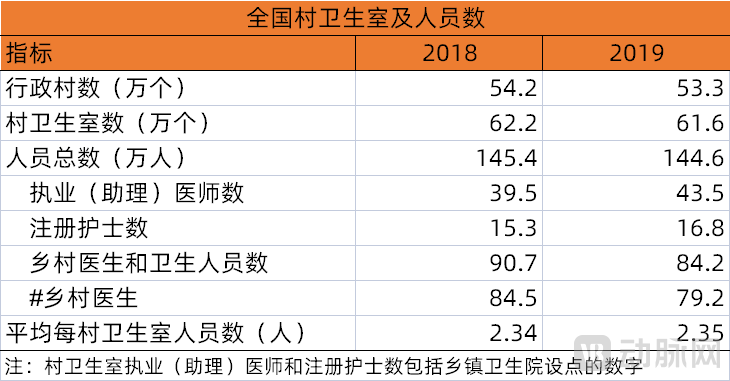
Data from the 2019 Statistical Bulletin on the Development of China’s Health and Health Services; chart by VCBeat
In 2019, village clinics recorded 1.6 billion patient visits, a decrease of 70 million from the previous year, with an average of 2,597 visits per clinic annually.
How to retain patients at the primary care level, rather than having them flow to other large tertiary Grade A hospitals, is also a factor that primary care institutions need to consider. Part of the reason why it is difficult for primary care facilities to retain patients lies in the relatively low level of medical expertise and inadequate supporting hardware and medical equipment. Primary care hospitals themselves have a strong demand for improving their medical service capabilities.
On the other hand, the needs of this population remain inadequately met.
According to DXY’s “2021 China Physician Insights Report,” among physicians providing online consultations, “more than 80% expect platforms to offer training content on advances in disease areas, sharing of new drugs and therapies, and case discussions, to further enhance their medical skills and proficiency. Meanwhile, a small proportion of physicians also express a need for training on the platform’s evaluation system and operational procedures.”
This also means that doctors' current demand to improve their professional competence through the platform has not been met.
It is worth noting that these demands come from physicians who are already partially engaged with online consultation platforms. As numerous internet healthcare companies target large, high-quality hospitals, the physician population in those settings has effectively been “over-exploited,” with many doctors registered on multiple internet healthcare platforms. In contrast, the cohort of township and rural physicians targeted by Shanyuhai Doctor is substantial in size, and most of these medical resources remain underutilized.
Pang Jinshan stated, “First, township doctors have ample time, enjoy local renown, and are closest to patients, with a base of loyal followers. They find it highly convenient to communicate with patients, face no barriers in interaction, and possess an in-depth understanding of their patients’ backgrounds. Second, what primary care physicians currently lack most is tools for doctor-patient management.” It was based on these reasons that Shanyuhai Doctor chose to enter the primary healthcare market.
How Can Shanyuhai Doctors Enhance Quality and Efficiency at the Primary Care Level?
Preliminary logical deductions can only indicate the potential existence of such a market; however, its viability ultimately requires validation through product performance.
According to physicians from Shanyuhai Doctor, “Since its launch on May 1, the Shanyuhai Doctor app has attracted 270,000 users in its physician-led patient management model and onboarded more than 1,800 physicians within just a few months. Backend data statistics show that 70% of these physicians are from urban community health centers, 20% are regional physicians, and 10% are from Grade A tertiary hospitals, indicating that this is a market with strong unmet demand.”
In fact, Shanyuhai Doctors adopted three operational strategies to onboard primary care physicians during this process:
① Physician Referral Program. Physicians invite their peers to join the platform, with incentives provided to referring physicians, thereby rapidly expanding physician onboarding within their professional networks.
② Foster deep collaborations with enterprises that maintain close ties with physicians to encourage them to offer online patient care services. For instance, partner with companies that have long-standing academic collaborations with hospitals to drive physician adoption of the platform.
③ Integrate with the hospital’s HIS system to facilitate physician onboarding. By providing physicians with direct, convenient patient management tools that enhance their management efficiency, we further encourage them to go online and adopt the product.
On the physician side, Shanyuhai Doctor provides physicians with a feature-rich application to help them better manage patients. To better support primary care physicians, Shanyuhai Doctor has prioritized the development of remote consultation invitation and referral functions, addressing the concerns of primary care physicians.
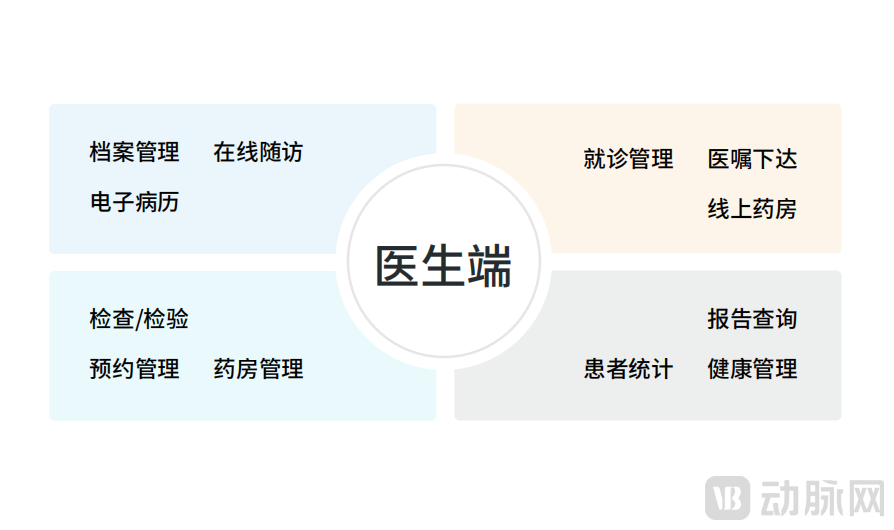
During the process of onboarding physicians, Shanyuhai Doctor also recognized the challenges associated with integrating hospital HIS (Hospital Information Systems), such as common issues related to HIS system connectivity and hospital billing and payment processes. Currently, Pang Jinshan stated that Shanyuhai Doctor “provides its SaaS platform to hospitals free of charge, ensuring that the product truly serves society and the public, enabling patients to access family doctor services from the comfort of their homes. Shanyuhai Doctor generates revenue by charging transaction fees for operating and maintaining these systems for hospitals.”
For example, the collaboration between Shanyuhai Doctor and Xinzhou Hospital of Traditional Chinese Medicine (TCM) has adopted this model. The SaaS platform developed by Shanyuhai Doctor has been successfully integrated with the Hospital Information System (HIS) of Xinzhou TCM Hospital. This partnership was established based on the specific needs of Xinzhou TCM Hospital. The project is being implemented in three phases and is currently progressing in an orderly manner. Ultimately, Shanyuhai Doctor will provide patients at Xinzhou TCM Hospital with a more convenient online healthcare experience through internet-based diagnosis and treatment services. Additionally, Shanyuhai Doctor will generate revenue from the ongoing operation and maintenance of the system.
In reality, the challenges facing the integration of internet-based healthcare into primary care settings are not limited to providers; patient-side issues are equally prevalent. Beyond offering a variety of features that meet daily needs, it is essential to address the limited familiarity of grassroots populations with mobile internet technologies and to explore effective ways to help patients access more convenient medical services.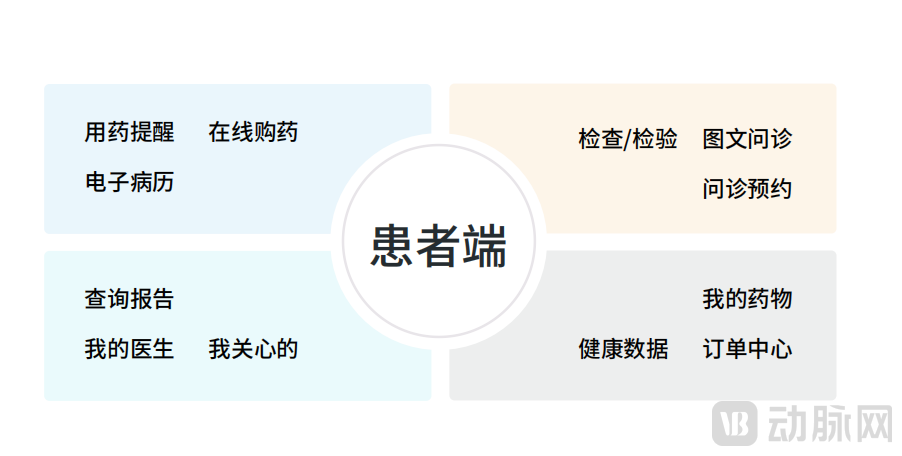
Shanyuhai Doctor has chosen to start at the product level, creating solutions adapted to an aging society. Within its product modules, Shanyuhai Doctor has introduced features such as “Children Caring for Parents,” enabling children living far away to monitor their parents’ medication adherence, receive reminders about remaining medication supplies, and access medical records and diagnoses. By supporting the upload, storage, and sharing of disease progression records and physician orders, as well as facilitating online payments on behalf of parents, the platform enables primary care patients to access online consultations, referrals, specialist second opinions, and virtual accompaniment during medical visits.
Planned Financing to Build an Integrated Ecosystem for Pharmaceuticals, Testing, Healthcare, and Medical Tourism
According to Pang Jinshan, the Shanyuhai Doctor team currently comprises nearly 30 members, two-thirds of whom have technical backgrounds. In addition to having a dedicated Dean of Product, Shanyuhai Doctor also engages several part-time Associate Deans of Product from prestigious institutions such as the PLA General Hospital (301 Hospital), Beijing Anzhen Hospital, Fuwai Hospital, and Beijing Tiantan Hospital.
For Shanyuhai Health’s physicians, the goal is to transform the current passive model of health management. By leveraging SaaS software, they help hospitals shift toward proactive service delivery, aiming to prevent disease through early health interventions. Through the proactive and precise services provided by family doctors, they achieve comprehensive lifecycle management of patients’ diseases.
Currently, Shanyuhai Doctor is also undergoing financing. The company plans to raise RMB 10 million to rapidly deploy its SaaS system into the primary healthcare market, expand its influence, quickly establish a competitive moat, and gradually build an ecosystem encompassing medical care, pharmaceuticals, diagnostics, elderly care, and health tourism.
In Pang Jinshan’s view, the development of internet hospitals is an inevitable trend.
“As society develops, the elderly population is increasing year by year, while the sub-healthy population is becoming increasingly younger; hospitals are under growing pressure. Meanwhile, the rapid development of the Internet has made communication between people simpler and more convenient. Under these circumstances, the development of internet hospitals is an inevitable trend,” pointed out Pang Jinshan.
“As an online SaaS management tool, Shanyuhai Doctor will further strengthen its connection with offline physical institutions, leverage local physician resources to promote family doctor services, deliver precise interventions, preventive care, and medical device data collection, empower local physicians, and effectively facilitate the decentralization of medical resources to better serve patients and society.”