

Lepu Biopharma's PD-1 Inhibitor Putilimab Receives Priority Review for Pan-Cancer MSI-H/dMMR Indication
On November 4, according to the official website of the Center for Drug Evaluation (CDE), the public notice period for the new indication marketing application of Lepu Biopharma’s putrilimab injection (HX008) has ended, and it has been formally included in the priority review. The indication is for the treatment of patients with advanced solid tumors who are highly microsatellite instability-high (MSI-H) or mismatch repair deficient (dMMR) and have failed prior first-line or subsequent systemic therapy. This is the second indication filed for this product, following its initial application for second-line treatment of melanoma.
MSI-H/dMMR is a prevalent mutation in solid tumors. In 2016, Ronald J Haus and colleagues employed whole-exome sequencing to analyze its distribution, revealing that MSI-H was present across 18 cancer types. The overall incidence rate was approximately 14%, with endometrial cancer exhibiting a rate nearing 30%, while colon adenocarcinoma and gastric cancer both showed rates of around 19%. In 2017, the U.S. FDA granted the first approval for the PD-1 inhibitor pembrolizumab (Keytruda) to treat patients with MSI-H/dMMR solid tumors. This milestone broke from the traditional paradigm of treating cancers based solely on their tissue of origin, instead enabling immunotherapy guided by biomarker status, thereby offering new hope for treatment to a broader range of tumor patients, particularly those with advanced-stage disease.
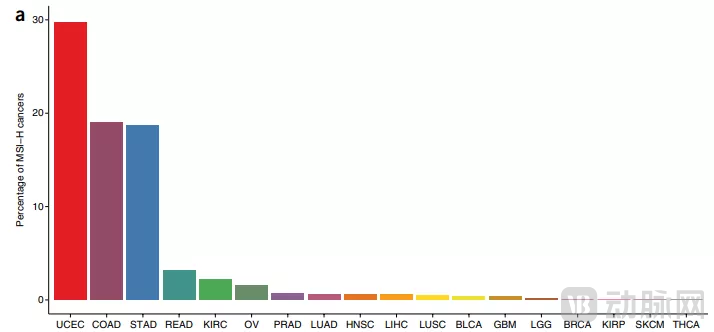
Distribution of MSI-H/dMMR Across 18 Cancer Types
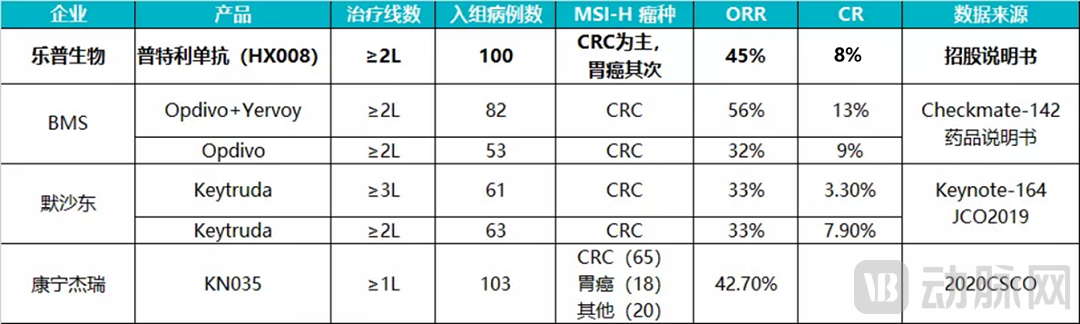
Based on the results of a pivotal Phase II clinical study submitted by Lepu Biopharma for putrelimab in patients with advanced MSI-H/dMMR solid tumors, as of June 3, 2021, the objective response rate (ORR) was 46.0%, and the complete response rate (CR) was 8%. The disease control rate (DCR) was 70.0%, the median progression-free survival (mPFS) had not been reached, and the 12-month progression-free survival rate was 55.1%. The median overall survival (OS) had not been reached, with 6-, 9-, and 12-month OS rates of 86.0%, 79.4%, and 76.6%, respectively. Although head-to-head comparisons are lacking, existing literature evidence, as shown in the table below, indicates that putrelimab monotherapy has demonstrated notable efficacy in the treatment of MSI-H solid tumors.
According to statistics, the annual number of newly diagnosed patients with MSI-H solid tumors among common cancer types in China is approximately 312,000, comparable to the annual incidence of breast cancer. Based on calculations considering the total patient population and the proportion of MSI-H tumor patients receiving pharmacological treatment, the potential number of patients eligible for medication for MSI-H/dMMR solid tumors is projected to reach 187,000 by 2030. Currently, only three anti-PD-1 monoclonal antibodies have been approved domestically and internationally for the treatment of MSI-H/dMMR tumors. Including putrilimab, three domestically produced PD-1/PD-L1 inhibitors have submitted marketing applications but have not yet received formal approval, demonstrating promising market development potential.
Notably, in addition to its PD-1 products, Lepu Biopharma is committed to developing an innovative antibody-drug conjugate (ADC) pipeline and oncolytic virus products with highly differentiated competitive advantages, actively exploring combination therapies to provide patients with superior treatment options. At the recently concluded European Society for Medical Oncology (ESMO) Annual Meeting, Phase I clinical studies of two ADC drugs—MRG003 and MRG002—led respectively by Professor Xu Ruihua from Sun Yat-sen University Cancer Center and Professor Li Jin from Shanghai East Hospital affiliated with Tongji University, were both selected as ESMO ePosters. This highlights Lepu Biopharma’s substantial expertise and innovative capabilities in the field of ADC therapeutics. Furthermore, the acceptance of New Drug Applications (NDAs) for pulitilimab for two consecutive indications lays a solid foundation for Lepu Biopharma’s strategy in PD-1-based combination therapies. With preliminary clinical data on immunotherapy combined with chemotherapy/targeted therapy or immunotherapy combined with ADCs presented at ASCO and CSCO, the mechanistic rationale for combining immunotherapy with ADCs is increasingly being validated. Lepu Biopharma aims to provide new directions for future combination treatments in oncology by combining pulitilimab with its ADC drugs.