

Global Pharma Giants Partner with Baidu Health Amid Digital Marketing Transformation
2021 was a year of accelerated advancement for the pharmaceutical and health industries in China and worldwide. First, technological progress and iteration drove the deep integration of digital technologies with the healthcare and wellness sector. Second, against the backdrop of the global fight against the pandemic, societal attention to public health and medical care increased significantly, further fueling enthusiasm for participating in major healthcare-related events.
Recently, at the 4th China International Import Expo (hereinafter referred to as the “CIIE”) held in Shanghai, the medical exhibition area covered 70,000 square meters, with nearly 350 companies from 33 countries and regions participating. Among them were more than 70 Fortune Global 500 industry leaders. The rate of specially designed booths exceeded 97%, and the number of new products and technologies making their global or China debuts far surpassed those of the previous three editions. This unprecedented scale of participation demonstrates the vast development potential of China’s pharmaceutical and healthcare industry.
VCBeat observed that,At the China International Import Expo, pharmaceutical giants GlaxoSmithKline and AstraZeneca both partnered with Baidu Health to engage in in-depth collaboration in areas such as digital pharmaceutical marketing.Specifically, Baidu Health partnered with GlaxoSmithKline to launch precision disease education initiatives, using herpes zoster prevention as a pilot program. Additionally, it collaborated with AstraZeneca to establish a Chronic Disease Management Center, providing users with more convenient and professional integrated online-to-offline chronic disease management services.
Why are top pharmaceutical companies increasingly choosing to partner with Baidu Health for digital marketing? What is the current state of the industry, and what challenges remain to be addressed? VCBeat will analyze these questions in the following article.
As more international pharmaceutical companies deepen their presence in the Chinese market and domestic pharmaceutical companies rise, how to explore methodologies for digital marketing in the pharmaceutical industry, and how to seize policy opportunities and meet user needs,Leveraging digitalization to drive breakthroughs in pharmaceutical innovative marketing has become a key focus within the industry.
Thus, from the evolutionary trends of the industry, it can be observed thatDigital technologies, represented by the internet, are increasingly becoming an indispensable scenario for digital marketing in the pharmaceutical industry.“The internet’s connectivity enables pharmaceuticals and medical services to transcend time and space, achieving equitable access. This allows for the provision of pharmaceutical care and healthcare services to patients at lower costs and with greater scalability,” said Shi Anjie, Senior Researcher at VCBeat.
For example, when the pandemic first emerged last year, pharmaceutical companies faced restricted internal information exchange due to the inability to work on-site, resulting in the suspension of offline academic activities and hindrance to routine face-to-face visits. In this context, pharmaceutical companies began shifting online and facilitating the digitalization of academic activities. According to the "2021 Report on Innovation in the Digital Marketing Services Industry for Pharmaceuticals" released by VCBeat Institute, nearly 80% of physicians used online platforms to access medical information during the pandemic.
It is not difficult to see that, under the impact of the COVID-19 pandemic,Users’ health consumption and consultation habits have undergone profound changes, creating a rapid development opportunity for digital pharmaceutical marketing.Additionally,The implementation of policies such as volume-based procurement, the “Two-Invoice System,” and national reimbursement drug price negotiations has led to sluggish growth in traditional pharmaceutical marketing, thereby providing a certain boost to digital marketing.
How to Understand This? First, under cost-containment policies, pharmaceutical companies have heightened demands for cost control. Since marketing expenditure constitutes a major component of costs in the pharmaceutical industry, digitalization helps reduce costs and improve efficiency. Second, digital marketing in the pharmaceutical sector can drive product updates and iterations by leveraging continuously accumulated user data.
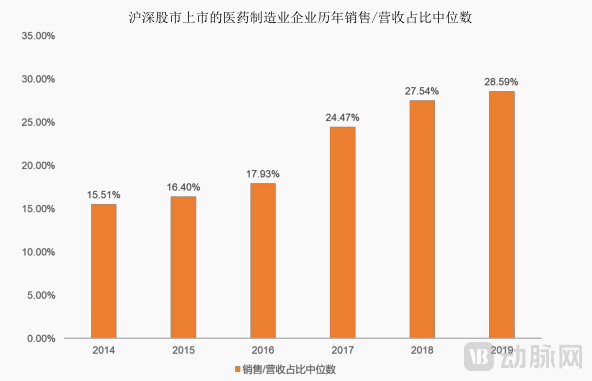
Image source: VCBeat
In this context, adopting a patient-centric approach to digital pharmaceutical marketing has become an essential prerequisite for both international and domestic pharmaceutical companies to stand out in an increasingly competitive market.Currently, the digital marketing sector has expanded into diverse business directions, such as online academic promotion projects, SaaS cloud services, physician platforms, retail terminals (including offline pharmacies and pharmaceutical e-commerce), proactive management by pharmacists/physicians, and family doctor services.
“We have found that the digital pharmaceutical marketing sector has made significant progress, particularly with greater possibilities in business models and further satisfaction of pharmaceutical companies’ needs; however, the industry still faces many pain points that need to be addressed,” said Shi Anjie.Throughout the pharmaceutical sales chain, most current business activities are primarily focused on "user outreach," with relatively little effort devoted to addressing information asymmetry in healthcare.
“With the development of internet healthcare and the rise in national income,Users' demand for popular science education on pharmaceuticals will also continue to rise.“Imagine that, after falling ill, patients—guided by their physicians and informed by medical science communication—know precisely which class of medication suits them best and which brand offers superior efficacy. This, in turn, will present opportunities for pharmaceutical companies.”
It is against this backdrop that pharmaceutical companies are faced with the question of how to expand the scope and methods of digital marketing in the pharmaceutical industry.
At this year’s China International Import Expo, top pharmaceutical companies GlaxoSmithKline and AstraZeneca both partnered with Baidu Health to engage in in-depth collaboration on business development.
Notably, the collaboration primarily focuses on areas such as digital pharmaceutical marketing. In the partnership between Baidu Health and GlaxoSmithKline (GSK), both parties have launched a pilot program centered on the prevention of herpes zoster.Online Disease Education for Middle-Aged and Elderly Populations, while in the collaboration with AstraZeneca, it isJointly Establish a Chronic Disease Management Center。
In practice, users can search for shingles-related content, such as “shingles vaccine,” on the Baidu App to access Baidu Health’s customized section, where they can view educational materials and health services related to shingles prevention. Similarly, searching for keywords related to chronic diseases will direct them straight to the Chronic Disease Center, where they can obtain professional knowledge on chronic disease prevention and access medical and health services.
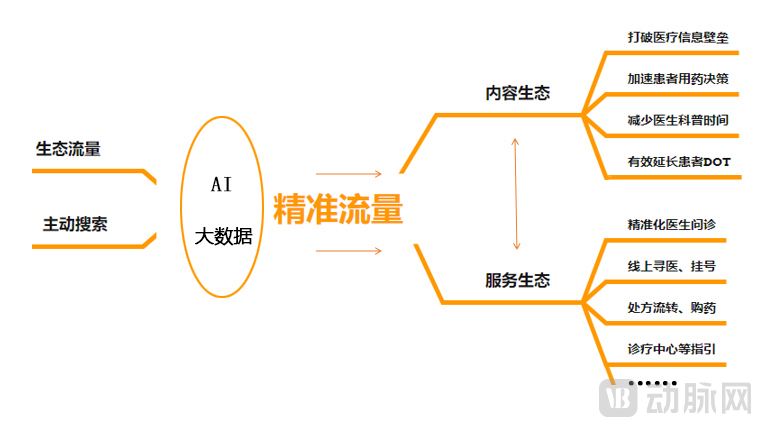
In other words, Baidu Health has introduced a new approach to digital marketing for pharmaceutical companies by leveraging its proprietary technology and its “content + services” model.
Unlike traditional digital marketing that targets physicians or retail endpoints directly, this approach engages end users face-to-face.This inevitably raises a question: Is this approach effective? Or, where lies the value anchor? It is important to recognize that the pharmaceutical industry is a field with high barriers to professional knowledge. In the past, within the drug distribution chain, patients lacked the ability to judge which type or brand of medication to choose.
From the user’s perspective, it becomes evident that patients wish to have a clear understanding of their condition when ill and, under the guidance of physicians, be able to independently assess and decide on the appropriate medical treatment plan. ThisDigital technologies such as the internet are needed to help users break down barriers to medical information, thereby reducing the time physicians spend on patient education and accelerating users’ medication decision-making.
How to solve this? This isThe platform needs to have sufficient understanding and insight into users' health concerns.Users are accustomed to searching for health-related content on Baidu. Baidu Health handles over 200 million daily search queries related to medical and healthcare topics, aggregating a vast array of user health concerns, such as which diseases users are concerned about and what health issues trouble them.
Taking chronic diseases as an example, when users search for chronic disease-related information on Baidu Health, Baidu Health de-identifies the personal information contained in user search behaviors and results. This ensures that individual user identities are not recognizable while conducting research and analysis on healthcare service demands for chronic diseases, thereby providing health medical services and content that better align with patient needs and the public interest.
Of course,Meeting these demands effectively tests the platform’s content and service capabilities.Since its inception in the field of medical science popularization, Baidu Health has collaborated with renowned physicians from top-tier tertiary hospitals. It has now indexed 500 million pieces of authoritative educational content, serving a daily user base of 100 million individuals seeking health and medical information. This authoritative, professional, and rich content ecosystem enables Baidu Health to meet the vast demands of its users while enhancing user stickiness to the platform.
Taking the needs of herpes patients as an example, there are approximately 1.56 million new cases of herpes zoster annually among individuals aged 50 and above in China. About one-third of these cases result from viral reactivation. Herpes zoster is often accompanied by neuralgia, making it a significant issue affecting the quality of life for middle-aged and elderly individuals.
At present, vaccination is the most effective approach for treating herpes zoster. However, awareness and acceptance of adult vaccines remain low among middle-aged and older adults, compounded by a lack of widespread preventive education. This has made the prevention and treatment of herpes zoster in this demographic particularly challenging. Leveraging its content ecosystem and tailored to the usage habits of middle-aged and older users, Baidu Health provides authoritative and comprehensive disease prevention information, thereby enhancing users’ correct understanding of the condition and offering options for treatment plans.
Additionally, robust technical capabilities serve as the foundational prerequisite for the platform to achieve efficient and precise reach.Leveraging Baidu’s deep expertise in the technology sector, Baidu Health is able to precisely direct user traffic through its “Precision Doctor-Patient Matching Engine” and “Refined Operations,” while building diversified service scenarios, including online consultations, appointment scheduling, online pharmacy services, health management, and health insurance.
In summary,Leveraging its robust underlying technological capabilities, rich and authoritative content ecosystem, and diversified service offerings, Baidu Health helps pharmaceutical companies enhance brand user stickiness and expand their reach across key stakeholders, including doctors, patients, and pharmacies.
It is particularly worth mentioning that,Under the “content + services” model, the matrix of medical science popularization and user accumulation significantly drive the stimulation of user demand for specific medications or services.
Take vaccination as an example. As a primary prevention measure for cervical cancer, HPV vaccination has a very low coverage rate in China. According to a report by Xinhua News Agency, the vaccination rate among individuals aged 9–14 years is less than 1%, far below the levels observed in developed countries. Meanwhile, a study conducted in China, which included 120,772 women aged 15–60 years from 37 cities, found that the prevalence of high-risk HPV infection among adolescents aged 15–19 years was as high as 31%.
Behind this lies the insufficient rational understanding of cervical cancer and HPV vaccines among many people. Although traditional e-commerce platforms have also launched online vaccine appointment services, these typically target only the existing market—that is, users turn to these platforms to make appointments only after their demand has already arisen. AndBaidu Health drives traffic through online entry points such as science-based content searches, shifting from a passive to an active approach. This encourages individuals who were previously unfamiliar with vaccines to proactively engage with vaccine-related information and schedule vaccinations. This undoubtedly represents a significant incremental market.
Furthermore, Baidu’s health ecosystem holds substantial potential. By leveraging Baidu Health Medical Encyclopedia, Baidu Health Baijiahao, and Baidu Health Live Streaming to establish a robust platform for popularizing health knowledge, and by engaging hundreds of thousands of physicians, Baidu can amplify the reach of medical science communication and provide more comprehensive services to users. This will foster a healthy medical ecosystem that not only assists pharmaceutical companies in their marketing efforts but also helps patients eliminate information asymmetry, thereby delivering an improved experience in seeking medical care and using medications.
 Baidu Health’s Digital Marketing Logic | Graphic by VCBeat
As is well known,The healthcare industry is subject to stringent regulatory oversight, and market development is closely intertwined with these policies.Therefore, policies related to the distribution and marketing of prescription drugs will have a significant impact on the industry.
From the documents issued at various stages,The state has always imposed strict restrictions on the marketing and promotion of prescription drugs.For instance, the “Administrative Measures for the Classification of Prescription and Over-the-Counter Drugs (Trial),” promulgated as early as 1999, stipulated that advertisements for prescription drugs were permitted only in professional pharmaceutical journals and newspapers, whereas over-the-counter drugs could be advertised in mass media outlets upon approval.
Therefore, digital marketing services are currently primarily applied to meet the marketing needs of pharmaceutical companies for prescription drugs.As the healthcare industry continues to develop, we believe four trends will emerge.
First, digital marketing has permeated the marketing operations of niche sectors such as medical devices.Against the backdrop of centralized volume-based procurement, medical devices, like prescription drugs, are facing cost pressures. Given their similarities in marketing approaches to pharmaceuticals, digital marketing is poised to expand further into the medical device sector.
Second, as pharmaceutical companies’ demand for cost containment further intensifies, the proportion of digital marketing in their overall marketing expenditures will continue to rise.From a medium- to long-term perspective, the market size of China’s pharmaceutical industry will continue to expand steadily. This growth will drive an increase in digital marketing expenditures and attract a growing number of players into the field, thereby offering pharmaceutical companies more diversified options.
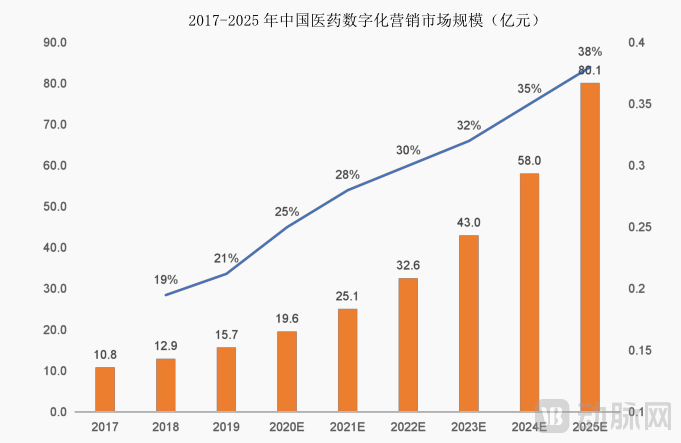 Image source: VCBeat
Third, the targets of digital marketing will gradually become more diversified.From the perspective of current industry evolution, in addition to marketing targeted at physicians, the sector will gradually develop toward comprehensive solutions that encompass physicians, retail endpoints, and even patients. For instance, top pharmaceutical companies such as GlaxoSmithKline and AstraZeneca have partnered with Baidu Health to capture user mindshare through health science popularization.
Fourth, the marketing approach is gradually shifting from a single-channel model to an omnichannel strategy.Currently, pharmaceutical digital marketing remains focused on a limited set of factors. In the future, academic promotion will extend beyond physicians reached through traditional offline channels, patient management will target more than just online patients, and payment solutions will encompass more than traditional medical insurance. Pharmaceutical digital marketing is inevitably moving toward omnichannel, holistic solutions.
It is foreseeable that a brand-new digital marketing ecosystem for the pharmaceutical industry is on the horizon.
Innovation is the driving force behind an industry's sustained and rapid development.
Driven by breakthroughs in digital technologies such as the internet, big data, and artificial intelligence, the healthcare industry is accelerating innovation, leading to continuous improvements in the accessibility, affordability, and cost-effectiveness of pharmaceutical products. In this context, the sector of digital pharmaceutical marketing is experiencing favorable developments, prompting pharmaceutical companies to adjust their operational logic accordingly.
However, it is important to note that digital marketing in the pharmaceutical industry is not an overnight achievement but should be regarded as a long-term strategy.From the perspective of current industry evolution, digital marketing in the pharmaceutical sector has entered a phase of deepening complexity. Therefore, the industry must exercise greater patience with digital marketing, adopt more diverse and rational metrics to evaluate its effectiveness, and introduce solutions that are lower in cost, higher in efficiency, and more effective at capturing consumer mindshare.
Only in this way can digital pharmaceutical marketing truly emerge from the “deep-water zone” and thrive. In this process, leading innovative enterprises represented by Baidu are offering their own solutions, bringing greater possibilities to the development of the entire industry.