

The Lancet Publishes FAVOR III China Trial: Chinese-Developed QFR-Guided PCI Reduces Postoperative Risk by 35%
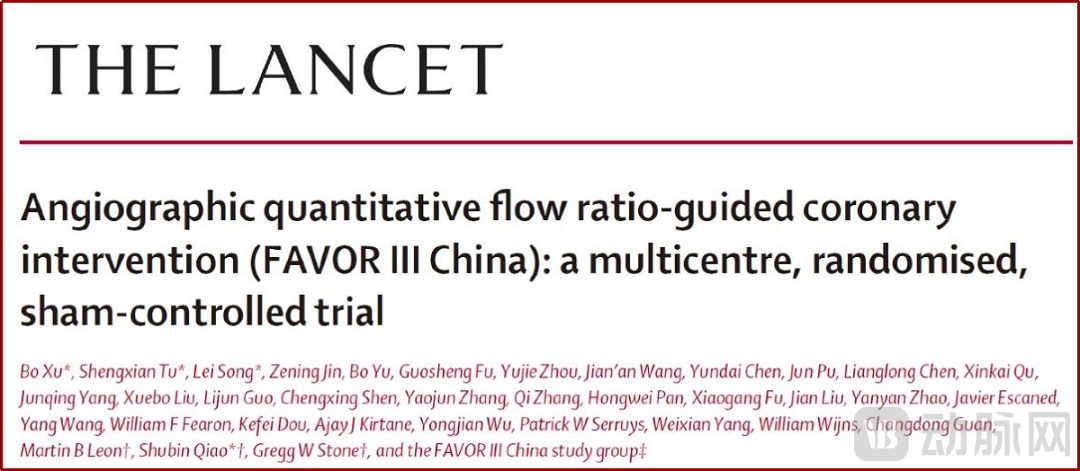
On November 4, 2021, The Lancet, one of the world’s premier medical journals (impact factor: 79.3), published online the results of the FAVOR III China study, co-led by Professor Xu Bo and Professor Qiao Shubin from Fuwai Hospital, Chinese Academy of Medical Sciences. This marks the first time that The Lancet has published findings from a large-scale, authoritative randomized controlled trial (RCT) led by Chinese experts and conducted in China, based on indigenous Chinese technology. It signifies global recognition of the Quantitative Flow Ratio (QFR®) technology developed by Pulse Medical Imaging Technology (Shanghai) Co., Ltd. (hereinafter referred to as “Pulse”), positioning it as a potential “new standard” for the diagnosis of coronary artery disease.

Professor Xu Bo Presented FAVOR III China at the TCT Conference LBCT Session
The FAVOR III China study was initiated by Fuwai Hospital, Chinese Academy of Medical Sciences. Professor Bo Xu, Professor Shubin Qiao, and Professor Lei Song from Fuwai Hospital, Chinese Academy of Medical Sciences, along with Professor Shengxian Tu from Shanghai Jiao Tong University, the inventor of QFR technology, served as co-first authors. Professor Martin Leon from Columbia University Medical Center in the United States, Professor Shubin Qiao from Fuwai Hospital, Chinese Academy of Medical Sciences, and Professor Gregg Stone from the Icahn School of Medicine at Mount Sinai in the United States served as co-senior authors. Professor Bo Xu was the corresponding author.
This prospective, multicenter, blinded, randomized clinical trial, conducted jointly by 26 leading tertiary hospitals in China, enrolled a total of 3,847 patients. Compared with conventional angiography-guided intervention, QFR-guided intervention reduced the 1-year incidence of major adverse cardiac events by 35%. Furthermore, QFR guidance was associated with fewer stents implanted, less contrast agent used, lower radiation exposure, and shorter procedural times.[1]

Professor Gregg W. Stone Comments on the FAVOR III China Study
The release of these research findings has also garnered high acclaim from numerous international experts.Professor Gregg W. Stone, Icahn School of Medicine at Mount Sinai, USACommenting, “FAVOR III China is the largest randomized controlled trial (RCT) in the history of coronary physiology. QFR is an exciting technology that is wire-free, adenosine-free, and can be used in real time in the catheterization laboratory, holding promise for widespread global adoption in the future.”Professor Robert Byrne, Mater Private Hospital, Dublin, IrelandIn a concurrent editorial published in The Lancet, high praise was also bestowed: “FAVOR III China is a landmark clinical study in the field of coronary artery disease treatment. The traditional era of determining revascularization strategies based solely on angiography will eventually pass. Computational coronary physiology technologies, represented by QFR, have provided cardiologists with new and powerful tools.”Professor Stuart Spencer, Senior Executive Editor of The LancetHighly Acclaimed: “FAVOR III China is a highly significant clinical study. The new angiography-based physiological assessment technology provides patients and cardiologists with a less invasive and more comfortable method for physiological evaluation.”
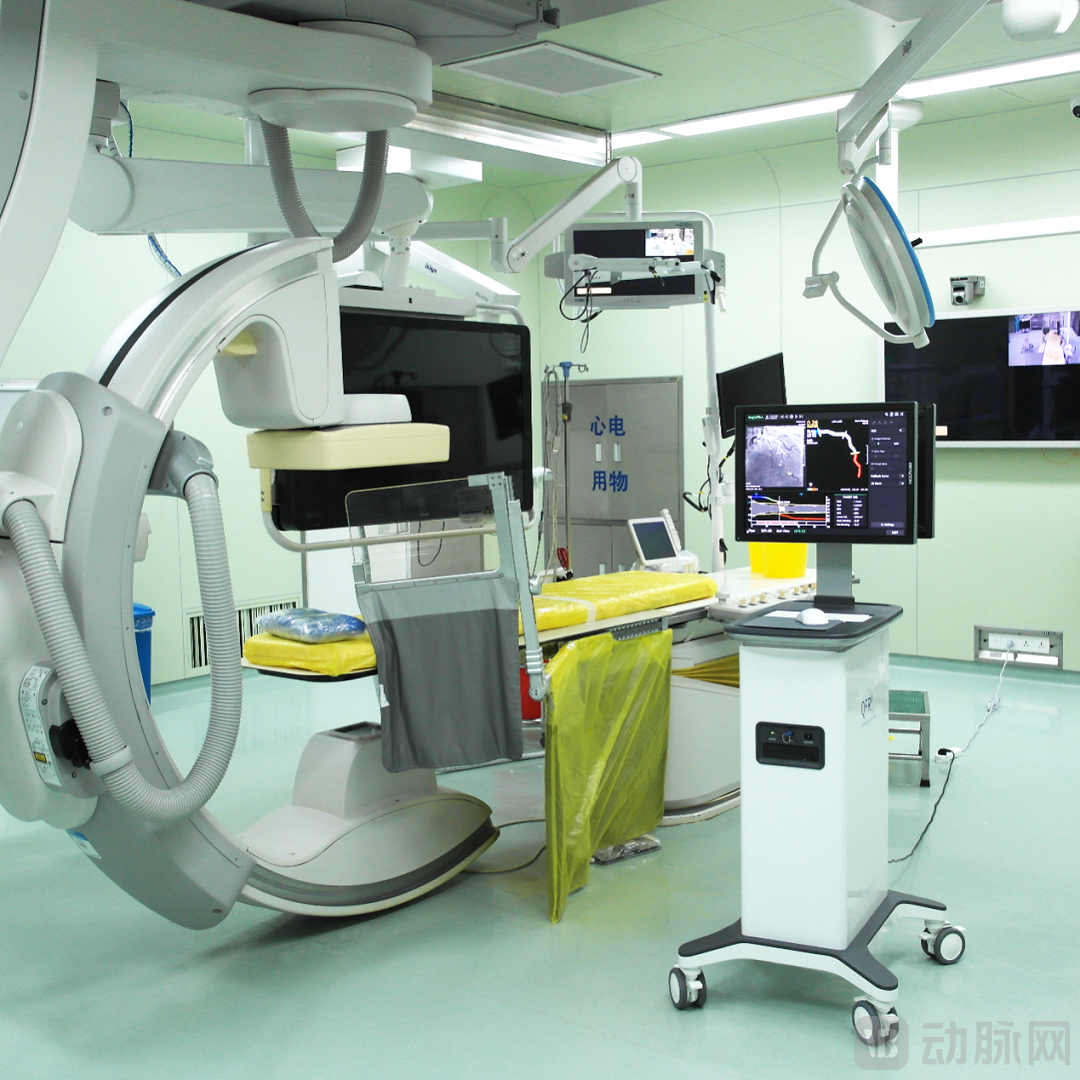
QFR Detector in the Catheterization Laboratory of Fuwai Hospital, Chinese Academy of Medical Sciences
According to statistics, cardiovascular disease ranks as the leading cause of death among both urban and rural residents in China.[2]. In the diagnosis of coronary heart disease, coronary angiography is the conventional method. However, substantial clinical evidence demonstrates that angiography-based morphological assessment fails to accurately identify the severity of ischemia in patients. Fractional flow reserve (FFR) assessment based on pressure wires is the gold standard for diagnosing flow-limiting lesions. Nevertheless, due to limitations such as operational complexity, invasiveness, and high cost, the clinical utilization rate of FFR remains significantly insufficient.
Quantitative Flow Ratio (QFR) is a computational coronary physiological assessment technology independently developed by Pulse Medical, with independent intellectual property rights. It can accurately assess the severity of myocardial ischemia and guide interventional treatment strategies without the use of pressure wires or vasodilator drugs. This approach not only spares patients the discomfort of invasive examinations and improves long-term prognosis, but also reduces the medical burden on patients and saves national fiscal expenditures.
QFR assessment is characterized by its high efficiency, non-invasiveness, and ease of operation. These features make it particularly well-suited to China’s national context, helping to promote high-level homogenization and standardization of medical care across different regions, thereby delivering tangible benefits to both physicians and patients. Professor Xu Bo from Fuwai Hospital, Chinese Academy of Medical Sciences, summarized: “The FAVOR III China study demonstrated that QFR-guided PCI can reduce unnecessary interventions by nearly 10%. Given the approximately one million PCI procedures performed annually in China, routine adoption of the coronary physiology technique QFR is expected to save the country around RMB 6 billion in healthcare resources each year, highlighting its significant health economic value.”
Chinese Technology, Chinese Experts, Global Acclaim. The Lancet publishes the FAVOR III China study, marking the rise of China’s original cardiovascular diagnostic and therapeutic technologies and large-scale clinical trials to a leading position worldwide. Chinese technology is continuously addressing global challenges. QFR is poised to become the new global standard for interventional diagnosis of coronary artery disease!
References:
[1] Xu B, Tu S, Song L, et al. Angiographic quantitative flow ratio-guided coronary intervention (FAVOR III China): a multicentre, randomised, sham-controlled trial. The Lancet. Epub ahead of print. DOI: doi.org/10.1016/S0140-6736(21)02248-0
[2] Summary of the Report on Cardiovascular Health and Diseases in China 2020[J]. Chinese Circulation Journal, 2021, Vol. 36, No. 6, pp. 521-545