

Global MedTech and Pharma Giants Double Down on China Amid Digitalization, Intelligence, and Localization Trends at CIIE
The healthcare sector has always been one of the core highlights of the China International Import Expo (CIIE). After all, there are few opportunities in China to bring together so many pharmaceutical and medical device giants under one roof.
The same held true for the fourth China International Import Expo (CIIE). In Shanghai this November, global medical device leaders such as GE Healthcare, Philips Healthcare, Siemens Healthineers, Fujifilm, Stryker, and Elekta set up exhibitions, while pharmaceutical giants including Eli Lilly, Roche, AstraZeneca, and Pfizer established a presence to seek partnerships and grow alongside China’s healthcare system.
VCBeat conducted one-on-one interviews with participating healthcare companies at the conference, aiming to gain insights into the most cutting-edge trends in the pharmaceutical and medical device sectors.
The inaugural China International Import Expo (CIIE) was held in 2018, coinciding with the surge in digital transformation within the healthcare sector. That year, Elekta launched the world’s first high-field magnetic resonance radiation therapy system, the Elekta Unity; Philips introduced the IQon Spectral CT, the world’s first CT scanner based on spectral detector imaging technology.
As of today, the medical device exhibition area remains as bustling as ever, but a more notable change lies inHardware has slightly decreased, while solutions have significantly increased.
This trend does not indicate that medical device companies have adopted a passive stance toward hardware. On-site observations show that industry leaders such as GPS (GE Healthcare, Philips, Siemens Healthineers), Elekta, Fujifilm, and Stryker are leveraging iterative advancements in hardware technology to gain deeper insights into physiological data. Innovations in foundational technologies—such as surgical robots, magnetic resonance imaging (MRI), and PET/CT scanners—remain the mainstream focus of the exhibition area at the China International Import Expo (CIIE). In this regard, corporate exhibits are increasingly centered on cutting-edge technologies.
Taking magnetic resonance imaging (MRI) as an example, such equipment is typically adept at imaging dense soft tissues. Due to the high air content in the lungs, physicians have historically seldom used MRI for pulmonary imaging. At the China International Import Expo (CIIE), this conventional wisdom is being overturned by technological leaps. For instance, Siemens Healthineers’ 0.55T superconducting MRI system can effectively address the challenges of pulmonary imaging with MRI.
Accompanying this is an increase in IT-related technologies and the application of cutting-edge technologies.On the one hand, hospitals have traditionally relied on specialized IT system vendors for services such as PACS and LIS. However, as hospital-side applications continue to expand, large enterprises with existing relevant business operations—such as Fujifilm, Philips, and GE HealthCare—are further increasing their investments in informatization-related businesses to support clinical processes through digital solutions. After conducting numerous on-site interviews, VCBeat has found that nearly all companies regard this sector as a key future development direction, aiming to integrate previously fragmented applications into one-stop solutions.
On the other hand, emerging technologies that were once in their infancy have now taken deep root in clinical practice, completing the transition from being “highlights” at the inaugural China International Import Expo (CIIE) to becoming “standard features” in most medical devices. It is evident that artificial intelligence has been integrated into equipment such as CT, MRI, PET/CT, ultrasound, endoscopes, and linear accelerators, maximizing diagnostic and therapeutic efficiency while lowering barriers and costs.
Continued growth in investment in China has been a consistent trend across multiple sessions of the China International Import Expo (CIIE), and this year, this trend can be summarized as “localization.”During the interviews, both GE HealthCare and Siemens stated that they would accelerate the global simultaneous launch of high-end medical devices and expedite the regulatory review and approval processes for related medical equipment in China. He Guowei, President of Philips Greater China, remarked, “As one of the earliest foreign-invested enterprises to enter the Chinese market, Philips has breathed the same air and shared the same destiny with Chinese society for over three decades. Aligning with China’s social development, we have remained committed to improving people’s health and well-being by leveraging technological innovation and addressing the needs of local customers and consumers.”
In the pharmaceutical sector,New Drug Showcase and Partnership Signingis the main theme of this CIIE.
In the second year of the pandemic, COVID-19-related elements were significantly reduced. Only AstraZeneca prominently featured its recombinant adenovirus-vector COVID-19 vaccine, while other companies focused on showcasing their new drugs addressing chronic diseases, oncology, and veterinary medicine. Examples include Boehringer Ingelheim’s novel immunotherapy drug Spesolimab, Sanofi’s multiple myeloma treatment Sarclisa (isatuximab), and its coronary heart disease medication Dupixent (dupilumab).
Pharmaceutical companies have also significantly increased their investments in China, to the extent that we have repeatedly seen news reports at the China International Import Expo (CIIE) exhibition areas highlighting collaborations between pharmaceutical companies and enterprises or institutions such as JD Health, ZhongAn Insurance, and the Boao Lecheng International Medical Tourism Pilot Zone.
The Boao Lecheng International Medical Tourism Pilot Zone has played an increasingly prominent role at the China International Import Expo (CIIE). This year, the Lecheng Pilot Zone signed agreements or held negotiations with 14 internationally renowned pharmaceutical and medical device companies, including Danaher, Novartis, AstraZeneca, GE Healthcare, Novo Nordisk, Bayer Pharmaceuticals, and Danone Asia Pacific.
Specifically, the Hainan Boao Lecheng International Medical Tourism Pilot Zone Administration and Danaher Corporation jointly launched the “Hainan Lecheng–Mammotome Breast Tissue Biopsy Marker Real-World Data Study Project.” The Administration also signed a memorandum of understanding on “Innovative Strategic Cooperation in the Field of Antibody-Drug Conjugates in Hainan” with AstraZeneca and Daiichi Sankyo, and entered into strategic cooperation memoranda with Bayer, Novartis, and Novo Nordisk to comprehensively deepen collaboration in the areas of diabetes, real-world studies, and chronic disease management, respectively. In addition, Boao Yiling signed a cooperation agreement with GE Healthcare for the “Edison Digital Ecosystem Hospital” project.
GE HealthCare: Advancing Alzheimer’s Disease Detection by 15 Years
This year marks GE HealthCare’s fourth appearance at the China International Import Expo (CIIE). Among the products showcased, the most eye-catching are undoubtedly the One MI Precision Nuclear Medicine Diagnosis and Treatment Ecosystem Solution, making its Chinese debut, and the fifth-generation ultrasound system, representing the cutting edge of ultrasound technology.
One MI Precision Nuclear Medicine Diagnosis and Treatment Ecosystem Solution focuses on addressing the significant challenges in the prevention and control of major diseases—such as cardiovascular disorders, cancer, Parkinson’s disease, and Alzheimer’s disease—exacerbated by an aging population. Essentially, it integrates hardware and software, including PET/CT systems and radiopharmaceutical synthesis modules, into a comprehensive solution that enables physicians to make more timely clinical diagnoses, thereby facilitating earlier intervention in diagnostic and therapeutic decision-making.
To overcome the challenge of labeling amyloid-beta (Aβ) in Alzheimer’s disease, GE Healthcare has developed a new tracer. When used in conjunction with the latest generation FASTlab2 standardized research platform and PET/CT imaging, this innovation enables the detection of Alzheimer’s disease up to 15 years before the onset of initial symptoms.
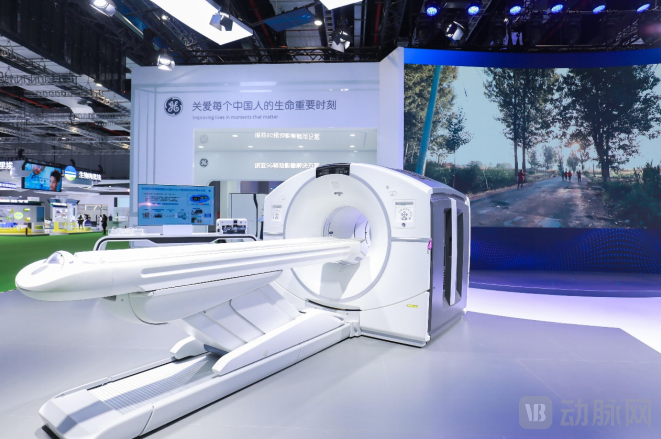
ONE MI Precision Diagnosis and Treatment Ecosystem Solution for Nuclear Medicine (Including DMI Equipment)
Staff at the GE Healthcare booth told VCBeat, “This means that people can detect amyloid-beta (Aβ) deposits associated with Alzheimer’s disease via PET/CT scans during middle age. By initiating interventions against Alzheimer’s at this stage, they stand a greater chance of achieving favorable outcomes.”
In the field of ultrasound, GE Healthcare unveiled a new version of the Voluson E10 Gold Standard, an ultra-premium obstetrics and gynecology ultrasound system equipped with novel transducers and advanced features. Designed to meet the health screening and diagnostic needs of women throughout their entire lifecycle, it covers a comprehensive range of specialized applications across reproduction, obstetrics, perinatal care, neonatology, and gynecology.
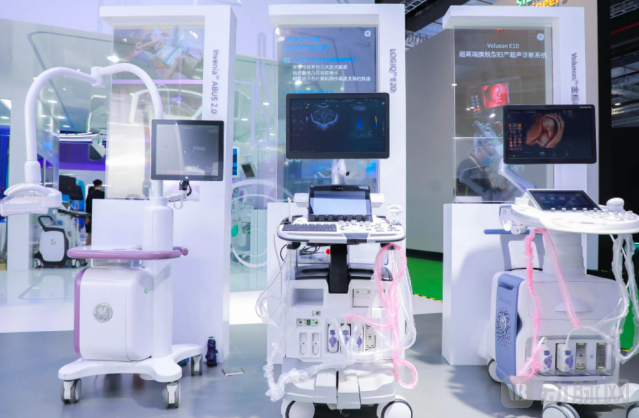
GE Healthcare’s Fifth-Generation Ultrasound Equipment
The new Gold Standard E Series, optimized for processing power and computational speed on the new Xuanguang hardware platform, combines the third-generation curved electronic matrix eM6C-G3 probe, the all-new high-frequency single-crystal phased array RM7C probe, and a series of refined blood flow micro-perfusion imaging technologies. This advancement elevates the quality of professional obstetric and gynecological ultrasound imaging to new heights in challenging clinical applications, including embryonic and early pregnancy assessments, fetal heart evaluation, and central nervous system examinations.
In the fields of quantitative and functional research, the new Gold Standard E10 BT21 provides a comprehensive fetal cardiac assessment system. It fully integrates information ranging from 2D, 3D, and 4D imaging data to quantitative techniques based on the second-generation speckle tracking technology, FetalHQ 2.0; from conventional blood flow patterns to detailed three-dimensional vascular detection; and from routine measurement modes to standard templates and analytical models based on professional guidelines.
Taking prenatal examinations as an example, pregnant women previously required ultrasound assessments at 25–30 weeks of gestation to evaluate fetal conditions, whereas the Voluson E10 BT21 can advance this window to 15–20 weeks. In China, where childbearing age is trending later and there is a strong emphasis on eugenics and optimal child-rearing, this ultrasound technology enables earlier detection of fetal health issues, facilitating timely therapeutic interventions.
Siemens Healthineers: “New Dragon” Debuts, Top-Tier PET/CT Unveiled
Siemens Healthineers has also not missed a single edition of the China International Import Expo (CIIE). Its exhibition area showcases cutting-edge medical equipment, including the ultra-high-end PET/CT system Biograph Vision Quadra, the next-generation robotic angiography system ARTIS pheno 2.0, the superconducting MRI scanner MAGNETOM Free.Max, and the dual-mode 7T MRI system MAGNETOM Terra for both clinical and research applications.
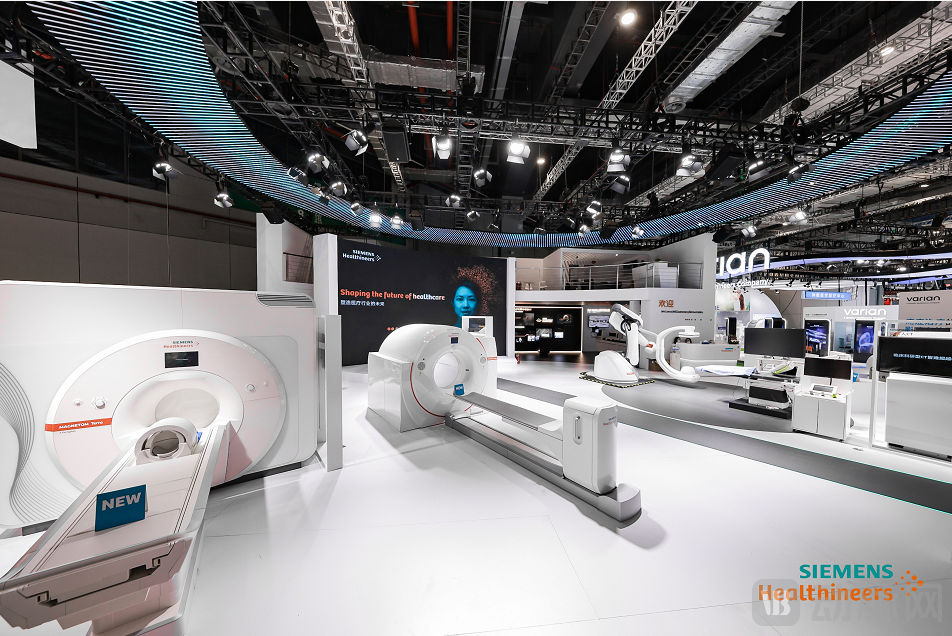
Siemens Exhibition Area
The new-generation robotic angiography system for general clinical applications, ARTIS pheno 2.0, made its debut in the Chinese market at this year’s World Expo. Its newly optimized OPTIQ imaging chain delivers consistently superior image quality at the lowest radiation dose among comparable procedures. The system features the industry-exclusive Syngo DynaCT Multiphase 10-phase imaging capability, which completes 10-phase rotational acquisition within one minute, resulting in more comprehensive imaging processes and clearer details.
New Feilong’s nine-axis bionic robotic arm is the only angiography system in the industry capable of positioning patients in semi-sitting or semi-recumbent positions, providing maximum support for clinical needs. Its fully automated interventional procedure management, Case Flows, liberates physicians from cumbersome equipment operations, greatly simplifying the entire surgical preparation process and reducing operational time by at least two-thirds.
The MAGNETOM Terra 7T MRI system elevates the resolution and signal-to-noise ratio of human body imaging to new heights. It holds significant potential in elucidating disease mechanisms, enabling early diagnosis, determining treatment plans, and evaluating therapeutic efficacy for neurodegenerative disorders such as Alzheimer’s disease, Parkinson’s disease, and epilepsy, as well as for vascular conditions, tumors, and musculoskeletal disorders.
The MAGNETOM Free.Max, a superconducting MRI system that recently obtained FDA and CE certification this year, has also made its debut at the CIIE exhibition booth. This “zero-helium” MRI scanner features the industry’s largest 80-cm bore, breaking through the traditional limitation of MRI in achieving clear lung imaging. Additionally, it boasts the distinction of being the smallest and lightest MRI system ever built, enabling installation in diverse settings and facilitating effective deployment at primary healthcare facilities.
A Siemens Healthineers representative stated in an interview, “We aim to empower primary healthcare institutions with more comprehensive diagnostic tools through devices such as the MAGNETOM Free.Max, thereby fundamentally supporting the ‘tiered diagnosis and treatment’ system.”
Philips Healthcare: Extending “Digital” Healthcare Innovation to the Consumer End
At this year’s China International Import Expo (CIIE), Philips Healthcare occupied a 500-square-meter exhibition space. The tech giant has placed significant emphasis on the broader health sector, rolling out four major thematic zones: “Healthy Living,” “Value-Based Healthcare,” “Smart Hospital Management,” and “County-Level Healthcare/Public Health Infrastructure.” It continues to focus on its end-to-end “Healthcare Continuum,” spanning healthy living, disease prevention, precision diagnosis, interventional therapy, and home care.
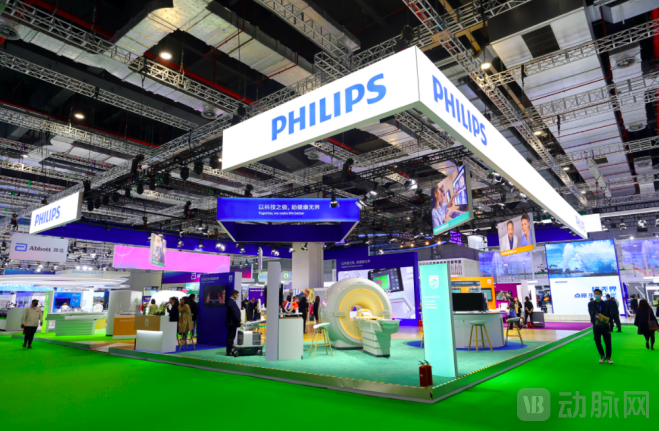 Philips Exhibition Area
Take the “youngest” concept of “healthy living” as an example. At this year’s China International Import Expo (CIIE), we got an early look at Philips’ launch in China of the world’s first integrated online-offline innovative platform—“Philips Healthy Living Lab”—which combines consumer experience with new retail.
“Philips Healthy Living Lab” was conceived in response to the needs of the new generation in the post-pandemic era. In a health and wellness products industry characterized by homogeneity, the Lab aims to innovatively create a business model that fosters community and embodies a human touch.
Guided by this vision, Philips strives to create an inspiring experiential space through its Lab, integrating offline physical healthy-living experience centers with an online healthy-living content platform. By collaborating closely with like-minded partners in areas such as cross-category product development and digital marketing, Philips aims to deliver a comprehensive, all-scenario healthy-living experience for consumers.
At the condensed “Healthy Living Lab” of the China International Import Expo (CIIE), Philips showcased its full range of personal care products, covering multiple care scenarios including oral health, maternal and infant health, grooming and beauty, and respiratory health.
Taking the medical-grade, professional, and personalized teeth whitening solution “Zoom!” as an example, this system offers both in-office and at-home whitening options. At dental clinics partnered with Philips, patients can receive a medical-grade, professionally customized teeth whitening treatment using the “Zoom!” LED whitening lamp in combination with in-office whitening gel. The in-office procedure typically involves 3–4 sessions, each lasting only 15 minutes. For consumers who wish to reduce the frequency of clinic visits for whitening treatments, they may undergo an examination at the clinic and have custom-fitted trays made, after which they can use take-home whitening gel independently at home.
For the new generation, “convenient” healthcare solutions are highly appealing. By enabling consumers to manage follow-up dental care at home after the initial consultation, Philips can reach more customers who are unable to maintain continuous teeth whitening treatments due to time constraints.
Elekta: How Intelligent Can AI Make Linear Accelerators?
This year, Elekta once again showcased its world’s first high-field magnetic resonance radiotherapy system, the Elekta Unity. As the only device of its kind globally, it physically integrates a medical linear accelerator for radiation therapy and a 1.5T high-field MRI scanner—two technologies traditionally considered incompatible—onto a single platform. Driven by real-time adaptive radiotherapy software, the system pioneers the real-time, high-resolution visualization and tracking of tumor changes during radiation treatment, thereby enabling truly precise, personalized adaptive radiotherapy. Since receiving approval from China’s National Medical Products Administration (NMPA) in 2020, the Elekta Unity has been installed at six top-tier hospitals across China.
However, Elekta Unity was not the sole highlight of the Elekta booth this year. On the first day of the conference, Elekta Harmony, the next-generation intelligent, integrated radiotherapy platform developed by Elekta, made its Asian debut, delivering efficient, precise, and intelligent solutions to the radiotherapy industry.
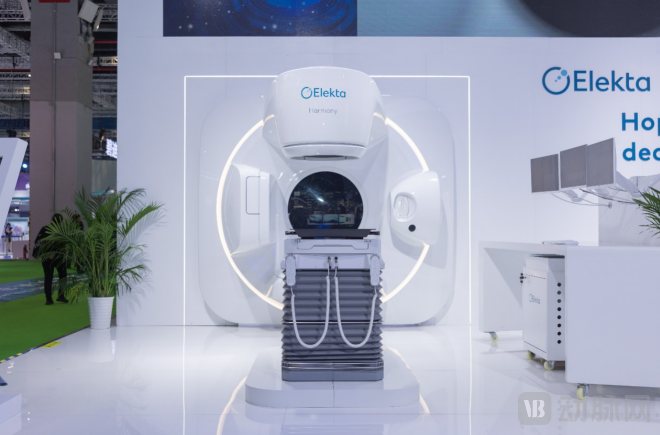
The New Generation Intelligent Interactive Integrated Radiotherapy Platform: Elekta Harmony
Compared with conventional linear accelerators, the greatest advantage of the Elekta Harmony lies in its ability to deliver AI-enabled interactive radiotherapy. In simple terms, it can record the positioning information of each patient during their initial treatment session and display this information on a large screen for physicians during subsequent radiotherapy sessions, thereby assisting in patient setup verification and achieving “end-to-end quality control” throughout the radiotherapy process. Furthermore, AI technology effectively optimizes the radiotherapy workflow. According to statistical data provided by the Medical University, the operational efficiency of medical staff supported by AI has nearly doubled, significantly reducing patient treatment time.
Overall, Elekta Harmony will provide patients with a comfortable and efficient premium healthcare experience, while also enhancing hospitals’ diagnostic and treatment efficiency as well as overall operational performance. Representatives from Elekta informed VCBeat that the new linear accelerator is expected to officially enter the Chinese market in 2021.
Fujifilm: A New Chapter in Healthcare Business
As a diversified, technology-driven innovative enterprise that has transitioned from a traditional film company, the Fujifilm Group possesses extensive expertise in image processing and AI technologies accumulated over many years. The acquisition of Hitachi, Ltd.’s diagnostic imaging-related business has expanded its overall healthcare portfolio to include a comprehensive range of products covering the three key areas of prevention, diagnosis, and treatment, such as CT systems, X-ray photography systems, ultrasound diagnostic equipment, endoscopes, in vitro diagnostic systems, and PACS.
At this year’s China International Import Expo (CIIE), Fujifilm dedicated nearly half of its exhibition space to showcasing therapy-related products, and its brand-new ultra-large-bore CT system, SCENARIA-view, made its Chinese debut at the event.
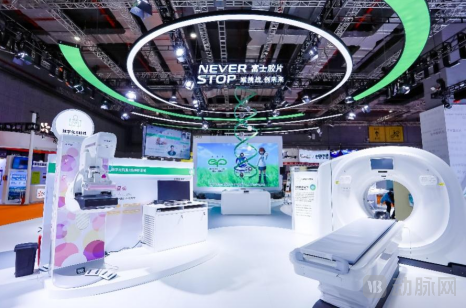
Fujifilm Exhibition Area
Uneven distribution of medical resources has become a prominent issue in China’s healthcare sector. To address this challenge, the Outline of the “Healthy China 2030” Plan proposed solutions such as establishing regional medical centers, implementing a tiered diagnosis and treatment system, and developing information platforms for medical quality management and control. These measures were further reinforced in the Implementation Plan for Building a High-Quality and Efficient Healthcare Service System during the 14th Five-Year Plan period, released this year.
To this end, Fujifilm has launched its “Medical IT Solutions” to help build more efficient in-hospital workflows. Leveraging technologies such as AI, IoT, and IT, these solutions meet the needs of China’s informatization construction both within and outside hospitals, provide intelligent services throughout the entire healthcare journey, and facilitate effective interaction and communication among hospitals, physicians, nurses, patients, suppliers, government agencies, public health institutions, and community service providers.
Meanwhile, as a partner of the China County Hospital Presidents’ Alliance, Fujifilm has established a platform to enhance the capacity for diagnosing and treating digestive diseases and performing gastrointestinal endoscopy in county-level hospitals through the “High-Quality Development at the County Level – Training Program on Enhancing Early Gastric Cancer Screening Capabilities.” It also supports the establishment of centers for early diagnosis and treatment of digestive system cancers and conducts academic exchange activities. These efforts collaboratively accelerate the decentralization of medical resources, as well as the promotion and widespread adoption of technologies, thereby assisting grassroots hospitals in building their disciplines and developing talent pipelines, contributing to the “Healthy China” initiative.
Stryker: Digitalization, Intelligence, Precision, and Minimally Invasive Approaches from an Orthopedic Perspective
Stryker, the world’s largest orthopedic medical technology company, introduces the Mako SmartRobotics™ system, currently the only robotic joint solution approved for marketing in China.
In traditional joint replacement surgery, surgical maneuvers are often determined based on the surgeon’s experience and estimation, making outcomes heavily dependent on the individual clinician’s expertise and technical skill. Consequently, patients are frequently subjected to procedures performed by less experienced surgeons, resulting in inaccurate bone cuts and unstable implant placement. However, insufficient precision in joint replacement can lead to a range of complications, including prolonged postoperative recovery, poor prognosis, and even the need for revision surgery.
To address the aforementioned challenges, the Mako SmartRobotics™ system is built upon two core technological principles: “Know More” and “Cut Less.” These principles drive joint replacement surgery toward personalization, precision, and minimally invasive techniques, helping medical professionals overcome traditional surgical difficulties such as limited visibility, inaccurate resections, and implant instability, thereby significantly improving patient outcomes.
Specifically, Know More focuses on the personalized formulation of preoperative plans. The Mako smart joint robot can perform 3D intelligent modeling based on CT scans, develop personalized surgical plans in advance according to the scanning results, and allow surgeons to “visualize” the surgical procedure beforehand. Meanwhile, surgeons can dynamically adjust the surgical plan during the operation based on the patient’s actual conditions, ensuring “precision” in surgery.
Cut Less is designed to ensure precise and efficient intraoperative execution. The intelligent assisted osteotomy technology of the Mako SmartRobotics™ system maximizes surgical "precision" and "intelligence." During the osteotomy process, Mako assists surgeons in achieving millimeter-level precision control to accurately execute the surgical plan. Additionally, its haptic-guided boundary protection helps reduce postoperative pain and bleeding, safeguarding patient prognosis.
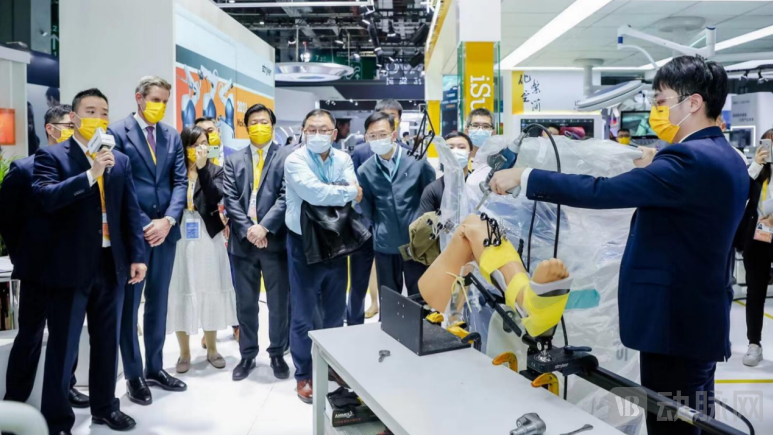
Stryker booth staff demonstrate the Mako smart joint robot on-site
“The development of information technology and digital science has injected new vitality into the healthcare industry. We aim to leverage the integration of advanced technology and medicine to help medical professionals provide higher-quality solutions for patients,” said Zhang Shaobin, Senior Director of Sales and Marketing for Stryker’s Implant Division. “The Mako SmartRobotics™ system serves as a powerful complement to traditional surgical diagnosis and treatment, driving joint replacement surgery toward digitization, intelligence, precision, and minimally invasive techniques, thereby bringing greater benefits to more patients.”
Signia Hearing Aids: CIIE Debut and Launch of the Augmented Xperience Platform
Signia, the premium hearing aid brand under WS Audiology, is a “fresh addition” to this year’s China International Import Expo (CIIE).
During the exhibition, Signia Hearing Aids made a major announcement of its industry-leading Augmented Xperience (AX) platform. Powered by Signia’s Augmented Focus™ technology, the AX platform revolutionizes conventional hearing aid technology by innovatively employing two independent chips to process speech and environmental sounds separately, enabling users to enjoy clear listening experiences in an immersive environment.
 Signia Hearing Aids Exhibition Area
Furthermore, leveraging e2e wireless 4.0 technology, the AX platform breakthroughly increases the sound transmission speed of hearing aids by 110%, reducing binaural latency to 2 milliseconds. Combined with a wide dynamic range of up to 117 dB and significantly enhanced pinna effect, the Signia AX platform delivers a clearer and superior listening experience for users.
According to the first-ever World Report on Hearing released by the World Health Organization (WHO) earlier this year, one in five people worldwide currently suffers from hearing loss, affecting more than 1.5 billion people globally. It is projected that nearly 2.5 billion people worldwide will have some degree of hearing loss by 2050. As China becomes one of the countries with the fastest-growing aging population in the world, it has a high incidence of age-related hearing loss, and the market for hearing health in China is expected to continue expanding in the future.
In response to this current landscape, Signia has stated that it will leverage the spillover effects of the China International Import Expo (CIIE) platform to accelerate the introduction of innovative technologies and products, deepen local collaborations, and continuously increase its investment in the Chinese market. By actively aligning with the policy directive of “promoting healthy aging” outlined in the Healthy China 2030 Planning Outline, Signia aims to work with partners across all sectors to drive the development and upgrading of China’s hearing health industry.
Johnson & Johnson: Raising Awareness of Sports Medicine
Johnson & Johnson showcased nearly 50 cutting-edge products, with 11 making their China debut. Among them, the “DYANCO” intelligent suture anchor and the “ZHENSHI” digital orthognathic system were the two most representative products.
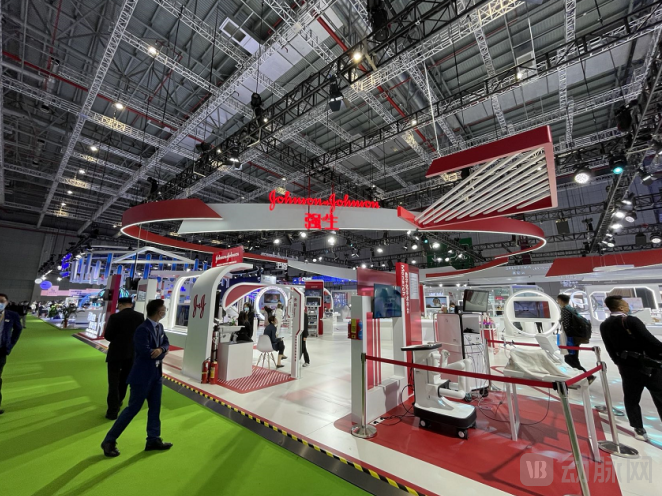 Johnson & Johnson Exhibition Area
“Dianco” smart suture anchors are primarily used in the field of sports medicine. Tears between tendons and bones have long been common sports injuries in many athletic activities. Although athletes can undergo sports medicine surgery to reattach these two structures, the procedure presents certain challenges. Any gap between the ligament and bone can lead to unstable healing, significantly increasing the precision required during surgical manipulation.
In contrast, the “Dianke” smart suture anchor leverages its deformable characteristics to self-adapt to the muscular environment by absorbing tissue fluids after implantation. It secures the tendon tightly against the bone, providing a stable healing environment with optimal tension control, thereby preventing postoperative suture laxity that could lead to gap formation between the tendon and bone and compromise healing.
Another “Zhenshi” digital orthognathic system is designed to meet the needs of the younger generation. Traditional treatment methods typically rely on manual measurement of facial data, followed by correction planning based on the physician’s experience, making human error inevitable. However, facial orthopedics is more critical than interventions in other body regions, requiring highly precise osteotomies and personalized treatment plans.
By acquiring preoperative patient data, such as CT scans and cephalometric measurements, the “ZhenShi” Digital Orthognathic System enables surgeons to perform precise virtual surgical planning online and utilize 3D printing to fabricate the surgical positioning guides and internal implant materials required for the procedure.
Compared with traditional treatment methods, virtual surgical design reduces the difficulty of preoperative planning. By replacing manual fabrication with 3D printing, it not only improves precision but also minimizes material waste caused by human error, thereby making the entire surgical process more efficient and accurate.
With the Winter Olympics approaching, Johnson & Johnson’s sports medicine solutions may gain further momentum, enabling more patients with sports-related injuries to receive timely treatment and return to healthy lives as soon as possible.
Boehringer Ingelheim
Boehringer Ingelheim’s main booth, centered on the “One Health” design concept, will showcase a range of star products and items making their global and Asian debuts. These include the latest research findings on spesolimab, a first-in-class investigational immunotherapy drug—a monoclonal antibody targeting the interleukin-36 receptor (IL-36R). The drug was recently designated as a breakthrough therapy by the Center for Drug Evaluation (CDE) of the National Medical Products Administration for the treatment of generalized pustular psoriasis (GPP).
To make advanced rehabilitation treatment plans more accessible to a broader patient population, ZhongAn and Boehringer Ingelheim will join hands to launch a series of collaborations focused on full-lifecycle services for stroke patients. Regarding post-stroke rehabilitation, the partnership will take a two-pronged approach: first, leveraging ZhongAn’s Patient Welfare Platform to provide health education and enhance patients’ awareness of rehabilitation; second, collaborating with Jida Rehabilitation, a subsidiary of Boehringer Ingelheim, to offer free rehabilitation trials to customers of ZhongAn Insurance’s “Zunxiang Yisheng” product and users of the Patient Welfare Platform.
In addition, Boehringer Ingelheim Biopharmaceuticals has entered into a collaboration with Shanghai ZJ Bio-Tech Co., Ltd. to provide process optimization and manufacturing services for Shanghai ZJ Bio-Tech’s bispecific antibody drug SYZJ001 for the treatment of COVID-19.
AstraZeneca
At the China International Import Expo (CIIE), AstraZeneca signed a strategic cooperation intent with Radiometer, a company under the Danaher Group, to jointly explore opportunities for enhancing the frequency of anemia testing in patients with chronic kidney disease (CKD) and building an ecosystem for comprehensive disease-course management of kidney diseases, thereby benefiting CKD patients. Additionally, AstraZeneca signed a memorandum of understanding with Sonoscape Medical Corp. in the field of dialysis. This partnership aims to fully integrate Sonoscape’s technical R&D strengths in ultrasound with AstraZeneca’s integrated diagnostic and therapeutic solutions in nephrology. Focusing on topics such as standard operating procedures for blood purification, clinical applications of ultrasound, and vascular access technologies, the two companies will strengthen comprehensive disease-course management for dialysis patients and promote standardized and regulated training for healthcare professionals, exploring the establishment of an ecosystem in the nephrology and dialysis sector.
Meanwhile, AstraZeneca and Kangtai Biologicals jointly held a celebration ceremony at the conference, during which AstraZeneca recognized Kangtai Biologicals for advancing the production and commercialization of their recombinant adenovirus-vector COVID-19 vaccine in mainland China, Pakistan, and Indonesia. This vaccine has already received emergency use approval in Indonesia. This progress marks a new achievement in their international cooperation against the pandemic, and both parties will continue to promote the registration and export supply of this vaccine in more countries, actively supporting global epidemic prevention and control efforts.
Roche
Roche Diagnostics Unveils Two Upcoming Innovative Molecular and Genetic Testing Products at the 4th China International Import Expo: The AVENIO Edge System, a Fully Automated NGS Library Preparation Workstation (hereinafter referred to as the “AVENIO Edge System”), and the Digital LightCycler Digital PCR System (hereinafter referred to as the “Digital LightCycler System”). The AVENIO Edge System is designed to optimize resources ranging from staffing to reagents and consumables, transforming NGS laboratory workflows into an automated production line. Meanwhile, the Digital LightCycler System enables faster and more sensitive detection of ultra-low-concentration samples, doubling the experimental throughput for up to 96 samples compared to conventional digital PCR.
**Collaboration Focus:** Roche Diagnostics and Renmai Bio officially announced a strategic partnership in July this year, under which Roche Diagnostics serves as the exclusive distributor in mainland China for Renmai Bio’s core product—the MCL60 compact fully automated chemiluminescence immunoassay analyzer—and its associated reagents, including panels for cardiac markers, inflammatory markers, hormone assays, thyroid function, and tumor markers. At this year’s China International Import Expo (CIIE), both parties will further deepen their collaboration by leveraging their respective technological strengths to create a powerful synergy that drives innovation in China’s in vitro diagnostics industry and supports the overall enhancement of medical services in the country.
Bristol-Myers Squibb
Bristol Myers Squibb has entered into a strategic partnership with the Bio-Innovation Committee of the China Association of Enterprises with Foreign Investment. The two parties will maintain close communication with experts in the biopharmaceutical field to discuss cutting-edge technologies, interpret regulatory policies related to pharmaceuticals and healthcare, and address issues such as biosafety infrastructure development, thereby striving for greater policy support for innovation in the biopharmaceutical industry.
The "Standardized Diagnosis and Treatment of Thalassemia" project, initiated by the Beijing Kangmeng Charity Foundation, supported by Bristol Myers Squibb, and involving top Chinese hematology experts, was officially launched during the China International Import Expo. The project aims to establish standardized protocols for the diagnosis and treatment of thalassemia (hereinafter referred to as "thalassemia"), form a hospital alliance in regions with high prevalence of the disease, and comprehensively improve the level of standardized care. It also seeks to explore the clinical application of innovative drugs, providing patients with better life "protection."
Novo Nordisk
On November 6, Novo Nordisk signed a strategic cooperation memorandum with the Administration Bureau of the Boao Lecheng International Medical Tourism Pilot Zone in Hainan. Leveraging the pilot zone’s policy advantages of “special access and pioneering trial implementation,” the two parties will focus their strategic collaboration on chronic diseases and jointly promote innovation in pharmaceuticals, medical services, and medical insurance.
Novartis
At this year’s China International Import Expo (CIIE), Novartis showcased a portfolio of innovative products, including multiple drugs making their debut in China, covering major disease areas such as cardiovascular diseases, multiple sclerosis, breast cancer, and prostate cancer. The company highlighted its cutting-edge R&D innovations through advanced therapeutic modalities, including small interfering nucleic acid therapies, radioligand and targeted therapies, and cell and gene therapies. Novartis also presented nearly 30 ongoing research projects and transformative therapies in China, spanning multiple new drugs or new indications planned for development and registration in China between 2021 and 2024. Novartis expects to submit marketing authorization applications for 50 new drugs in China within the next five years.
Eli Lilly
This year marks the 100th anniversary of the discovery of insulin. Eli Lilly and Company, the pioneer in the first commercial production of insulin globally, held the “A Century Unstoppable, Beyond a Century” celebration at the China International Import Expo (CIIE). The event brought together numerous authoritative experts in the field of diabetes and senior executives from Eli Lilly to reflect on the remarkable century of advancements in diabetes treatment, discuss unmet clinical needs, explore smart healthcare solutions in diabetes care, and jointly usher in the next century of innovative applications in diabetes treatment.
For many years, Eli Lilly’s diabetes division has been committed to providing a comprehensive range of treatment options and ongoing support services to meet patients’ therapeutic needs at different stages of their disease. Today, Eli Lilly is accelerating the introduction of globally innovative diabetes medications, spanning multiple categories including insulin, GLP-1 receptor agonists, SGLT-2 inhibitors, and injection pens, to address diverse patient needs. Looking ahead, Eli Lilly will continue to research improvements in insulin and other diabetes treatments. Meanwhile, by building a patient care ecosystem and actively collaborating with government bodies, associations, societies, and other sectors of society, the company aims to pool resources, empower primary healthcare providers, and support the prevention, control, and management of diabetes.