

Guoxin Health Ushers in a New Era of Hospital DRG Payment with Data-Driven Knowledge Assets
On October 26, 2021, Shandong Province officially implemented payment operations for healthcare insurance reimbursement reforms based on Diagnosis-Related Groups (DRG), global budgeting with regional point systems, and Disease Intervention Packages (DIP). With technical support from China Reform Health Management and Services Group Co., Ltd. (hereinafter referred to as "China Reform Health"), Shandong has become the only province in China to achieve full provincial coverage of both DRG and DIP payment systems. This marks another step closer to the goal set by the National Healthcare Security Administration, which aimed for all pilot regions to enter the actual payment phase by the end of 2021.
At a recent press conference, the Secretariat of the State Council Leading Group for Medical Reform and the National Health Commission explicitly stated that by 2025, DRG/DIP payments should account for 70% of all eligible inpatient medical insurance fund expenditures. This implies more refined and practical requirements for hospital operational management under the DRG/DIP payment reform.
What challenges have hospitals encountered during the pilot implementation of DRG/DIP payment systems? As a central state-owned enterprise providing critical technical support, how has China Reform Health Management and Services Group Co., Ltd. (China Reform Health) transformed its core technologies into core competencies to deliver practical application value by helping hospitals systematically address real-world issues? More importantly, leveraging policy and technological dividends, how can positive value be established to drive the “three medical sectors” (medical care, health insurance, and pharmaceuticals) back to their fundamental roles? This article provides comprehensive answers while exploring the future direction of China’s health insurance payment reform.
In October 2019, the National Healthcare Security Administration issued the Technical Specifications for DRG Grouping and Payment under the National Medical Insurance System, which outlined six prerequisites for implementing DRG-based payment: standardized basic codes, compliant medical record quality, standardized clinical pathways, interoperable information systems, a competent management team, and sound coordination mechanisms. From another perspective, these prerequisites also represent the key challenges hospitals may encounter when implementing DRG.
According to the evaluation conducted by the National Healthcare Security Administration Research Institute in November 2020 on the progress of DRG payment pilot cities in China, the main challenges currently faced by hospitals in implementing DRG-based payments include: substandard data quality, with medical record quality being the primary concern; insufficient coding capability due to the limited number and professional competence of coding staff; and severe “data silo” issues caused by difficulties in integrating information systems. As a critical component of the entire DRG/DIP payment process, the effectiveness of hospital implementation will directly impact the overall outcomes of DRG/DIP-based payments.
Observing the “bucket effect” in the reform of medical insurance payment methods, China Reform Health leverages its stable “data foundation” to focus on building a “bridgehead,” ensuring the smooth implementation of DRG/DIP payment systems in hospitals. Empowering the entire healthcare ecosystem with its products and services—much like essential utilities such as water, electricity, and gas in people’s livelihoods—is precisely the original intention behind China Reform Health’s efforts to promote DRG/DIP at the hospital level.
So, what kind of DRG/DIP system do hospitals actually need? Ultimately, it boils down to a few key points.
First, it can drive improvements in both quality and efficiency. Hospitals urgently need to leverage DRG/DIP systems to establish a refined operational management framework. This is primarily achieved by enhancing data quality and advancing informatization and digital management capabilities, while optimizing cost structures, implementing process-based cost control, enabling real-time dynamic monitoring, and improving overall system efficiency. These measures collectively facilitate the “dual enhancement” of hospital quality (medical quality, disciplinary development, and clinical pathway optimization) and efficiency (operational and managerial efficiency).
Secondly, hospital-side DRG/DIP systems require multi-departmental collaboration. The data required for DRG/DIP flows through multiple departments within the hospital, including clinical departments, medical records, quality control, the health insurance office, finance, information technology, and operational management. Therefore, DRG/DIP-based payment represents a systemic engineering project for hospitals; only by aligning efforts from top to bottom can holistic effectiveness be achieved. In the course of reform, no single link can operate in isolation. Consequently, hospital-side DRG/DIP systems capable of meeting the multi-role and multi-dimensional needs within institutions are gradually emerging.
Furthermore, hospital-side DRG/DIP systems must prioritize customer experience by enhancing operational responsiveness to deliver more user-friendly and convenient products. The entire system should be fast, responsive, and lag-free to enable seamless, intelligent services. This approach not only improves system efficiency but also enhances the user experience.
DRG/DIP Payment is a systematic process, wherein the required data circulation within the hospital begins with the completion of the medical record face sheet by clinical departments; it then proceeds through the Medical Records Department (coding of the medical record face sheet), the Quality Control Department (medical record quality control), the Healthcare Security Administration (data synchronization), and the Health Insurance Office (analysis and management of grouping and cost information), ultimately culminating in settlement. The entire process must meet the requirements for data “completeness, timeliness, authenticity, and standardization.”
As a pioneer in China’s DRG payment sector, China Reform Health has a deep understanding of user needs and proposed a product philosophy based on multi-departmental collaboration from the outset. Its hospital-side DRG/DIP system provides integrated, refined operational services to meet the management requirements of various departments within hospitals, establishing full-process control through pre-event behavioral standardization, in-event process management, and post-event comprehensive analysis. Based on a profound understanding of the current status and pain points of hospital information systems in China, China Reform Health places particular emphasis on the user experience of its hospital-side DRG/DIP system, achieving rapid response, zero latency, and seamless interaction, thereby significantly enhancing the overall user experience.
Pre-emptive Conduct Guidelines: Multi-layered Validation and Review for Enhanced Efficiency
Data from the front page of medical records serves as the source and foundation for DRG/DIP clinical data. In actual hospital workflows, clinicians struggle to keep abreast of medical record coding rules, lacking both intelligent tools and sufficient time to thoroughly study documentation standards. For medical record management departments, the large volume of records, lengthy review cycles, insufficient staffing, and lack of systematic tool support make it difficult to focus on the specific content of individual medical records. Meanwhile, medical insurance cost management departments face significant challenges in medical record administration, particularly due to the stringent quality control requirements imposed after the implementation of DIP/DRG payment systems. There is a lack of standardized guidelines and effective mechanisms to ensure the acquisition of high-quality medical records.
Leveraging its extensive industry knowledge accumulated over years of service and incorporating advanced artificial intelligence algorithms, China Reform Health has developed an intelligent medical record verification system that covers the entire workflow of “medical record validation–review–correction.” Compared with traditional workflows for medical record face sheets, this intelligent quality control management system shifts quality control to the physician’s end, providing real-time prompts during clinical consultations. By improving the quality of medical record face sheets at the source, the system aims to reduce losses (for hospitals), enhance efficiency (for medical records departments), and strengthen management (for quality control).
Meanwhile, the clinical decision support service has also yielded significant benefits in multi-departmental collaboration. Prior to the incurrence of medical insurance expenses, physicians’ prescriptions are subject to real-time review and proactive alerts based on factors such as the insured individual’s prior medical history, medical insurance payment policies, and relevant audit rules, thereby reducing unreasonable medical practices at their source. This functionality serves to enable real-time audit and monitoring (for the Medical Insurance Office and Quality Control), standardize clinical practices (for Clinical Departments), reduce expenditures from the medical insurance fund (for the Medical Insurance Office), and enhance departmental management standards and efficiency (for Operations Management), thereby further improving the efficiency of multi-departmental collaboration.
While this goal appears simple, it is in fact quite challenging. Leveraging years of accumulated expertise in knowledge computing, point-of-care assistance services have achieved integration of data within hospitals, including insurance enrollment information, diagnosis and treatment records, execution details, and billing information. Furthermore, built upon a clinical knowledge base and incorporating national healthcare policies and documents, as well as health insurance management experiences from other regions and local regulatory requirements, these services deliver multi-dimensional, dynamic, and real-time point-of-care audit capabilities.
In-Process Management: Lightweight, Non-Intrusive, Intelligent Services
During the care process, the DRG/DIP grouping prediction and early warning system can configure benchmark values and alert information related to disease group management in accordance with the management requirements and objectives of hospitals or departments. Without interfering with clinical workflows or increasing the workload of clinicians, it provides reference data and early warnings for optimizing resource allocation, thereby meeting the requirement for lightweight, non-intrusive intelligent services.
With this system, clinical departments can conduct real-time risk monitoring; the medical records department can analyze grouping errors and implement educational initiatives; the quality control department can further optimize clinical pathways and strengthen quality management; and the medical insurance office can provide dynamic alerts for abnormal information. The system’s real-time capability, foresight, flexibility, precision, and efficiency effectively serve as an instant, intelligent “consulting service” for the hospital, guiding internal DRG/DIP management and ultimately achieving optimized diagnostic and treatment pathways and improved operational efficiency.
Post-Event Comprehensive Analysis and Global Closed-Loop Precision Management
The DRG/DIP Hospital Intelligent Management System for Post-hoc Comprehensive Analysis is designed to meet the needs of various management roles by providing analytical dimensions such as pooling areas and case types, thereby achieving holistic monitoring of in-hospital DRG/DIP management and cost structures. Furthermore, building upon the hospital’s existing performance management model, it offers performance management and evaluation based on DRG/DIP metrics. This continuously enhances the hospital’s autonomous management and digital intelligence capabilities amidst DRG/DIP payment reforms, facilitating globalized, closed-loop, and refined management of hospital-wide processes.
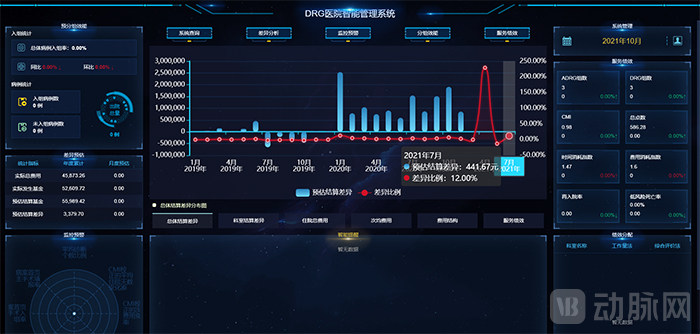
DRG Hospital Intelligent Management System Interface in the China Reform Health Hospital-Side DRG/DIP System (Image from China Reform Health)
Clinical departments can leverage this system to understand the relationship between coding and grouping, obtain case-mix information and payment prediction benchmarks, and implement clinical pathways under DRG/DIP bundled payment models. The Medical Records Department can identify surplus and over-budget case groups through settlement variance analysis, delve into and compare charge details by case group, and establish management standards based on DRG/DIP frameworks and coding specifications. For hospital-wide administration, the system enables comprehensive, closed-loop, refined management and PDCA-driven optimization for lean operations.
Industry experts believe that the optimization of clinical pathways and refined hospital operations constitute a process evolving from informatization to digitalization, and ultimately to intelligence. The digital foundation is determined by knowledge graphs and digital governance capabilities built through the long-term accumulation of massive data and multidimensional databases. Thus, knowledge computing and knowledge assets accumulated over many years represent the core differentiated competitiveness of China Reform Health’s provider-side DRG/DIP system.
Since entering the digital health sector, it has established underlying data standards and knowledge bases. Through nearly two decades of continuous accumulation, it has developed China’s most comprehensive, largest-scale, and most authoritative clinical knowledge base—the “Four Libraries and Twenty-Four Systems”—which encompasses a medical knowledge base, a pharmaceutical knowledge base, a standard database, and an evidence-based medicine information repository. The total volume of data exceeds 2.9 million records, while the information repository for medical insurance fund regulatory rules contains approximately 86.07 million entries.
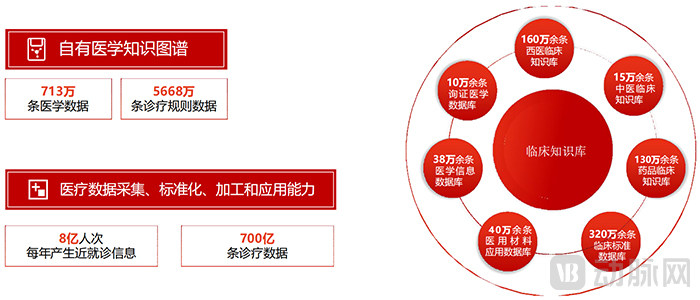
China Reform Health’s clinical knowledge base is one of its core competencies (Image from China Reform Health)
Taking medical record rules as an example, China Reform Health’s clinical knowledge base encompasses three major categories and 25 subcategories of medical record rules, comprising 480,000 specific rule items. By integrating these rules with algorithms and selecting the most suitable deep neural network models, the accuracy of its intelligent medical record validation system has been increased to over 90%. This clearly demonstrates the competitive advantage derived from knowledge computing and the development of knowledge assets.
In fact, a closer look reveals that the integration of knowledge computing with knowledge assets is ubiquitous in China Reform Health’s systematic solutions. As a pioneer in China’s exploration of DRG-based payment systems, China Reform Health integrated medical record quality control with payment mechanisms from the outset. It categorized charging item rules into two major classes and 20,000 subcategories, closely aligning various medical procedures with billing practices.
The refinement of the data foundation has proven mutually beneficial amidst the artificial intelligence wave. In 2018, the Joint Laboratory for Medical Artificial Intelligence was established by China Reform Health and Peking University, aiming to combine its over two decades of accumulation and practical experience in the health security sector with the technological R&D capabilities of Peking University’s Software Engineering Center. This collaboration leverages AI technologies to promote the scientific analysis and utilization of medical big data, as well as the in-depth construction of knowledge graphs. Currently, these achievements are increasingly demonstrating their value within systematic DRG/DIP solutions for hospitals.
Moreover, as a central state-owned enterprise serving as the core support for comprehensive medical insurance management services, China Reform Health has always prioritized building its customer service capabilities. Currently, it boasts a service team of over 1,000 professionals across seven major regions nationwide and adheres to service requirements that exceed industry standards—what is often hailed as the “gold standard” in the industry is merely part of its daily operations. More importantly, the company emphasizes the “reliability, stability, and effectiveness” of its systems. Committed to delivering truly valuable knowledge outputs to clients, thereby earning market acclaim and consistent recognition, has been the enduring positive value upheld by China Reform Health over the years.
Drawing on its extensive experience and accumulated expertise in long-term medical insurance services, this low-profile and pragmatic listed company controlled by a central state-owned enterprise has developed unique differentiated competitive capabilities. The professionalism, precision, and cost-effectiveness of its hospital-side DRG/DIP solutions have been well demonstrated in practical applications, helping hospitals achieve digitalized decision-making, refined management, and intelligent services. As the saying goes, “Good wine needs no bush.” Its products gained recognition in a very short period—from September 2021 onward, within just over two months, China Reform Health secured numerous centralized bids for its hospital-side DRG/DIP solutions, making significant strides toward its strategic goal of “becoming a leading builder of China’s health security service system.”
“The road ahead is long and arduous; I will tirelessly search high and low.” Over the past 27 years, China’s healthcare insurance payment system has undergone three rounds of reform and continues to explore new pathways. As a central state-owned enterprise serving as the main force in building comprehensive management services for healthcare insurance funds, medical quality and safety services, and drug and medical device regulatory services, China Reform Health Management and Services Group Co., Ltd. (China Reform Health) has not halted its exploration of healthcare insurance payment methods after successively achieving coverage of DRG/DIP systems at both the bureau and hospital levels. Its next move has become clear: outpatient payment reform.
DRG/DIP is not a panacea; challenges such as inpatient stay fragmentation and cost shifting to outpatient settings persist. Building on reform achievements and international experience, Ambulatory Patient Group (APG) bundled payment for outpatient services will inevitably become the norm in the future. It is reported that China Reform Health has assisted Jinhua City in pioneering the APG pilot, streamlining the entire payment process. This initiative represents the only comprehensive solution in China currently covering both inpatient and outpatient care through an integrated “DRG + DIP + APG” framework, marking another innovative exploration in the path of health insurance payment reform following the implementation of DRG.
How has this initiative been implemented, and what are its future evolutionary directions? We will continue to monitor these developments closely.