

Jiabao Renhe's PGT-A Kit Receives NMPA Approval, Signaling Maturation of China's Third-Generation IVF Testing Market
On November 4, 2021, the National Medical Products Administration (NMPA) issued a notice on its official website, stating thatBeijing Zhongyi Kangwei Medical Devices Co., Ltd. (a wholly-owned subsidiary of Jabrehoo)The innovative medical device “Preimplantation Chromosomal Aneuploidy Detection Kit (Reversible Terminator Sequencing Method),” independently developed and manufactured, has been approved for market launch. This isChina's First PGT-A Kit Based on Reversible Terminator Sequencing, alsoChina’s Second Officially Certified Genetic Testing Kit for Third-Generation IVF。
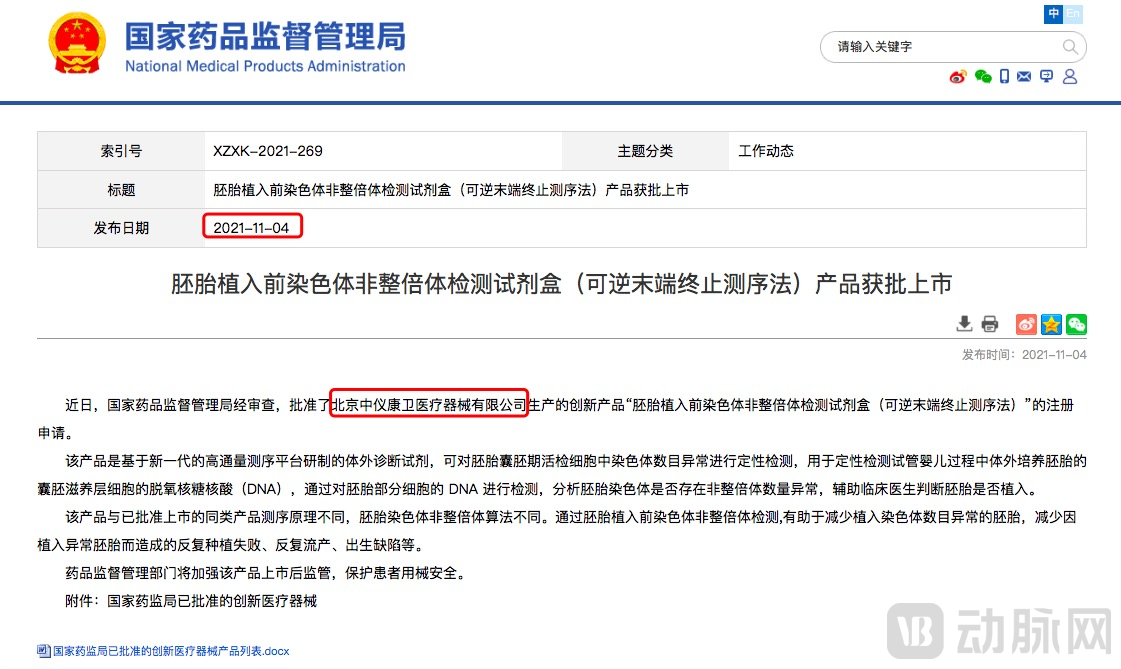
Preimplantation Chromosomal Aneuploidy Testing Kit (Reversible Terminator Sequencing Method) Approved for Market Launch
This PGT-A kit is an in vitro diagnostic reagent developed based on next-generation high-throughput sequencing platforms. It can detect the chromosome number in cells biopsied from blastocyst-stage embryos, analyze whether there are abnormalities in aneuploidy counts, and help avoid implanting embryos with chromosomal number abnormalities, thereby reducing recurrent implantation failure, recurrent miscarriage, birth defects, and other issues caused by implanting abnormal embryos.
According to NMPA disclosures, the kit approved this time and the PGT-A product approved in early 2020 areSequencing PrinciplesandChromosomal Aneuploidy Algorithmcompletely different from the latter, which adopts “semiconductor sequencing,” while the former employs the most widely used NGS sequencing chemistry technology worldwide—“Reversible Terminator Sequencing”,Fills the gap in the corresponding field。
Jabrehoo’s PGT-A Kit Receives Approval, Adding Another Class III Medical Device Registration Certificate to the Assisted Reproductive Testing Industry. This signals that China’s third-generation IVF testing market is gradually maturing, and the collaboration model between hospitals and third-generation IVF technology service providers will shift from third-party laboratory services to more direct in-house deployment at hospitals, thereby promoting the standardized development of the entire assisted reproductive industry.
The Assisted Reproductive Technology Industry with Unlimited Potential
The World Health Organization (WHO) once predicted that infertility would become the third major disease of the 21st century, after cancer and cardiovascular diseases. In China, the incidence of infertility has been rising year by year due to factors such as deteriorating natural environments, increasing work-related stress, and delayed childbearing among women. In May 2021, a report published in the international journal The Lancet pointed out thatThe infertility rate among Chinese couples of childbearing age has risen from 2.5%-3% in 1993 to approximately 18% in 2020., which means that there are nearly 48 million couples with infertility in China.
The primary treatments for infertility include pharmacological therapy, surgical intervention, and Assisted Reproductive Technology (ART), among whichHighest Pregnancy Rates with Assisted Reproductive Technology。
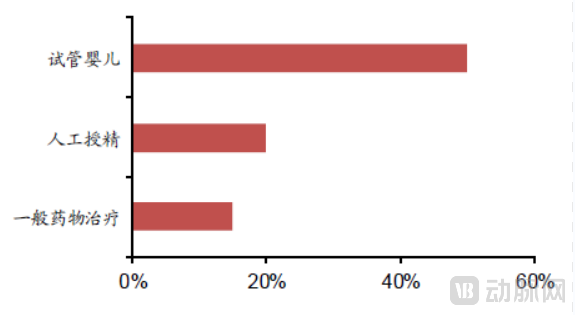
Comparison of Pregnancy Rates Across Various Diagnostic and Treatment Methods for Infertility (Data Source: DXY, GF Securities Development Research Center)
According to a study published in *Reproductive BioMedicine*, it is projected that 1.4%–3.5% of the world’s population could be born through assisted reproductive technology (ART) by the end of this century. Meanwhile, data from *Reproductive Biology and Endocrinology* indicate that approximately 20% of infertile couples in China opt for ART services, whileAmong Chinese physicians' choices of treatment modalities for infertility, assisted reproductive technology (ART) accounts for as high as 52%., with pharmacological treatment and surgical treatment accounting for 22% and 9%, respectively.
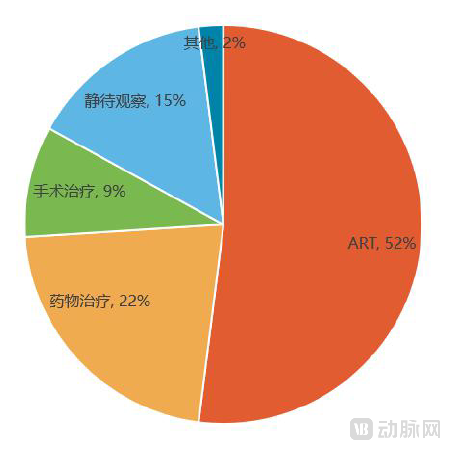
Distribution of Treatment Options for Infertility Selected by Doctors in China (Data Source: "Reproductive Biology and Endocrinology")
Assisted reproductive technologies primarily encompass two major categories: artificial insemination and in vitro fertilization-embryo transfer (commonly known as “test-tube baby technology”), along with their related derivative techniques.
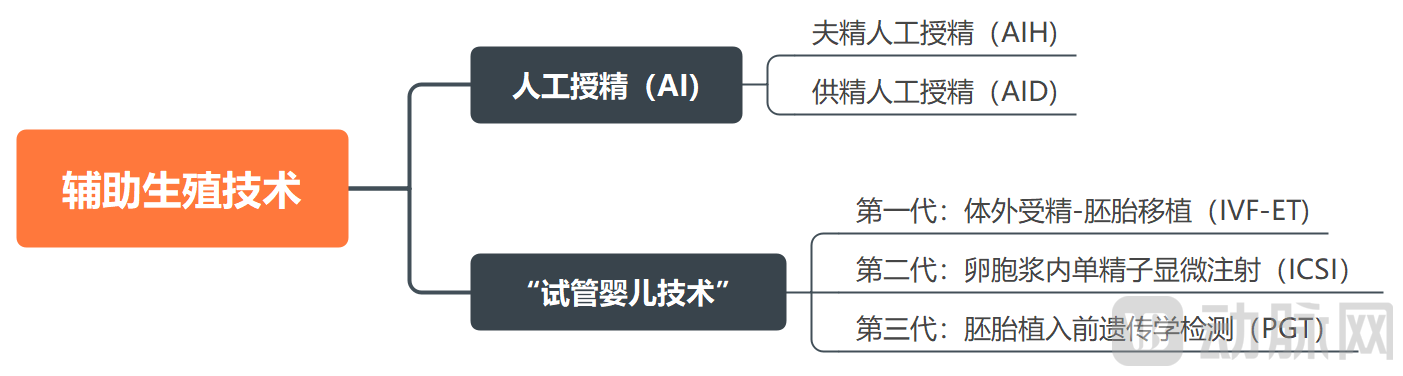
The so-called “first-, second-, and third-generation IVF technologies” target different patient populations with specific indications. Conventional “First-generation IVF”It mainly targets infertility caused by female ovulatory disorders and tubal factors; whereas “Second-Generation IVF“It primarily targets male-factor infertility, such as severe oligoasthenozoospermia or obstructive azoospermia;”Third-Generation IVF“i.e.”Preimplantation Genetic Testing (PGT) Technology, refers to a technique that involves genetic testing or detection of chromosomal numerical and structural abnormalities in the trophoblast cells of embryos before implantation into the maternal uterus during conventional in vitro fertilization (IVF) treatment. By selectively implanting embryos, this technique aims to prevent the birth of children with monogenic diseases and chromosomal abnormalities. It is primarily suitable for patients with chromosomal abnormalities, monogenic genetic disorders, unexplained recurrent spontaneous abortions, repeated implantation failure, and advanced maternal age.
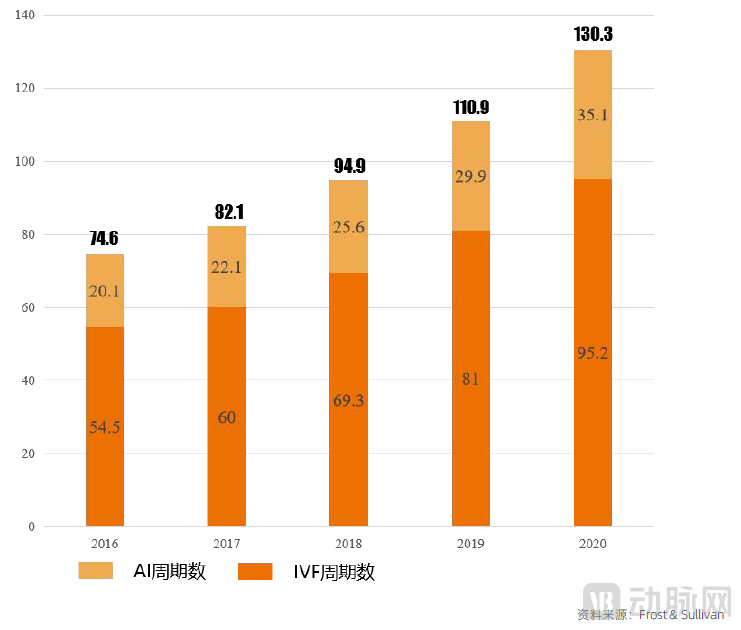
Total Number of ART Service Cycles in China (2016–2020) (in 10,000 Cases)
By the end of 2020, the total number of ART service cycles in China reached 1.303 million, including 952,000 IVF cycles and 351,000 artificial insemination cycles. The CAGR of the total number of ART service cycles from 2016 to 2020 was as high as 15%.
PGT-A: An Assisted Reproductive Technology to Improve Clinical Pregnancy Rates and Reduce Miscarriage Rates
According to the findings shared at the 11th Reproductive Medicine Academic Conference of the Guangdong Medical Association (GDMA2021), both the clinical pregnancy rate and live birth rate for PGT increased year by year from 2013 to 2020,The average pregnancy rate reached 55.4%, and the live birth rate reached 45.5%., its clinical advantages are particularly prominent among a range of assisted reproductive technologies.
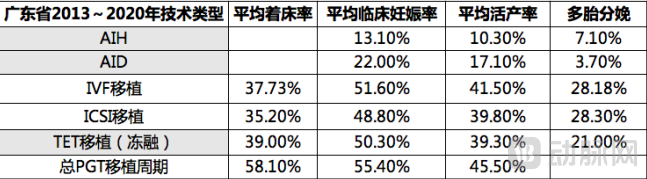
PGT-A is the most widely used technology in preimplantation genetic testing (PGT) services., primarily targeting patients undergoing in vitro fertilization (IVF) who are women aged 38 years or older, couples where one or both partners have chromosomal abnormalities, individuals with more than three failed IVF implantations, patients with more than three spontaneous miscarriages, and couples who have previously given birth to a child with chromosomal abnormalities. The principle involves comprehensive chromosomal screening of preimplantation embryos to select those without aneuploidy or structural chromosomal abnormalities for uterine transfer. According to the statistical classification of PGT-A indications from the 2019 European Society of Human Reproduction and Embryology (ESHRE) annual meeting, advanced maternal age accounted for the highest proportion of indications at 51%.
The optimal reproductive age for women is generally between 25 and 30 years. After the age of 35, the risks of spontaneous abortion and infertility gradually increase, while pregnancy rates and live birth rates begin to decline significantly. Particularly in women over 38, accelerated oocyte aging substantially increases the likelihood of chromosomal nondisjunction, leading to a marked rise in the incidence of embryonic aneuploidy. Consequently, issues such as infertility, miscarriage, and fetal birth defects become more prevalent.
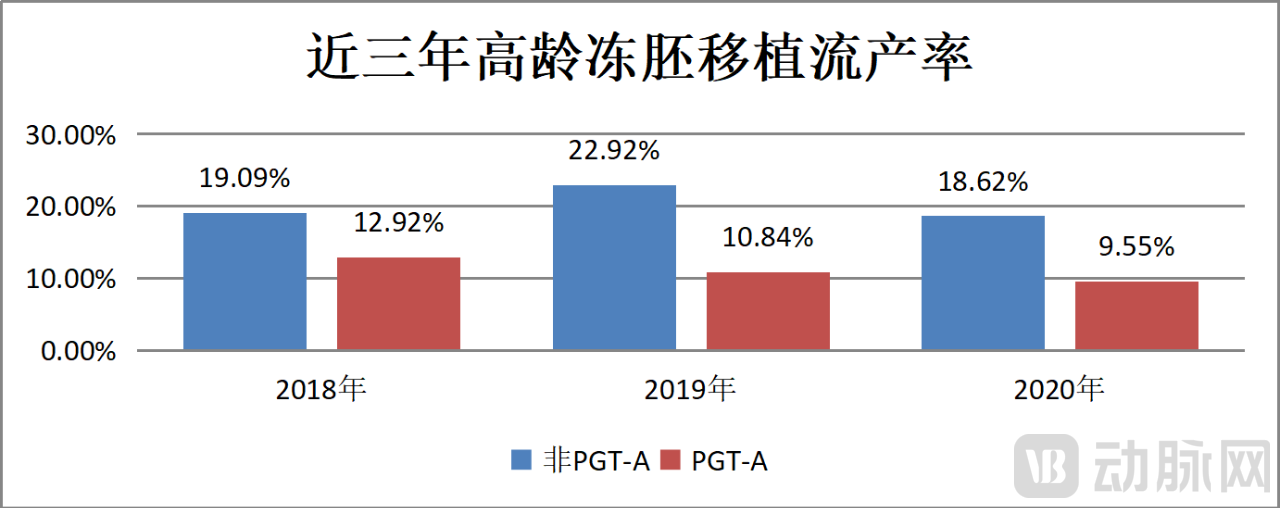
Public data from CITIC-Xiangya Reproductive and Genetic Hospital, the reproductive center with the highest number of cycles in China, reveals a comparison of miscarriage rates among women of advanced maternal age over the past three years.The miscarriage rate in PGT-A-assisted pregnancies is significantly lower than that in non-PGT-A-assisted pregnancies.。
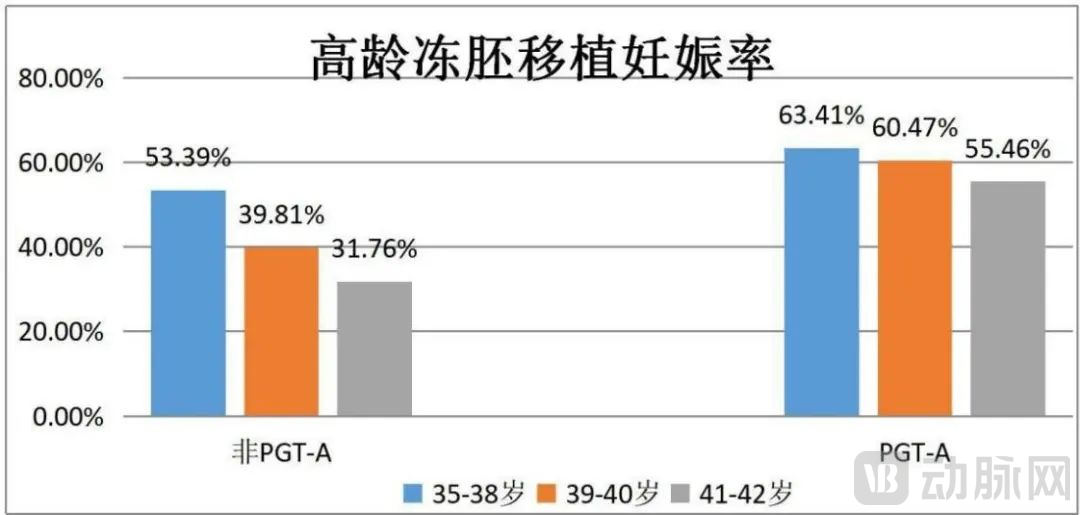
Among the different age groups of the elderly,The pregnancy rate of frozen embryo transfer with PGT-A is significantly higher than that without PGT-A.:
The significance of applying this technology lies in:
1. For patients of advanced maternal age and those with recurrent implantation failure, PGT-A technology can prevent the transfer of embryos with chromosomal aneuploidy or structural abnormalities, thereby improving embryo implantation rates;
2. Reduce the incidence of miscarriage caused by embryonic chromosomal abnormalities, thereby effectively minimizing the physical and psychological harm to women resulting from miscarriage, uterine curettage, or labor induction after missed abortion (such as intrauterine adhesions), shortening the time to live birth, and simultaneously reducing various unnecessary costs associated with repeated treatments and embryo transfers.
Preimplantation Genetic Testing for Aneuploidy (PGT-A): “Essential Demand” Before Embryo Transfer Drives a $2 Billion Market
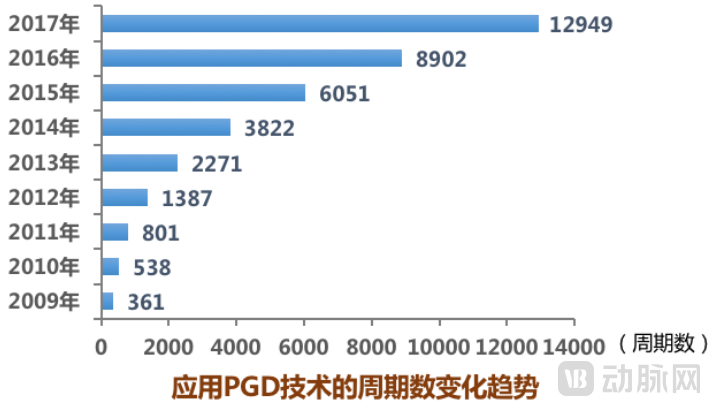
According to data reported at the 2019 Shanghai IFFS Conference, the number of PGD-assisted reproductive cycles in China increased from 361 cases in 2009 to 12,949 cases in 2017.The market penetration rate of PGT is increasing year by year.. Meanwhile, the number of medical institutions approved to conduct human assisted reproductive technology (ART) in China increased from 37 in 2004 to 536 in 2020, while the number of ART institutions qualified for preimplantation genetic diagnosis (PGD) rose from 4 to 78.
To improve China’s demographic structure and proactively address population aging, China has been gradually relaxing its fertility policies in recent years. According to data from the National Bureau of Statistics, the implementation of the “selective two-child” policy in 2013, followed by the nationwide rollout of the universal two-child policy in October 2015, led to a noticeable upward trend in the two-child fertility rate. The introduction of the three-child policy in May this year further implies an increase in the number of advanced maternal age pregnancies, signaling accelerated growth momentum for the assisted reproductive technology market.
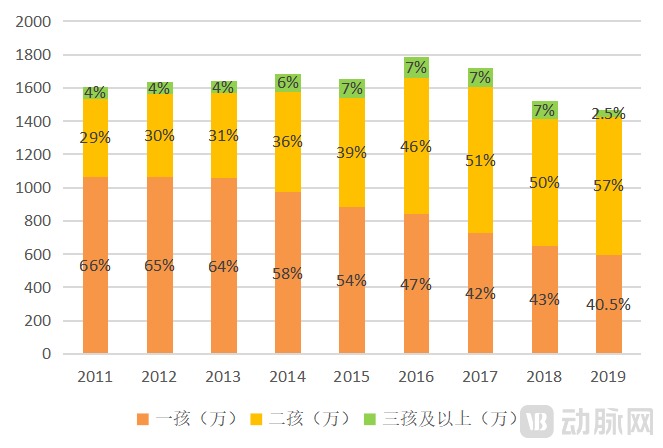
Statistics on First, Second, and Third-or-More-Births Among Newborns in China (Source: National Bureau of Statistics)
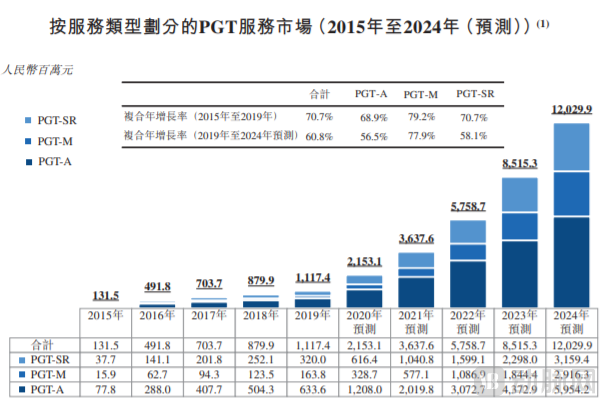
The continuous increase in the number of ART institutions in China is driven by the surging demand for PGD testing. With the introduction of the three-child policy and increased state support for the application of assisted reproductive technologies, China’s PGT services market is expanding rapidly. According to data from the IPO prospectus of an assisted reproduction company, China’s PGT services market grew from RMB 100 million in 2015 to RMB 1.1 billion in 2019, representing a compound annual growth rate (CAGR) of 70.7%. The market is projected to exceed RMB 12 billion by 2024, with a CAGR of 60.8% from 2019 to 2024.
Several reproductive genetics technology service companies have gathered in China's PGT services market. Among them, Peking Jabrehoo Med Tech Co., Ltd., as a national high-tech enterprise that was among the first to promote the mature clinical application of next-generation sequencing (NGS) technology in PGT services,Its number of testing cycles accounts for approximately 50% of the total PGT cycles conducted by reproductive centers with PGD qualifications in mainland China, and its business coverage extends to nearly 80% of assisted reproductive centers with PGD qualifications.(Data source: the company’s internal data and publicly available statistical data from the Chinese Society for Reproductive Medicine Annual Conference), it has become a leading provider of PGT products and services in China.
It is reported that JabrehooCommitted to building a direct sales team and providing comprehensive, integrated services, since 2013, the company has been assisting ART institutions in applying for PGD accreditation and building NGS laboratories. It has successfully helped more than thirty hospitals obtain PGD accreditation and assisted over twenty institutions in establishing their PCR/NGS laboratories, earning high recognition for its brand within the industry.
Jabrehoo PGT-A Kit: More Precise Testing and Safer Localized Deployment
In 2015, Peking Jabrehoo Med Tech Co., Ltd. entered into an exclusive strategic partnership with Illumina, a giant in gene sequencing. The two parties jointly developed and promoted diagnostic methods and solutions based on next-generation sequencing (NGS) technology for the field of assisted reproduction, focusing on Illumina’s MiSeqDx NGS platform. By applying Jabrehoo’s independently developed PGT-related reagents and analysis software, they aimed to create a clinical testing platform and clinical solutions that are more suitable, accurate, and efficient. During the recently highly anticipated fourth China International Import Expo, Jabrehoo and Illumina signed a further cooperation agreement.

Schematic Diagram of the Zhongyi Kangwei PGT-A Kit
The PGT-A kit recently approved for Jiabao Renhe employs Illumina’s sequencing-by-synthesis (SBS) chemistry, which detects nucleotide incorporation as DNA strands are extended one base at a time, enabling parallel sequencing of millions of DNA fragments. By leveraging the natural competitive dynamics among four labeled nucleotides, this approach minimizes bias and delivers more stable sequencing performance in repetitive and homopolymer regions, thereby ensuring high accuracy of sequencing results. Consequently, the company is also exploring high-resolution PGT-A testing to address the challenge of detecting embryonic abnormalities associated with microdeletion and microduplication syndromes.
"with higher data qualityReversible Terminator Sequencing“It not only meets the clinical testing needs of PGT-A, but also demonstrates advantages in PGT-M (monogenic disorder testing) and PGT-SR (structural chromosomal variation testing), which require higher precision. It is reported that as of October 31, 2021, Jabrehoo’s PGT-M testing had covered 920 monogenic diseases.”Primer design success rate exceeds 98%; The Microseq (microdissection) patented technology, jointly pioneered with CITIC-Xiangya, enables testing without the need for a proband.The success rate of distinguishing translocation carriers is as high as 99%.. The company is also actively advancing the application for Class III medical device registration certificates for its PGT-M and PGT-SR kits.
Prior to the approval of third-generation IVF products, ART institutions mostly relied on collaborations with third-party platforms for preimplantation genetic testing (PGT) and subsequent data analysis by sending out samples. With the approval of related products, this previous service model is set to change, enabling ART institutions to independently procure PGT medical devices that have obtained registration certificates when conducting clinical testing programs. To further achieve a true in-house closed-loop next-generation sequencing (NGS) testing workflow, Jabrehoo has additionally launched automated bioinformatics analysis software, PGXCloud and PGXStation, which leverage cloud platforms and local servers, respectively, to automate the process from PGT-A testing data to report generation.
PGXStation is a PGT-A data analysis software currently applying for Class II medical device registration. Leveraging years of accumulated embryo testing data from its PGT operations, the company integrates artificial intelligence technology to continuously optimize the software. This provides clinicians with a more standardized, intelligent, and user-friendly data analysis system, while also assisting in the accumulation of personalized clinical data to facilitate diverse downstream analyses.
The software is deployed directly within hospitals, ensuring that data neither leaves the facility nor is uploaded to the cloud. With the implementation of regulations such as China’s Data Security Law, leading hospitals are increasingly inclined to choose medical products that guarantee data compliance and robust security.The issuance of this certificate will enable Peking Jabrehoo Med Tech Co., Ltd. to hold all three required certifications for its sequencers, test kits, and software., ensuring the security and compliance of samples and data. This truly localized strategy will become the trend for the entire assisted reproductive testing industry in the future.
From the first registration certificate for third-generation IVF products to more precise PGT-A kits, and further to localized deployment supporting measures, the third-generation IVF testing market has evolved from scratch toward standardization and maturity. This progress aligns with the Chinese government’s strong support for the assisted reproductive technology (ART) sector in recent years, including the introduction of the “three-child” policy and its supporting measures. These initiatives have shifted the public focus from merely “being able to conceive” to achieving “eugenics,” with ART testing service providers playing a pivotal role in this transition.Every small step forward by each company in the industry will collectively constitute a major leap for China’s reproductive health sector.。