

One Year On: Where Does Tencent Stand in Its Healthcare Journey?

Tencent Healthcare
Developer of Digital Healthcare Products
“The ‘Tencent Healthcare’ mini program has connected with over 3,000 public hospitals across China, providing residents with convenient and personalized medical services. Vaccine services have been launched in 70 cities nationwide, covering more than 7,200 vaccination institutions. Through WeChat’s connectivity, electronic health cards are now available in 21 provincial-level administrative regions and over 2,400 hospitals, enabling a single code for seamless access, medical consultations, and health management…”
In Wuhan’s Optics Valley, Tang Daosheng, Senior Executive Vice President of Tencent and CEO of the Cloud and Smart Industries Group, released a suite of data, disclosing the latest progress in Tencent Healthcare’s business. This marked the kickoff of the medical track at the annual Tencent Digital Ecosystem Conference.
It has been less than two years since Tencent officially launched the Pandemic Zone within the Medical Health module on the WeChat Pay page in January last year, providing medical services to over 1 billion WeChat users.
At this year's conference, Tencent once again provided“WeChat Electronic Health Card Open Platform 3.0,” “Medical Insurance WeChat,” and other solutions, and released the White Paper on Cloud Applications of Medical Imaging and Cybersecurity Capability Assessment, providing security guarantees and standards for the digital medical imaging industry.
Looking forward, we can see Tencent’s advantages in foundational technologies and its inherent ability to connect with users. Looking back, we can see a vision of Tencent Healthcare that has already become a reality.
Integration of Digital and Physical Realms: Tencent’s Healthcare Business Landscape
A review of the products unveiled by Tencent at the conference, whether it be the “WeChat Electronic Health Card Open Platform 3.0” or “Medical Insurance WeChat,” revealsA Key Component of Tencent Healthcare’s Strategic Landscape: “Integration of Digital and Physical Realities”
What Tencent currently needs to do is to promote deep industry integration through its “C2B Dual-Engine Drive” strategy, build the “Two Sides and Four Bridges” framework for digital healthcare, and ultimately achieve this goal in its healthcare journey.
“Two Sides, Four Bridges” may seem abstract, but when broken down, it isWith users and the industry as two pillars, and electronic health cards, electronic medical insurance vouchers, medical consultation aids, and popular science medical information as four bridges.
For users,Tencent leverages the “Tencent Healthcare” mini program as a platform to provide individual users with an integrated online-to-offline service ecosystem, connecting them with public hospitals, public health services such as vaccination, and authoritative medical science popularization.
Industry-focused,It leverages its technological capabilities in artificial intelligence, big data, and cloud computing to empower the digital transformation of medical institutions and medical consortia, as well as the development of city-level resident health information platforms, public health management and early warning systems, and smart health insurance management and decision-making, thereby enhancing industry services and scientific governance capabilities.
Above the “Two Sides” are the four “Bridges” connecting healthcare and health:
First, leveraging electronic health cards to integrate service scenario innovations with health record management;
Second, leverage the electronic health insurance certificate to connect settlement scenarios with intelligent healthcare decision-making;
Third, improve healthcare efficiency through diversified medical assistance tools;
Fourth, by providing authoritative medical science popularization information, we bridge the information gap between doctors and patients.
Based on this strategic framework, the solution presented by Tencent at the conference is more readily understandable.By leveraging innovative applications such as the Electronic Health Card, Smart Medical Insurance, and Imaging Cloud as entry points, we are building the new digital infrastructure for the healthcare system. With data as the core driver, we provide industry-wide capability support ranging from underlying technologies to upper-layer applications, thereby constructing the digital infrastructure for the healthcare sector.
Take its “WeChat Electronic Health Card Open Platform 3.0” as an example.
In December 2018, to address the healthcare access bottlenecks of “one hospital, one card; redundant card issuance; and lack of interoperability,” the General Office of the National Health Commission issued the “Opinions on Accelerating the Popularization and Application of Electronic Health Cards,” calling for the establishment of a unified digital health identity credential for residents in the internet era—a “single-card” system for cross-institutional and cross-regional health services.
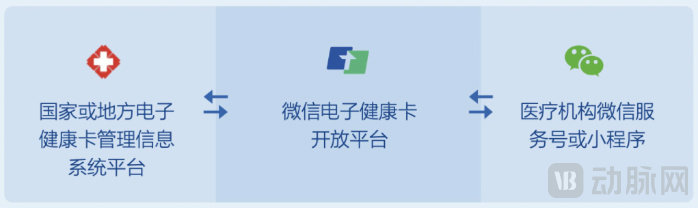
In response to this demand, Tencent launched an innovative platform for the issuance and application of electronic health cards, which has been newly upgraded to the “WeChat Electronic Health Card Open Platform 3.0” at this ecosystem conference, achieving comprehensive openness from underlying technologies to scenario-based applications.
Leveraging Tencent’s internet technologies and its user reach capabilities within the WeChat ecosystem, this platform upgrades electronic medical cards to electronic health cards. It provides healthcare institutions across various regions with services such as issuing electronic health cards via WeChat, facilitating interconnectivity among medical institutions and promoting the intelligent integration of “Internet + Healthcare Services.” Meanwhile, it enhances the efficiency of electronic health card adoption in different regions and improves residents’ service experience and sense of benefit.
Specifically, the Electronic Health Card Open Platform will achieve three major upgrades.
First, the “Basic Installation Package,” which includes essential components such as identity authentication, integration with card management systems, one-click association, and batch upgrades, enables the basic functionalities of the Electronic Health Card through a low-cost, rapid-integration approach;
Second, the “Custom Installation Package” modularizes technical and innovative application tools through Tencent Healthcare’s proprietary services, jointly developed ecosystem services, and service providers’ proprietary services, making them available as a repository to facilitate the innovative upgrade of Electronic Health Card applications;
Third, leveraging Tencent’s user reach and service capabilities, we provide partners with online-to-offline operational capabilities.
From papyrus to the internet, humanity has never ceased its reliance on communication and social interaction over the course of thousands of years. Tencent, which started out by providing communication and social services, appears to be aligning with this trend, establishing a “natural” connection with its users.With this advantage in hand, reaching out to user groups seems even easier for Tencent.
Today, leveraging its user connectivity and technological capabilities, Tencent has established various user service touchpoints—including Official Accounts, Mini Programs, self-service terminals, and service windows—and integrated three major scenarios: medical care, health management, and public health.
As of July 2021, Tencent had partnered with 21 provincial-level administrative regions, including Hunan and Shandong. Moving forward, the company will leverage the core applications and technological infrastructure of the Electronic Health Card to drive innovation in a broader range of service scenarios.
Furthermore, leveraging WeChat as a “connector” and drawing on its capabilities in technology, resources, and ecosystem integration, Tencent has actively advanced the development of smart medical insurance and launched the Smart Medical Insurance Reform Service Platform—the WeChat Medical Insurance Platform.
This solution, on the one hand, will leverage the WeChat ecosystem to popularize and enrich mobile medical insurance payment scenarios.On the other hand, it can leverage capabilities in AI, big data, and cybersecurity to support the development of smart medical insurance platforms.
For users, the electronic medical insurance certificate can be activated simply through WeChat. For industry institutions, they can enjoy support for "connectivity" and "reach" in the construction of regional integrated healthcare, as well as an exclusive workspace for medical insurance professionals.

In offline healthcare settings, users can access a full suite of services throughout their medical journey—including outpatient appointment registration, fee payment, mixed insurance-and-self-payment options, post-payment guidance, and notifications of changes to their medical insurance accounts—simply by accessing the hospital’s official WeChat account. Additionally, quick payment via the Medical Insurance Code is available across various scenarios, such as hospital service counters, self-service kiosks, prescription slips, internet hospitals affiliated with public hospitals, and pharmacies.
Currently, the platform is undergoing trial operation at the Jinan Municipal Healthcare Security Administration.
Expanding into Broader Healthcare Scenarios
At the meeting,Wu Wenda, Vice President of Tencent Healthcare, summarized the development positioning of its healthcare business using three keywords and outlined Tencent’s four major engines and development goals.He stated:
The first keyword is “professional.” We identify opportunities from the perspective of actual industry needs, focusing not on showcasing technological sophistication but on solving practical problems.
The second keyword is “long-term,” which means adopting a long-term development perspective to assess industry value, rather than pursuing short-term commercial gains.
The third keyword is “Openness,” leveraging rich, diverse, and decentralized digital tools to empower independent innovation within the industry.
Guided by these three strategic pillars and powered by four core engines—users, technology, security, and ecosystem—Tencent leverages its foundational technologies and capabilities to address practical challenges in healthcare delivery and health insurance.
On one hand, we focus on the healthcare industry to help address its developmental challenges, including improving service accessibility, enhancing management efficiency, and optimizing resource allocation. On the other hand, we collaborate with the healthcare sector to drive continuous innovation, serve the general public, and contribute to the building of a Healthy China.
Under Wu Wenda’s interpretation, Tencent’s path in healthcare becomes clearer.
Overall, WeChat Pay will serve as the entry point for Tencent Healthcare to reach a broad population, while enterprises will provide users with services such as internet-based medical care, health management, and authoritative professional content.Meanwhile,Leverage the platform’s role to complement hospital official accounts, enabling hospitals to reach users within their service scope via the WeChat public platform.
On one hand, it supports hospital operations by providing consistent and in-depth capabilities for integrated online-offline patient services. On the other hand, it collaborates with ecosystem partners, hospitals, and other institutions to offer service products such as health management, rehabilitation, medical service packages, and transitional care, thereby enhancing hospitals’ service capabilities.
Under the guidance of this strategy,Tencent Healthcare will transition from “serving patients” to “serving users,” covering a broader population, through three stages: cognitive communication, health management and plan matching, and regular check-ups with precise admission.
As the digitalization of healthcare progresses to its current stage, we can see that internet hospitals have established an emerging medical model that integrates online and offline services, and they will play an even greater role in the future.
Against this backdrop, online healthcare has expanded from its previous focus on disease diagnosis and treatment to encompass broader health wellness and public health prevention; the industry’s strategic emphasis has shifted from being institution-centric to patient-centric; and the focal point of medical care has evolved from connecting with patients to engaging with users, which may well become the industry’s answer.
What Tencent aims to do is leverage its ability to connect with users, focusing on individual and family health, to engage the broader population with limited health awareness, participation channels, and knowledge. This approach guides them from health screening and education into more comprehensive health management scenarios.
Transformation Never Stops
It is particularly meaningful that this conference is being held in Wuhan, a city that has witnessed the profound integration of technology and healthcare.
One year ago, Tencent joined hands with Wuhan, the heroic city, to tackle pandemic-related challenges. Through macro-level planning for the city’s overall public health informatization system, digital transformation of large and medium-sized regional medical institutions, construction of integrated online-offline medical services, and upgrades to personal health management tools, Tencent provided comprehensive solutions to meet diverse healthcare needs.
During the pandemic, Tencent collaborated with Zhongnan Hospital of Wuhan University to urgently develop an AI-assisted diagnostic system for COVID-19, capable of identifying lung lesions associated with the disease in seconds. Within two months, the system facilitated CT scan interpretations for over 24,000 patients and was deployed via mobile cabin units to support regions such as Hebei Province, thereby enhancing physicians’ efficiency.
Tencent has pioneered the “Wuhan Model” for building smart healthy cities, offering a digital practice to support the “Healthy China” initiative. This “Wuhan Model” serves as a blueprint for Tencent’s further expansion into healthcare and the development of smart healthy cities. It also exemplifies the in-depth implementation of Tencent’s “C2B dual-wheel drive” strategy and its comprehensive penetration into the medical industry.
Today, digital technologies such as the internet, artificial intelligence, big data, blockchain, the Internet of Things (IoT), and cloud computing are permeating every aspect of smart healthcare, weaving an expansive ecosystem for digital health. In the future, Tencent will collaborate with its partners to deepen this ecosystem. Leveraging its “integration of digital and real economies” strategy, Tencent’s healthcare journey is poised to unlock increasingly broad avenues for innovation.
Beneath the setting sun, by the shores of East Lake, the Tencent Digital Ecosystem Conference has once again drawn to a close. Yet, it is evident thatThe digital transformation of healthcare and Tencent’s journey in the medical field will never cease.