

Papa Files for IPO: The On-Demand Senior Care Platform Connecting Young 'Papa Pals' with Aging Adults

Papa
Elderly and Family On-Demand Service Provider
2017, South Florida, USA.
Two cousins stood solemnly at the bedside of an elderly man with white hair.
The elderly man in the bed was their grandfather. Unfortunately, just minutes earlier, they had learned that he had been diagnosed with early-onset dementia.
The man with the thick beard standing to one side was lost in thought. His grandfather needed care assistance, but traditional American home health providers were not suitable; the elderly grandfather was more in need of the loving companionship and familial devotion of his grandchildren.
Later, by chance, the bearded man connected his grandfather with a young, empathetic companion, yielding unexpected results. With the company of this grandchild-like young person, the grandfather seemed like a different man: he became more communicative, his mental state appeared significantly improved, and his life was filled with a cheerful and relaxed atmosphere.
Years later, whenever reporters asked the bearded man about his reasons for starting the business, he would always recall that moment of contemplation: “My grandfather didn’t want traditional care, but he needed his grandson to help him… yet we couldn’t always be there.”
Yes, this bearded man is Andrew Parker, the founder of Papa, a U.S.-based in-home elderly care platform.
Interestingly, this family appears to have a particular penchant for healthcare entrepreneurship. Jake Rothstein, Andrew Parker’s cousin, who was present at the time, co-founded Papa with his cousin before leaving the company to establish UpsideHom, an elderly care company, in 2020. UpsideHom secured $2.3 million in seed funding in July 2021. Meanwhile, Parker’s father, Randy Parker, founded the telemedicine company MDLive, where Parker once served as Vice President of Health Systems.
Less than a year after its previous funding round, Papa announced in early November 2021 that it had secured $150 million in Series D financing.
This funding round was led by SoftBank Vision Fund 2, with participation from TCG, Tiger Global Management, Canaan, Initialized Capital, and Seven Seven Six.
To date, Papa has cumulatively raised over $240 million in funding, with its latest valuation standing at $1.4 billion.
The company disclosed that the funds from this round will be used to onboard more partners and enhance the platform’s data analytics capabilities, thereby delivering a more personalized experience for Papa members.
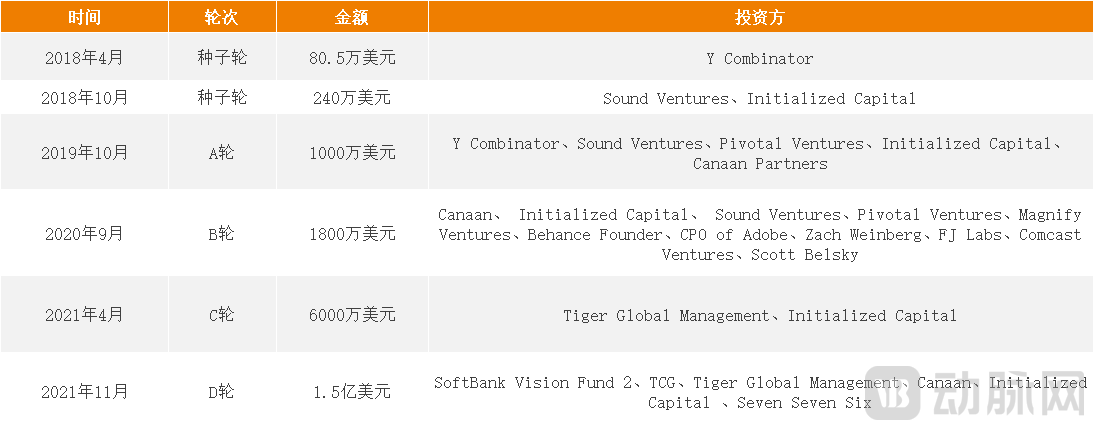
Data Source:crunchbase, Chart by VCBeat
Papa is a home-based elderly care platform that provides “on-demand services” to help seniors address challenges such as transportation and household chores. Papa’s corporate mission is to help cure loneliness among older adults in the United States.
“Loneliness among older adults is one of the greatest public health challenges, imposing substantial human and economic costs,” said Lydia Jett, Partner at SoftBank Investment Advisers and Director at Papa, in an interview. “Amid a shortage of healthcare providers and a growing recognition of social needs as health needs, Papa is leveraging technology to build a new caregiving workforce that provides companionship and support to those in need.”

Papa’s Current Core Leadership Team
The secret to Papa’s standout success and clear lead in the fiercely competitive elderly care market boils down to just three words—Young People。
As the elderly population in the United States continues to grow, significant gaps persist within the traditional healthcare ecosystem. According to research published in JAMA, the COVID-19 pandemic has exacerbated social isolation and internalized loneliness among this demographic, with more than half of older adults reporting that they experience social isolation.
A growing body of research on the “loneliness epidemic” indicates a correlation between social isolation and mortality. According to a 2020 study published in PLOS Medicine, individuals experiencing loneliness have a 50% higher risk of premature death compared to those with healthy social relationships.
The emergence of Papa seeks to alleviate this sense of lonely powerlessness.
Papa Founder and CEO Andrew Parker stated, “We have demonstrated that pairing individuals in need with energetic, compassionate local Papa Pals, combined with the use of data and technology, can significantly improve the lives and health of our members.”
Papa pals,Literally translated as “Dad’s Friend,” this is the core element through which Papa directly connects with users and serves as the foundation for all of Papa’s services. It primarily consists of compassionate college students. These energetic young people provide attentive care to members via phone or in-person visits, alleviating loneliness among the elderly.
This bears a striking resemblance to the common saying, “Spending time with young people makes you feel younger yourself.”
Papa’s core business model is essentially a home-based elderly care platform that connects college students with the senior population.
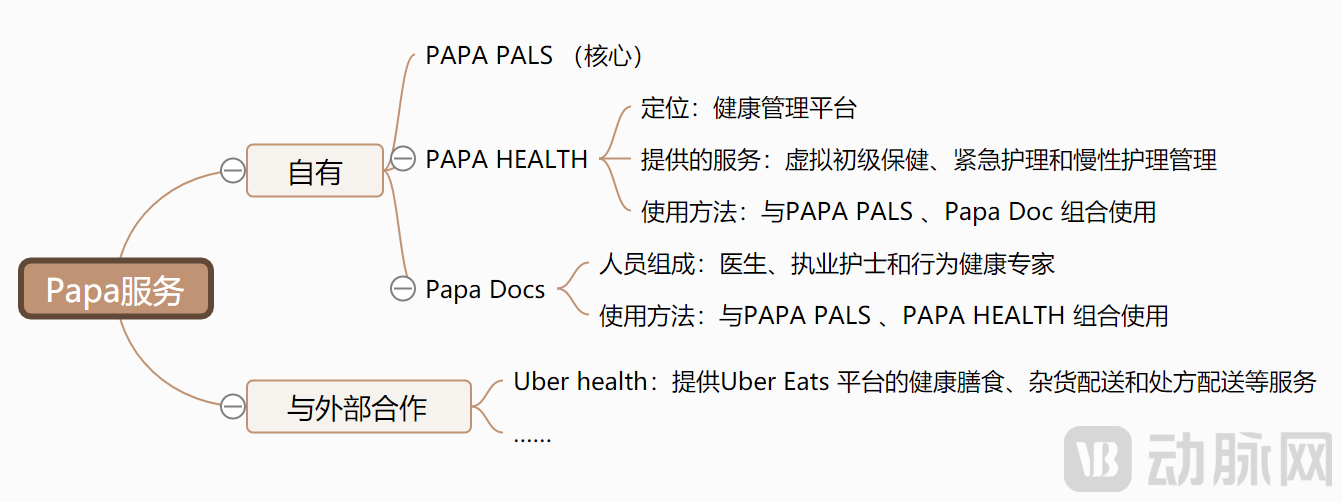
Papa Service Overview; Source: Papa Official Website, Graphic by VCBeat
In terms of service provider recruitment, Papa promotes the concept of “doing good while making money,” similar to part-time work. The primary source of personnel isUniversity StudentTo become a Papa Pal, applicants must submit their information on the official website or register by downloading the Papa Pal mobile app. Papa conducts five rigorous screening steps, including questionnaires, phone interviews, and background checks. Once approved, service providers can browse and schedule their preferred clients, service times, and service types. Subsequent services and transaction settlements are also recorded and completed through the app.
However, according to the company’s public disclosures, a small number of professional caregivers also accept service requests. Undoubtedly, service providers who possess professional nursing skills and deliver care with compassion can offer users a superior experience. As significant trends often emerge from subtle beginnings, if this small cohort of professional caregivers were to become the primary workforce, it could well reshape the competitive landscape.
Papa is planning to launch Pal University in the near future. According to information currently disclosed on its official website, this service will provide free training to users who wish to join Papa, thereby enhancing their practical experience.

Image source: Papa official website
In terms of service content,Papa Pals differ from traditional caregivers. VCBeat compares them across four dimensions—service provider type, target population, service settings, and service content—to facilitate a clearer understanding of the distinctions.
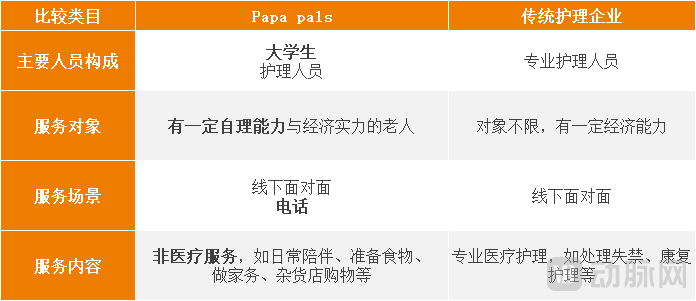
Papa Pals vs. Traditional Caregivers
In terms of commercialization,Papa’s business model is B2B2C. On the B2B side, the primary payers are corporate employers and insurance companies, with Papa integrated as a covered benefit. On the consumer side, end users with needs can purchase services directly. To date, the company has established partnerships with more than 65 health plans, including prominent insurers such as WellCare, Aetna, Humana, and Florida Blue.
According to publicly available information on Papa’s official website, Papa Pals are paid by the hour, with reimbursement for travel expenses and daily and weekly bonuses. Highly capable Papa Pals can earn up to $3,000 per month.
Papa offers a total ofTwo Purchasing Options.One option is pay-per-service based on duration, while the other is a premium membership that charges a fixed monthly fee in addition to service-duration-based fees. However, premium members enjoy a broader range of services, greater personalization, and more meticulous care compared to single-purchase options.
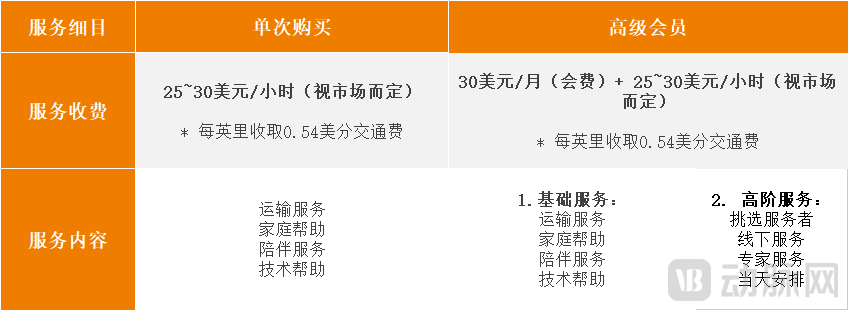
Source: Papa official website; graphic by VCBeat
Papa’s founder and CEO, Parker, previously served as Vice President of Health Systems at MDLive, a telehealth company founded by his father, Randy Parker. This experience enabled Parker to recognize the benefits of virtual care services, paving the way for Papa’s subsequent launch of its online offering, Papa Health.
According to Paker,Papa HealthIt is not a standalone service, but rather part of the Papa Pals experience, as members require assistance from Papa Pals to complete any service.
This service connects members with Papa Docs, reinforcing offline Papa Pals services while bridging the online channel to create a closed-loop service ecosystem.
Papa DocsComposed of physicians, nurse practitioners, and behavioral health specialists. With the assistance of Papa Pals, members browse and schedule services online through Papa Health, and connect with Papa Docs to receive targeted, personalized care.
This not only helps reduce the travel burdens for the elderly, but also enables a more accurate understanding of their needs. To some extent, it also mitigates the adverse impact of the COVID-19 pandemic on older adults.
According to Papa’s public disclosures, its membership grew by 500% year-over-year due to the impact of the COVID-19 pandemic.

Image source: Papa official website
MeanwhilePapa also actively collaborates with other health companies.A typical example is the partnership with Uber Health. When members have transportation needs, Papa care coordinators can directly arrange rides through Uber Health, which also provides services such as grocery delivery and prescription delivery.

Image source: Papa official website
According to the data from the seventh national census, China's population aged 60 and above reached 264 million, making it the country with the largest elderly population in the world today.
On the other hand, China's population is currently characterized by increasing life expectancy and declining fertility rates.
Furthermore, influenced by traditional Chinese views on elder care, the majority of elderly individuals opt for aging in place.
The advantages of aging in place are evident: it is cost-effective from an economic perspective, and from an emotional standpoint, it better aligns with the Chinese cultural preference for staying close to one’s roots and enjoying familial happiness.
According to survey data from iiMedia Research and forecasts by the Qianzhan Industry Research Institute, China’s elderly care industry is projected to exceed RMB 10 trillion in scale in 2022, with an annual growth rate surpassing 15%. The elderly care services sector is poised to become the most promising “sunrise industry.”
However, the corresponding market challenges are also evident—China’s elderly care market is still in its nascent stage, characterized by disorder, unclear standards, and unproven profitability models. How to enable seniors to age comfortably and with dignity at home has become an urgent issue for elderly care enterprises to address.
VCBeat has selected four startups in the elderly care sector to share with our readers.If you are also engaged in the elderly care industry and have never been covered by VCBeat, feel free to add the author at the end of the article as a friend.
Chunhui Wisdom,Established in 2019 and headquartered in Shenzhen, the company has built a socialized service network that leverages technologies such as the Internet of Things (IoT) and artificial intelligence to provide round-the-clock safety monitoring for seniors’ home environments. It enables early detection of abnormal daily routines, intelligently predicts potential health risks, and mitigates underlying hazards. By delivering considerate and timely cloud-based and local services to the elderly, it pioneers a new model of smart elder care. Currently, Chunhui Smart’s service network has expanded to 21 provincial-level regions and over 150 cities across China, with partial penetration into rural and urban grassroots communities. (Related reading“Spring Sunshine Smart Care: Expanding to 21 Provinces and Municipalities in One Year, Building an Online + Offline Home-Based Elderly Care Service Network”)
Unity of Knowledge and Action,Established in 2019 and headquartered in Zhuhai, Guangdong Province, the company is a service-oriented enterprise dedicated to providing integrated medical and elderly care services for disabled and semi-disabled seniors. Its core business focuses on delivering construction and operational solutions for medical-nursing care centers in public hospitals, pioneering a new integrated model combining “daily living assistance + medical nursing + long-term care fund.” The company has recently secured angel financing amounting to nearly RMB 10 million. (Related reading[Exclusive] Zhixing Heyi Completes Multi-Million Yuan Angel Financing Round, Focusing on the Niche Sector of Integrated Medical and Elderly Care)
Orange One Health,Founded in 2018, Chengyi Health was co-established by Xie Qi, former COO of Yihu Daojia (a leading O2O provider of at-home medical and nursing services), and CEO Xu Hao. Chengyi Health has developed a people-centric, comprehensive home healthcare solution ecosystem, which includes “Duodianyi,” a platform for appointment registration facilitating physicians’ multi-site practice; “Chengyi Health,” an out-of-hospital patient guidance, consultation, and management platform; and “Chengyi Nurse,” a part-time service platform for healthcare professionals. The company has established partnerships with Baidu Health, Haodafu, Xiaohe Doctor, and other industry players. In terms of financing, Chengyi Health secured pre-A series RMB investment from prominent U.S. venture capitalists in 2019. (Related reading“Reaching 300,000 Patients Through 1,000 Physicians: Orange One Health Aims to Be the Link Between Pharmaceuticals, Healthcare, and Insurance”)
Kumquat Health, founded by Wang Yuxi, a professional nurse with eight years of experience working at a Grade A tertiary hospital. Leveraging a nursing team primarily composed of professional nurses, Jinju Health has created a consortium model centered on its medical, nursing, and elderly care business lines, offering “24/7 Internet + Hospital + Medical Insurance + Comprehensive Home-Based Health Management Services.” Currently, Jinju Health collaborates with multiple Grade A tertiary hospitals, as well as Shuyu Pingmin Pharmacy and Youren Medical. (Related reading“Kumquat Health: Building Nurse IPs to Bring Professional Medical Care into Homes and Communities”)
References:
1. Papa Official Website
2. Heather Landi<Startup tackling loneliness among seniors expands into virtual primary care>
3. Heather Landi<Papa, Uber Health team up to coordinate rides for seniors to tackle social isolation>
4. Paige Minemyer <Papa closes $60M series C funding round>
5. PLOS MEDICINE<Social Relationships and Mortality Risk: A Meta-analytic Review>https://journals.plos.org/plosmedicine/article?id=10.1371/journal.pmed.1000316