

How Roche, Eli Lilly, and Novo Nordisk Are Tackling Digital Diabetes Management
Global top pharmaceutical companies are flocking to invest in a billion-dollar medical trend: the digital diabetes management sector.
Why? The reason lies in the immense potential of this market. According to data released by the International Diabetes Federation, the number of diagnosed diabetes patients in China reached 116 million in 2019, and is projected to reach 200 million by 2030. This vast population of individuals with diabetes has created a substantial demand for blood glucose management.
However, entering the field of digital diabetes management is not an easy path.Statistics from VCBeat show that during the peak period of 2015 to 2016, digital diabetes management companies in China sprang up like mushrooms, with their number exceeding 500, creating a boom known as the “War of a Hundred Diabetes Platforms.” By 2021, most of these companies had vanished, with fewer than 30 surviving.It is evident that achieving innovative breakthroughs in this field is extremely challenging.
Despite the twists and turns ahead,Top pharmaceutical companies, including Roche, Eli Lilly, and Novo Nordisk, continue to actively explore better solutions.How are these top pharmaceutical companies actually performing? What issues remain in the digital management model for diabetes? How will the industry evolve in the future? In the following section, VCBeat provides an overview and analysis to offer insights for the industry.
China is one of the countries with the fastest-growing diabetes prevalence worldwide. According to the latest epidemiological survey on diabetes in China, published online by a Chinese research team in BMJ, the overall prevalence of diabetes among adults in China is 12.8%.
As one of the four major chronic diseases prioritized for prevention and control under the Healthy China Action (2019–2030), diabetes has become a significant chronic disease threatening human health. Unfortunately,There is currently no cure for diabetes; it can only be managed effectively through various treatment modalities.
The more challenging aspect lies in,Current diabetes population management still faces numerous pain points, including low rates of patient awareness, treatment, and control.It is important to note that all these figures do not exceed 50%. Moreover, in the three large-scale epidemiological surveys conducted over the past decade, these figures were even lower.
In other words, many patients are unaware that they have the disease, and even among those who are aware and have initiated treatment, ideal control outcomes are not always achieved.As can be seen, there are numerous bottlenecks at every stage for diabetes patients, from disease onset to awareness and then to treatment.
How to Address This Issue? The Key Lies in Strengthening Self-Management. However, the Primary Setting for Self-Management Is Outside the Hospital,The patient lacks effective motivation for self-management, resulting in poor adherence to key aspects such as blood glucose monitoring and medication usage. This is the primary bottleneck affecting glycemic control and has led to two negative outcomes.
First, individual health will face greater threats. In addition to causing damage to the kidneys, nervous system, retina, and cardiovascular and cerebrovascular systems, diabetic complications are also the primary cause of renal failure, cardiovascular and cerebrovascular events, blindness, and amputation among numerous patients in China. Poor adherence further increases the risk of developing these complications.
Second, the rising incidence of diabetes complications has further exacerbated the healthcare burden. In addition to increased hospitalization and medical expenses borne by patients themselves, the financial burden on both public health insurance and commercial insurance has correspondingly risen. Furthermore, pharmaceutical companies’ sales volumes have been adversely affected due to patients’ non-adherence to prescribed medications and failure to undergo recommended blood glucose monitoring.
It is precisely on this basis that digital management of diabetes has become a competitive arena for innovative enterprises.Theoretically, digital management of diabetes refers to a medical behavior management process in which healthcare institutions or physicians leverage digital diabetes management software and smart hardware to deliver remote interventions for individuals with diabetes (including those with diagnosed diabetes and those with prediabetes), or in which these individuals utilize relevant digital tools for self-management, with the aim of controlling the condition and preventing its progression.The core logic here is to improve patient adherence.
However, significant challenges remain in translating concepts into practical implementation.
Since patient compliance is closely linked to pharmaceutical companies’ product sales and operational costs, it has become an intrinsic driver for these companies to deepen their engagement in digital diabetes management.
Consequently, global pharmaceutical giants such as Novo Nordisk, Eli Lilly, and Roche are actively strategizing around the digital management of diabetes. The following section provides a detailed review and analysis of the strategic initiatives undertaken by these three companies.
First, let’s look at Novo Nordisk, which emphasizes the integration of hardware and software.As a biopharmaceutical company with a 98-year history, Novo Nordisk is at the forefront of the world in the research, development, and sales of insulin for diabetes treatment. It has also been exploring digital management of diabetes for many years.
In terms of hardware, Novo Nordisk launched the smart insulin pen, NovoPen, which was updated to its sixth generation this year. As China’s first connected and data-transmitting smart insulin pen,NovoPen® 6 can store and display previous insulin injection doses, injection times, and more., and can also share data with other diabetes management apps to help patients achieve more precise blood glucose control.
In terms of software,This year, Novo Nordisk launched the patient education platform—the “NovoCare” mini program., and jointly launched an intelligent conversational engine developed by Microsoft (Asia) Internet Engineering Institute, as well as“Teacher Xiao Nuo,” which provides text and speech support through Microsoft Azure Cognitive Services.“Teacher Xiao Nuo” will also be integrated into the “NovoCare” mini program.
In terms of operation, patients can simply scan the QR code on the medication box using WeChat to conveniently access the “NovoCare” mini-program. Empowered by AI, they can acquire knowledge about diabetes medications while achieving better disease management.
It is worth noting that Novo Nordisk established the “Diabetes Net” on PC platforms at an early stage for patient education, while providing a physician education platform through “Tangyi Net.” The subsequently launched “Novo Nordisk Medical News” and “Novo Nordisk Clinical Trials” have focused primarily on advances in the academic field of diabetes. As the trend toward mobile adoption has become increasingly prominent, both “Diabetes Net” and “Tangyi Net” have transitioned to mobile platforms, operating via official WeChat accounts. Through these initiatives, Novo Nordisk has built a multi-tiered patient and physician education platform.
In other words, with the launch of the “NovoCare” mini-program, Novo Nordisk has established a comprehensive support system for physicians, nurses, researchers, and patients through tiered content and tool-based applications. By continuously sharing the latest treatment technologies, R&D advancements, successful case studies, and clinical experience, it is enhancing the diagnosis and treatment standards for diabetes.
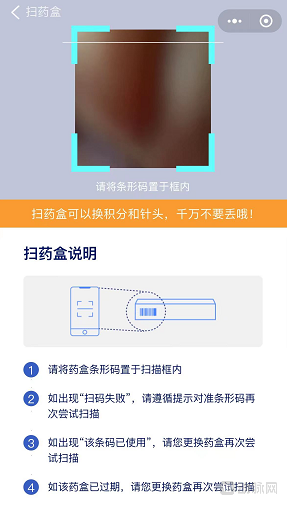
(NovoCare Mini Program Interface, screenshot from VCBeat)
In summary, the “NovoCare” mini-program is fundamentally an AI-powered tool, positioned as a “smart assistant” for diabetes patients and an “out-of-hospital aide” for physicians. The decision to partner with Microsoft was driven by its strengths in artificial intelligence technology.Therefore, Novo Nordisk is primarily focused on leveraging artificial intelligence to more broadly and efficiently disseminate diabetes-related disease knowledge, thereby supporting patients in their daily disease management.
Turning to Eli Lilly, the company focuses on the digitalization of internal and external processes and the synergy of resources.Eli Lilly, which has been strategically positioned in the field of digital diabetes management for many years, identified a key milestone for its intensified efforts atLaunched version 1.0 of the “Diabetes Heart World App” in 2013This is also the first diabetes management mobile application exclusively developed by a pharmaceutical company, which has gradually evolved from “providing professional disease knowledge to help patients effectively understand and manage their condition” to “offering stronger Lilly support and services to people with diabetes.” At its core, it enables patients to access multi-dimensional services from Lilly, including disease education and medications.
Moreover, the Eli Lilly IT team has developed “Li Yi,” a one-stop physician service platform based on WeChat, to facilitate communication, interaction, and service delivery with physicians. The Li Yi platform enables functionalities such as meeting invitations, pre-conference information access, conference check-in, real-time voting, real-time Q&A, surveys, and medical knowledge retrieval.
Of course,In addition to digital tools such as mobile apps, the digitization of internal processes is also critically important.In terms of specific implementation, Eli Lilly has undertaken digital adaptation within the company, including equipping sales teams with iPads, electronic promotional interactive materials, and remote meeting tools to better support sales and marketing efforts with digital solutions; it has also built a robust data platform that integrates internal and external data to leverage data analytics in supporting business decision-making.
During its exploration, Eli Lilly realized that patient management relying solely on a mobile app was far from sufficient. In 2017, Eli Lilly partnered with Tencent’s Tang Daifu and DXY to launch the “Eli Lilly Diabetes Youxing Care Project” (hereinafter referred to as the “Youxing Project”). This project represents a practical application of the “diabetes management ecosystem” concept, aiming to connect patients, physicians, socially engaged individuals, and professional healthcare providers.Leverage the expertise and experience of the three parties in diabetes treatment, patient education, physician relations, digital technology, and internet innovations to bridge the “last mile” in care services for patients with diabetes.
In this project, after patients measure their blood glucose levels using a smart glucometer, the data is automatically displayed on WeChat. This information is simultaneously accessible to both the attending physician and family members, enabling timely external interventions from the DXY Care Center. Furthermore, Eli Lilly has established an institutional account on the DXY app, leveraging multiple channels to assist physicians in managing patients with diabetes.
As can be seen above, in the digital management of diabetes, Eli Lilly emphasizes the digital synergy and integration of internal and external processes, while also strengthening collaboration with resources across various sectors of healthcare.
Roche’s strategy in the field of digital diabetes management encompasses both acquisitions and localized partnerships.In June 2017, Roche acquired the Austrian diabetes management platform mySugar for $75 million, making it a core component of its new patient-centric digital health care services for diabetes.
In localized collaborations, Roche Diagnostics has worked closely with Jingli Technology, a domestic innovative enterprise.Pioneered a proactive, full-course management model for out-of-hospital diabetes patients based on the WeCom ecosystem, enabling low-cost, high-efficiency, and large-scale management of over 20,000 out-of-hospital diabetes patients.
Specifically, the proactive management model for the full course of diabetes care outside hospital settings comprises three core components.
First, a digital management platform was established.This model is built on the WeChat ecosystem, leveraging a more efficient, intuitive, and convenient digital management platform to help patients and physicians monitor patients’ blood glucose fluctuation data, while providing patients with accessible health education content through interactive features, live streaming, short videos, and other formats.
For physicians, this is achieved by tracking out-of-hospital patient data through patient management tools, thereby improving patient adherence and follow-up rates while reducing management costs.
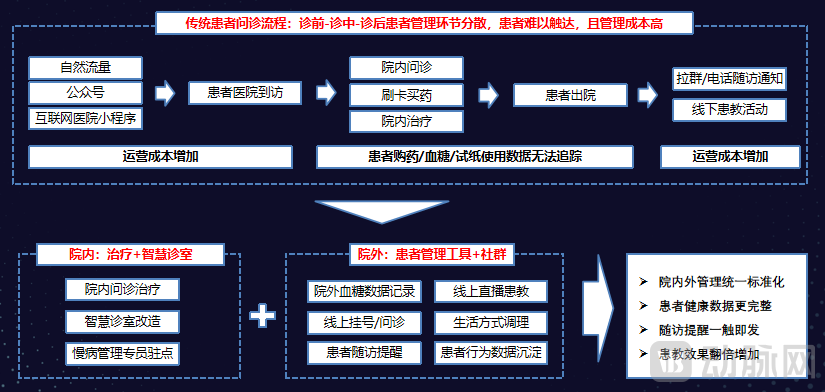
From the patient’s perspective, patients scan a physician’s QR code or the information on an e-commerce package insert card to access the platform. Through refined patient engagement leveraging a “community + mini-program + enterprise WeChat tagging system,” the platform facilitates effective out-of-hospital management for patients.
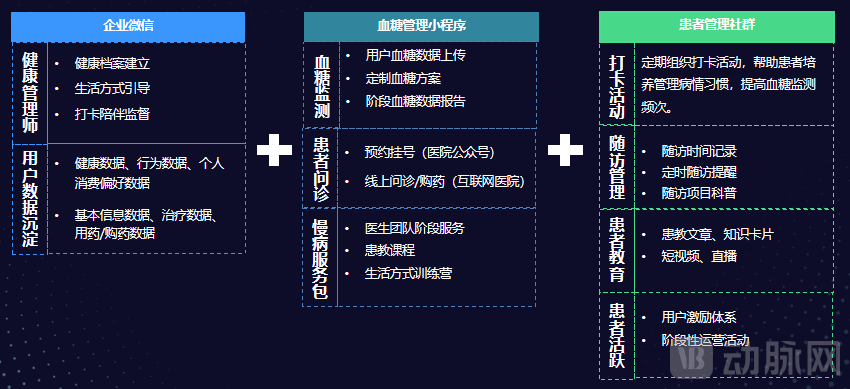
To ensure practical implementation in specific user operation scenarios, Jingli Technology has developed MagicFlow, an intelligent SCRM tool featuring channel-specific QR codes for traffic acquisition. This tool not only automatically tags patients by their acquisition channel but also assigns patient labels and sets up automated welcome messages. Notably, in community management, when patients mention @Ai Assistant to ask questions within the group, the assistant’s sidebar (script library) identifies the inquiry. Staff can then reply with a single click by selecting “Send,” while the system promptly records patient behavioral patterns, manages user tagging, and provides online consultation services.
Additionally, MagicBot can leverage intelligent tasks to precisely deliver relevant patient education materials to patients with specific conditions, and provide regular follow-up visit reminders based on their historical medication adherence and consultation records. By leveraging MagicFlow and MagicBot, patient management efficiency can be significantly enhanced.
Second, a blood glucose management service team based on the “innovative technology + professional empowerment” model was established.Roche Diagnostics and Jingli Technology have assembled a professional blood glucose management service team for diabetes patients, comprising physicians, medical assistants, health managers, AI robots, and patient key opinion consumers (KOCs). This team delivers more specialized medical guidance and leverages AI-driven intelligent information distribution to ensure patients receive highly efficient responses. Meanwhile, real KOCs share their experiences within community groups, providing patients with empathetic emotional support.
Third, a patient-centered service model has been established.Unlike the traditional physician-centered medical model, the proactive whole-course management model for out-of-hospital diabetes patients is entirely patient-centered. It replaces conventional management with service-oriented care, treats patients as regular users, and employs edutainment approaches to influence patients, stimulate their active participation in activities, and promote proactive blood glucose management.
To enable precise user management, Jingli Technology collaborated with Roche Diagnostics during the early stages of the project to conduct user persona research. Survey data revealed that Roche Diagnostics’ users are primarily distributed across the age groups of 30–40, 40–50, and 50–60 years. Notably, 46% of users had been diagnosed with diabetes for less than one year, and 36.53% monitored their blood glucose levels once or twice per week. Users expressed a strong desire for more comprehensive knowledge on blood glucose management and holistic management plans. Based on these insights, Jingli Technology’s operations team continuously optimized community content and launched engaging initiatives such as the “28-Day Light Sugar Mutual Support Training Camp,” encouraging individuals with diabetes to actively participate in blood glucose monitoring.
Through three phases of free training, the check-in participation rate among patients with diabetes exceeded 90%, and the completion rate surpassed 80%. These patients have recognized the importance of dietary management in blood glucose control and developed a consistent habit of logging their meals. Over more than a year of continuous operation, patients have genuinely experienced being surrounded by professional care and support even outside the hospital setting, thereby enhancing their adherence to health management, as well as their sense of benefit and engagement.
From the above three perspectives, the core objective is to ensure service effectiveness.So, how is service quality controlled? After all, it directly impacts the ultimate effectiveness of blood glucose management.The aforementioned approach was attempted from four dimensions: underlying database accumulation, AI-driven information stratification, attention to the psychological well-being of individuals with diabetes, and the positive role of Key Opinion Consumers (KOCs).
Taking AI-driven information stratification as an example, how can services be made effective? The core lies in distinguishing which patient needs should be assessed by AI, which by physician assistants, and which by health managers. Therefore, achieving information stratification—assigning appropriate questions to the right roles—is essential for rapid response and resolving patients’ inquiries. However, to achieve such stratification and ensure quick responses, it is first necessary to leverage AI’s natural language processing capabilities, and second, to have a comprehensive underlying disease database that enables roles such as virtual assistants to provide prompt replies. This, in turn, hinges on strong technological R&D capabilities.
However, beyond ensuring the effectiveness of patient services, Roche and Jingli Technology also prioritize gaining a deeper understanding of patients, which requires meticulous attention to detail.For example, in traditional out-of-hospital patient management, follow-up often consists merely of a phone call to inquire about the patient’s condition, leaving healthcare providers unaware of the patient’s actual status. To address this, Jingli Technology has established a digital management platform. Once patients join the designated group by scanning a QR code before discharge, a dedicated team provides continuous support for their daily life, medication adherence, and health management outside the hospital, thereby achieving multi-party collaborative care.
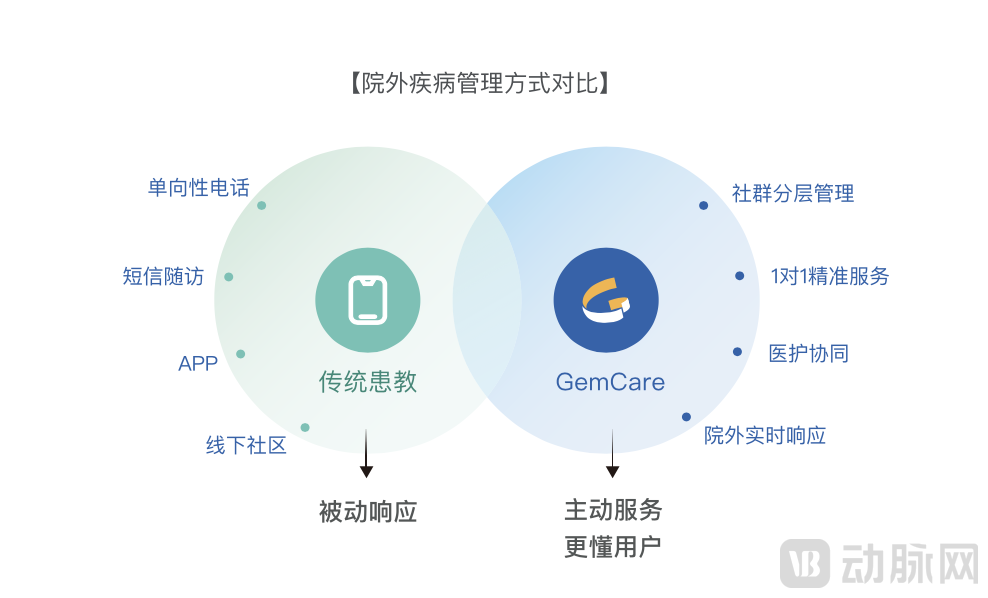
Moreover, the healthcare industry is fundamentally different from other industries, as it is more closely related to life and health, soThe warmth of service is also extremely important to patients.Therefore, Roche and Jingli Technology have established a familiar doctor-patient relationship in out-of-hospital settings, “extending” offline doctor-patient connections to online platforms.
For instance, when patients visit a doctor’s outpatient clinic and scan the doctor’s QR code to join a group chat, this group becomes part of the doctor’s private-domain traffic for daily engagement, fostering stronger emotional connections. Furthermore, regular knowledge sharing, doctor-patient interactions, and live streaming sessions within the group can enhance patients’ motivation to manage their blood glucose levels, thereby facilitating glycemic control in an enjoyable manner. In community operations, Jingli also pays attention to the psychological well-being of individuals with diabetes by organizing peer exchanges and hosting “worry-relief” chat rooms, where patients and professional medical teams work together to address post-diagnosis concerns and psychological issues. The combination of professional medical services and social interaction enables patients to experience the humanistic warmth of medicine on physiological, psychological, and social levels.
In summary, Roche has made diverse attempts in the digital management of diabetes, with a particular emphasis on localized collaboration and synergy with domestic innovative enterprises, thereby delivering digital solutions better tailored to the Chinese population.
Top pharmaceutical companies are actively positioning themselves to drive the advancement of digital diabetes management. In this process, VCBeat identifies three key industry trends worth noting.
First, as the conversion efficiency of potential users improves, the market space will continue to expand.Driven by the continuous advancement of digital diabetes management solutions, the awareness, treatment, and control rates among patients with diabetes are steadily improving. It is foreseeable that, with the emergence of more enterprises and high-quality solutions, coupled with improvements in national public health standards, the number of diabetes patients entering the controlled management phase will continue to rise.
It is worth noting that, at the current stage, the elderly population generally exhibits low reliance on mobile internet, resulting in limited penetration of digital diabetes management among patients. However, over time, the proportion of diabetic patients who are highly dependent on the internet will gradually increase, making them more receptive to digital management tools. The convergence of these factors will drive growth in the potential user base for digital diabetes management.
Second, the maturation of payers, represented by health insurance, will create greater potential for the expansion of digital diabetes management.From the current industry landscape, the collaboration models between digital diabetes management providers and pharmaceutical/medical device companies or pharmacies are well-defined, with tangible results achievable in the short term. In the realm of commercial insurance, although health insurance coverage remains limited, this sector is experiencing rapid growth, offering significant potential for further exploration of digital diabetes management solutions.
According to data from the China Banking and Insurance Regulatory Commission (CBIRC), the original insurance premium income for health insurance business reached RMB 817.27 billion in 2020, a year-on-year increase of 15.7%; while the total original insurance premium income for insurance companies amounted to RMB 4.5 trillion in 2020, representing a year-on-year growth of 6.1%. This indicates that the growth rate of health insurance significantly outpaced the overall industry average. The “Opinions on Promoting the Development of Commercial Insurance in the Social Services Sector,” jointly issued last year by thirteen ministries and commissions including the CBIRC and the National Development and Reform Commission (NDRC), set a target to expand the market size of commercial health insurance to exceed RMB 2 trillion by 2025.
Third, as the influence of high-quality domestic digital health enterprises grows, collaborating with them facilitates global pharmaceutical companies’ localization strategies in China.As is well known, industry development is a process of mutual learning and collaboration among enterprises. In the field of digital health, top pharmaceutical companies are not only building their own teams but also strengthening cooperation with domestic innovative enterprises.
In the specific realm of digital diabetes management, high-quality innovative enterprises in China, represented by Jingli Technology, are continuously deepening their expertise and achieving breakthroughs. What Roche values is Jingli’s pioneering development of an innovative and effective proactive whole-course disease management model for out-of-hospital patients. By leveraging digital products and compassionate services, this model enhances patients’ disease awareness and self-management capabilities, truly realizing low-cost, high-efficiency, and large-scale effective management of out-of-hospital patients.
As Chinese innovative enterprises enhance their technological capabilities and deepen their business model exploration, their global influence is expected to grow. We look forward to seeing an increasing presence of Chinese companies in the global market in the future.
Of course, this is no easy path. Yet, as the saying goes, “All difficult things in the world must begin with what is easy, and all great things must begin with what is small.”Every small step taken by innovative enterprises will serve as a cornerstone for the industry’s giant leap forward.