

Ge Yafei, Chairman of Mingdu Zhiyun: Building a Digital Trust Ecosystem through Smart Pharma Manufacturing and Intelligent Regulation
China has elevated the digital economy to a prominent position in its national strategy, proposing to integrate the internet, big data, artificial intelligence, and other
To deeply integrate digital technologies with the real economy, we must develop the digital economy and build a Digital China.
The digital wave is revolutionizing industries across the board. For pharmaceutical companies, how can they seize digital opportunities to achieve intelligent upgrades and become a core driving force in global pharmaceuticals? At the recently held 2021 China SaaS Conference,Ge Yafei, Chairman of Mingdu Zhiyun, delivered a presentation titled “The Digital Journey of a Single Pill,”It shared the opportunities and challenges facing pharmaceutical companies, as well as how they can leverage digital technologies to empower intelligent pharmaceutical manufacturing, reshaping trust systems through more compliant, safe, and reliable R&D and production, thereby promoting the sustainable and healthy development of the industry. VCBeat has compiled its insightful perspectives.

Ge Yafei, Chairman of Mingdu Zhiyun
Amidst the digitalization trend and the developmental transformations brought about by the pandemic,For China’s pharmaceutical industry to enhance overall production standards and mitigate safety risks, it faces not only the pressure of achieving a smooth transition to digital transformation but also the challenge of rebuilding trust.
It is well known that drug research, development, and manufacturing constitute an extremely complex and lengthy process. However, once a core breakthrough is achieved, its contribution to humanity is immeasurable. From the novel “PD-1” anti-cancer therapy consecutively creating multiple miracles of “clinical cure” in advanced-stage cancer cases, to the news that CAR-T therapy, priced at 1.2 million yuan per dose, can completely eradicate cancer cells sweeping through the medical community, the emergence of compliant pharmaceuticals, particularly various innovative therapies, has brought hope of survival to patients with difficult-to-treat and rare diseases.
Pharmaceuticals also possess a “dual nature.” Non-compliant drugs, once they enter the market, will pose significant threats to public life and health safety, as well as undermine the social credibility of the pharmaceutical industry.
Safety and compliance oversight in the drug research, development, and manufacturing process is of paramount importance. However,The overall level of digitalization in China's pharmaceutical industry remains relatively lagging, characterized by reliance on manual recording and control, as well as low utilization efficiency of data. This not only constrains production efficiency but also increases the risk of safety hazards across various operational stages.
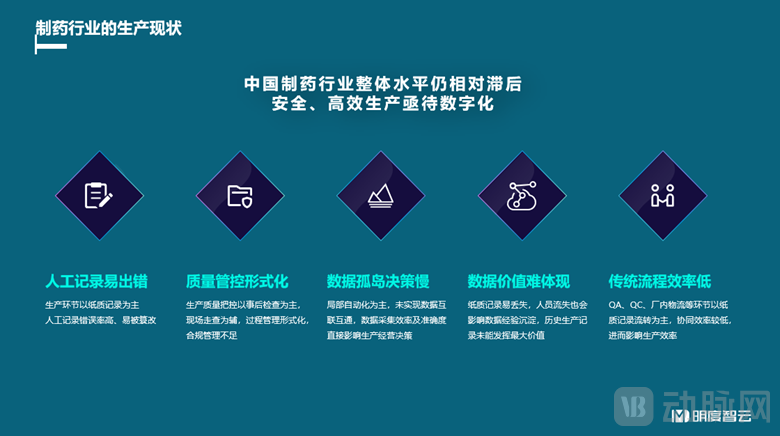
From the Changsheng Biotechnology vaccine fraud scandal in 2018 to the “toxin gate” involving antihypertensive drugs, a series of pharmaceutical safety incidents have sparked intense public concern. How could production records be falsified? How did substandard drugs enter the market? These incidents have led the public to question the safety of pharmaceutical manufacturing in China’s domestic industry, causing social trust to plummet to an all-time low.
Ge Yafei stated, “I am deeply outraged by the fact that China has failed to produce even a single pediatric vaccine adequately, followed by subsequent revelations of negative cases involving pharmaceutical safety. The pharmaceutical industry is directly linked to public health and life safety. Recurring issues related to backward production quality and management within the industry have dealt a severe blow to the domestic and international reputation of China’s pharmaceutical sector.”
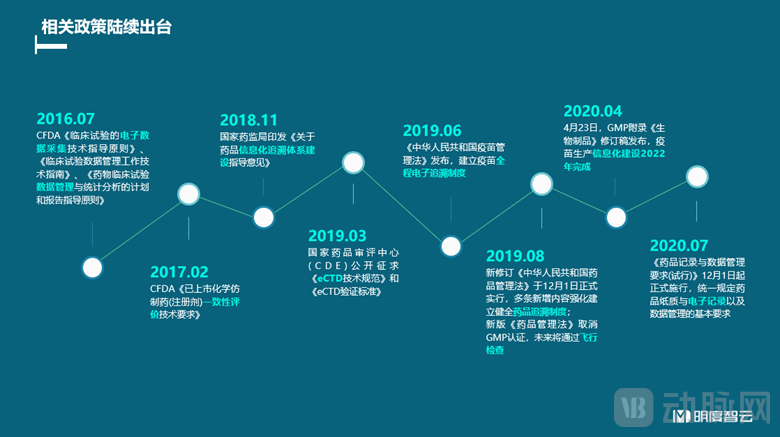
“Fortunately, the state has attached great importance to this issue and successively issued a series of documents. Among them, the Guiding Opinions on the Construction of Drug Information Traceability System, released on October 31, 2018, became a watershed moment for the development of the entire industry.”
The multi-party trust relationship among society, regulatory authorities, and pharmaceutical companies is becoming increasingly strained, and the entire market is urgently awaiting a solution that “addresses both the symptoms and root causes.” Undoubtedly,The core solution is digitalization.
It is evident from the intensive issuance of policies by regulatory authorities in recent years regarding drug research and development, production traceability, and consistency evaluation thatDigitization will become a key means for regulatory authorities to trace drug quality and safety.
Over the past decade, China’s pharmaceutical industry has experienced rapid development, with its current market growth rate reaching 2.2 times that of the global market. However, in terms of the pace of digital transformation, China’s pharmaceutical industry lags significantly behind its overseas counterparts.
The digital transformation journey of overseas pharmaceutical companies began around 2010, and they are currently in a stage where initial digitization has been largely completed, with expansion underway toward intelligent upgrading. In contrast, the inflection point for digital development among Chinese pharmaceutical companies occurred around 2020; the sector is currently in the early stages of digitization, characterized by high growth rates but low penetration as the prevailing industry norm.
Chinese pharmaceutical companies are eager to harness the momentum of the digital intelligence era, seize opportunities for innovative breakthroughs, and become a core force in the global pharmaceutical industry; however, their digital transformation journey remains long and arduous. Mindu Zhiyun aims to accelerate this digital transformation for pharmaceutical enterprises.
Ge Yafei stated, “The original intention behind founding MindCloud was, on one hand, rooted in our recognition of and confidence in the development of national digital technologies, and on the other, derived from our reverence for and sense of mission toward the pharmaceutical industry. Safeguarding every medication and protecting every patient is MindCloud’s unwavering commitment to its clients, consumers, and society as a whole.”
As a leading digital service provider for pharmaceutical companies, Mingdu Zhiyun addresses the digitalization needs across multiple scenarios—including R&D, production, and quality management—by leveraging technologies such as cloud computing, big data, the Internet of Things (IoT), artificial intelligence, and digital twins.Launched a full-stack digital product matrix covering R&D, manufacturing, and logistics, truly realizing the “digital journey of a single pill” to meet the needs of pharmaceutical companies at every stage of development.
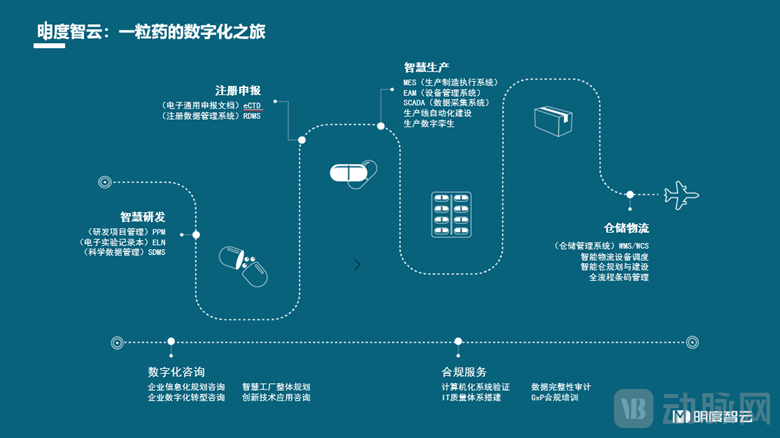
Notably, digital products were previously dominated by large foreign corporations. As a company with fully independent research and development capabilities in the digital sector, Mingdu ZhiyunPossesses one of the first domestically certified MES "first-set" products,and has gained widespread application and recognition within the industry.
“Both personally and on behalf of Mindu Zhiyun, I firmly believe that digitalization and AI technologies will reshape every industry, and that every industry deserves to be reimagined through these innovations. This is precisely what Mindu Zhiyun is undertaking. We are committed to pursuing depth over breadth—aiming for a depth of 100 meters rather than a width of 100 meters. By leveraging our core proprietary products, we help pharmaceutical companies achieve regulatory compliance while enhancing quality and efficiency. Furthermore, we enable comprehensive traceability across the entire lifecycle of a drug, from raw materials, production processes, and formulations to the overall manufacturing workflow,” said Ge Yafei.
“In the future, Mingdu Zhiyun will gradually refine its product layout. It aims to differentiate itself from the software of past segmented industrial internet platforms by avoiding overly heavy and cumbersome features, thereby achieving lightweight and SaaS-based solutions.”
To strengthen intelligent drug supervision, the Zhejiang Provincial Medical Products Administration has launched the “Black Box” project. This initiative enables dynamic monitoring of key production processes in pharmaceutical manufacturing enterprises—including material management, production processes, quality control, and product release—by leveraging digital technologies to compute risk data models and automatically generate risk warning signals within the “Black Box.”
Mingdu Zhiyun, as a digital service provider, participated in the construction of the "Black Box" project.Leveraging the digital infrastructure built for pharmaceutical companies by Mingdu Zhiyun, the data regulatory processes between drug administration authorities and pharmaceutical enterprises have been integrated.
Currently,With the digital support provided by Mingdu Zhiyun, multiple well-known pharmaceutical companies, including Conba, Zhebei Pharmaceutical, Saiermo Pharmaceutical, and Anglikang Pharmaceutical, have participated in the “Black Box” project.Significantly enhanced patients' confidence in drug safety.
The “black box” initiative enables smart regulation, yielding positive implications for patients, pharmaceutical companies, and the National Medical Products Administration (NMPA), thereby reconstructing the trust relationship among these three stakeholders.
For patients,The “Black Box” project has improved drug quality and helped the state establish a complete traceability chain for pharmaceutical raw materials, production, warehousing, and logistics, ensuring that patients can use medications with confidence.
For pharmaceutical companies,“Black Box” Initiative: Accelerating Enterprise Digitalization for Compliance, Cost Reduction, and Efficiency Enhancement; Correlating and Visualizing Data Across Man, Machine, Material, Method, Environment, and Measurement (5M1E) in the Entire Production Process to Facilitate Rapid Problem Identification and Recall; Implementing Real-Time Monitoring of Deviations or Anomalies to Enable Early Detection and Warning of Quality Issues, Thereby Improving Product Quality.
For the National Medical Products Administration,The “Black Box” project facilitates off-site supervision of pharmaceutical manufacturers’ production processes, including material management, manufacturing procedures, quality control, and product release; it analyzes and provides early warnings based on data recorded by manufacturers, and summarizes production process data to ensure the authenticity and reliability of regulatory data.
Finally, Ge Yafei stated, “We hope to leverage Mindray Cloud’s full-stack digital product matrix, which covers multiple stages including R&D, production, and logistics, to achieve co-creation, sharing, and mutual benefit with all parties across the industrial chain, jointly building a digital trust ecosystem. Ultimately, this will help every patient in China and around the world access better, more affordable, and safer medications they can trust.”
“In recent years, Mingdu Zhiyun has experienced rapid growth. We are fortunate that an increasing number of like-minded partners, recognizing the future of China’s industrial digitalization, have chosen to join the ranks of pharmaceutical digital transformation and become part of Mingdu, committing themselves to achieving the goal of digital transformation in the pharmaceutical industry. Among them are senior industry experts, business elites, and seasoned algorithm R&D teams from Roche, GSK, Novo Nordisk, Hengrui Medicine, WuXi AppTec, Siemens, Honeywell, Thermo Fisher Scientific, HP Inc., Huawei, the UCL Gatsby Computational Neuroscience Unit, Veeva, and other leading organizations. We welcome more talented individuals to join us in shaping the blueprint for the digital and intelligent transformation of China’s pharmaceutical industry!”