

21 Medical Projects Honored in China's National Science and Technology Progress Awards: Focus on Oncology, Cardio-Cerebrovascular Diseases, Advanced Imaging, and AI-Driven Diagnostics
In early November, the 2020 National Science and Technology Awards Conference was officially held at the Great Hall of the People.
A total of 157 projects were awarded the National Science and Technology Progress Award, including two Grand Prizes, 18 First Prizes (including one Innovative Team), and 137 Second Prizes. According to the published list, 21 of the 157 award-winning projects were from the medical field, accounting for 13.4% of the total awards.
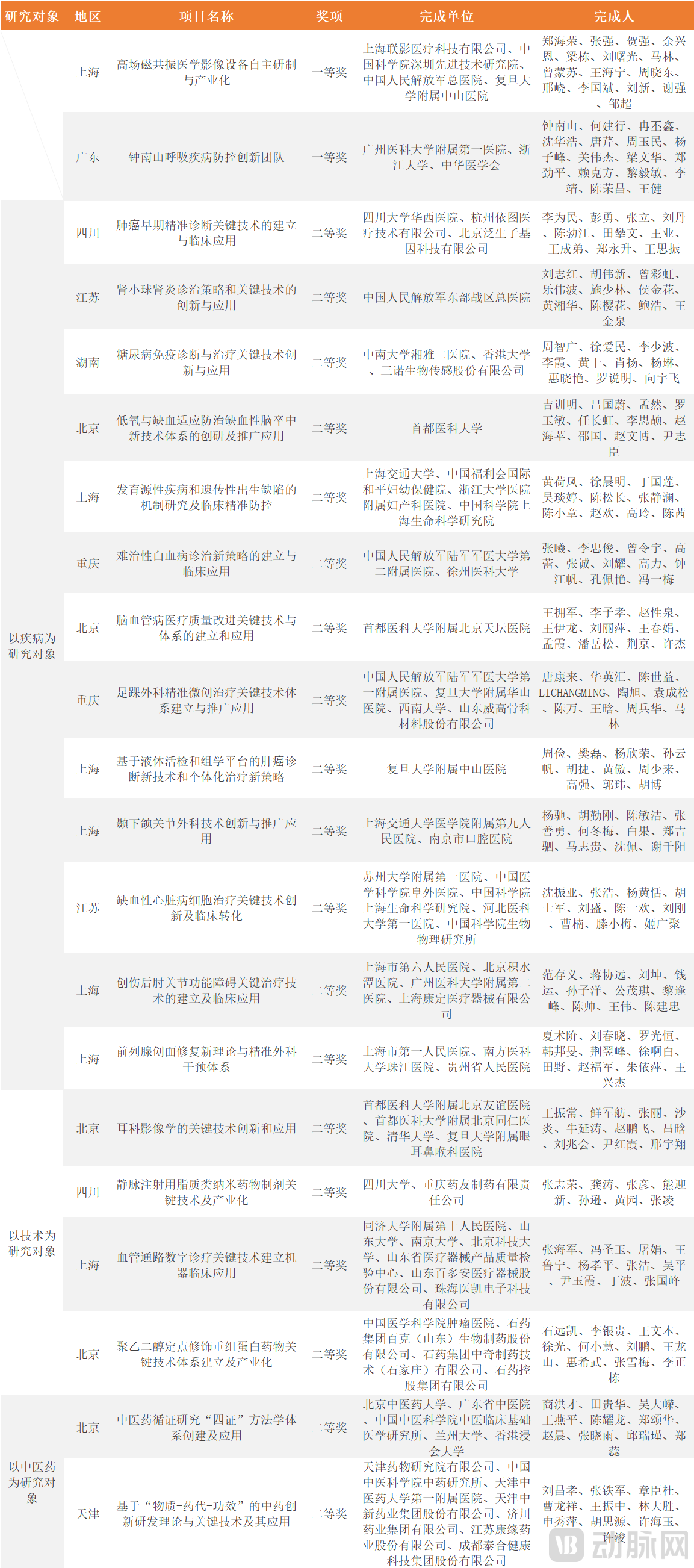
Among them, there were 2 first-prize awards, including one for an innovative team; 9 second-prize awards, covering cancer, stroke, and deficiency.Cardiovascular diseases, tumors, diabetes, nephritis, hereditary birth defects, leukemia, benign prostatic hyperplasia, and other disease areas. VCBeat conducted a statistical analysis of these 21 award-winning projects.
According to the data, there were two healthcare-related projects awarded the First Prize of the National Science and Technology Progress Award. These included one innovative team—the Zhong Nanshan Innovative Team for Respiratory Disease Prevention and Control—and one medical device project titled “Independent Development and Industrialization of High-Field Magnetic Resonance Medical Imaging Equipment.” The latter was the only project among the 21 awardees whose primary completing entity was a private enterprise.
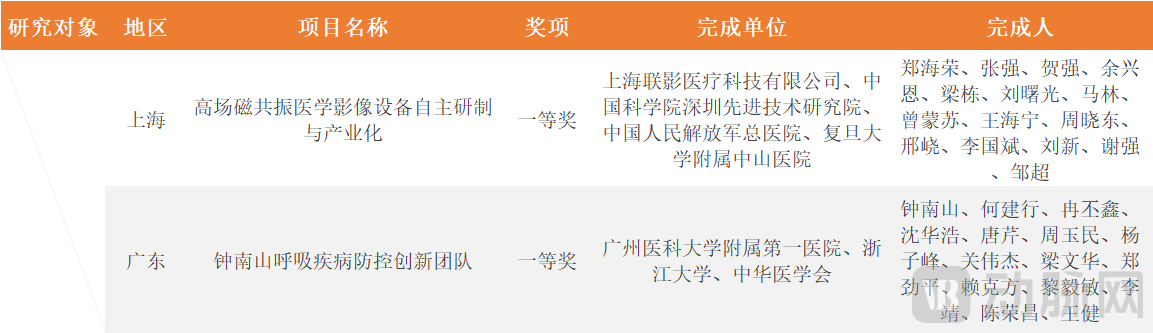
“Independent Development and Industrialization of High-Field Magnetic Resonance Medical Imaging Equipment”The project has achieved breakthroughs in a series of core key technologies, including spectrometers, radiofrequency (RF) power amplifiers, gradient power amplifiers, gradient coils, RF transmit coils, and superconducting magnets.Successfully developed China's first 3.0T high-field MRI scanner, achieving complete system manufacturing and clinical application, thereby filling a domestic gap.China Becomes the Third Country, After the United States and Germany, to Achieve Independent Research and Development of All Core Components for High-Field Magnetic Resonance Imaging Systems.United Imaging Healthcare has also become the first enterprise in the high-end medical equipment industry to win the highest honor in the field of science and technology as the primary completing institution.
Large, cutting-edge medical imaging equipment, represented by magnetic resonance imaging (MRI), is an essential tool for clinical diagnosis. It enables in-depth and detailed observation and analysis of internal human tissues at multiple levels, including structural and functional aspects. It serves as the gold standard for imaging diagnosis of various major diseases, such as those affecting the cardiovascular, cerebrovascular, and nervous systems, as well as tumors, and stands as a significant hallmark of modern healthcare.
Meanwhile, high-field-strength magnetic resonance imaging (MRI) can provide more detailed images of brain structure and function for major frontier scientific research such as brain science, making it an indispensable scientific instrument in the field of research.
Prior to the successful development of this project, only two companies worldwide had mastered the technologies for all core components of magnetic resonance imaging (MRI) systems. Due to the lack of control over core components and critical bottleneck technologies, domestically produced MRI equipment primarily occupied the mid- to low-end markets, with the domestic share of high-end imaging equipment amounting to less than 5%. The most advanced 3T MRI scanners were entirely reliant on imports. As imported equipment was prohibitively expensive, China’s number of MRI units per million population was less than one-tenth of that in countries such as the United States and Japan.
This project increased the domestic market share of Chinese-made magnetic resonance imaging (MRI) systems from 14% in 2013 to 41%.Furthermore, this MRI system is being exported in reverse to the United States, Europe, India, and other regions, marking China’s transition from a net importer to an exporter. This has broken the monopoly held by multinational corporations in this field for over 30 years and reshaped the global industrial landscape of the sector.
Another First Prize-Winning Project “Zhong Nanshan’s Innovative Team for Prevention and Control of Respiratory Diseases" is one of the earliest respiratory disease research teams in China,The team currently comprises 50 members, of whom 96% hold senior professional titles (associate senior level or above) and 88% possess doctoral degrees. It has established 11 national-level platforms, including the National Laboratory and the National Center for Respiratory Medicine.The team is led by Zhong Nanshan, He Jianxing, and Ran Pixi, with key members including Shen Huahao, Tang Qin, Zhou Yumin, and others.
The team has conducted research focused on the key scientific question of “the epidemiological characteristics, molecular mechanisms, and early diagnosis and intervention in the onset and progression of respiratory diseases,” achieving fruitful results in multiple fields, including epidemic prevention and control, chronic disease management, and scientific innovation., including the establishment of a clinical prevention and control system for major respiratory infectious diseases, and promoting early diagnosis, early intervention, and early treatment of diseases such as chronic obstructive pulmonary disease (COPD), asthma, and lung cancer.
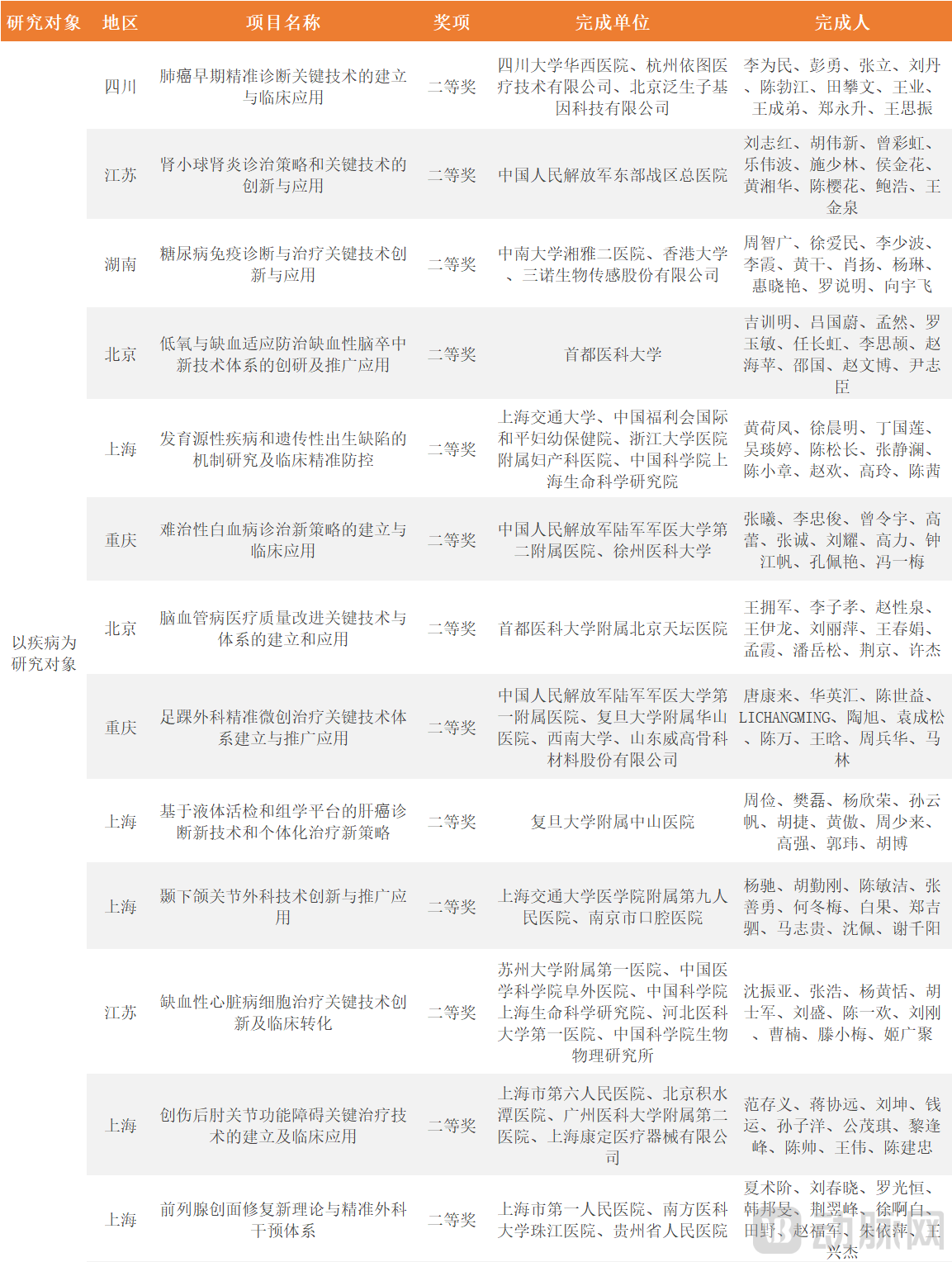
There were 19 projects awarded the Second Prize of the National Science and Technology Progress Award,Thirteen projects, accounting for 68.4% of the Second Prize winners, focused primarily on diseases; four projects, accounting for 21%, focused primarily on technologies; and two projects, accounting for 10.6%, focused primarily on traditional Chinese medicine.
More than half of the award-winning projects focus on diseases as their primary research entry point, tackling challenges in the treatment of severe and refractory conditions. These efforts have yielded innovative theoretical, technical, and application frameworks. By integrating modern technologies such as artificial intelligence, cell therapy, and gene technology, these projects have established theoretical models, developed digital and intelligent therapeutic approaches, produced technological devices, and completed clinical practices, thereby achieving international influence in the field of disease management.
Cardiovascular and Cerebrovascular Diseases
Among the award-winning projects, those focusing on cardiovascular and cerebrovascular diseases were the most numerous, with a total of three., namely “Research, Development, and Promotion of a New Technological System for the Prevention and Treatment of Ischemic Stroke Based on Hypoxic and Ischemic Adaptation,” “Establishment and Application of Key Technologies and Systems for Improving Medical Quality in Cerebrovascular Diseases,” and “Innovation and Clinical Translation of Key Technologies in Cell Therapy for Ischemic Heart Disease.”
“Research, Development, and Promotion of a Novel Technical System for the Prevention and Treatment of Ischemic Stroke Based on Hypoxic and Ischemic Adaptation“Based on the human body’s innate adaptive response to ischemia and hypoxia, this project explored strategies to enhance the tolerance of brain tissue to ischemic injury, yielding a series of innovative achievements.”
First, the "Hypoxic Tissue Adaptation" theory was proposed for the first time.Discovery and Confirmation of the Neuroprotective Effects of Hypoxic Adaptation, elucidating its mechanisms against ischemic and hypoxic injury; secondly,Pioneering the Novel Method of "Remote Limb Ischemic Conditioning", thereby confirming its role in the prevention and treatment of ischemic stroke and elucidating the mechanism of “peripheral intervention, central protection”; thirdly,Development of Specialized Equipment for Remote Ischemic Conditioning of the Upper Extremities, obtained the medical device registration certificate and production license, achieving clinical translation; fourthly,Establishing a New Clinical Strategy for the Prevention and Treatment of Ischemic Stroke Using Remote Limb Ischemic Conditioning of Both Upper Extremities, and develop international guidelines. Formulate the International Guidelines on Remote Ischemic Conditioning for the Prevention and Treatment of Cerebrovascular Diseases, and promote remote ischemic conditioning technology worldwide.
“Establishment and Application of Key Technologies and Systems for Improving the Quality of Medical Care in Cerebrovascular Diseases"The project team aimed to reduce the recurrence, disability, and mortality rates of cerebrovascular diseases over an 18-year period,"Developed a comprehensive suite of precision therapy technologies for cerebrovascular diseases based on imaging features, biomarkers, and novel genetic indicators, resulting in a 37%–73% relative reduction in recurrence rates.
Meanwhile, the teamEstablished a medical quality improvement and translational technology system centered on the standardized application of precision therapy technologies.,can reduce the 1-year recurrence rate of cerebrovascular disease by 28% and the disability rate by 26%, relatively,An effective pathway for the clinical translation of medical technologies has been identified.
The team also established an integrated quality improvement system for cerebrovascular disease care, combining organized management models, hierarchical quality control architectures, and information-based data platforms, thereby enabling real-time monitoring and feedback on the quality of medical services.The system covers 2,497 hospitals across China, effectively promoting the clinical translation and application of appropriate diagnostic and therapeutic technologies, thereby increasing the relative compliance rate with medical quality indicators for cerebrovascular disease by 21%.
“Key Technological Innovations in Cell Therapy for Ischemic Heart Disease and Their Clinical Translation"The project conducts in-depth research on key technologies for cell therapy in ischemic heart disease,"Established a New Theoretical Framework for Cell Therapy in Ischemic Heart Disease, providing theoretical support for the establishment of innovative technologies;Developed Key Technologies for Cell Transplantation, breaking through the bottleneck of cell therapy for ischemic heart disease.
Furthermore,The project team also pioneered clinical translation in China., the application of innovative technologies has significantly improved the clinical efficacy of cell therapy for ischemic heart disease, andEstablished Clinical Application Standards for Cell Therapy in Cardiac Diseases, and promote its application within China.
Cancer Early Screening
There are two projects with cancer as the primary research focus., namely “Establishment and Clinical Application of Key Technologies for Early Precision Diagnosis of Lung Cancer” and “New Liquid Biopsy- and Omics Platform-Based Technologies for Liver Cancer Diagnosis and Novel Strategies for Personalized Treatment.”
“Establishment and Clinical Application of Key Technologies for Precise Early Diagnosis of Lung Cancer"The project reveals the unique molecular and genetic characteristics of lung cancer in young non-smokers,"Establishment of a Novel Low-Dose Spiral CT Screening Technology for Lung Cancer in High-Risk Populations Aged 40 and Above in China, overcoming the challenge of missed diagnoses in early-stage lung cancer; established a radiomics-based prediction model for lung cancer,Developed China’s leading intelligent lung cancer disease database and AI-assisted diagnostic system for lung cancer (pulmonary nodules), overcoming the technical challenges in the precise early diagnosis of lung cancer; by analyzing multi-omics features to elucidate the molecular mechanisms underlying lung cancer evolution,Identification of Molecular Biomarkers for High-Accuracy Early Diagnosis of Lung Cancer, thereby addressing the bottleneck in targeted therapy based on early-stage molecular subtyping of lung cancer.
This project was implemented at West China Hospital. Among 15,996 employees who underwent health examinations at the hospital, 142 cases of lung cancer were identified. If high-risk individuals were screened according to the U.S. lung cancer screening guidelines, the miss rate in this population would reach 74.65% and 90.85%. However,Under the screening protocol proposed in this project, the false negative rates for men and women are only 2.74% and 1.45%, respectively.
“Novel Technologies for Liver Cancer Diagnosis Based on Liquid Biopsy and Omics Platforms, and New Strategies for Personalized Treatment"ProjectEstablished a novel technology for the early diagnosis of hepatocellular carcinoma using circulating microRNAs (miRNAs), and developed an early diagnostic model for hepatocellular carcinoma based on circulating miRNAs., with a 30% higher sensitivity than alpha-fetoprotein (AFP), the tumor marker commonly used in clinical practice for liver cancer (J Clin Oncol. 2011). A concurrent editorial in J Clin Oncol stated that this diagnostic model is expected to become the preferred method for liver cancer screening.
Furthermore, the project team alsoNew Strategies for Personalized Treatment of Liver Cancer to Overcome Tumor Heterogeneity Have Been Developed, systematically investigated tumor heterogeneity in liver cancer and elucidated the mechanisms by which combination therapy enhances therapeutic efficacy (Gastroenterology. 2016). A concurrent editorial in Gastroenterology highlighted that this work reveals the impact of liver cancer heterogeneity on drug sensitivity, underscoring its significant clinical implications;First Elucidation That Targeted Deep Sequencing Can Overcome Tumor Heterogeneity to Identify Targets for Targeted Therapy(J Hepatol, 2017), the construction of a liver cancer-specific targeted deep sequencing protocol to guide clinical practice; largeSignificantly improved the success rate of establishing patient-derived xenograft (PDX) models for liver cancer patients, increasing from 25.5% to 42.2%.;and establish the world’s first PDX database(Int J Cancer. 2019; BMC Cancer. 2018), guiding personalized treatment.
Orthopedics
In the field of orthopedics, two team projects have also won the Second Prize of the National Science and Technology Progress Award,"Establishment and Promotion of Key Technical Systems for Precision Minimally Invasive Treatment in Foot and Ankle Surgery" and "Establishment and Clinical Application of Key Therapeutic Techniques for Post-Traumatic Elbow Dysfunction"
“Establishment and Promotion of Key Technology Systems for Precise Minimally Invasive Treatment in Foot and Ankle Surgery"Project TeamPioneered a Series of Minimally Invasive Arthroscopic Micro-Techniques for the Treatment of Refractory Ankle Joint Injuries, breaking through the contraindications of arthroscopic surgery, it was the first time internationally to use arthroscopic technology to treat advanced ankle joint tuberculosis, increasing the cure rate from 60% to over 95%.
The team also pioneered a minimally invasive single-incision autologous periosteal-bone grafting technique for refractory osteochondral lesions of the talus, achieving an excellent-good rate that set a new international benchmark; additionally, they established arthroscopic double-anchor ligament repair and anatomical isometric reconstruction techniques for the treatment of chronic ankle instability.This technology elucidates the pathogenesis of complex diseases at the heel and establishes a novel strategy for endoscopic cavity creation therapy.
Pioneered the world’s first arthroscopic repair for Achilles tendon rupture, reducing return-to-sports time by 50%, spearheaded the development of China's first evidence-based medicine guideline in the field of orthopedics. This technology has established precise treatment techniques for end-stage joint diseases and complex fractures.
To address the issues of monolithic material composition and low adaptability in implantable prostheses,The project team overcame multiple technical challenges in multi-material composite processes and successfully developed the world’s first personalized 3D-printed talus prosthesis., and in 2016 successfully performed the world’s first 3D-printed talus implantation surgery. By breaking through traditional surgical contraindications, we achieved biological functional reconstruction of the ankle joint, established a series of minimally invasive techniques—including joint arthrodesis, precision navigation, and percutaneous minimally invasive surgery—for treating end-stage joint disease and complex fractures, thereby enabling patients to return to sports rapidly.
“Establishment and Clinical Application of Key Therapeutic Techniques for Post-Traumatic Elbow Dysfunction"The project team established a new clinical classification and functional assessment system for PTES that integrates imaging with function, employing the 'dual-interval' approach,"Achieving Function-Oriented Precise Resection of Pathological Tissues;Pioneering PTES Static and Dynamic Stability Reconstruction Technique, innovating external fixation methods to achieve a combination of "dynamic and static" stability, thereby meeting the goals of early rehabilitation.
Furthermore, the team proposed novel strategies for the prevention and management of three major complications following percutaneous transforaminal endoscopic surgery (PTES), established new standards for heterotopic ossification resection, identified therapeutic targets for heterotopic ossification and facilitated their clinical translation, put forward new neuroprotective strategies to mitigate nutrient vessel injury and reduce dynamic tension, and discovered novel mechanisms underlying neural immune microenvironment reconstruction and tissue adhesion formation.
In addition, projects awarded the Second Prize of the National Science and Technology Progress Award have also focused on research into diseases such as nephritis, diabetes, refractory leukemia, hereditary birth defects, and benign prostatic hyperplasia.
Among the 21 projects awarded the National Science and Technology Progress Award, four focused on key technologies, including medical imaging, nanomedicine formulations, vascular access techniques, and recombinant protein therapeutics. Notably, three of these studies achieved significant breakthroughs in the treatment of cardiovascular, cerebrovascular, and oncological diseases.
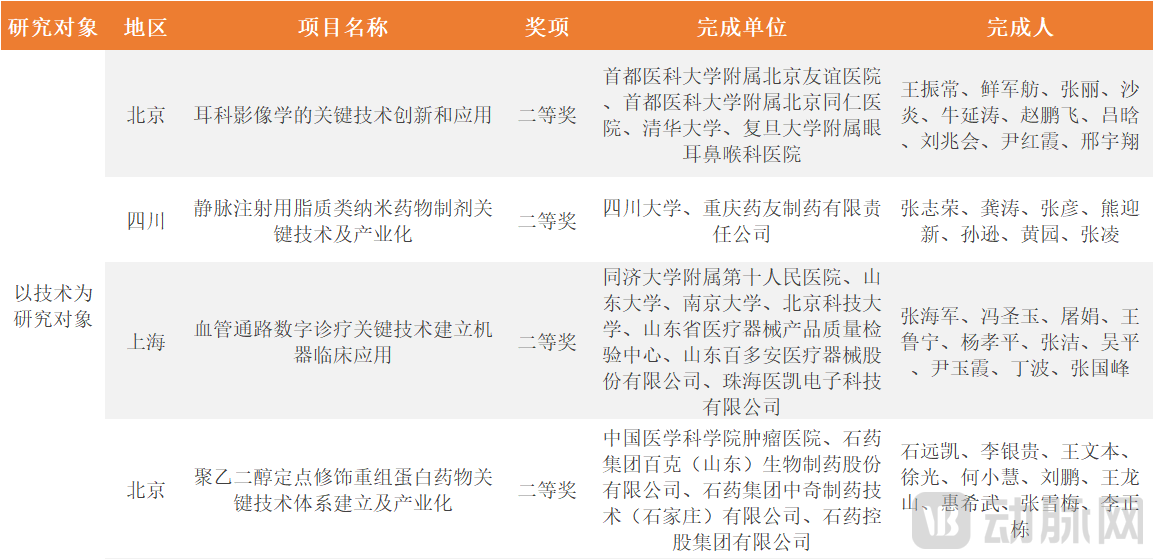
“Key Technologies and Industrialization of Lipid-Based Nanomedicines for Intravenous Injection“The project primarily addresses some of the world’s key challenges in the industrialization of nanopharmaceutical formulations. By employing excipients suitable for intravenous administration, such as phospholipids, lipids, and albumin, it pioneered a novel class of lipid-based nanopharmaceutical formulations for intravenous injection. Systematic research and technological breakthroughs were conducted, yielding a series of innovative achievements.”
First,Pioneering Phospholipid-Drug Supramolecular Aggregate Nano (Particle/Emulsion) Formulations(referred to as DPLNs), elucidating their microstructure and high drug-loading mechanism, thereby achieving the encapsulation of drugs with varying solubility properties. Second,Pioneering Formulation and Process for Nanoemulsion Lyophilized Preparations, invented key technologies for the industrialization of freeze-dried emulsions.The developed Alprostadil Lyophilized Nanoemulsion for Injection is the world's first lyophilized nanoemulsion formulation.. This preparation has a clear pharmacological effect of targeted improvement of microcirculation and stable improvement of hemorheology, and can be used to treat cardiovascular and cerebrovascular diseases. Thirdly,Invention of Albumin-Encapsulated DPLNs Technology, enhancing the targeting capability of DPLN formulations. It addresses the low targeting efficiency of conventional nanomedicines and overcomes the narrow applicability of albumin nanoparticles.
“Clinical Application of Key Technologies for Digital Diagnosis and Treatment of Vascular Access"The project team's achievements include the development of target vessel analysis and screening technology, puncture composite enhanced imaging technology, and the creation of intravascular bioelectric precision navigation technology."
To address the challenge of selecting target vessels for puncture that affects access performance, the team proposed a multi-parameter selection method for the puncture target area based on color Doppler ultrasound flow measurement. This approach enables precise analysis of biological characteristics such as target vessel diameter and antegrade blood flow velocity, thereby improving the success rate of puncture.Development of an Integrated ECG-Ultrasound-Doppler Diagnostic and Therapeutic System for Central Vascular Access, integrating vascular screening, puncture imaging, and ECG navigation into a single device to achieve integrated, miniaturized, and high-speed clinical operations.
The team alsoInvented dual-head ultrasound transducers and image-space compound enhancement display technology, enhancing image clarity, eliminating blind spots in the puncture field of view, and enabling real-time monitoring throughout the entire puncture procedure. Furthermore, to address the shortcomings of traditional in vivo catheter tip localization using X-ray anatomical landmark visual estimation—such as significant localization errors, high complication rates, and repeated patient exposure to X-rays—the teamInvented Bioelectric Precision Navigation for Catheter Tips, reducing patients' X-ray exposure, improving the accuracy of clinical localization, and lowering the incidence of complications such as ectopic placement and migration.
“Establishment of Key Technology System for Site-Specific PEGylation of Recombinant Protein Drugs and Its Industrialization“The project team has established two site-specific PEGylation technologies for recombinant protein drugs, both with independent intellectual property rights: on one hand,”Established a key technology system for site-specific PEG modification of recombinant protein drugs via chemical methods,Achieved a breakthrough from "zero" in China in this field and was awarded the China Patent Gold Award.Pioneered the industrialization of Jin You Li, China’s first PEGylated recombinant protein drug and a Class I new biological product.。
The project team adopted an independently designed, innovative clinical trial protocol. Over more than a decade, the system conducted clinical studies involving 1,969 patient visits across 164 hospitals, focusing on patients with breast cancer, lung cancer, and lymphoma. The results demonstrated the long-acting characteristics, favorable efficacy, and safety profile of Jinyouli (PEG-rhG-CSF).Since its market launch, the product has been adopted by more than 2,500 hospitals across 30 provinces and municipalities in China, cumulatively treating approximately 2 million patients. It was included in the National Reimbursement Drug List in 2017.
On the other hand,The project team innovatively introduced enzyme catalysis technology into the technical system for site-specific PEGylation of recombinant protein drugs., globally pioneering the creation and engineering of transglutaminase (mTgase) using genetic engineering techniques to enhance its selectivity for reaction sites and reactivity, enabling site-specific PEGylation of recombinant protein therapeutics, achieving technological upgrades with green and efficient production processes.
In addition to the aforementioned three projects that have achieved major breakthroughs in cardiovascular, cerebrovascular diseases, and oncology, the otologic imaging project “Key Technological Innovations and Applications in Otologic Imaging”also won the Second Prize of the National Science and Technology Progress Award.
Starting with the establishment of standardized imaging protocols and systematic evaluation models for otology, as well as enhancing the visualization of pathophysiological structures in ear diseases, the project team has dedicated ten years to overcoming key challenges.By elucidating disease pathogenesis, establishing targeted imaging examination and diagnostic systems, and developing dedicated otologic CT equipment with ten-micrometer resolution, significantly enhancing the diagnostic efficacy of otologic imaging and the application value of otologic radiology in disease diagnosis and treatment.
Among the 21 award-winning projects, two research achievements in the field of Traditional Chinese Medicine (TCM) were awarded the Second Prize. These projects are “Establishment and Application of the ‘Four-Evidence’ Methodological System for Evidence-Based TCM Research” and “Theory and Key Technologies for Innovative R&D of TCM Based on ‘Material-Pharmacokinetics-Efficacy’ and Their Applications.”
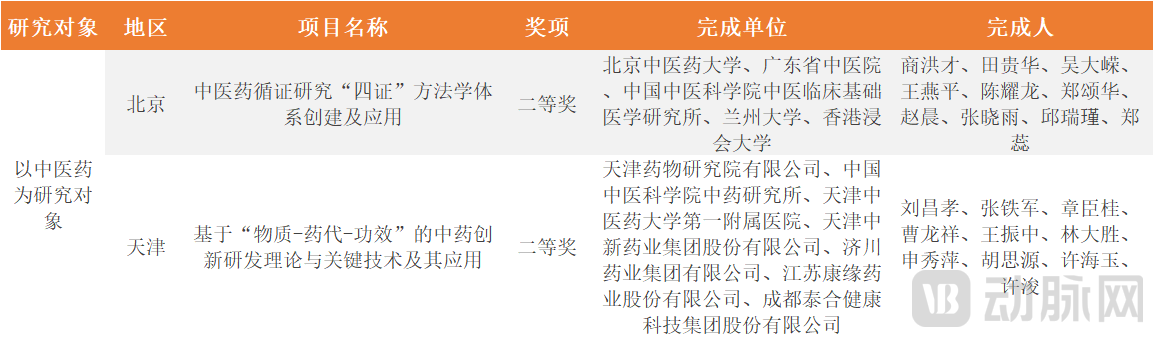
Among them, “Creation and Application of the “Four-Evidence” Methodological System for Evidence-Based Research in Traditional Chinese Medicine"The project focuses on the issue that the advantages of clinical efficacy are difficult to evaluate objectively and present precisely."Established the “Four-Evidence” methodological framework for evidence-based research in Traditional Chinese Medicine, integrating population-level and individual-level evidence.
Building on the establishment of a standardized technical system for product certification, and integrating the core characteristics of personalized precision diagnosis and treatment in Traditional Chinese Medicine,By integrating key algorithms such as artificial intelligence and machine learning, we have developed a series of methods and core technologies suitable for evaluating the clinical efficacy of Traditional Chinese Medicine (TCM), including Evidence-Based Goal Attainment Scaling, Single-Case Randomized Controlled Trial Design for TCM, Core TCM Syndrome Sets, and Parallel Medical Records Co-created by Physicians and Patients., establishing a systematic framework and implementing practices that effectively promoted the integration of evidence-based standards with the distinctive features of Traditional Chinese Medicine.
This project covers the entire chain of high-quality evidence in traditional Chinese medicine, from generation to application, including standardized evidence production, precise syndrome differentiation, and efficient evidence utilization and validation. It facilitates the efficient translation of high-quality evidence into “clinical productivity.”
“Innovative R&D Theory, Key Technologies, and Applications of Traditional Chinese Medicine Based on the “Material–Pharmacokinetics–Efficacy” Framework“The project is dedicated to addressing the bottlenecks in the research and development (R&D) and industrialization of traditional Chinese medicine (TCM), establishing theoretical frameworks, scientific models, and key technologies for innovative TCM R&D.”
This project takes pharmacokinetics as the entry point and core component, linking the complex relationships between the chemical constituents of traditional Chinese medicine (TCM) complex systems and their biological effect expressions.Proposed and established an innovative R&D model for traditional Chinese medicine (TCM) centered on the “material–pharmacokinetics–efficacy” paradigm, and developed a series of common key technologies covering the entire process of TCM innovative drug development, including druggability assessment, preclinical studies, clinical evaluation, industrial translation, in-depth exploration of post-marketing clinical value, and advanced manufacturing., and be applied to guide the R&D of new traditional Chinese medicine (TCM) drugs and the secondary development of marketed proprietary Chinese medicines.
This project leverages the established evaluation system and technology platform,Completed preclinical research and evaluation, as well as international registration, of new traditional Chinese medicine drugs for nearly 100 organizations across China., its independently developed and industrialized new traditional Chinese medicine (TCM) drugs have reached 24 provinces and municipalities across China, with cumulative sales exceeding RMB 30 billion in the past three years.
Based on the results of the National Science and Technology Progress Award, China has achieved significant breakthroughs in fields such as cancer, cardiovascular and cerebrovascular diseases, leukemia, diabetes, orthopedics, stomatology, and hereditary birth defects. These advancements have generated substantial social and economic benefits, spanning from theory to practice and from technology to products.
In the realm of cutting-edge technologies, significant breakthroughs have been achieved in high-field magnetic resonance imaging (MRI), nano-formulation technology, cell therapy, genetic testing and genetic engineering, vascular access technology, medical imaging technology, and recombinant protein drug technology. These advancements have broken foreign monopolies and garnered international recognition.
In the field of Traditional Chinese Medicine (TCM), a comprehensive methodological system for evidence-based research has been established and well-validated in clinical practice. Significant progress has also been made in the innovative research and development of TCM pharmaceuticals, while the standardization and internationalization of TCM have achieved robust development.