

Xiaoshui Intelligence Files for IPO: Pioneering Next-Gen AI with 'Brain-Computer + Communication' Integration
“Mind control,” “human-computer interaction,” and “brain-controlled intelligence”—concepts that readily evoke scenes from science fiction films—are quietly entering our world.
Earlier this year, Neuralink, the brain-computer interface (BCI) company under Tesla CEO Elon Musk, achieved a breakthrough by implanting BCI devices into monkeys’ brains, enabling them to play ping-pong games through thought control. This feat once again drew significant attention from numerous technology companies and investment institutions both in China and abroad. In July, Neuralink completed its Series C financing round, raising $205 million, marking the largest funding round in the field to date.
In fact, brain-computer interfaces (BCIs) are not a novel concept. As early as the 1970s, American neuroscientist Eberhard Fetz conducted the first true BCI experiment by training monkeys to trigger instrument panel activations through their thought processes. To date, BCIs have been primarily applied in the medical and educational fields, with substantial room for further exploration.
Xiaoshui Intelligence was founded in 2013,Dedicated to building an open AIPaaS intelligent interaction cloud platform centered on brain-computer interaction, communications, voice, vision, AIoT, and data technologies., leveraging self-developed chip-level core algorithms to perform behavior recognition analysis and data analytics, we are committed to rapidly deploying high-performance, highly reliable, and cost-effective “Smart+” integrated hardware-software solutions, thereby empowering digital, networked, and intelligent transformation and upgrading across various industries.
In 2021, Xiaoshui Intelligence increased its investment in brain-computer interaction technology and began to lay out the field of brain-computer interfaces. Unlike other players, Xiaoshui Intelligence comes with a halo of communication technology, committed to solving the problem of high-concurrency data packet loss during the collection and transmission of EEG signals, thereby facilitating the upgrade of brain-computer interface technology.
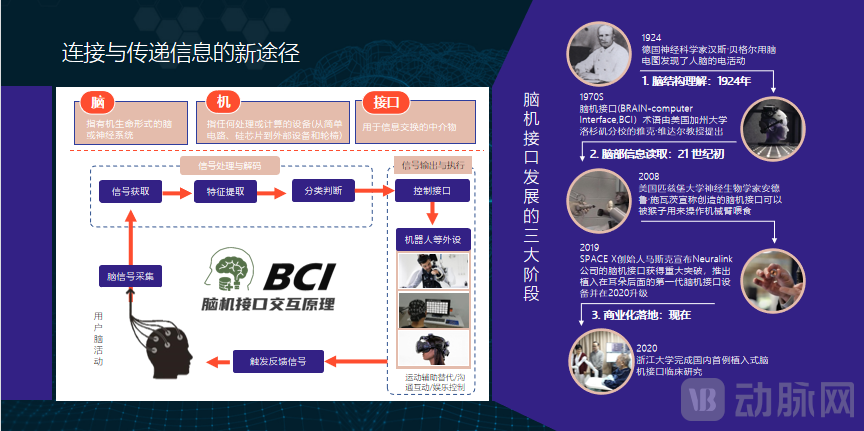
Principles of Brain-Computer Interface Technology. Image source: Xiaoshui Intelligence
Since its establishment, after nearly six years of rapid development,Xiaoshui Intelligence’s Revenue Reaches 300 Million, with Net Profit Exceeding 28 Million. Xiaoshui Intelligence is not a healthcare company. As an enterprise that has already identified a viable profit model in the AI sector, why has it chosen to enter this new field? Moreover, as a newcomer to the brain-computer interface (BCI) space, how does it plan to strategize for the future? VCBeat conducted an in-depth interview with Sun Xuefeng, President of Xiaoshui Intelligence.
Sun Xuefeng, President of Xiaoshui IntelligenceIntroduced to VCBeat the three development stages that Xiaoshui Intelligence has experienced from its inception to the present.
Phase I:In 2016, Xiaoshui Intelligence officially launched its AI strategy. At its inception, Xiaoshui Intelligence focused on cloud communications services, aggregating SMS channels from the three major telecom operators into its AIPaas platform and delivering cloud communication solutions—such as SMS verification codes—to enterprise clients via API interfaces and SDKs.
Phase II:Since 2017, the intelligent voice business has advanced, unlocking a broader market landscape. Xiaoshui Intelligence seized this opportunity to integrate intelligent voice technology with customer service, entering the AI voice sector by launching the China Mobile AI Voice Secretary. This solution replaced the existing missed-call alert service, providing users with AI voice assistant features such as automated call answering and incoming call categorization.
Phase III:Xiaoshui Intelligence has entered the IoT sector, leveraging its AIPaaS platform to deliver behavioral recognition analytics and data processing capabilities. It deploys high-performance, highly reliable, and practical “Smart+” integrated hardware-software solutions, empowering industries across the board to undergo intelligent, digital, and networked transformation. Representative cases include IoT functional modules for industry-leading clients such as Hikvision’s wireless cameras, Hive Box pickup lockers, Niu electric scooters, and Didi Chuxing.
“Whether the interaction is based on text, voice, or video, or conducted over the internet, its essence lies in leveraging communication capabilities to serve diverse application scenarios. Brain-computer interaction, in fact, represents a more comprehensive process of information exchange between humans and computers,” explained Sun Xuefeng, describing the brain-computer interaction process.
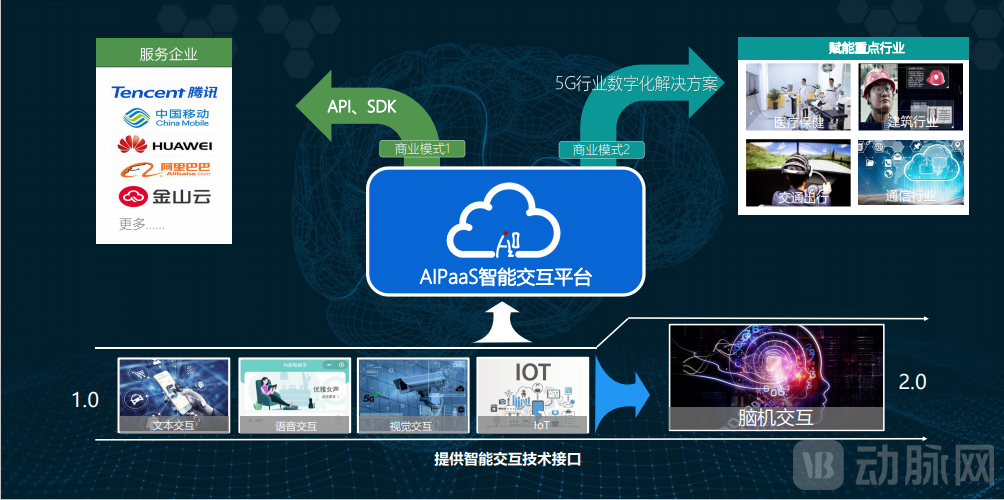
AIPaaS Intelligent Interaction Platform
ForWhy Enter the Brain-Computer Interface FieldSun Xuefeng stated, “We are not a medical company per se; however, the brain-computer interface (BCI) field represents both the most critical and the most proximate application scenario for us. Against the backdrop of continuous advancements in virtual reality (VR) technology, the future trend will involve extensive and effective connectivity between humans and intelligent devices, robots, and the internet. This presents a significant opportunity in the communication applications market and constitutes the core rationale behind our investment and strategic layout in the BCI sector.”
Currently, brain-computer interface technology is not yet mature and requires overcoming multiple technical challenges. From the perspective of communication,Sufficient data collection is the foundation of everything.Regardless of the application domain, communication at the first level always involves data acquisition. In this regard, brain-computer interfaces (BCIs) are facing significant challenges. Traditionally, conventional materials have been used for electroencephalogram (EEG) signal acquisition, but there is a pressing need to introduce more innovative materials.
Secondly,The collection process must always be patient-centric, which means the collection method should be sufficiently convenient and user-friendly.At the data processing level, as the volume of real-time collected data continues to grow, addressing high-concurrency data packet loss and ensuring data integrity during transmission and signal amplification constitutes the second challenge, which requires the involvement of communications experts.
Finally,In the current field of brain-computer interfaces, data and algorithms are not actually shared., different laboratories and teams possess their own sample data and are continuously collecting new samples. The sharing of both aspects is in fact urgently needed, which constitutes the third challenge.
Xiaoshui Intelligence possesses unique technical advantages and background in the field of communications. Liu Bin, CTO of Xiaoshui Intelligence, has over 20 years of R&D experience in communications and the internet, and is an expert in chip application research at well-known communications companies such as Huawei and ZTE. The company collaborates with research institutes in the field of microelectronics, focusing on collected signals,Utilize specialized chips for signal amplification to address packet loss issues in high-concurrency data transmission, and apply state-of-the-art algorithms during noise processing to enhance signal processing capability and efficiency.
At the algorithmic level, Xiaoshui Intelligence collaborates with globally leading universities researching affective brain-computer interfaces (BCIs). This partnership enables the analysis of EEG signals to assess users’ emotional states—such as anger, happiness, depression, and anxiety—as well as their motor imagery capabilities. Currently, these algorithmic advancements have been applied in medical fields including the treatment of refractory depression, epilepsy, and Alzheimer’s disease. By integrating these algorithmic capabilities into the AIPaaS platform through this collaboration, Xiaoshui Intelligence can serve a broader user base and industry practitioners, extending applications to areas such as daily sleep monitoring and routine monitoring of mild depression.
Currently, Xiaoshui Intelligence is engaging in deep collaborations with numerous research institutes and universities. In the area of data collection,Collaborated with the Technical Institute of Physics and Chemistry, Chinese Academy of Sciences on liquid metal applications and signal acquisition and transmission for brain-computer interfaces, the Technical Institute of Physics and Chemistry, Chinese Academy of Sciences (TIPC, CAS) has accumulated 15 years of world-leading practice and expertise in the field of liquid metals.
Sun Xuefeng stated, “One of the advantages of liquid metal isElastic. Previously, EEG data acquisition was achieved using metal wires and dry electrodes, which involved high material rigidity and complex collector designs. We are now attempting to use liquid metal to make itLighter and thinner, like a bandage stuck on the forehead, which collects electroencephalogram (EEG) signals via liquid metal wires to complete the entire transmission process. The second advantage is that,Liquid metal technology has enabled micron-scale contacts, allowing EEG signal collectors that were previously limited to a single channel to now acquire signals across eight channels.“Only when the collected information is more comprehensive and the data volume is larger can algorithm experts truly leverage their core value.”
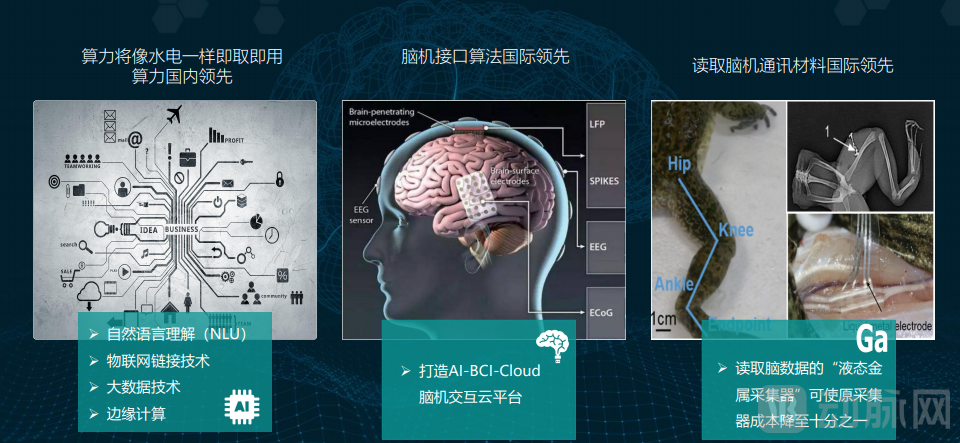
Technical Highlights
Developed by Xiaoshui IntelligenceSmart Helmet Products, enabling the monitoring of workers' fatigue status through EEG-based recognition capabilities, and has already been piloted commercially at China State Construction.Smart hard hats are equipped with head-mounted monitoring sensors at the forehead position. When construction workers perform high-altitude or hazardous tasks, these sensors can monitor their electroencephalogram (EEG) data in real time and transmit it to the ground command center via a 4G IoT module installed on the side of the hard hat. Upon receiving the data, the command center server analyzes it using algorithms to identify in real time whether workers are experiencing fatigue, issuing early warning signals immediately.
Going forward, Xiaoshui Intelligence will also extend this technology to a broader range of application scenarios, such as the recognition and monitoring of fatigue states in military personnel.
Xiaoshui Intelligence has also partnered with the orthopedic centers of key national hospitals to monitor clinical patient data and develop personalized rehabilitation solutions by integrating brain-computer interfaces (BCI) with exoskeletons. Sun Xuefeng stated that the current exoskeleton market is dominated by passive motion, where the exoskeleton drives human movement; however, with the addition of brain-computer interfaces, it canTransform Passive Motion into Active Motion, enabling patients to transmit signals via brain neurons, which are then recognized by the brain-computer interface and relayed to the exoskeleton to drive active movement. The project is currently in the initiation phase.
Sun Xuefeng stated, “We hope to integrate these algorithmic capabilities into the AIPaas intelligent interaction platform through collaboration, thereby helping all participants in the brain-computer interface field achieve”On-Demand Service CapabilityAvoid the duplication of experts and R&D resources, make full use of limited research funding, R&D expenses, and human resources, so that participants in the field of brain-computer interfaces can leverage their respective areas of expertise.”
The potential of the human brain is nearly limitless. Brain-computer interfaces (BCIs) can establish communication pathways between the brain and external devices, serving both neurorestorative purposes—addressing certain medical conditions currently affecting humans—and enhancing innate human capabilities. Sun Xuefeng stated that the future BCI market will evolve toward three key scenarios:
The first is assistance.To address the diseases encountered by humanity, it is essential to leverage brain-computer interface (BCI) technology to help patients recover their health; this represents one of the most significant trends we foresee for the future.
Second is reinforcement.For instance, consider the application of brain-computer interface (BCI)-integrated exoskeletons. For elderly individuals with mobility impairments, these devices enable normal standing and ambulation without the need for canes or wheelchairs. In the realm of light medical care, they can be applied to daily monitoring of depression and sleep quality, thereby assisting professional physicians in diagnosis and the implementation of personalized treatment plans.
Third is consumption.This market is even more expansive. By recognizing brainwaves to facilitate VR interaction, thoughts can be manifested in the digital world. This also has a broad consumer market in the education sector, such as in training programs designed to improve children's concentration.
However, many challenges remain in realizing such a future. In this regard, Sun Xuefeng believes, “The brain-computer interface (BCI) field is interdisciplinary, yet most industry practitioners are experts in the medical field. Although scientists from the AI sector have begun to engage in clinical hospital settings in recent years, overall,”Talent, especially interdisciplinary talent, remains very limited.Next comes the challenge of materials: how to reduce laboratory costs and enhance product convenience, thereby enabling products to truly integrate into the daily lives of consumers or patients. This requiresThe material truly achieves consumer-grade application,only then can broader commercial promotion be launched. Finally,Breakthroughs in Core Technologies,“The most cutting-edge research findings in China still originate from laboratories within scientific research institutes, which is why we have established collaborations with institutions such as the Chinese Academy of Sciences and universities.”
After six years of rapid development, Xiaoshui Intelligence has achieved an annual revenue of RMB 300 million, marking the establishment of a sustainable growth trajectory. Beyond this, the company has formulated more long-term strategic plans. Moving forward, in addition to expanding its existing businesses in communications and the Internet of Things (IoT), Xiaoshui Intelligence will strengthen collaborations with leading scientists in the field of brain-computer interfaces (BCI). This effort aims to facilitate the commercialization of laboratory research outcomes, thereby realizing the corporate vision of “making the connection between the physical and digital worlds more intelligent.”