

SMO Biopharma Chairman Li Hangwen: Building a Globally Differentiated mRNA Platform Starting from COVID-19 Vaccines and Strategically Advancing Next-Generation Immunotherapies
Due to the outbreak of the COVID-19 pandemic, mRNA vaccines for COVID-19 have been approved for market launch and widely used, thereby elevating attention to mRNA technology to unprecedented levels.Owing to the advanced nature of its underlying principles, mRNA technology can theoretically produce any protein required by humans, whether for preventive applications or therapeutic interventions, thereby generating unparalleled social and commercial value.
According to an article on mRNA drug market analysis published in Nature Reviews Drug Discovery, the global market size for mRNA products is projected to exceed $50 billion in 2021. According to the report “mRNA Technology Enters a Period of Rapid Development with Broad Future Prospects” published by Southwest Securities, the market size for mRNA technology is expected to reach $32.6 billion by 2025.
Furthermore, data indicate that mRNA COVID-19 vaccines offer the highest efficacy among various vaccine types. The mRNA technology can elicit robust B-cell and T-cell immune responses in cancer immunotherapy. With continuous breakthroughs in mRNA technology, there will be substantial market opportunities in preventive vaccines, cancer immunotherapy, protein replacement therapy, and regenerative medicine.
Thus, it is evident that while mRNA technology has accelerated its development due to the COVID-19 pandemic, it will not wane as the pandemic subsides. In the post-pandemic era, how will mRNA therapeutics sustain their momentum and support a market size worth hundreds of billions over the next decade?
Recently, at the healthcare forum of the 2021 Sequoia China Portfolio CEO Summit, Li Hangwen, CEO of Stemirna Therapeutics, delivered a detailed forward-looking perspective on mRNA drugs under the theme “From Oncology to COVID-19 Vaccines: The Development of mRNA Therapeutics in the Post-Pandemic Era.” VCBeat has compiled and edited his insightful remarks.
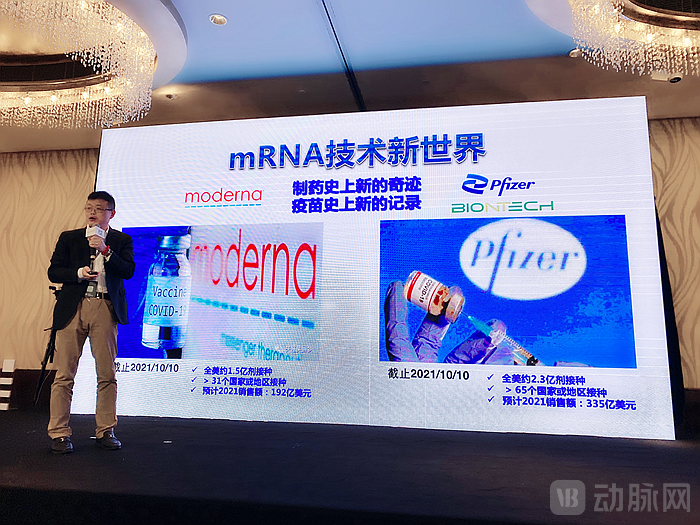
Li Hangwen, CEO of Stemirna Therapeutics
Let us begin with the technological development of mRNA. The mRNA molecule was first discovered in 1961. Its fundamental technical principle involves encoding target transcripts for one or more immunogens, delivering them into the cytoplasm of host cells, where they are translated into proteins that subsequently perform specific recognition and binding functions.
Li Hangwen stated, “In theory, all protein-level diseases can be treated with mRNA-based replacement therapy; therefore, mRNA technology holds immense potential in advancing human health.”
After decades of technological accumulation and catalyzed by the COVID-19 pandemic, mRNA technology has experienced rocket-like explosive growth in the past two years.
The peak moments of the outbreak are clearly evident in two aspects, first in terms of time.An explosion of innovation has enabled the production of vaccines for tens of millions or even hundreds of millions of people in less than a year;Consequently, in terms of salesThis has also spurred an explosion, with the mRNA product market expected to exceed $50 billion this year.
Li Hangwen stated: “Behind this formidable market lies the support provided by three advantages of mRNA.
“First, mRNA represents not only mRNA vaccines but also encompasses a technological platform system.In theory, mRNA-based replacement therapy can be applied to all protein-level diseases. Through integration, this technological platform will continuously give rise to new products in the future. Built on the mRNA technology platform, it can transform “host cells” into highly specific “vaccine/drug manufacturing factories,” thereby upgrading traditional “biological vaccines” into “chemical vaccines.”
“Second, mRNA demonstrates significant advantages in efficacy due to the inherent strengths of its mechanism of action.mRNA vaccines can activate the MHC I antigen presentation pathway to effectively elicit cellular immunity, and can also secrete mRNA-encoded proteins extracellularly to activate the MHC II antigen presentation pathway, thereby effectively eliciting humoral immunity.
“Third, mRNA also possesses significant advantages in terms of industrialization.Taking mRNA vaccines as an example, they are manufactured using enzymatic chemical synthesis, eliminating the need for large-scale fermentation. This approach offers advantages such as high stability, excellent consistency, and ease of scale-up. Furthermore, the production cycle for mRNA products is relatively short; a single batch can be completed in 4–5 days, and product updates can be implemented within 4–6 weeks. Since mRNA does not enter the cell nucleus, and the final product contains no preservatives, antibiotics, adjuvants, or animal-derived components, it also demonstrates significant safety advantages.
“Overall, in the context of the COVID-19 outbreak, three global mRNA giants—Moderna, BioNTech, and CureVac—have already emerged abroad.”Many domestic companies have also seized the opportunities presented by this global wave, with dozens of enterprises—including Stemirna Therapeutics, Fosun Pharma, and Hengrui Medicine—actively rolling out their strategic layouts.In particular, once Stemirna Therapeutics successfully achieves mass production and commercial sales of its mRNA COVID-19 vaccine, it will break the monopoly held by Europe and the United States in the mRNA industry., and join the ranks of world leaders,” said Li Hangwen.
Beyond vaccines, mRNA products also hold vast potential in the field of oncology therapeutics.
Li Hangwen stated, “mRNA-based tumor vaccines, antibody therapies, cytokine therapies, and cell therapies can all be applied to cancer treatment.”
First is the personalized cancer vaccine developed with mRNA technology.Personalized cancer vaccines refer to the process of performing gene sequencing on a patient’s tumor tissue and then custom-designing a set of tumor neoantigens based on the sequencing results. These vaccines can be administered as monotherapy or in combination with small-molecule drugs, cell therapy agents, and other therapeutics. A breakthrough in personalized cancer vaccines would propel cancer immunotherapy to new heights.Therefore, personalized cancer vaccines are the crown jewel of the field of cancer therapy.
Next is the application of mRNA drugs in cytokine immunotherapy.Intratumoral injection of mRNA encoding specific antigens or cytokines modulates the tumor microenvironment, activates immune responses within tumor tissues, and exerts antitumor effects.
Then, applying mRNA cell therapy to tumor treatment, i.e., directly performing transient transfection of CAR-encoding mRNA into T cells, rather than using traditional lentiviral transduction. The advantages include avoiding genomic integration, while CAR expression is subject to degradation of the CAR-encoding mRNA and thus does not persist long-term in vivo.
Currently, global R&D pipelines are most abundant and clinical progress is fastest in the field of tumor immunotherapy. According to projections by the U.S. CDC, the number of cancer patients worldwide will exceed 24 million by 2025. Conservatively estimating a 1% penetration rate of mRNA technology among cancer patients by 2025, and based on data from the American Society of Clinical Oncology (ASCO) showing an average annual treatment cost of $41,800 per patient in the initial stage, the total market size is expected to surpass $10 billion.
It must be acknowledged that, based on the current corporate landscape, mRNA technology already holds promising potential for drug development. Even greater possibilities lie ahead.
mRNA drugs can also be used for protein replacement therapy, enabling the expression of intracellular, transmembrane, or secreted proteins via mRNA delivery, thereby exerting their corresponding functions. Based on this platform, targeted therapeutics for tissue- and organ-specific diseases can be developed for the heart, liver, blood, skin, lungs, nose (olfactory system), and bone tissue.
It is foreseeable that mRNA will replace certain traditional protein-based drugs, enabling improved targeting and efficacy. However, the current pipeline for protein replacement therapies remains limited, with Moderna being the major mRNA company primarily active in this area.
mRNA can also be used to encode antibodies, determining specific antibody sequences, designing and synthesizing mRNA encoding antibodies, delivery and antibody expression (membrane-bound, intracellular, secreted), and antibody functional execution (opsonization, targeted killing, etc.) will have significant implications for the improvement of macromolecular drugs in the future. Industry giants such as Moderna, CureVac, and BioNTech have already made strategic moves in this area.
Furthermore, Intellia Therapeutics, a pioneer in gene editing, has validated the feasibility of co-delivering mRNA encoding the Cas9 protein and sgRNA for in vivo gene editing, demonstrating favorable safety profiles and high efficiency. Thus, it is evident thatmRNA technology has also achieved significant breakthroughs in gene editing.
Li Hangwen mentioned, “Although the application prospects of mRNA are thought-provoking, there are still some problems to be overcome before mRNA technology can achieve wider application.”
“First, the challenge of administration routes,”Currently, mRNA vaccines are primarily administered via intramuscular injection, whereas the routes of administration for mRNA therapeutics vary. For instance, mRNA encoding antibodies is mainly delivered intravenously. For mRNA antibody therapies targeting specific organs and tissues, the delivery systems require optimization to avoid systemic distribution of the antibodies.
“Then, how to extend the duration of action of mRNA drugs.Regarding the currently popular mRNA vaccines, if mRNA technology is applied to vaccine production, its short duration of action is precisely an advantage; however, if mRNA is used as a therapeutic drug, particularly for the treatment of certain chronic diseases, it is necessary to extend mRNA expression through modification.
"Another issue is how to reduce the unnecessary immunogenicity of mRNA."The immunogenicity of mRNA stems from the recognition of the mRNA molecule itself as exogenous RNA by the host, as well as the immune responses elicited by the encoded antibodies or proteins. While a certain degree of immunogenicity is desirable when mRNA is used for vaccine development, it must be strictly controlled when mRNA is employed for gene therapy. In the future, optimization of its immunogenicity will require approaches such as nucleoside modifications and vector improvements.
In the future, with the development of different antibody types, drugs targeting diverse antigens, various mRNA platforms for encoding protein therapeutics, and novel administration routes and delivery systems, the application prospects of mRNA will be as vast as the starry sea.
Returning to the arena where technology is translated into products—the enterprise. Taking the domestic company Stemirna Therapeutics as an example, this serves as an opportunity to gain insight into the noteworthy strategic layouts of China’s innovative mRNA companies in this sector.
Stemirna Therapeutics was founded in 2016 by a team of Ph.D. holders returning from the MD Anderson Cancer Center in the United States, becoming the first company in Asia dedicated to the research and development of innovative mRNA-based therapeutics.From the perspective of the mRNA technology industry chain, it can be mainly divided into three segments: upstream raw materials, midstream R&D and manufacturing, and downstream distribution and transportation.
From the perspective of industrial chain value, Stemirna Therapeutics, as a biotechnology enterprise with robust innovation capabilities in the mRNA field, occupies the most core segment of the industry chain. This is because it involves core technical patents—such as sequence design and LPP delivery system synthesis—which present the highest industry barriers and account for a significant proportion of the value chain.
Stemirna’s industry barriers are precisely reflected in this aspect. Stemirna possesses multiple moats, including patents, and features an LPP delivery system with independent intellectual property rights capable of breaking through core technological barriers in Europe and the United States. The company has established a fully proprietary mRNA end-to-end CMC technology platform, independently developed AI-based platforms for antigen analysis, prediction, and sequence optimization, an mRNA synthesis technology platform, patented targeted formulations, a comprehensive mRNA vaccine analysis and quality control technology platform, as well as core patents covering key technologies and equipment required for large-scale production of hundreds of millions of doses of mRNA vaccines annually.
Furthermore, Stemirna Therapeutics is the first innovative enterprise in China to undertake mRNA drug R&D and the earliest to initiate human clinical trials for mRNA-based precision cancer vaccines. Its LPP nanoparticle delivery platform outperforms LNP systems in dendritic cell (DC) targeting, expression duration, delivery efficiency, and encapsulation rate. The safety and efficacy of this novel delivery system have been clinically validated.
With the rapid development of the industry, “high-throughput” has become a critical area for optimization. Stemirna Therapeutics, in collaboration with Microna, has jointly developed proprietary, China-made high-throughput microfluidic equipment technology for the large-scale manufacturing of mRNA vaccines, achieving chip throughput levels that are internationally advanced.
Li Hangwen stated, “As the first company in China with a fully integrated mRNA technology platform possessing global independent intellectual property rights, Stemirna Therapeutics is also accelerating its strategic layout in the mRNA COVID-19 vaccine sector.”
“Currently, Stemirna Therapeutics is accelerating the development of its second-generation COVID-19 mRNA vaccine, which is the first iterated COVID-19 vaccine product in China capable of efficiently neutralizing the Delta variant. Data show that this vaccine elicits higher levels of neutralizing antibodies than internationally approved products and can induce high-titer neutralizing antibodies against the Delta variant.”
“To optimize vaccine delivery and storage conditions, Stemirna Therapeutics has successfully developed the world’s first lyophilized formulation of a COVID-19 mRNA vaccine. This lyophilized COVID-19 mRNA vaccine offers significant advantages and convenience in storage and transportation compared to internationally approved counterparts.”
“In addition to the vaccine sector, Stemirna Therapeutics has established a comprehensive presence in veterinary vaccines, gene therapy, cancer vaccines, monoclonal antibody drugs, and medical aesthetics. The company currently maintains over 20 R&D pipelines, along with industrialized mRNA synthesis and related formulation technologies.”
Finally, Li Hangwen stated, “In recent years, Stemirna Therapeutics has experienced rapid development. We are very fortunate that our COVID-19 mRNA vaccine has received strong support and assistance from governments at all levels.”,We have also received invaluable guidance and generous support from experts at the National Medical Products Administration’s Center for Drug Evaluation (CDE), the Shanghai Municipal Medical Products Administration, the Yangtze River Delta Regional Center, and the National Institutes for Food and Drug Control. Furthermore, we have garnered increasing support from like-minded partners in our industrial layout across preventive vaccines, oncology vaccines, antibody-based therapeutics, and AI algorithms.
“Since its inception, Stemirna Therapeutics has remained committed to its mission of developing mRNA-based therapeutics, pursuing innovation with prudence and striving to become a leading Chinese biotechnology enterprise. Throughout its growth, the company has continuously recruited talent worldwide who are passionate about biotechnology and immunotherapy, gradually building a diverse and competitive team.”
“We hope to leverage Stemirna Therapeutics as a bridge to foster co-creation, sharing, and mutual success with all stakeholders across the industry chain, jointly building a brighter future for biopharmaceuticals. We look forward to welcoming more talented individuals to join Stemirna Therapeutics, collaboratively mapping out the mRNA drug blueprint in the post-COVID era, and delivering more effective health and therapeutic solutions to patients worldwide!”
Based on the continuous updates of real-world data and scientific research, we can see that the explosive growth of the mRNA product market did not happen overnight; it has undergone decades of accumulation.
We can also see that the COVID-19 pandemic is not the ceiling for mRNA products; the pipeline derived from this technology platform is robust enough to support a future market worth hundreds of billions. The mRNA vaccine is merely the dazzling debut of mRNA-based therapeutics, with the next decade and beyond poised to be the golden age for the full maturation of mRNA technology.
Healthcare is an enduring and fundamental human need. The future envisioned through the blueprint of mRNA technology holds the theoretical promise of resolving many challenges confronting human health and longevity. In the face of emerging technologies and uncharted territories, we should embrace bold imagination coupled with rigorous verification, adopting an optimistic yet cautious approach to dispel the layers of uncertainty surrounding mRNA.
"Befriending Time: In the future, we look forward to innovative mRNA enterprises such as Stemirna Therapeutics bringing revolutionary changes to disease prevention and clinical treatment."