

Huiying Medical Showcases AI-Powered Healthcare Solutions at Huawei Cloud & Connect Summit Thailand and Asia-Pacific Innovation Day
The three-day “Thailand Huawei Cloud and Connectivity Summit & Asia-Pacific Innovation Day” kicked off in Bangkok, Thailand, on the 17th. Organized by Huawei Technologies (Thailand) Co., Ltd., The Bangkok Post, and the ASEAN Foundation, along with more than 50 Thai information and communications technology enterprises, the event focused on unlocking the new potential of digital technologies and exploring the applications of cloud computing, 5G, AI, and digital energy solutions across various industries. Huiyi Huiying, a Chinese domestic medical artificial intelligence company, appeared at the exhibition as an ecosystem partner of Huawei’s healthcare technology solutions.
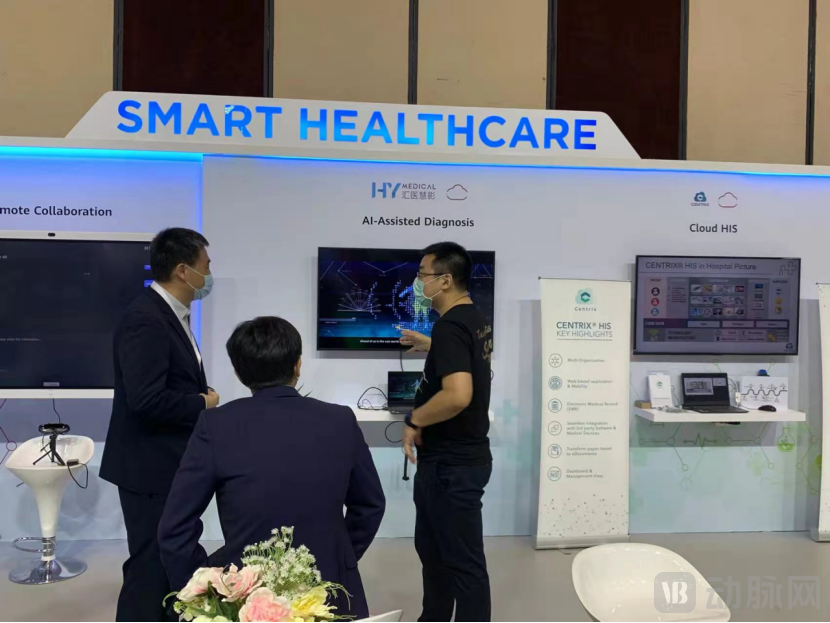
Huiyi Huiying’s Medical AI Technology Showcased in the Smart Healthcare Sector
It is reported that this is not the first time Huiyi Huiying, a Chinese AI company, has expanded overseas. As early as 2020, during the pandemic, Huiyi Huiying partnered with Huawei to collaborate with Thailand’s Ministry of Digital Economy and Society, providing AI-assisted solutions powered by 5G technology to multiple hospitals, including Siriraj Hospital (Thailand’s largest public hospital) and Ramathibodi Hospital. The initiative aimed to leverage high-speed networks to efficiently, rapidly, and accurately generate diagnostic results, thereby assisting Thai medical personnel in effectively responding to the COVID-19 outbreak. This collaboration also received strong support and active cooperation from the Thai government and hospitals.
Thai Prime Minister and Minister of Defence Prayut, in his capacity as head of the Centre for COVID-19 Situation Administration (CCSA), visited Siriraj Hospital in Thailand to inspect the hospital’s pandemic prevention and control measures, patient treatment protocols, and the work of medical staff. He also personally tested the AI-assisted diagnostic service provided by Huawei Cloud and Huiyi Huiying.
Prime Minister Prayut, speaking on AI-assisted diagnostic technology, stated that this artificial intelligence technology has been put into practical use worldwide, including in Wuhan, China, and many other hospitals around the globe. Currently, the service has been deployed at Ramathibodi Hospital and Siriraj Hospital in Thailand and will be expanded to other hospitals across the country.
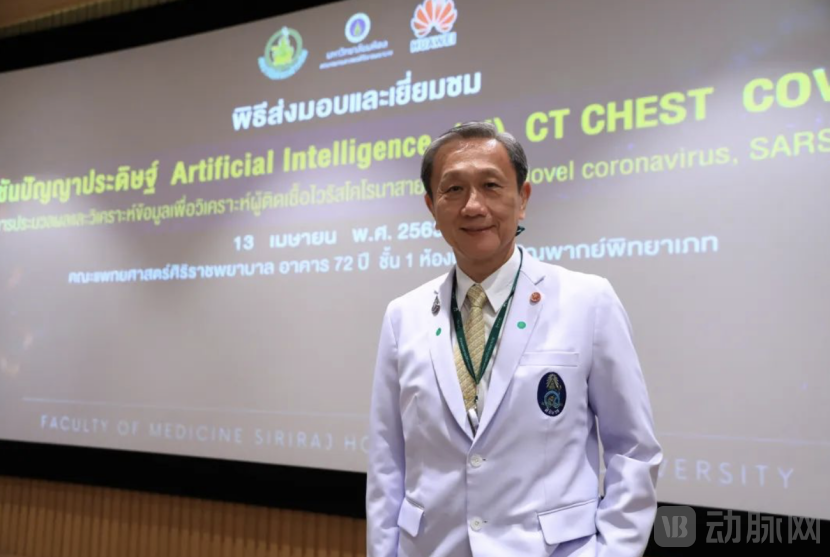
Professor Prasit Watanapa, Dean of Siriraj Hospital, Mahidol University
“Using CT scans to diagnose and evaluate the treatment efficacy of COVID-19 requires patients to undergo multiple follow-up visits and imaging examinations. Artificial intelligence technology can assist physicians in performing high-precision analysis of quantitative CT findings in infected cases.” Professor Prasit Watanapa, Dean of Siriraj Hospital at Mahidol University, pointed out: “It reduces the time required for image analysis to just 25 seconds per case, significantly alleviating the workload of healthcare workers in Thailand amid the current pandemic impact. Meanwhile, thanks to 5G capabilities such as high-speed connectivity, high reliability, and low latency, the healthcare system benefits from shorter response times, enhanced patient monitoring, improved data collection and analysis, remote collaboration, and optimized resource allocation.”
According to a representative from Huiyi Huiying, this technology leverages computer vision and medical image analysis techniques to segment multiple pulmonary ground-glass opacities (GGOs) and consolidations, and performs quantitative assessment. It can deliver image analysis results within 25 seconds, assisting physicians in more accurately differentiating between the early, late, and severe stages of novel coronavirus infection, thereby enabling more precise treatment plans for patients.
Leveraging Huawei’s cloud deployment capabilities and the precision of Huiyi Huiying’s algorithms, this AI-assisted pneumonia screening system has been widely adopted in more than 100 hospitals, with cumulative screenings exceeding 250,000 cases. The system undergoes continuous upgrades and optimizations, achieving an accuracy rate of 96% and a DICE score above 85.
As the COVID-19 pandemic has been brought under gradual control, demand for medical AI applications in Thailand and the Asia-Pacific region has continued to expand and deepen, encompassing areas such as data governance, academic research, optimization of radiology workflows, and updates to diagnostic disease categories. At this conference, Huiyi Huiying showcased its Imaging Data Middle Platform, RadCloud Big Data Research Platform, NovaCloud Imaging Cloud Platform, and more than 10 AI-assisted diagnostic products newly launched in 2021, including QCT-based bone mineral density assessment, drawing significant interest and attention from attendees.
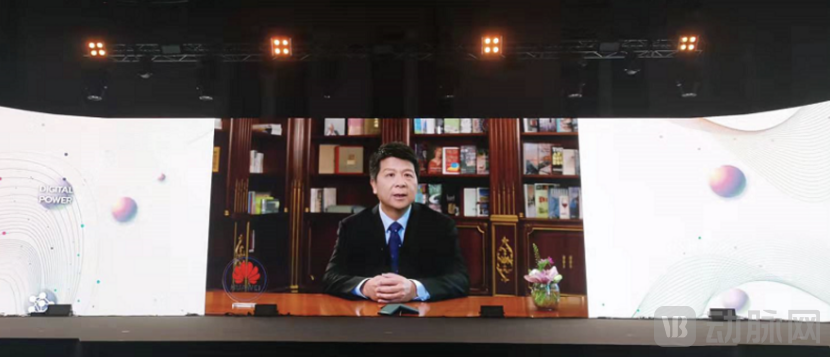
Huawei Rotating Chairman Guo Ping
As Mr. Guo Ping, Huawei’s Rotating Chairman, stated in his opening speech, the COVID-19 pandemic has accelerated digital transformation in the Asia-Pacific region, and he expressed strong confidence in the region’s post-pandemic economic recovery and digital economy growth. He emphasized that “digital technologies such as 5G, cloud computing, and AI will become important pillars for countries to drive post-pandemic economic recovery and build resilience.” Huiyi Huiying will continue to focus on AI applications in healthcare and medical services, working alongside Huawei to bring digital technologies to the global stage and strive tirelessly for the health of 7 billion people worldwide.