

Luken Medical Files IPO Prospectus: Pioneering Ultra-Minimally Invasive Surgical Devices with Customized IP Solutions
With the development of minimally invasive surgery (MIS), the market for minimally invasive surgical instruments and accessories (MISIA) has been growing steadily. According to Kangji Medical's prospectus, based on sales revenue, the size of China's MISIA market was RMB 9.6 billion in 2015 and RMB 18.5 billion in 2019, with a compound annual growth rate (CAGR) of 17.8%. The market is projected to exceed RMB 40 billion by 2024.
Due to the relatively minor variations in minimally invasive surgical techniques, the subcategories of MISIA are also limited. Main products include trocars, ligation clips, electrocoagulation forceps, ultrasonic scalpels, laparoscopic staplers, and conventional accessories and consumables.
From the perspective of market competition, the overall localization rate of MISIA is relatively low. Imported products occupy the majority of the market share, especially in the high-end product segment. However, for categories with low prices and high clinical usage volume, such as disposable trocar cannulas, disposable electrocoagulation forceps, and polymer ligation clips, domestic products hold a relatively high market share.
Among these, a trocar is a medical device used to create a channel for the entry of endoscopes or other surgical instruments through percutaneous puncture of the abdominal wall or chest. According to a report by Guoyuan Securities, the market size of disposable trocars reached RMB 1.8 billion in 2019, with domestically produced products accounting for 67.9% of the market share.
Compared with reusable trocars, disposable trocars can reduce the risk of infection in patients and alleviate the burden of disinfection and sterilization on hospitals. Currently, there are many manufacturers of disposable trocar cannulas on the market.
Luken (Shanghai) Medical Technology Co., Ltd., based in Shanghai, is a company specializing in the development and manufacturing of novel devices in the minimally invasive field. Its first product launched on the market was a disposable trocar for assisted endoscopic surgery.
Prior to founding Luken Medical, both co-founders were employed at Johnson & Johnson Medical. Wang Xiaoying, Founder and CEO, graduated from East China University of Political Science and Law. He spent seven years at Johnson & Johnson Medical, working in the electrophysiology and ultrasonic scalpel divisions, where he was responsible for marketing and sales. The other co-founder, Zhang Zhanhong, graduated from Imperial College London (IC). With nine years of engineering design experience at Johnson & Johnson Medical, he currently oversees research and development as well as production at Luken Medical.
The two founders’ experience at Johnson & Johnson, coupled with the broad market prospects in minimally invasive surgery, led Luken Medical to target this field from its inception.
Luken Medical maintains an R&D-led development strategy, with researchers currently accounting for over 60% of its team.. Meanwhile, the company places great emphasis on the integration of medicine and engineering.During the product development process, Luken Medical engaged in close and iterative communication with clinicians to promptly adjust product parameters, thereby meeting clinical needs and aligning with physicians’ usage habits.
Through interactions with clinicians, Luken Medical has identified “ultra-minimally invasive” as a promising direction.Because “ultra-minimally invasive” procedures are highly patient-friendly, causing minimal surgical trauma and significantly aiding postoperative recovery and reducing complications. For physicians, “ultra-minimally invasive” instruments can facilitate the adjustment and innovation of traditional surgical techniques, making surgeries simpler and safer.
Luken Medical’s “ultra-minimally invasive” philosophy aims to achieve greater surgical precision by innovating medical devices, building upon the current foundation of minimally invasive surgery.
Its disposable trocars for endoscopic surgery are available in 20 different models and specifications, with a puncture diameter of only 2.4 mm.
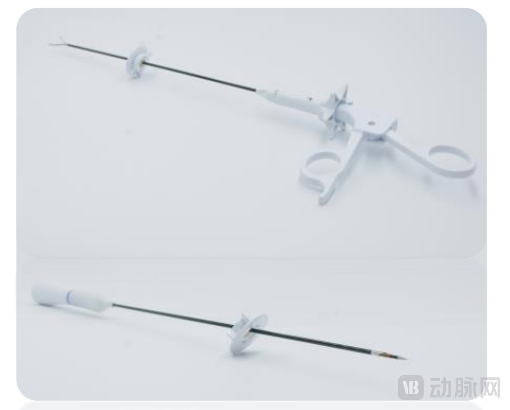
Source: Luken Medical
However, achieving an “ultra-fine” diameter is not the ultimate goal of R&D. In addition to posing significant challenges for research and development, “fineness” also imposes stringent requirements on manufacturing materials. Luken Medical stated that, on the basis of achieving a fine diameter, it ensures product toughness to provide sufficient support during surgical procedures.
In 2016, Luken Medical settled in the Caohejing Development Zone in Shanghai, where it began establishing its own laboratories and manufacturing facilities and initiated key research on materials. In 2018, the company completed its R&D on manufacturing materials and filed relevant patent applications.
Subsequently, the first-generation product completed its R&D phase and submitted an application for registration as a Class II medical device. In 2019, pre-market assessment and review processes were underway. However, due to the sudden outbreak of the pandemic, the intended registration certificate and manufacturing license were not obtained until 2020.
Luken Medical stated that the company's disposable trocars for assisted endoscopic surgeryThe handle material weighs only 50% of that of existing instruments. The product is easily suspended on the abdominal wall via a universal locking wheel, providing additional support for critical areas and key maneuvers. It eliminates the need for manual assistance by medical staff and does not obstruct the surgical field.
As a fundamental minimally invasive surgical instrument, trocars have broad market prospects. According to the prospectus of Kangji Medical, the penetration rate of disposable trocar cannulas is projected to reach 63.2% by 2024 compared to reusable trocar cannulas. Currently, Luken Medical’s products have been assigned medical insurance codes in Guangdong and Fujian provinces, with approvals underway in other provinces.
In addition to iteratively refining its disposable trocar products, Luken Medical will focus on innovative product development in the surgical field centered around the concept of “ultra-minimally invasive” procedures.The company will expand its presence across a full range of surgical platform products, such as manually controlled robotic arms and bipolar devices with cold saline irrigation. In the long term, the company will also develop robotic-compatible surgical instruments tailored for its robotic systems.
In addition to mass-produced products such as disposable trocars for endoscopic-assisted surgery, Luken Medical has established a “Think Tank Model” that collaborates with physicians and provides customized services. Currently, Luken Medical engages in “IP” collaborations with numerous physicians, helping them translate their ideas into reality by facilitating device design, patent applications, and related processes.
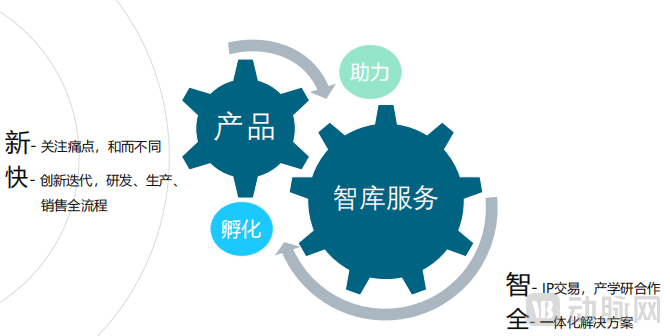
Source: Luken Medical
Luken Medical stated that communication with physicians is one of the most important sources of inspiration for R&D enterprises, as physicians are the ones who actually perform procedures using the products.Benefiting from effective communication with physicians, Luken Medical engaged in industry-academia-research collaborations with them during this process, gradually establishing its own small R&D think tank.For instance, its in-development product, the hand-controlled robotic arm, completed its development reserve during previous expert-customized projects and has now finished prototype design and first-generation development.
The company’s in-house product R&D and manufacturing capabilities are complementary to its customization services. Luken Medical provides a standardized customization process through phased delivery of deliverables to clients, participation in deep incubation, and project promotion.
Through these customized services, the company also gains more opportunities to engage with experts and expand its product portfolio. To date, Luken Medical has facilitated multiple customized collaborations, including assisting with 32 patent applications, providing 2 technical consultations, and producing 6 product prototypes.
Since its establishment, Luken Medical has completed two rounds of financing.A new round of financing is currently being planned to help the company accelerate product market promotion and expand production.
For entrepreneurs, the journey of starting a business is inevitably filled with countless stories. The impact of the pandemic in 2020 was a noteworthy chapter for Luken Medical.
At that time, the company faced near-stagnant growth. However, its previously laid “dormant strategic moves” proved instrumental: prior to the pandemic, Luken Medical had no foreign trade operations. Yet, in line with the company’s overall strategic planning, Luken Medical had secured all necessary qualifications for international trade well in advance. It was precisely this brief pivot into foreign trade during the pandemic that enabled the company to successfully navigate the “crisis.”
“Being prepared for a rainy day and keeping an eye on the future” seems to be a tradition among most Chinese people, and this holds true for companies as well.