

Elixiron Immunotherapeutics Unveils 'Innovation Trilogy' Strategy in IPO Prospectus: Advancing Global Immunotherapy Pipeline with Swiss Subsidiary and Gates-Backed Programs

Anli Xirong
Developer of New Drugs for Immunotherapy
With continuous breakthroughs in global science and technology, ongoing improvements in domestic and international environmental demands, and sustained policy support from governments worldwide, the 21st century has officially entered a golden age of biopharmaceutical development. In recent years, as the Chinese government has successively introduced a series of incentive policies for drug review and approval, enthusiasm for innovative drug R&D within China’s healthcare industry has been fully ignited. A large number of elite overseas talents have returned to China, and a wave of innovative pharmaceutical companies has emerged rapidly.
We can observe that the R&D strategies of domestic pharmaceutical companies are transitioning from mere “Me-too/Me-better” and “Fast-follow” approaches toward “Best-in-class,” with some even beginning to pursue “First-in-class” innovations. These scientists, driven by their vision for innovative drugs, have been making relentless efforts, leveraging their expertise and dedication to improve the diagnosis and treatment of patients.
As a biopharmaceutical company focused on source innovation, Anli Xirong (English name: Elixiron Immunotherapeutics) was founded byDr. Chen Hongkai, a Chinese-American and renowned expert in translational medicineFounded in 2017. The company currently has offices in Shanghai, China; Taipei, China; Lausanne, Switzerland; and San Francisco, United States, and is developing multiple therapies including treatmentRare diseases, cancer, neurodegenerative diseases, chronic hepatitis B, and autoimmune diseasesinnovative immunotherapy drugs, including.
Currently,EI-1071, a small-molecule drug developed by Anli Xirong, has completed Phase I clinical trials and yielded positive clinical data, preparing to enter Phase II clinical development for tenosynovial giant cell tumor. Another novel monoclonal antibody drug, EI-001, targeted for the treatment of hemophagocytic lymphohistiocytosis (HLH), has recently initiated its Phase I clinical trial in Australia.To further strengthen the company's global footprint and enhance collaboration with top-tier R&D institutions and experts worldwide,Anli Xirong recently announced the establishment of its oncology immunology subsidiary, Pilatus Biosciences, in the Biopole life sciences park in Lausanne, Switzerland, and has invited several top European experts to join its Scientific Advisory Board.
“I firmly believe that only revolutionary innovation can create the greatest value, so Anli Xirong has steadfastly pursued a path of independent innovation since its inception,” pointed out Dr. Chen Hongkai. He noted that Anli Xirong’s new drug development follows a “Trilogy of Innovation”:
One of the “Innovation Trilogy”: Innovation in Clinical Indications
Dr. Chen Hongkai told VCBeat that the establishment of Anli Xirong was not the result of overnight market insight, but rather the natural culmination of decades of accumulation by its co-founders. “Behind the development of each targeted drug lies decades of research accumulated by our team of scientists. We are well-versed in identifying new indications for each of our drugs. This enables us to develop multiple new indications around a single drug, thereby effectively reducing the development cost per drug.”
Take the company’s two core product pipelines, EI-1071 and EI-001, which are advancing rapidly, as examples. Due to their ability to effectively cross the blood-brain barrier,EI-1071This small-molecule inhibitor not only holds significant promise for the treatment of Alzheimer’s disease and other neurodegenerative disorders, but has also demonstrated robust preclinical data in the treatment of recurrent/diffuse tenosynovial giant cell tumor (TGCT), positioning it as a potential “Best-in-class” therapeutic agent.
Given the potential demonstrated by EI-1071 in the treatment of neurodegenerative diseases,In August last year, Anli Xirong received a $1 million grant from the 2020 Part the Cloud-Gates Partnership program, a collaboration between Microsoft co-founder Bill Gates and the Alzheimer's Association, to advance the clinical research and development of its novel immunotherapy drug candidate EI1071.
(Editor’s Note: The Cloud-Gates Partnership program is the world’s largest non-profit research initiative dedicated to Alzheimer’s disease and dementia, established to accelerate the development of innovative therapeutics. Previous awardees have predominantly been top-tier R&D institutions in Europe and North America, with Anli Xirong becoming the first recipient from Asia last year.)
Recurrent/Diffuse Tenosynovial Giant Cell Tumor (TGCT) is a rare, typically non-malignant tumor of the joints or tendon sheaths. Some patients may experience locally aggressive disease, with an annual incidence of approximately 8–9 new cases per million adults. Currently, only one therapeutic agent is available on the market. EI-1071, developed by Anli Xirong, may bring new hope to this patient population.
In September 2020, Anli Xirong signed an EI-1071 licensing agreement with Fubei Bio, granting Fubei Bio the rights to develop EI-1071 in non-oncology indications within China, with a total contract value of RMB 900 million. Currently, the EI-1071 project has completed Phase I clinical trials and achieved positive clinical data, and is preparing to initiate Phase II clinical trials.
EI-001It is a human monoclonal antibody drug expressed through single B-cell cloning, considered to be closely related to the pathology of several immune diseases. Currently, Anli Xirong has conducted research on this drug for multiple indications, including hemophagocytic lymphohistiocytosis (HLH), vitiligo, and chronic hepatitis B. The company has partnered with Boehringer Ingelheim, a globally leading contract development and manufacturing organization (CDMO) in the biopharmaceutical industry, to complete cGMP production of the monoclonal antibody and submit clinical trial applications in Australia, with Phase I clinical trials currently underway.
Part II of the “Innovation Trilogy”—Innovations in Antibody Development Platforms
Leveraging the innovative T-action Technology platform, which significantly enhances the activity of intratumoral T cells, Anli Xirong has developed a pipeline of novel bispecific antibody drugs for cancer immunotherapy. “This is a completely new platform technology capable of reactivating terminally exhausted T cells that could not be activated through previous methods or multiple pathways. This represents a major breakthrough achieved by our company,” introduced Dr. Chen Hongkai.
Part III of the “Innovation Trilogy”: Leveraging the Advantages of Antibody Development Platforms to Accelerate Innovation in Target Discovery
Leveraging its superior, cutting-edge platform technologies, Anli Xirong has established close collaborations with multiple internationally renowned cancer research institutions, including the Ludwig Institute for Cancer Research in Switzerland. By capitalizing on the robust innovation ecosystem of Switzerland’s renowned Health Valley West, the company set up the Pilatus Biosciences R&D Center. This strategic initiative has led top-tier researchers specializing in tumor immunometabolism regulation to prioritize partnerships with Anli Xirong from the earliest stages of novel target discovery, actively engaging them in the development of new antibody-based therapeutics. This milestone marks a significant leap forward in the company’s strategy of leveraging its antibody platform technology to drive innovative drug development, ensuring that advanced research breakthroughs benefit patients at the earliest possible stage.
Anli Xirong’s ability to implement a multi-pronged product pipeline strategy, establish an innovative antibody development platform, and accelerate the development of novel targets is attributable to its robust R&D/scientific advisory team and elite management members.
First, it is no easy feat to establish a development pipeline for rare disease drugs. Dr. Chen Hongkai told VCBeat that, for companies,The most challenging aspect of rare disease drug development lies in identifying sufficiently distinguished clinical experts to guide trial design and in recruiting the scarce pool of patients with rare diseases.(Due to the low incidence, complex pathogenesis, and diagnostic challenges associated with rare diseases, recruiting relevant patient resources is difficult), which directly determines whether the development of a rare disease drug can ultimately be implemented and carried out.
Anli Xirong’s scientific advisory team includes world-leading experts in immunology and rare diseases, such as Professor Jean-Laurent Casanova and Professor Fabrizio de Benedetti; among them,Professor Jean-Laurent Casanova is a member of both the U.S. National Academy of Sciences and the National Academy of Medicine, as well as an immunologist; Fabrizio de Benedetti is a highly experienced Italian expert in HLH research.Whether in providing guidance on clinical drug development design or in securing clinical patient resources, the scientific advisory team has provided strong support to Anli Xirong behind the scenes.
Although the development of orphan drugs appears to be fraught with challenges, global preferential policies targeting rare diseases—ranging from approval mechanisms to market incentives—have provided certain motivations for companies like Anli Xirong. This has enabled them to gain a speed advantage over conventional pharmaceutical enterprises in advancing their drugs toward market launch.
From the composition of Anli Xirong's core executive team,Dr. Chen Hongkai, Founder & ChairmanNot only is he a renowned expert in translational medicine, but he is also a rare talent with extensive R&D and management experience in both the academic and industrial sectors.
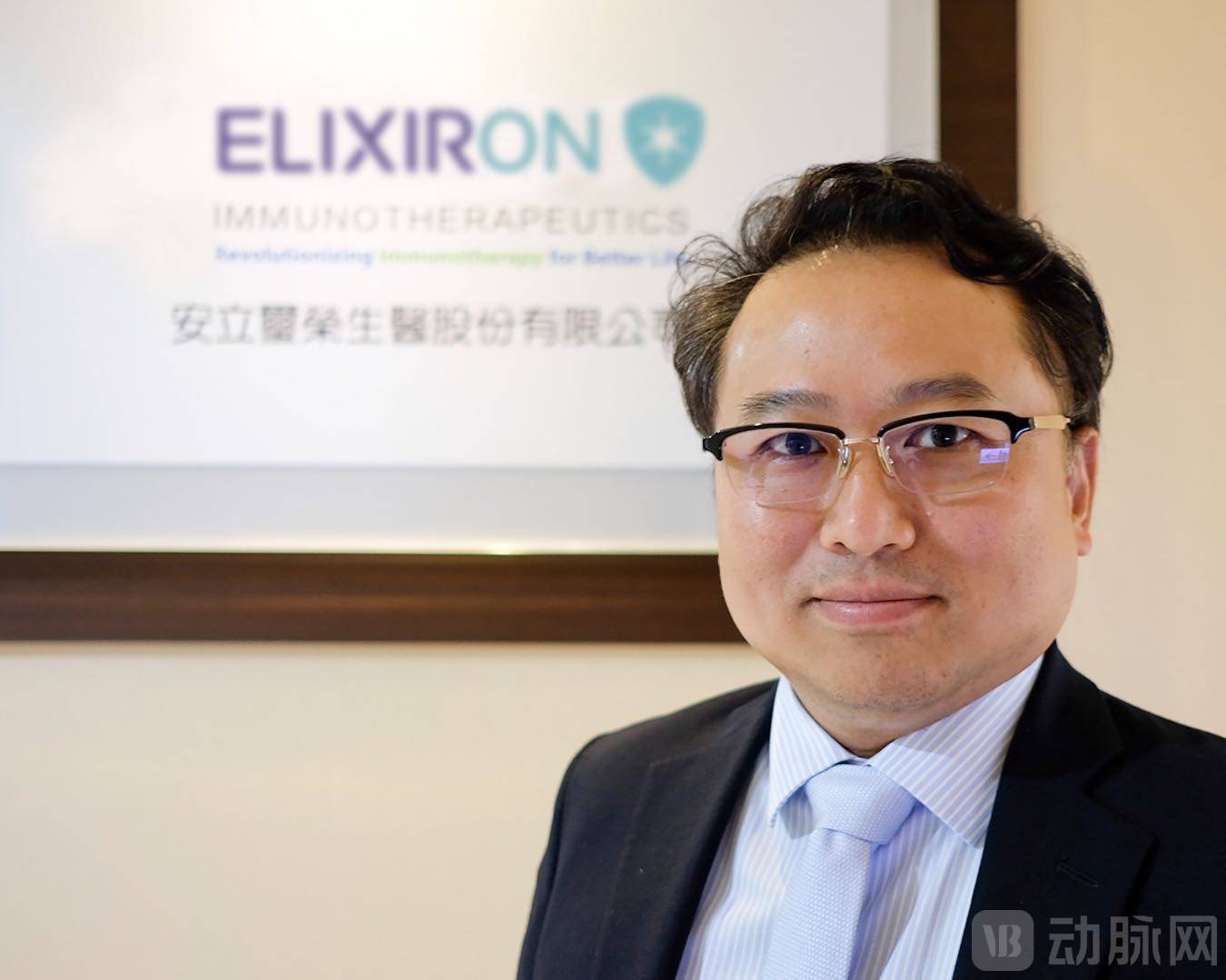
Pictured is Dr. Chen Hongkai, Founder & Chairman of Anli Xirong
Dr. Chen Hongkai completed his undergraduate studies in medicine at National Yang-Ming University, where he also earned his Ph.D. in Microbiology and Immunology. He subsequently conducted postdoctoral research at the Institute for Human Molecular Genetics at Baylor College of Medicine in the United States and served as a Postdoctoral Fellow at the Howard Hughes Medical Institute. Dr. Chen later worked as an Assistant Investigator at the Center for Translational Research of the Gladstone Institutes, affiliated with the University of California, San Francisco. There, he engaged in the development of novel therapeutics for Alzheimer’s disease, elucidated the molecular mechanisms by which ApoE4 induces mitochondrial dysfunction in neurons, and established a screening platform for neuronal mitochondrial function. He subsequently joined the GlaxoSmithKline (GSK) Shanghai R&D Center as a Principal Investigator and Director of Neuroimmunology Research, where he developed a high-throughput drug screening platform using human stem cell-derived neurons and led several new drug development projects for neuroimmunological diseases.
In addition, Dr. Chen Hongkai previously served as the Director of Translational Medicine at the Biotechnology Development Center, where he established a cross-disciplinary translational medicine platform and led multiple new drug development programs in tumor immunology. Prior to founding Anli Xirong, Dr. Chen served as Senior Vice President and Chief Medical Officer (CMO) at Yaxiang Biopharmaceutical Co., Ltd., where he oversaw the clinical development of novel therapeutics for neurological disorders.
During the interview, Dr. Chen repeatedly mentioned to us that,Clinicians, academic scientists, and industrial researchers have entirely different perspectives on drug development.For him personally, each career “crossover” has been a continuous process of learning.
“Dr. Chen is a scientist with profound dedication, possessing rare hands-on experience and extensive knowledge spanning from R&D to translational medicine and clinical practice. From clinician to postdoctoral researcher, and from academic scientist to industry scientist, each ‘cross-boundary’ move in his career has been driven by an underlying ideal: to alleviate suffering for a broader patient population. His leadership in founding Anli Xirong was not merely based on market insights, but rather a pursuit of personal dreams. His entrepreneurial venture represents the culmination and outburst of the quantitative and qualitative accumulation throughout his career—a natural progression when conditions are ripe.”Ms. Duan Xiaohua, General Manager of Anli Xirongsaid.
Ms. Duan Xiaohua possesses over 20 years of extensive experience in clinical research, medical affairs, project management, team building, and personnel management within multinational pharmaceutical companies and local innovative enterprises. She has previously held key leadership positions in medical innovation and R&D product pipeline management at the China and Asia-Pacific R&D centers and International Medical Departments of renowned multinational pharmaceutical companies, including GlaxoSmithKline, AstraZeneca, Bayer, Baxter, and Novartis. Ms. Duan demonstrates robust comprehensive management capabilities with a broad perspective, covering the entire process from new drug development to post-launch commercialization, as well as operations spanning from local to international markets.
Dr. Pandelakis Koni, Vice President of R&D at Anli XirongHolding a Ph.D. from the University of Cambridge and an MBA from Imperial College London, he has extensive research experience in molecular biology, cytology, and in vivo immunology. He previously served as an Associate Professor at the Department of Medicine, Augusta University, and the Georgia Cancer Center, and as Director of Research and Development at the Parker Institute for Cancer Immunotherapy in San Francisco, where he led preclinical research and development initiatives.