

Avow China Leverages Mobility Index for Elderly Fall Prevention and Rehabilitation in IPO Filing

Xavor
Medical Information Solution Provider
At the end of last year, the “Proposal” of the 14th Five-Year Plan issued by the Central Committee of the Communist Party of China called for “implementing a national strategy to proactively address population aging.” The inclusion of the term “proactively” and the designation as a “national strategy” have ushered in significant development opportunities for the elderly care industry.
On the policy front, elderly care has received significant attention. From the perspective of market development, data from iiMedia Research shows that the market size of China’s elderly care industry reached RMB 6.57 trillion in 2018 and is projected to reach RMB 10.29 trillion by 2022. This growth is driven by the rapid increase in China’s elderly population. According to data released at a press conference by the Ministry of Civil Affairs in October 2020, the number of elderly people nationwide is expected to exceed 300 million during the 14th Five-Year Plan period.
In line with this major trend, the broader health and wellness industry is being reshaped: the surge in the elderly population has expanded the demographic base for age-related diseases, and given that this group’s essential demand for medical and healthcare services far exceeds that of any other age bracket, older adults are undoubtedly becoming one of the mainstream consumer segments in the health and wellness market. As a result, new business models and innovative technologies will continue to emerge and evolve, driven by both market demand and policy support.
“China’s aging trend is pronounced, with the elderly population projected to account for one-third of the total population by 2050. Most existing solutions focus on diagnosis during illness or post-illness rehabilitation. Given this market opportunity and current landscape, combined with our 20 years of technological expertise, we have decided to make general health and elder care our core focus within the medical sector,” said Wu Yaqin, Product Manager at Xavor China.
Xavor is a U.S. technology company based in California, dedicated to delivering exceptional user experiences by leveraging digital technologies such as the Internet of Things (IoT), big data, cloud computing, and artificial intelligence/machine learning. With extensive experience in customer service within the healthcare sector, Xavor has, to date, provided services to numerous international healthcare enterprises, including Edwards Lifesciences, Pfizer, and Masimo.
The company established a branch in China in 2016, creating the Xavor Elderly Care Technology Innovation Platform, which focuses on the development of artificial intelligence technologies and service support in the fields of general health and elderly care, as well as project incubation for the elderly care industry.
Elderly Companion Robot is a core project of the Xavor Aging Technology Innovation Platform. Developed based on an elderly data platform, personal health data models, and robotic hardware, this robot aims to enhance the ability of older adults to live independently.
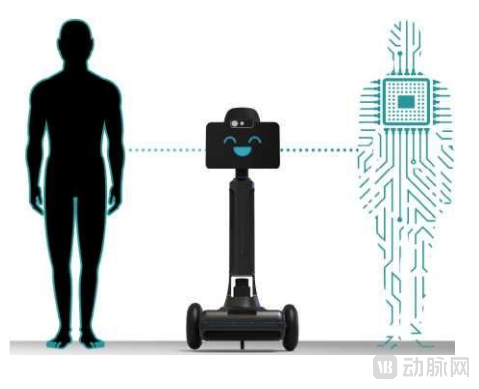
Elderly Care Companion Robot (Image from Xavor China)
Elderly Care Data Platform: An ecosystem for elderly care built on a personal lifestyle data-driven model, primarily designed for the precise prediction and prevention of falls. By observing changes in activities of daily living (ADLs), robots identify behavioral patterns, conduct early assessments, and proactively engage high-risk seniors in preventive rehabilitation activities.
The Yawo elderly care companion robot features dual capabilities in prevention and rehabilitation. It integrates into the daily lives of older adults through functions such as intelligent navigation, voice guidance, risk monitoring, gamified rehabilitation, and remote supervision. The robot proactively interacts with elderly users.
Furthermore, it can assess the mobility of older adults by observing their balance, stride length, gait, step width, and step distance during walking; provide guidance on safe physical activities; incorporate gamified training incentives; and follow up on health plans with goal-oriented feedback.
Furthermore, by observing the behaviors and responses of older adults during interactions, robots can predict their risk of falls and other early-stage risks. In the event of a hazardous situation, the system will promptly and accurately relay this information to the older adult’s family members, friends, social service providers, and geriatric specialists.
Wu Yaqin introduced that the core function of the Xavor elderly care companion robot is to predict trends in changes to an elderly person’s early-stage mobility. If a decline is detected, the system enables early intervention by guiding adjustments to diet and daily living habits, thereby facilitating faster recovery.
Wu Yaqin also mentioned that what sets this robot apart from others is that it was developed based on the “Personal Health Data Model” of P4 and 5Ms.
The P4 model, namely Personalized, Predictive, Preventive, and Participatory. Compared with the traditional healthcare model, the P4 model pioneers a new pathway for health care, helping the elderly prevent diseases and hazardous conditions at an early stage.
The 5Ms Model, comprising Mind (mental health), Mobility, Medication, Multi-complexity, and Matters Most. The 5Ms Model takes into account the actual needs of elderly individuals aging in place, providing them with comfortable and dignified elder care services.
By analyzing data from specific events in individuals’ daily lives, digital twin data are generated to enable more accurate prediction and prevention of health and living conditions among the elderly. The Xavor elderly care companion robot has completed its development phase and is about to undergo real-world pilot testing for iterative optimization and refinement. To this end, Xavor China is actively seeking local technology and healthcare service partners committed to addressing China’s aging population challenges.
In the course of digital transformation, innovation incubation centers have become important platforms for communication, exchange, and collaboration between international giants and innovative enterprises. Therefore, many large corporations are also leveraging their accumulated industry experience and resources to extensively connect, collaborate, and implement projects with startups. This is precisely the case with Xavor China’s Age-Tech Innovation Platform.
Xavor China aims to leverage technology to influence the entire value chain of the health and wellness industry, with a focus on elderly care, utilizing technological means to enhance the quality of life for seniors in their later years.
In terms of talent, Xavor China has assembled 12 cross-disciplinary expert teams across three major sectors: product design, technology, and business, encompassing professionals in home care rehabilitation, aging technology, digital strategy, and more. Furthermore, Xavor China has established an innovation development process that is driven by design and executed by interdisciplinary teams.
Currently, Xavor China’s projects—including telemedicine, smart mobility vehicles, in-home care services, and high-sensitivity olfactometers—are also underway. In addition to internal incubation, Xavor China is seeking deep collaborations with external innovative enterprises, aiming to join forces with more companies to advance the development of the elderly care industry.
“We have always maintained an open mindset in seeking innovative collaboration opportunities. In the course of our business operations, we frequently identify commercialization needs. If one enterprise can acquire data while another can transform such data into solutions, there arises room for collaboration. In this process, we are responsible for providing resources and implementing commercialization solutions,” said Wu Yaqin.
The challenges in elderly care and health are numerous and complex. In response to these difficulties, countless innovators have entered the elderly care and health industry. Looking ahead, Xavor China aims to collaborate with innovative enterprises to explore and seek optimal solutions for elderly care issues.