

Data-Driven Transformation: How Tertiary Hospital Accreditation Is Reshaping Healthcare Data Capabilities
Editor’s Note: This article is reprinted from HIT Expert Network, authored by Gong Chen. VCBeat has been authorized to republish it.
Tertiary Hospital Accreditation Is Undergoing a Transformative Change.
On December 28, 2020, the National Health Commission issued the Accreditation Standards for Tertiary Hospitals (2020 Edition) (hereinafter referred to as the “Accreditation Standards”). This marks the first revision since the promulgation and implementation of the Accreditation Standards for Tertiary General Hospitals (2011 Edition) nine years ago, and the changes between the new and old standards have drawn widespread attention across the industry.
On October 21, 2021, the “Implementation Rules for the Tertiary Hospital Accreditation Standards (2020 Edition)” (hereinafter referred to as the “Implementation Rules”) were officially issued, providing further interpretation and detailed elaboration of the “Accreditation Standards.” The National Health Commission requires that all regions may adjust the “Implementation Rules” according to current key priorities and local characteristics, adhering to the principle of “raising but not lowering standards, adding but not reducing content,” and formally implement them after filing for record.

These two pivotal documents determine the future trajectory of accreditation for tertiary hospitals. It is evident that one of the most significant changes in the new standards is the requirement for participating hospitals to provide data for hundreds of monitoring indicators. Consequently, accurate, reliable, and timely data support has become an imperative necessity for meeting accreditation requirements. This poses challenges to hospital information technology development, particularly in the construction of data platforms.
From the specific requirements of the Accreditation Standards and Implementation Guidelines, the accreditation work for tertiary hospitals entering a new stage of development presents the following characteristics.
First, the review format has shifted from subjective qualitative assessment to objective quantitative evaluation.In the past, the accreditation of tertiary hospitals primarily relied on on-site inspections, subjective qualitative assessments, and centralized reviews, which inevitably led to hospitals engaging in last-minute preparations for inspections. In the future, the accreditation model will gradually shift towards a combination of routine monitoring, objective indicators, on-site inspections, and both qualitative and quantitative assessments. This change in the "Accreditation Standards" aims to guide medical institutions to prioritize daily quality management and performance, as strengthening routine operations is the key to achieving excellent results in accreditation. It also seeks to reduce the subjective biases inherent in traditional accreditation methods and enhance the objectivity of the accreditation outcomes.
Secondly, emphasize the use of information technology to carry out medical quality management and control.The Accreditation Standards establish 74 sections and 240 monitoring indicators within the “Medical Service Capacity and Quality Safety Monitoring Data” section. The content encompasses monitoring of indicators related to hospital resource allocation, quality, safety, services, and performance, as well as routine monitoring data such as DRG evaluations, quality control for single-disease entities and key medical technologies. The data statistical cycle covers the entire accreditation period, with primary sources being national and provincial data monitoring systems. The Implementation Rules state that traditional data collection methods can no longer meet the current needs of quality management in tertiary hospitals, and leveraging information technology to rapidly and accurately obtain relevant data is a prerequisite for adapting to the requirements of modern hospital management.
Ma Xudong, Director of the Medical Quality Division under the Bureau of Medical Administration and Hospital Management of the National Health Commission, stated in an interview with the media that healthcare informatization should at least enable functions for medical quality and safety management, such as real-time statistical monitoring of quality indicators, along with the analysis, feedback, and integration of relevant information, thereby serving the core mission of hospital medical quality management.
Third, prioritize the authenticity and accuracy of reported data.The Implementation Rules establish the "Data Verification Principles," which stipulate that data shall be deemed erroneous if: the discrepancy between the values provided by the hospital and the verified true values exceeds 10% (inclusive of both positive and negative deviations); the original data cannot be provided; or the review expert panel determines the data to be fabricated. All erroneous data shall be recalculated based on the verified results, and punitive point deductions shall be applied according to the percentage of erroneous data relative to the total number of data points subject to on-site verification. If the proportion of erroneous data reaches 10% or more, the evaluation shall not be passed.
Thus, it is evident that in the accreditation of tertiary hospitals, data quality issues can be a matter of life and death.
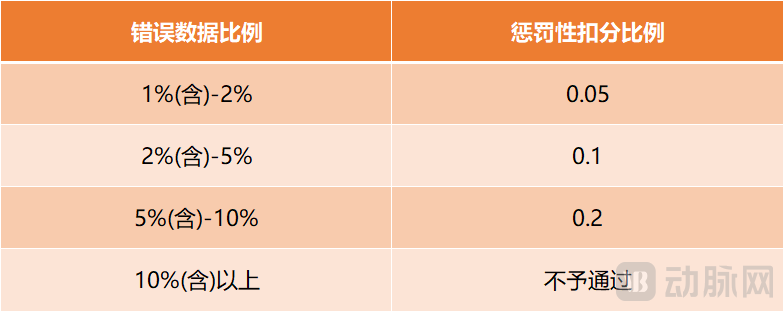
《Provisions on Point Deductions for Erroneous Data in the Implementation Rules
Without high-quality data as support, the accreditation of tertiary hospitals would be out of the question; and without informatization construction, high-quality data would be like water without a source or trees without roots.
The resulting question is: what informational tools and pathways should be leveraged to support hospital accreditation and daily operations? In fact, the Accreditation Standards and the Implementation Rules have already provided the answer.
Article 23 of the "Accreditation Standards" explicitly states: “Strengthen the construction of hospital information platforms based on electronic medical records to meet the needs of medical quality management and control.” The "Implementation Rules" further elaborate: “Hospitals shall rely on information platforms to strengthen the standardization and normalization of information systems, enhance collaborative data sharing, and achieve interconnectivity between clinical and management systems.”
To enhance a hospital’s intrinsic data capabilities, the role of its big data platform is pivotal.As a participant in and practitioner of industry standards related to hospital information integration platforms and medical big data applications, Collibri has a profound understanding of this field: In the top-level design of hospital informatization construction, the development of two platforms is critical—namely, the information integration platform at the foundational layer and the big data middle platform at the upper layer.
In 2015, the former Shanghai Municipal Commission of Health and Family Planning (now the Shanghai Municipal Health Commission) spearheaded the compilation of the Guidelines for the Construction and Practical Application of Hospital Information Integration Platforms in Shanghai. Collinbrai, a company with extensive industry experience that has assisted numerous medical institutions in building hospital information platforms, participated in the drafting process. Qin Xiaohong, co-founder of the company, served as the first associate editor-in-chief.
The Guidelines are the first to conceptually distinguish between business integration platforms and data platforms. The integration platform focuses on addressing interface issues among business systems, while the data platform concentrates on unified hospital data management, data standardization, data governance, and big data applications. For the first time in the industry, the Guidelines propose and define the Operational Data Repository (ODR), categorizing human resources, financial, and material data under the ODR rather than solely under the Clinical Data Repository (CDR). Additionally, the Guidelines introduce and define the Research Data Repository (RDR) for the first time in the industry, laying a theoretical foundation for constructing the RDR through CDR-based data tagging and secondary modeling, thereby clarifying practical pathways and methodologies.
ColinBri’s hospital information platform, designed for healthcare institutions, complies with the “National Standards and Specifications for Hospital Information Construction in China,” meets the functional requirements outlined in the “Guidelines for Application Functions of Hospital Information Platforms,” and adheres to the technical standards specified in the “Technical Guidelines for Hospital Information Construction Applications (2017 Edition).” It provides the data and information necessary for medical quality management and control. Building on this solid foundation, ColinBri is committed to helping healthcare institutions achieve effective governance and utilization of medical big data.
Colin Brierly believes that data cleansing, standardization, governance, and integration should be performed without disrupting the normal operation of business systems or requiring any interface modifications to those systems.
Therefore, on the Collinbree big data platform, the “data layer” monitors changes in the underlying data of business systems, reconstructs and integrates the business system data into the CDR, ODR, and RDR in real time. This process effectively isolates the impact on production systems, enabling data to be ingested into the big data platform within seconds.
At the “service layer” above the “data layer,” ColinBrain has independently developed multiple core technologies, including ETL tools, NLP systems, metadata systems, and big data visualization systems, thereby establishing core data governance capabilities tailored to the practical needs of the healthcare industry. The governed data complies with the requirements of the National Hospital Data Reporting Management Plan and the National Hospital Reported Data Statistical Analysis Indicator Set. Meanwhile, drawing on years of experience, ColinBrain has built a data quality rule library comprising more than 3,000 rules to help hospitals continuously improve their data quality.
At the “application layer” of the big data platform, Colibri leverages its capabilities and expertise to help healthcare institutions implement a wide variety of data application scenarios, including regional interoperability applications, patient service applications, clinical operations applications, operational management applications, and research and teaching applications. This enables hospitals to fully align with the relevant requirements of the Accreditation Standards and Implementation Rules, thereby thoroughly preparing for accreditation assessments.
Colinbray’s big data platform has been battle-tested in more than 150 tertiary hospitals. In 2017, amid a competitive bid involving 37 vendors for the Big Data Center project at West China Hospital of Sichuan University, Colinbray stood out with its scientifically mature big data governance framework and comprehensive data governance solutions. It was acclaimed as having “the most extensive data dimensions, with over 10,000 data elements in the clinical domain alone.” The jointly developed “Medical Big Data Integration and Application Platform” integrates data resources from West China Hospital and its medical consortium hospitals, encompassing records of more than 20 million patients and over 70 million visits. The data spans multiple domains—including electronic medical records, laboratory tests, diagnostic examinations, physician orders, and billing—covering a time period of more than 10 years. Driven by data analytics, the platform supports the ambitious goal of propelling West China Medicine to the forefront of world-class medical institutions.
Behind the “exam” on data in the accreditation of tertiary hospitals lies the essential goal of guiding hospitals to achieve self-management and sustainable, healthy development by enhancing their capabilities in recognizing, analyzing, and applying relevant data.
Collinbray has developed a “3 (three data centers) + N (multi-scenario adaptive applications) + 1 (one information integration platform)” architectural framework for healthcare institutions. By employing various technical means to achieve in-depth data governance and integrating scalable functionalities tailored to diverse business scenarios, it establishes a comprehensive, closed-loop quality control management system. This system embeds practices such as “continuous monitoring, data analysis, strategy formulation, and adjustment and improvement” into the daily operations of hospitals, thereby achieving the goal of sustained development and continuous improvement.
Currently, Collinbrary’s data intelligence applications for hospitals are being deployed comprehensively across multiple domains. They not only provide robust support for the high-efficiency and high-quality completion of various data reporting and accreditation tasks—including tertiary hospital accreditation, performance evaluation, electronic medical record (EMR) grading, and interoperability assessments—but also lay a solid foundation for data-driven, high-quality development in hospitals.
In terms of medical service capabilities and hospital quality and safety, Colinbri’s independently developed"Hospital Medical Quality Monitoring and Management System"It includes basic monitoring indicators such as hospital resource allocation, workload, and work efficiency. It monitors key inpatient diseases, overall inpatient mortality rate, unplanned readmission rate after discharge, hospital-acquired infections, nursing quality, rational drug use metrics, medical record timeliness, and critical values. This approach standardizes hospital medical quality control management from a comprehensive, multi-dimensional perspective.
In terms of quality control for single diseases (surgical procedures), Colinbry's independently developed“Single-Disease Quality Control Reporting System”, it can automatically extract complete patient medical record data. Leveraging artificial intelligence technologies such as Natural Language Processing (NLP) and deep learning, it performs data collection, monitoring, management, and reporting on key aspects of the diagnosis and treatment process for single diseases, focusing on two dimensions: quality control and resource consumption. Characterized by an equal emphasis on both process and outcomes, it enhances the quality of data submission while improving hospitals’ single-disease management capabilities, thereby ensuring medical quality and safety.
In terms of hospital operations management, Collinbree's independently developed"Operations Management System"This is a comprehensive hospital statistical analysis and decision support platform built on ODR, driving the transformation of hospital management from a traditional report-centric, multi-source, fragmented, and relatively rigid model to a new centralized, dynamic, KPI-based management model. Leveraging data mining tools, the system establishes an analytical framework across multiple dimensions—including clinical operations, efficiency analysis, revenue analysis, disease analysis, surgical analysis, and resource analysis—to support hospital management, monitoring, evaluation, and forecasting. It assists hospital administrators in gaining intuitive insights into operational performance, thereby promoting scientific, standardized, and refined hospital operations management.
In terms of medical insurance cost control, Collinbrew’s independently developed“DIP Medical Service Capability Evaluation and Cost Control System”Supported by medical big data governance, it provides services such as quality control of medical record front pages, pre-grouping analysis of disease types, DIP operational evaluation, and analysis and monitoring alerts for medical insurance surpluses. It achieves refined performance and cost accounting from various dimensions including hospitals, departments, medical teams, and disease groups, thereby promoting lean operations in modern hospitals.
In terms of performance appraisal, the “Public Hospital Performance Appraisal and Evaluation System,” independently developed by Colinbury, covers all indicators required by national hospital performance assessments. Through four functional modules—hospital quality analysis, operational management analysis, sustainable development analysis, and satisfaction evaluation analysis—the system tracks and analyzes hospitals’ performance appraisal activities. It visually presents statistical data on performance appraisal results, automatically integrating, analyzing, and summarizing indicator content. This provides critical support for tertiary public hospitals to accurately and efficiently complete their annual performance appraisals, helping them achieve simultaneous improvements in refined management and performance appraisal outcomes.
Rather than assessing a hospital’s various monitoring indicators, the tertiary hospital accreditation process evaluates its “data capability”—that is, its capacity to understand, govern, analyze, and apply data. To enhance this “data capability,” hospitals need to leverage effective tools, with a robust big data platform serving as the optimal foundation.