

Seizing the '14th Five-Year Plan' Momentum: AI Becomes Essential for High-Quality Hospital Development
As the inaugural year of the 14th Five-Year Plan, a series of policies related to healthcare informatization were intensively issued this year. The “Opinions on Promoting High-Quality Development of Public Hospitals,” the “Key Tasks for Deepening the Reform of the Medical and Healthcare System in 2021,” and the “Action Plan for Promoting High-Quality Development of Public Hospitals (2021–2025)” all emphasize strengthening the supportive role of informatization, prioritizing it as a key area in hospital infrastructure development, and advancing the construction of “three-in-one” smart hospitals—integrating electronic medical records, smart services, and smart management—alongside the standardization of health information systems.
To ensure the effective implementation of relevant policies in recent years and guide the high-quality development of public hospitals, the state has established a series of supporting evaluation measures, including the “Public Hospital Performance Appraisal,” the “Graded Evaluation of Electronic Medical Record System Functionality and Application Level,” the “Assessment of Standardization and Maturity for Hospital Information Interconnectivity,” and the “Graded Evaluation Standard System for Smart Hospital Services/Management.” These initiatives continuously drive hospitals to strengthen information technology infrastructure and promote the application of emerging technologies such as big data and artificial intelligence (AI).
At the outset of the 14th Five-Year Plan period, and against the backdrop of leapfrog development in healthcare informatics, how can medical AI enterprises facilitate high-quality hospital development, provide robust support for the advancement of the national healthcare sector, and what new opportunities will this new historical phase bring to the entire industry?Zhang Qi, CEO of Huimei Technology, stated in a recent media interview: “The core objective is to inject the value and momentum enabled by information technology into hospital development, while continuously enriching the connotation of this value in both depth and breadth.”
“Helping hospitals enhance their level of informatization and intelligence is the fundamental value that Huimei Technology delivers to its customers, specifically embodied in the principle of ‘promoting development through evaluation,’ which means facilitating the advancement of hospital information systems by supporting various assessment and accreditation processes.”
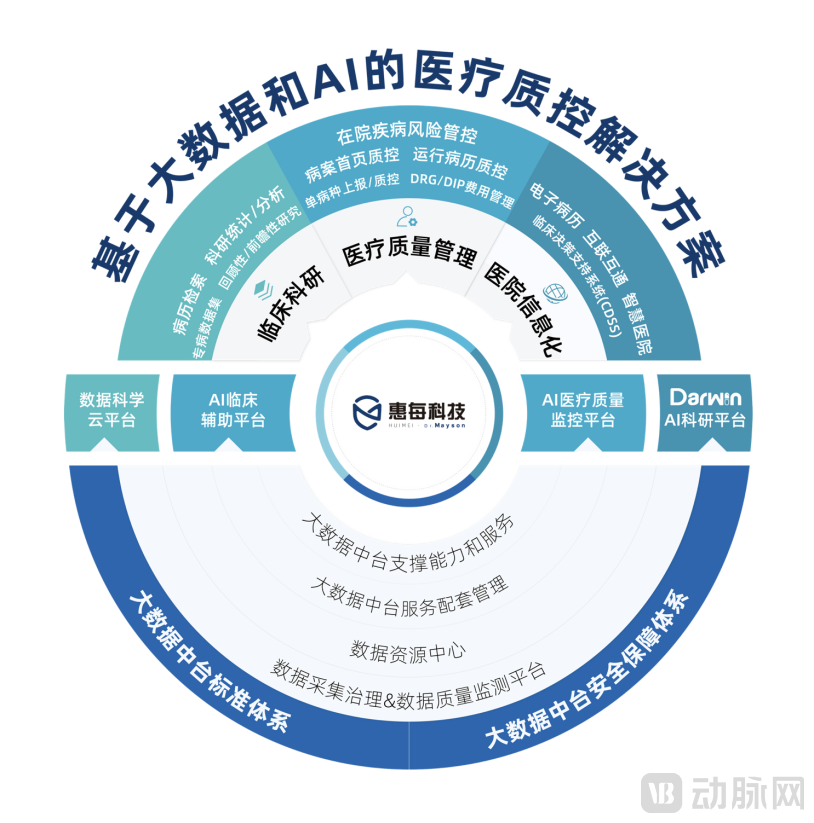
“Quality control in medical processes is the core application scenario of Huimei Medical’s AI solutions.”“The effectiveness of our quality control has generated positive word-of-mouth among users. The fundamental reason is that we truly drive improvements in hospital management efficiency and medical care quality—by supporting various assessment and evaluation initiatives to promote development through evaluation, thereby enhancing the level of hospital informatization. Furthermore, by processing clinical data in real time, providing real-time intervention in physicians’ decision-making, and achieving hospital-wide coverage, we help physicians improve the quality of clinical diagnosis and treatment while ensuring patient safety,” introduced Zhang Qi.
Taking venous thromboembolism (VTE) as an example, the current situation of VTE prevention and control in hospitals across China is severe, making the construction of a prevention and control system one of the key priorities for future healthcare quality and safety. Data from a hospital in southern China shows that after implementing the AI-based Huimei VTE Intelligent Prevention and Control System for four months, the VTE risk assessment rate across 26 high-risk departments exceeded 90%. This achieved comprehensive coverage of risk screening for hospitalized patients, enabled automatic identification and alerts for moderate-to-high-risk patients to ensure appropriate prophylaxis, and ultimately prevented the occurrence of serious adverse events.
Building on this achievement, the hospital led a consortium of nearly 20 hospitals and institutions, including Huimei Technology, in jointly developing the “Specification for the Construction of Clinical Decision Support Systems (CDSS) for VTE Prevention and Treatment in Hospitals,” which was officially published on the National Group Standard Information Platform in June this year.Fills the gap in domestic standards and requirements for the development of information technology platforms for VTE management.
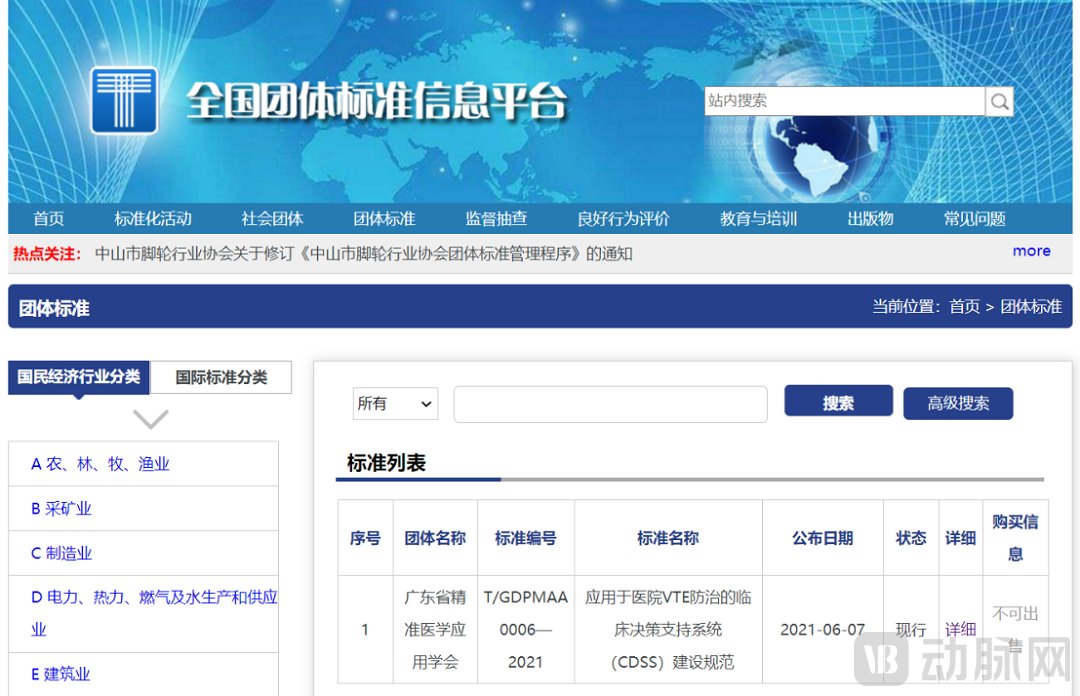
“The Construction Specifications set forth explicit requirements for the informatization of in-hospital venous thromboembolism (VTE) prevention and control across four dimensions: system design, system implementation, functional modules, and system quality control. These specifications not only provide guiding standards and norms for system development in in-hospital VTE prevention and control but also facilitate standardized and regulated management of VTE prevention and control among member units of medical consortia and medical communities, as well as subsidiaries of hospital groups,” introduced Zhang Qi.
Other studies have shown that only one-quarter of the physiological deterioration signals in patients are detected clinically. There is an urgent need for hospitals to establish an early warning system to improve healthcare professionals’ ability to identify and respond to deteriorating indicators. Currently, clinical assessment of patient condition and prognosis primarily relies on internationally recognized scoring tools such as the Sequential Organ Failure Assessment (SOFA) score and APACHE II. Higher scores correlate with higher mortality rates, necessitating timely adjustments to nursing care plans based on the scores.
“With Huimei AI, hospitals can not only monitor the condition of ICU patients but also track the trend of inpatients in other departments progressing to critical illness, thereby seizing the golden window for resuscitation. The entire process is fully automated by AI, encompassing comprehensive data collection, analysis, monitoring, dynamic assessment, and real-time alerts for hospitalized patients,” introduced Zhang Qi. He added that Huimei’s inpatient disease risk early warning system is also applied to assess stroke risk in patients with atrial fibrillation and the risk of fundus lesions in patients with diabetes.
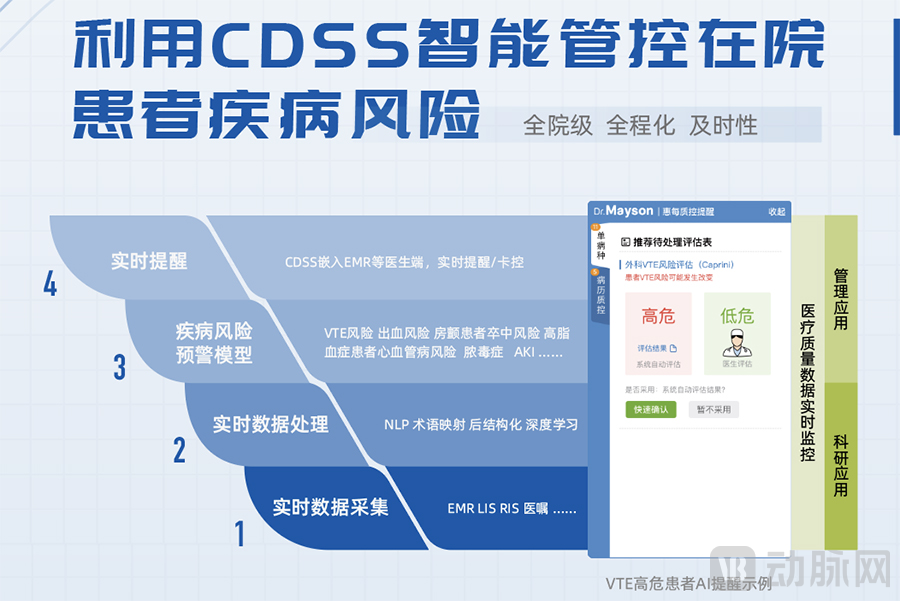
According to application data from a Grade A tertiary hospital in Shanghai, among the 2,044 discharged patients included in the analysis, Huimei AI identified high mortality risk groups through automated SOFA and APACHE II scoring,Covered 95.16% of patients with adverse outcomes, which is 31.72 percentage points higher than the 63.44% predicted by physicians, the area under the receiver operating characteristic curve (AUROC) was substantially higher than that of manual predictions. This indicates that Huimei AI can accurately predict patient mortality risk; its application in clinical diagnosis and treatment can facilitate early identification and intervention, thereby improving patient prognosis.
The “Opinions on Promoting High-Quality Development of Public Hospitals” explicitly state that, within five years, hospitals must shift their development model from scale expansion to quality improvement and efficiency enhancement; transition their operational model from extensive management to refined management; and reorient resource allocation from a focus on material factors to a greater emphasis on human resources and technological capabilities.
To guide hospitals toward high-quality development, the state has successively issued the Implementation Rules for Tertiary Hospital Accreditation Standards, the Hierarchical Assessment Standard System for Smart Hospital Management and Services, Quality Control Indicators for Medical Record Management, Annual National Goals for Improving Medical Quality and Safety, and the Compendium of Medical Quality Management and Control Indicators. These documents clarify the weighting of routine monitoring data—such as indicators for hospital resource allocation, quality, safety, services, and performance, as well as health insurance cost containment and single-disease quality control—and continuously refine various quality control, management, and assessment accreditation indicators to enhance the scientific rigor of the accreditation process.
Public hospitals have entered a new phase of “data-driven” development, where medical quality control, hospital management, patient safety, and other tasks must be based on data from the front page of medical records. Consequently, the importance of managing the quality of this data has risen to an unprecedented level. The Huimei Medical Record Quality Control System covers more than 300 quality control points, including audits for consistency, completeness, timeliness, and compliance across all medical record content such as the front page, initial progress notes, and admission records. It also assesses the rationality of diagnoses and surgical selections on the front page. By enabling real-time monitoring and in-process intervention for issues related to documentation format, terminology coding, and content defects, the system enhances the overall quality of hospital medical records and increases the rate of Grade A medical records.At a large Grade A tertiary hospital in Shanghai, the implementation of the Huimei Medical Record Quality Control System led to a 42.77% reduction in Class C medical records within two months.
“Quality Improvement” Must Be Accompanied by “Efficiency Enhancement.” Faced with 51 monitored disease types and over 7,000 data entry fields, manual reporting of a single case previously took at least 30–50 minutes. This process was cumbersome, inefficient, prone to errors, and consumed substantial time and energy from clinicians. “The complexity of diagnosis and treatment varies across disease types, as do the data entry requirements, leading to varying reporting times. Previously, reporting for certain conditions could take more than 50 minutes. With automatic data capture and entry enabled by the Clinical Decision Support System (CDSS), some disease types can now be fully reported in just five minutes—only one-tenth of the original time,” pointed out Zhang Qi. He emphasized that AI not only significantly reduces reporting time but also ensures more objective and accurate data. More importantly, it helps physicians redirect their valuable time and energy back to clinical care.
The continuous advancement of hospital informatization has accelerated the growth of medical big data, while also giving rise to challenges such as multi-source heterogeneous data, inconsistent standards, and “information silos.” In the face of various assessments and evaluations, it is crucial to fully unlock the value of data.
Huimei Technology leverages a data middle platform to integrate various hospital information systems, aggregating enterprise-wide data for unified development, visualization, and quality management. It establishes an enterprise-level, highly reusable data asset center and business interaction platform, providing versatile and rapidly responsive data resources to meet diverse operational needs. This transforms medical data into core hospital assets, supporting compliance with various evaluation frameworks and empowering clinical operations and managerial decision-making.“Taking the accreditation review of tertiary hospitals as an example, hospitals can perform routine monitoring and statistical analysis of more than 500 indicators in the evaluation system on the middle-end platform,” introduced Zhang Qi.
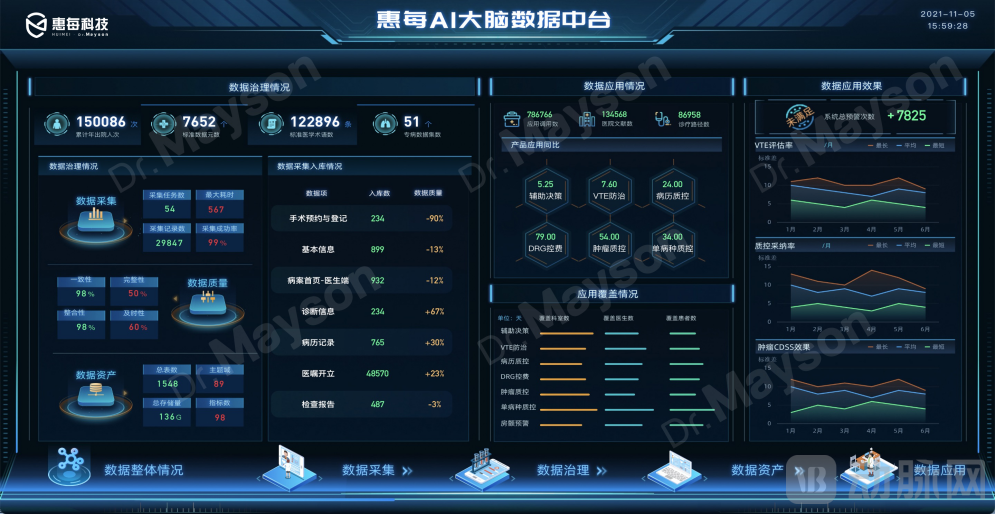
Huimei Data Middle Platform incorporates over 1,600 clinical data quality assessment rules, including data quality evaluation criteria for Electronic Medical Record (EMR) application grading, medical record quality control, and Diagnosis-Related Groups (DRGs). It enables automated, multi-dimensional acceptance and evaluation of hospital data—assessing consistency, completeness, and other dimensions—in alignment with national data standards and institutional operational characteristics, thereby significantly enhancing the efficiency and quality of hospital data governance.
On September 9, the National Health Commission officially released the “Administrative Measures for Investigator-Initiated Clinical Research Conducted by Medical and Health Institutions (Trial),” which sets forth clear provisions on the organizational management, basic classification and fundamental requirements, project approval, and implementation management of IITs conducted by hospitals. As clinical research in hospitals faces increasingly stringent regulatory oversight, it also encounters numerous challenges, including data management and quality monitoring.
Huimei Technology has leveraged AI technologies to build an integrated platform for clinical care and scientific research in hospitals. Based on Clinical Decision Support Systems (CDSS) and leading data capabilities, the platform provides fully automated services throughout the entire research workflow, including potential subject screening, process quality control, and research data collection and auditing. By empowering every stage of clinical research with AI, the platform enhances the efficiency and quality of hospital-based scientific research.
Zhang Qi introduced that the Huimei Integrated Clinical Research Platform includes a series of platforms and services, such as the AI-powered patient screening platform for research, the anti-tumor drug evaluation system, and real-world study support, helping hospital researchers accelerate technical processes throughout the entire workflow.
“To resolve many contradictions in the hospital-based execution of clinical research, such as: difficulty in identifying suitable research centers; inability to recruit sufficient eligible subjects; untimely monitoring, reporting, and management of adverse events (AEs); and ensuring procedural quality throughout the study—these challenges actually fall within the capabilities of Clinical Decision Support Systems (CDSS). We can leverage data and CDSS technology to empower these processes,” stated Zhang Qi. He emphasized that, whether for core or innovative business lines, Huimei Technology remains steadfast in its original aspiration and mission: to harness the advantages of CDSS to serve hospitals and physicians (investigators), enhance quality, improve efficiency, reduce errors, and safeguard lives.