

Nearly Half of Hypertension Patients Unaware of Their Condition: How 'Smart Catcher' Is Revolutionizing Early Detection
“Some cases of hypertension present no obvious symptoms, with the damaging consequences often emerging only after 10–20 years. If left untreated for a prolonged period, it may lead to myocardial infarction, cerebral infarction, and organ damage, which can even be fatal in severe cases.” Ding Zhongru, Chief Physician in the Department of Cardiology at the Eighth Medical Center of the Chinese PLA General Hospital, frequently educates those around him about hypertension. Recently, he attended to a patient who fit this profile:
Liu Xiao (a pseudonym), 32, is overweight. During a routine health checkup, he was found to have left ventricular high voltage on electrocardiogram (ECG), myocardial hypertrophy on echocardiography, and urine protein (++). The physician suspected that he likely had hypertensive heart disease with concurrent renal impairment. However, Liu expressed disbelief, insisting that he had always been in good health. Subsequent blood pressure measurement yielded a reading of 125/82 mmHg, which indeed falls within the normal range.
Where exactly did the problem lie? Subsequently, Liu Xiao underwent ambulatory blood pressure monitoring and polysomnography (PSG). The results revealed that he had typical nocturnal hypertension, complicated by obstructive sleep apnea syndrome (OSAS) and severe nocturnal hypoxemia. This condition is also known as masked hypertension; due to its difficulty in detection and serious health risks, it is referred to in medicine as the “invisible killer.”
In fact, Liu Xiao’s case is not an isolated incident. A new study published recently in The Lancet, led by Imperial College London and the World Health Organization and conducted by more than 1,100 physicians and scientists, represents the largest-ever investigation into global hypertension trends. It found that over the past 30 years, the number of adults aged 30–79 with hypertension has risen from 650 million to 1.28 billion, with more than 700 million people unaware of their condition.
The situation in China is equally grim. According to the "Report on Cardiovascular Health and Diseases in China 2018," there are 245 million hypertension patients in China. The awareness, treatment, and control rates of hypertension among adults aged 18 and above are significantly low, at 51.6%, 45.8%, and 16.8%, respectively. Meanwhile, public understanding of hypertension remains inadequate.
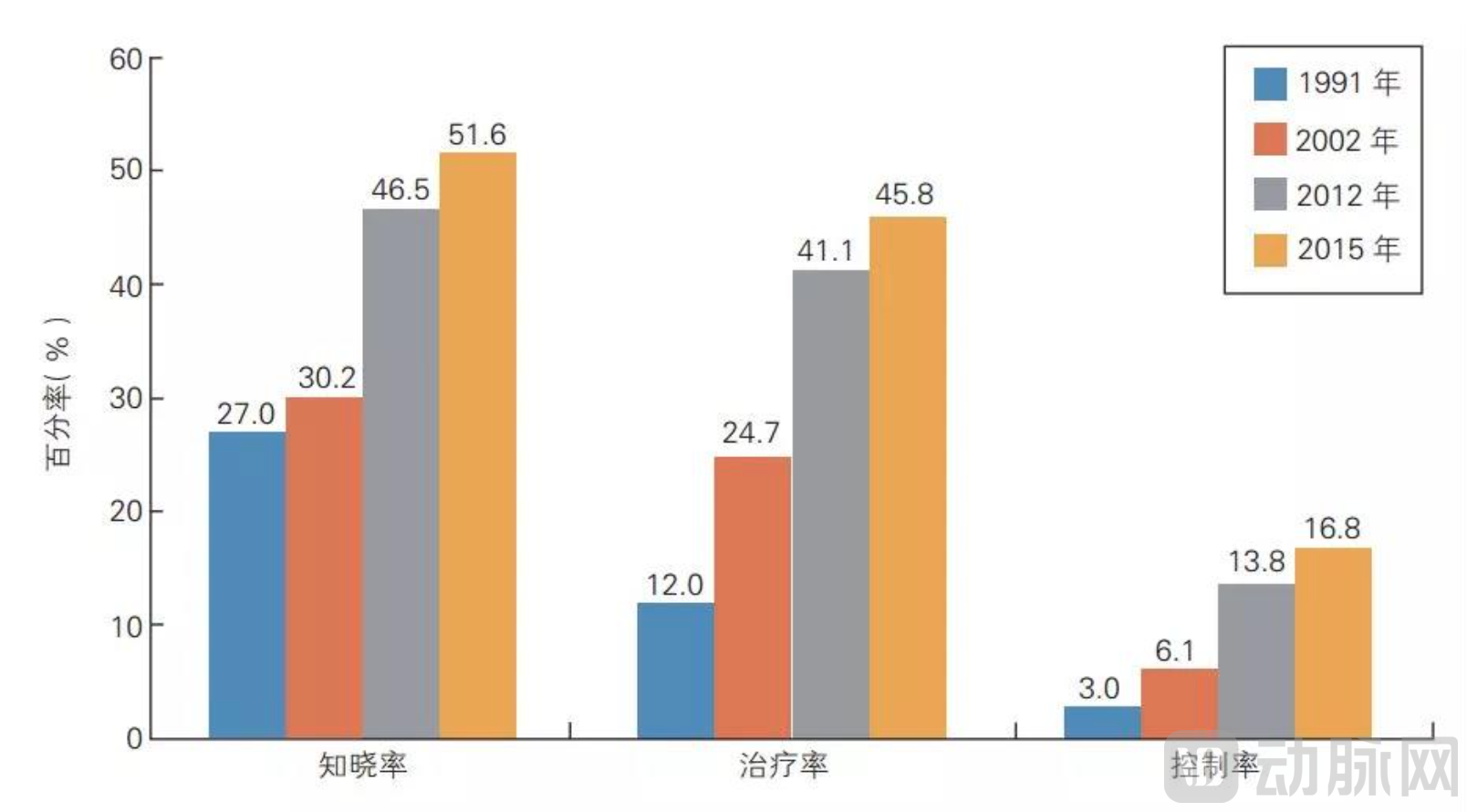
(Image source: Report on Cardiovascular Diseases in China 2018)
“The most pressing task at present is to ensure that the public is aware of their blood pressure levels and whether they have hypertension,” stated Zhou Xiaoyang, Chairman of the Hubei Hypertension Alliance and Director of the Hypertension Department at Renmin Hospital of Wuhan University. He noted that relying solely on office-based blood pressure measurements, with a threshold of 140/90 mmHg for diagnosing hypertension, fails to provide a comprehensive picture of an individual’s blood pressure profile. Some individuals experience elevated blood pressure only in clinical settings while maintaining normal levels in daily life, a phenomenon commonly known as “white-coat hypertension.”
“Some individuals may experience morning surge hypertension, nocturnal hypertension, or symptomatic hypertension. Office blood pressure measurements may inadvertently miss the periods of elevated blood pressure, a condition we refer to as ‘masked hypertension,’ which is no less harmful than overt hypertension,” explained Zhou Xiaoyang. Human blood pressure exhibits a morning surge, with another peak occurring in the afternoon between approximately 4:00 and 8:00 PM, known as the second peak. In some individuals, obstructive sleep apnea syndrome (OSAS), commonly known as snoring, may lead to nocturnal hypertension. Poor sleep quality or anxiety can also contribute to elevated nighttime blood pressure. These conditions are easily missed when relying solely on traditional office-based blood pressure measurements.
Ding Zhongru also stated that masked hypertension accounts for approximately 8%-15% of the population and is prone to being missed in diagnosis. Once identified, the condition has often progressed to a considerable severity, with serious complications such as renal insufficiency, uremia, or overt heart failure already present. Hypertension is also the most significant risk factor for cardiovascular and cerebrovascular diseases; approximately 60% of myocardial infarctions and 50% of cerebral infarctions are directly caused by high blood pressure.
Therefore, the Healthy China Initiative proposes that by 2022 and 2030, the awareness rate of hypertension among residents aged 30 and above shall reach no less than 55% and 65%, respectively; the standardized management rate for hypertensive patients shall be no less than 60% and 70%, respectively; and the treatment and control rates for hypertension shall continue to improve.
Only through early detection, diagnosis, and intervention can the “invisible killer” be nipped in the bud. In current consensus guidelines for hypertension management, out-of-office blood pressure measurement methods—including home blood pressure monitoring (HBPM) and ambulatory blood pressure monitoring (ABPM)—have become indispensable components of the diagnostic process; however, both approaches have significant limitations.
Currently, the "gold standard" for diagnosing hypertension in clinical practice is ambulatory blood pressure monitoring (ABPM). Patients are required to wear a blood pressure monitoring device, which measures blood pressure every 15–20 minutes during the day and every 30 minutes at night. Although ABPM offers high accuracy and comprehensive data, it has several limitations, including high cost, sleep disturbance at night, limited monitoring duration, and the need for hospital appointment and waiting.
Home blood pressure monitoring has become an important supplementary tool; however, home blood pressure monitors still have drawbacks, such as potentially inaccurate data recording, infrequent daily measurements, and the inability to perform on-demand measurements when symptoms occur. These limitations hinder accurate screening and can lead to underestimation of disease severity. Evidence indicates that, compared with ambulatory blood pressure monitoring, diagnosis based on home blood pressure measurements underestimates masked hypertension by 45.3% and sustained hypertension by 18.7%.
Consequently, researchers and industry practitioners have begun to turn their attention to the increasingly prevalent smart wearable devices, particularly smartwatches equipped with health monitoring capabilities. Smartwatches offer advantages such as ease of wear, ubiquitous and repeated measurement capabilities, accurate results, and affordability. By integrating the benefits of both home blood pressure monitoring and ambulatory blood pressure monitoring, they have the potential to address this substantial unmet need among patients.
Recently, a multicenter clinical study titled “The Role of Wrist-Worn Smart Blood Pressure Watches in Screening for Hypertension Among Undiagnosed Individuals,” jointly initiated by the cardiology departments of several Grade A tertiary hospitals—including Peking University First Hospital, Renmin Hospital of Wuhan University, and Shanghai Tenth People’s Hospital—in collaboration with Huami Technology, has been officially launched. The study will be conducted under strictly defined medical conditions. Suspected hypertension cases identified through smartwatch screening will be re-evaluated using ambulatory blood pressure monitoring, the gold standard, to validate the reliability of smart blood pressure watches for hypertension screening.
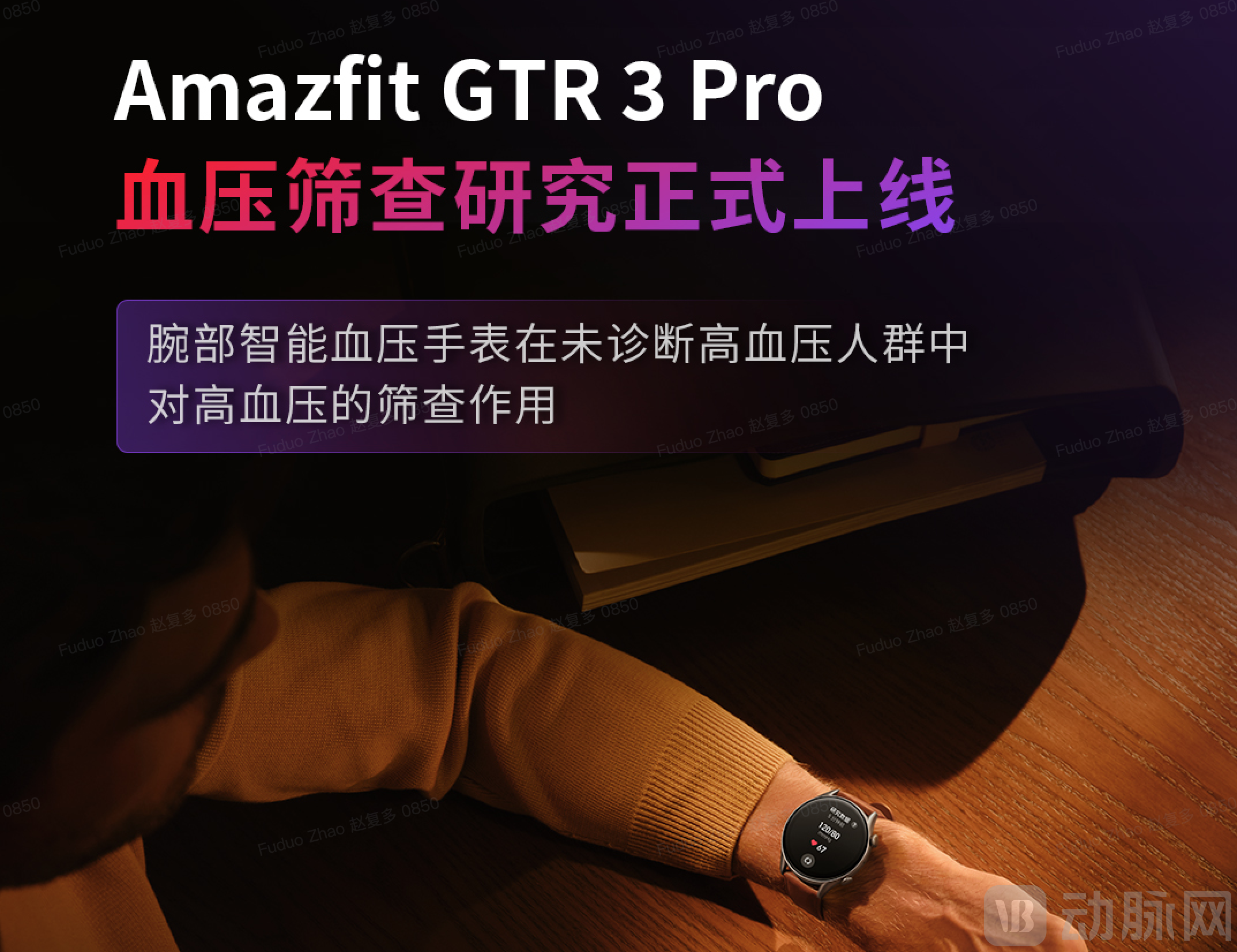
As the technical support provider for this study, Huami Technology has achieved a series of technological breakthroughs in blood pressure monitoring for smart wearable devices after five years of research and development, creating the PumpBeats™ blood pressure monitoring engine that enables blood pressure estimation based on PPG signals and the tester's physiological status.
It is understood that PPG (photoplethysmography) is an optical sensor composed of LEDs (light-emitting diodes) and PDs (photodiodes, i.e., light receivers), capable of detecting changes in blood volume within the microvasculature. During measurement, the smartwatch collects PPG signals from the user’s wrist. By performing morphological analysis and feature extraction on these PPG signals, the extracted features are input into a gradient boosting tree model to calculate the user’s blood pressure. In subsequent calibration processes, users are required to enter personal information (including gender, age, height, weight, as well as systolic and diastolic blood pressure values measured using a standard mercury or electronic sphygmomanometer) and record a segment of resting wrist pulse/PPG signals, thereby ensuring data accuracy.
Why Has Monitoring via Smart Wearable Devices Become a Focal Point?
In recent years, with technological advancements and product evolution, wearable devices have been able to collect an increasing number of user physiological parameters, such as heart rate, physical activity, sleep patterns, emotional stress, respiratory rate, and blood oxygen saturation. The integrated application of these diverse physiological parameters holds significant value for the real-time, comprehensive, and dynamic assessment of an individual’s health status.
Zhou Xiaoyang proposed that hypertension management emphasizes dual targets and comprehensive care for patients, an area in which smart wearable devices offer distinct advantages. Hypertension management requires not only achieving target blood pressure levels but also maintaining optimal heart rate, necessitating a thorough understanding of patients’ sleep quality, physical activity levels, and sedentary behavior. Smart wearable devices are well-positioned to provide this holistic data, making them highly valuable for the end-to-end management of hypertensive patients.
Looking ahead, Ding Zhongru believes that continuous blood pressure monitoring via wearable devices represents a new direction for development and may emerge as a novel method for blood pressure measurement, playing an increasingly significant role in health management and the prevention and control of hypertension.
Huami Technology currently plans to launch features such as continuous nighttime blood pressure monitoring, integrating intelligent, continuous blood pressure monitoring during sleep with user-initiated self-monitoring. The company aims to explore a new approach for screening masked hypertension through prolonged monitoring via smartwatches.
Zhou Xiaoyang also stated that continuous wearable blood pressure monitoring represents a key direction and trend in the evolution of blood pressure measurement. With the ongoing refinement of artificial intelligence algorithms, it is believed that this technology will truly transform the future of disease prevention and control, playing a particularly vital role in early detection and hypertension management. Furthermore, from a public health perspective, dynamic big data on blood pressure within a region can reflect the prevalence and control status of hypertension, thereby providing valuable reference for health administrators’ decision-making.