

Judo Tech: Building a Digital Platform for End-to-End Rare Disease Diagnosis and Drug Development to Unlock a Blue Ocean Market
Unlike most chronic diseases caused by acquired environmental and lifestyle factors, rare diseases are like preordained adversities, leaving many patients with no choice from birth.(Currently, over 70% of rare diseases are genetic disorders with clearly identified pathogenic genes). Patients with rare diseases and their families can only muster immense strength from their frail bodies to confront the disease and life.
Currently, there are more than 6,000 rare diseases worldwide, with less than 5% having targeted pharmacological treatments.In the face of this arduous and protracted medical journey, the release of China’s First Batch of Rare Diseases Catalog and the inclusion of rare diseases in medical insurance coverage in certain regions demonstrate the national government’s support for and emphasis on the field of rare diseases.
However, there is still a critical bottleneck in the rare disease field that urgently needs to be addressed: diagnostic capability for rare diseases.The norm for rare disease patients in China is to seek a correct diagnosis amid confusion, at the cost of traveling to multiple locations, enduring years of uncertainty, and incurring substantial expenses. A correct diagnosis brings about a transformation in identity, clarifying the individual’s relationship with the disease, physicians, medications, and future lifestyle.
Faced with this difficult yet correct path, how will China’s nascent field of rare disease diagnosis and treatment develop? Driven by this curiosity, VCBeat (hereinafter referred to as VB), as an observer of the healthcare industry, had the privilege of interviewingDr. Li Xiarong, Founder & CEO of GeneDock, the “Digital Platform for Full-Cycle Diagnosis, Treatment, and Drug R&D for Rare Diseases”, to gain insights from industry professionals.
1. At the intersection of bioinformatics, data technology, and medical genetics
IT & BT Composite Team
VB:You previously served as Chief Data Scientist at Umeng, an Alibaba affiliate. What motivated your transition from computer science to the pharmaceutical industry, and specifically to the nascent field of rare diseases?
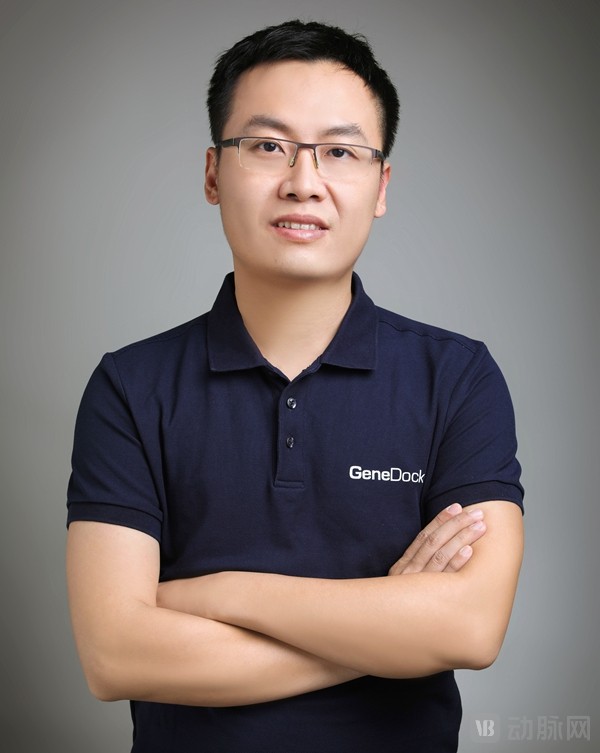
Dr. Li Xiarong, Founder & CEO of GeneDock
Dr. Li Xiarong:At Alibaba’s Umeng, my work primarily revolved around building a data management platform for mobile internet data, conducting large-scale computing and machine learning, and establishing user profiling systems for mobile devices along with precision advertising applications.
It is precisely because of my research and professional experience in the data field that I aspire to apply data technologies, such as distributed computing and machine learning, to address more fundamental human issues, rather than merely enhancing shopping or gaming experiences. Consequently, I entered the healthcare sector with the initial goal of developing data technologies tailored for medical applications, aiming to contribute meaningfully to healthcare.
As for why rare diseases were chosen within the broad healthcare sector, GeneDock has been building a cloud-based data computing and analytics platform since its establishment in September 2014, focusing on genomic data—the largest in volume and most challenging to analyze in the medical field. Genomic data has three primary clinical application scenarios: oncology, rare diseases (genetic disorders), and infectious diseases.
Although rare diseases represent an emerging field, the demand for and application of genomic data in this area are more rigorous and technically demanding.
The diagnosis of most rare diseases (genetic disorders) is based on genetic testing results, combined with clinical phenotypes and various diagnostic data, making it a typical data-driven diagnostic field. Furthermore, due to the vast diversity of rare diseases, many challenges remain unresolved in both medical research and clinical practice, including clinical interpretation and drug development. These areas hold significant research value and substantial room for advancement.
On the other hand, given the current state of rare disease development in China, diagnostic resources for rare diseases are primarily concentrated in leading hospitals. We aim to collaborate with these top-tier institutions to jointly develop a clinical decision support system that can extend rare disease diagnostic capabilities to a broader range of regions.
Therefore, the heavy reliance on data in the diagnosis and treatment of rare diseases aligns perfectly with our original aspiration to “deeply cultivate medical R&D data technology.” Of course, pioneering innovation in an emerging field inevitably presents numerous challenges. Throughout our entrepreneurial journey, continuous engagement with physicians and patients with rare diseases has steadily reinforced our conviction and sense of value in dedicating ourselves to the rare disease sector.
We believe that choosing to deeply cultivate the field of rare diseases is a difficult yet right thing to do.
VB:What is the current status of GeneDock's overall team structure?
Dr. Li Xiarong:I believe that a team truly coalesces only through the continuous process of solving problems together. Since its establishment seven years ago, GeneDock’s core leadership has remained driven by a deep-seated passion and steadfast commitment to the field of rare diseases. We are also eager to welcome more partners with an entrepreneurial mindset to join our team.
Currently, GeneDock has assembled an interdisciplinary IT & BT team specializing in bioinformatics, data technology, and medical genetics. Core team members hail from leading companies such as Alibaba, Baidu, and BGI Genomics.Meanwhile, the company has also established a multidisciplinary advisory team, including Professor Lihua Jiang from the Department of Genetics at Stanford University as an advisor in omics data science, and Professor Zhibo Wang from the Department of Computer Science at Zhejiang University as an advisor in artificial intelligence and data privacy.
Prof. Jiang LihuaA core Principal Investigator (PI) in the team of Professor Michael Snyder, Director of the Center for Mass Spectrometry in the Department of Genetics at Stanford University and a leader in personalized multi-omics medicine, with extensive experience in the research and clinical application of genomics and other omics data.
Prof. Wang ZhiboHe is a Professor and Doctoral Supervisor at the College of Computer Science and Technology / College of Cyber Science and Technology, Zhejiang University. His research interests include AI security, cybersecurity, and privacy protection. Professor Wang has presided over and undertaken multiple national-level projects, including those funded by the National Natural Science Foundation of China, the Major Projects on New Generation Artificial Intelligence, and the National Basic Research Program (973 Program).
On the other hand, we maintain deep strategic partnerships with over 30 hospitals across China, collaborating with clinical experts to overcome technical challenges in clinical digitalization.
2. The global rare disease market is worth $150 billion,
CNY 4–5 billion
VB:From an industry perspective, what are the current R&D challenges and future development trends for rare diseases? What key support do digital platforms for rare diseases provide to the development of the rare disease industry?
Dr. Li Xiarong:According to data from consulting firms,The global market for rare disease drugs is currently valued at approximately $150 billion, whereas China’s market stands at only RMB 4–5 billion. This proportion is disproportionately low relative to China’s economic size and population. Therefore, we believe that China’s rare disease drug market holds substantial room for growth.
Certainly, in recent years, with policy encouragement and support, technological advancements, and increased capital attention, the field of rare diseases has also been developing rapidly. However, there are certainly common industry pain points that urgently need to be addressed along the way.
First, the current diagnostic efficiency for rare diseases is low, and diagnostic capabilities are difficult to disseminate widely. Second, given the vast variety of rare diseases, most primary care clinicians are unable to accurately differentiate, diagnose, and treat them. Finally, a significant number of etiologies for rare diseases remain to be investigated; therefore, as an evolving discipline, it requires close integration of clinical practice and scientific research.
China’s vast territory means that diagnostic and screening capabilities are not yet universally accessible. Consequently, in grassroots and rural areas—regions that are relatively remote and have underdeveloped medical resources—there is a high likelihood of missed or misdiagnosed cases among patients with rare diseases.
Research data from Europe and the United States indicate that there are currently approximately 270 million rare disease patients worldwide. Based on China’s population proportion, there should theoretically be 30 to 40 million rare disease patients in China; however, the actual number of diagnosed patients is at least an order of magnitude lower. This discrepancy numerically underscores the urgent need to improve the current diagnosis rate of rare diseases in China and highlights the significant potential for growth in this area.
The specific number of diagnosed patients with rare diseases is also a primary consideration for pharmaceutical companies when evaluating their drug pipeline strategies.Furthermore, further research into the pathogenic mechanisms of rare diseases will also help pharmaceutical companies better develop drugs.Therefore, drug development and clinical diagnosis and treatment share a mutually reinforcing relationship, with diagnosis serving as the decisive link within this relationship.
3. Currently, genetic databases rely on foreign sources,
China Needs to Establish Its Own Source Innovation
VB:What challenges has GeneDock faced in the establishment and development of its digital platform for rare diseases?
Dr. Li Xiarong:The primary challenge lies in the fact that the rare disease sector is still in its early stages of development, with currently limited related medical resources.However, with rare disease medical security policies being placed on the domestic agenda and the promotion of maternal and child healthcare capacity building under the broader context of encouraging childbirth, I believe that rare diseases will naturally overcome the difficulties characteristic of their initial developmental stage.
On the other hand, there is a weak foundation in rare disease cases and medical genetic data.GeneDock’s digitalization efforts primarily rely on the development of medical genetics disciplines within the rare disease field. This discipline depends on large-scale data as its foundation for growth; currently, China’s data infrastructure remains relatively weak. However, with the declining cost of gene sequencing, the widespread adoption of clinical applications, and the implementation of large-scale medical cohort studies, these data-related shortcomings are gradually being addressed.
VB:Since you mentioned that the development of rare disease treatments is more advanced abroad, why doesn’t China directly introduce foreign orphan drugs and adopt international data solutions for rare diseases?
Dr. Li Xiarong:Indeed, China currently relies primarily on foreign databases and knowledge bases for the clinical diagnosis of rare diseases.However, in publicly available databases abroad, data from East Asian populations account for less than 10%, with the majority comprising Caucasian, African, and Latino populations.Current public databases exhibit significant differences in the types and frequencies of genetic variants for the Chinese population. These discrepancies pose challenges to the clinical diagnosis and treatment of rare diseases in this population.
China’s biopharmaceutical industry is riding a wave of independent innovation.To achieve independent innovation, we must establish a database based on the characteristics of our domestic population as a foundation.This is a long-term, highly challenging endeavor, yet it is both the right thing to do and well worth the effort, representing our proper stewardship of genetic resources. In the field of rare diseases, as a country with a large population, we have established a stronger data foundation, which will contribute to the collaborative global advancement of rare disease initiatives.
4. Four Major Segments Covering the Entire Rare Disease Value Chain,
Addressing Issues Across the Entire Clinical Diagnosis and Treatment Workflow
VB:What is the current landscape of this sector?
Dr. Li Xiarong:Digital platforms for rare diseases are more prevalent in Europe and the United States, while they are still in their infancy in China.Currently, the industrial layout in China’s rare disease sector is primarily concentrated at two ends: one is genetic testing for rare diseases (genetic disorders), and the other is the introduction and R&D of rare disease drugs. GeneDock positions itself to be hospital-based, focusing on enhancing diagnostic efficiency, and leveraging data systems to bridge clinical diagnosis and treatment of rare diseases with medical research and drug development. This is our distinctive feature and competitive advantage.
VB:Turning to GeneDock itself, could you please explain the basic framework of its digital platform for rare disease diagnosis, treatment, and drug R&D, as well as the potential application scenarios enabled by this platform?
Dr. Li Xiarong:In terms of product application, GeneDock's current rare disease digital platform mainly consists of four components.
The first is the omics data computing system (GeneDock SeqFlow), built on a hybrid cloud architecture and leveraging distributed computing, containerization, and heterogeneous computing technologies, it addresses the large-scale omics computing needs (such as genomics and transcriptomics) of medical institutions and pharmaceutical companies, enabling them to process massive datasets more quickly, efficiently, and cost-effectively. Meanwhile, it continuously provides positive feedback and intelligently optimizes analytical algorithm performance based on operational performance data.
GeneDock’s omics data cloud computing services are currently leading in China, with a cumulative data analysis volume exceeding 10 PB. The company has supported users in completing over 25,000 whole-genome sequencing (WGS) and 30,000 whole-exome sequencing (WES) analyses, accumulating advanced omics analysis technologies tailored to medical genetics needs.
The second is the Molecular Diagnostics Integrated Platform (GeneDock Lab), this platform is designed for the management of in-house LDT laboratories and clinical genetic diagnostic workflows. It enables end-to-end integration and management—from patient information and sample management to data processing and report generation—and achieves interoperability with hospital information systems, thereby helping clinical teams perform diagnostic analysis and traceability more efficiently and enhancing the quality of clinical services.
GeneDock currently serves the genetic centers/prenatal diagnostic centers of more than 20 core hospitals in China, supporting a large volume of sample testing workflows and data analysis annually.
The third is the Cohort Management and Data Science Platform (GeneDock Cohort), designed to meet the needs of retrospective and prospective studies in medical genetics, it provides modules for cohort management, comprehensive search, and data science, helping researchers conduct data analysis and statistics based on large-scale accumulated data to generate new scientific discoveries.Currently, the system supports multiple large-scale medical genetics cohort projects and has contributed to the development of the National Major Birth Defects Data Platform.
The fourth is the Rare Disease Clinical Decision Support System (GeneDock Analyzer), in collaboration with rare disease principal investigators (PIs), we will leverage high-quality phenotypic and genomic data resources to establish a diagnostic and therapeutic database and develop AI models for clinical decision support, thereby building a clinical decision support system that is poised to serve more mid-tier and primary care physicians in the future.
The four components are seamlessly integrated to cover the full spectrum of clinical diagnosis and treatment scenarios for rare diseases, helping healthcare institutions establish a standardized and regulated management framework. Based on the continuous accumulation of clinical and cohort data, this system enables the integration of clinical practice and scientific research, further supporting and facilitating drug development and clinical trials.
5. Collaborating with dozens of leading hospitals,
Actively Participate in Grassroots Free Clinic Activities
VB:Which enterprises or institutions has GeneDock currently partnered with?
Dr. Li Xiarong:We have established collaborations with leading hospitals and institutions in the field of medical genetics, including West China Hospital, Xinhua Hospital, Beijing Children’s Hospital, West China School of Stomatology, Ruijin Hospital, Nanfang Hospital, Southwest Hospital, Shanghai Sixth People’s Hospital, Xuanwu Hospital, The First Affiliated Hospital of Zhengzhou University, Fudan University Obstetrics & Gynecology Hospital, Sichuan Provincial People’s Hospital, CITIC-Xiangya Reproductive & Genetic Hospital, and International Peace Maternity and Child Health Hospital.
Furthermore, we also participate in public welfare free clinic activities conducted by clinical experts in grassroots communities. During these clinics, it has been observed that there is a high prevalence of rare disease cases in grassroots and underdeveloped regions due to insufficient prenatal diagnosis and limited dissemination of genetic knowledge. Additionally, the relative scarcity of medical resources makes it difficult for many patients with rare diseases to obtain timely and accurate diagnoses.
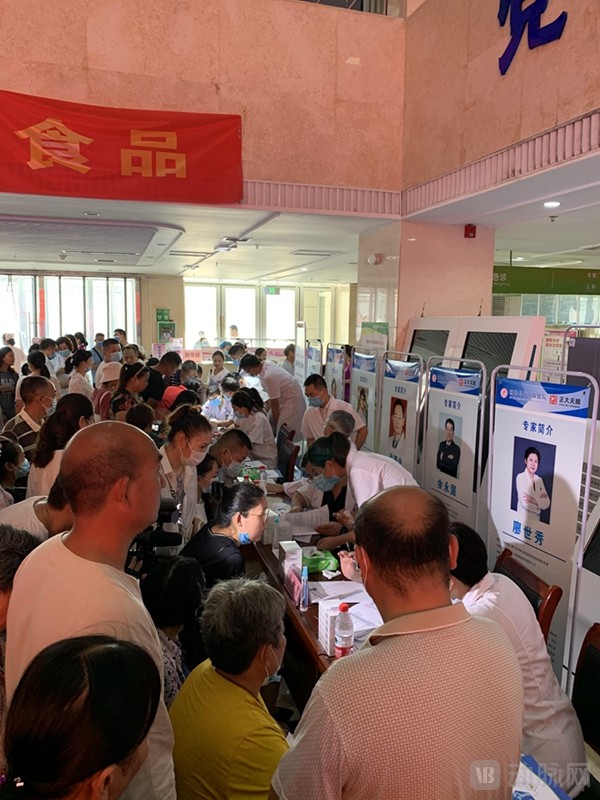
On-Site Free Clinic Event for Rare Diseases by Experts
Therefore, the widespread adoption of diagnostic capabilities for rare diseases is also a critical pain point that urgently needs to be addressed.To address this pain point, we are also driving technological innovation:First, collaborate with expert teams to establish knowledge bases and auxiliary analysis systems tailored to specific rare diseases., supporting primary care providers in recognizing and identifying rare diseases;2. Establish a 5G Telemedicine System, enabling patients at the primary care level to more efficiently access specialists from top-tier hospitals and receive accurate diagnoses.
To address the vast primary healthcare needs across China, we are empowering grassroots medical institutions with a digital diagnosis and treatment system for rare diseases. This is also the direction we are continuously advancing in collaboration with our team of experts.
VB:"During the course of our collaboration, were there any heartwarming stories that left a deep impression on you?"
Dr. Li Xiarong:This question instantly brought to mind many people and scenes.
I have a good friend, Tan Xuesong, whose daughter, An’an, is a patient with Rett syndrome.To care for his daughter, he resigned from his position at Huawei and founded “An’an Rett,” a patient support organization for individuals with Rett syndrome. By collaborating with international patient organizations, he introduced advanced rehabilitation and educational concepts and products, actively promoted research into the disease, and strove to provide maximum assistance to patients and their families.
I also have a highly respected friend, Dr. Chen Yiwei.Her doctoral research focused on gene therapy (currently, over 70% of rare diseases are genetic disorders with clearly identified pathogenic genes). Driven by her commitment to and support for the rare disease field, she later resigned from her position as a scientist at WuXi AppTec to devote herself to philanthropy. She founded the “Pea Sir” media platform, tirelessly working to advance public education about rare diseases and provide care and support for patients.
I also know a rare disease patient named A Gan, who has Kennedy’s disease. He runs a WeChat official account titled “Rare Disease A Gan on the Road.”Kennedy’s disease is a relatively rare neurodegenerative disorder affecting motor neurons, for which there is currently no cure worldwide. Patients gradually lose their mobility due to muscle atrophy. While this may seem disheartening, A Gan is an individual who embraces life with positivity and enthusiasm. Living with the condition has led him to cherish his finite existence even more, prompting him to engage in meaningful activities and inspire others through his vivid and engaging writings.
This is also the profound inspiration I have drawn from the rare disease community: although illness continually erodes their own or their family members’ physical health and daily lives, they increasingly channel their energy within the confines of their limited lifespans, embracing work, life, and helping others with positivity and optimism.
They possess greater courage to live and more power to act than ordinary people.Unlike common chronic diseases, which are often caused by external environmental factors or unhealthy lifestyles, rare diseases resemble preordained adversities. Affected individuals, born with no choice in the matter, must summon immense strength from their vulnerable selves to confront these conditions.Therefore, the rare disease community is in greater need of support and assistance from society.
Moreover, many medical experts I am familiar with have devoted themselves to the field of rare diseases, maintaining high-intensity work schedules for decades. They assist patients in clinical settings while continuously exploring disease mechanisms and innovating diagnostic and therapeutic technologies in research, thereby driving continuous progress in the industry.
I am deeply inspired by the resilience, courage, compassion, and optimism of patients with rare diseases and their healthcare providers. These mentors and friends are also a significant reason why I remain committed to this cause.
VB: GeneDockWhat are the future vision and near-term plans?
Dr. Li Xiarong:Our company’s vision is “Computing for Life, Making Healthcare Accessible.”At this stage, we aim to leverage data technology to support medical genetics experts in improving the efficiency and accessibility of clinical diagnosis for rare diseases. In the future, building on digital diagnostics, we hope to expand into areas such as AI-assisted drug R&D, digital therapeutics, and disease progression management for patients.
Recently, we aim to collaborate with more medical teams and pharmaceutical companies to jointly advance the development of the emerging field of rare diseases. Meanwhile, we are also undertaking new financing rounds and expanding our team.
Previously, our company boasted a robust shareholder lineup, including renowned investment institutions such as 5Y Capital, Matrix Partners China, BGI Group, Furong Investment, BV (Baidu Ventures), Puhua Capital, Beike Fund, and Legend Star.
VB:Finally, I have one additional question. Today, many internet “giants” such as JD.com, Meituan, and Alibaba are actively expanding into the life sciences sector. Given your prior experience in the internet industry, what is it about the life and health field that attracts you to join?
Dr. Li Xiarong:I cannot approach issues from the perspective of industry “giants”; I can only share my insights on these two fields from the standpoint of a professional who has transitioned from the internet sector to life sciences.
The internet is a fast-paced domain with intense competition. However, the value of the internet still depends on the transformation of resources from traditional and offline physical industries; the role of the internet is to accelerate the aggregation and circulation of resources and information.
From a technical perspective, the rapid development of the internet industry has greatly advanced information and data technologies, which can be applied to more foundational sectors related to national welfare and people's livelihoods, including life sciences and healthcare.
From the Resource Perspective, as internet giants have accumulated more resources and wealth, they have also developed a greater sense of responsibility to address fundamental issues of human survival or more cutting-edge challenges.
Examples include the Cell Atlas project funded by Facebook’s Mark Zuckerberg, the cocktail therapy launched in collaboration with the German research center Helmholtz Zentrum München, numerous life science projects funded by the Bill & Melinda Gates Foundation, and significant investments by Google’s DeepMind in new algorithmic tools for the life sciences.
From a scientific perspectiveIn 1944, Schrödinger elucidated “What Is Life?” using information theory, sparking scientists’ continuous in-depth exploration of genetic material, genetic information, DNA, and genomes at the molecular level. To this day, as Craig Venter, a leading figure in human genomics and synthetic life, states in *Life at the Speed of Light*: “Life is an information system; DNA is the software of life.”
Therefore, life sciences must co-evolve with information science.