

Smartee Orthodontics: A Deep Dive into Its Rise as a Leading Domestic Clear Aligner Brand

Smartee
Oral Medical Device R&D and Manufacturer
The rapid development of the domestic clear aligner orthodontics sector is beyond doubt.
In terms of market size, according to a Frost & Sullivan report, China’s clear aligner market became the second-largest in the world in 2019. In terms of retail revenue, the market size in China increased from USD 200 million in 2015 to USD 1.4 billion in 2019, representing a compound annual growth rate (CAGR) of 56%, and is expected to reach RMB 11.9 billion by 2030. The CAGR from 2019 to 2030 is projected to be 21.5%.
Moreover, the number of clear aligner orthodontic cases in China increased from 47,800 in 2015 to 303,900 in 2019, representing a compound annual growth rate (CAGR) of 58.8%, and is expected to reach 3.8 million by 2030, with a CAGR of 25.9%.
The potential of the clear aligner orthodontics market has also attracted significant capital investment.
According to previous reports by VCBeat, as of August this year, there were a total of 9 financing events in the primary market for the clear aligner orthodontics sector, with single-round funding amounts generally reaching the hundred-million-yuan level.
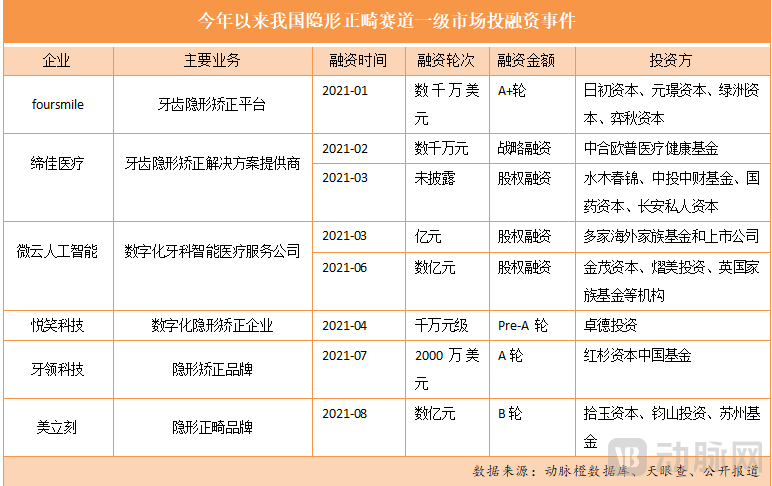
In this booming market, VCBeat has identified a “veiled” company that holds the largest number of patents in the industry and ranks among the top in market share, yet has rarely been covered systematically or comprehensively by the media. This pragmatic and low-profile enterprise is Shanghai Smartee Denti-Technology Co., Ltd. (hereinafter referred to as “Smartee”). Recently, VCBeat had the privilege of interviewing Smartee’s founder, Yao Junfeng, in an attempt to lift this “mysterious veil.”
Founded in 2004, Smartee is a company specializing in the research and development of digital orthodontic technologies, related services, and the manufacturing of customized clear aligners. Its R&D team has achieved significant accomplishments in multiple fields, including biomechanics and algorithms, materials science, digital simulation technology, online design systems, and production automation.
Reviewing Yao Junfeng’s resume, it is somewhat surprising that he has no background in dental medicine and had no work experience related to dentistry prior to starting his business.
The only job related to healthcare was my first position after returning from studying in the UK—sales in orthopedics.
In 2003, Yao Junfeng completed his Master of Business Administration (MBA) at the University of Hull in the United Kingdom. Upon returning to China, he worked in sales at an innovative company specializing in customized orthopedic medical devices.
It was this work experience that led Yao Junfeng, who originally majored in software and information engineering, to enter the healthcare industry. Through repeated participation in medical trade shows, he gradually built up his understanding of medical devices.
butThe real opportunity for Yao Junfeng to come into contact with invisible orthodontics appeared in 2004.
In 2004, the project “Personalized Prosthesis CAD/CAM Technology and Computer-Aided Clinical Engineering System,” developed by Professor Wang Chengtao of Shanghai Jiao Tong University in collaboration with Academician Dai Kerong of the Ninth People’s Hospital affiliated to Shanghai Jiao Tong University School of Medicine, was awarded the Second Prize of the National Science and Technology Progress Award (Team).
Yao Junfeng’s father, also an award recipient, is a core member of the team and is responsible for industrialization.
Yao Junfeng learned about this technology through his father. Through communication with experts and scholars, as well as reviewing relevant literature, he realized that the technology could be applied in dentistry. At that time, however, a foreign company (Invisalign) had just begun to develop its offerings, and the domestic market remained untapped.
Yao Junfeng keenly seized this market opportunity.
Smartee was thus born.
“The name ‘Smartee’ was chosen by my father. By deconstructing the Chinese character ‘Ya’ (雅), it consists of ‘Ya’ (牙, meaning tooth) and ‘Jia’ (佳, meaning good or excellent). Thus, ‘Smartee’ signifies achieving optimal orthodontic outcomes,” said Yao Junfeng. “Although we had established the company, at that time we only had the concept of applying this technology to dentistry. Everything that followed was figured out step by step through our own exploration.”
In the early stages of its establishment, the challenges of software development, manufacturing processes, and medical design were the first issues to confront Yao Junfeng.
“Fortunately, my academic background had some relevance to software development, so I teamed up with some friends to develop software from scratch. For the medical design aspect, we collaborated with a professional orthodontist, a graduate of Tongji University, to discuss design concepts and methodologies,” said Yao Junfeng. “The challenges in manufacturing processes were significant. At that time, 3D scanning was unavailable, so we had to rely on industrial CT scanning and machine-tool-based layer-cutting reverse engineering techniques, which offered poor stability. Moreover, 3D printers were still rare and expensive equipment; unable to afford them, we had to outsource the printing services.”
Looking back on his entrepreneurial journey, Yao Junfeng appeared rather nonchalant. “Although we encountered some challenges, I never considered giving up. It was clear that this technology offered significant advantages, capable of reducing physicians’ workload and enhancing patients’ orthodontic treatment experience. I believed this venture could succeed; all it took was perseverance.”
However, beneath the calm and composed surface lies a foundation of grounded exploration and continuous experimentation.
During the early stages of its establishment, the company’s operational funding was partially sourced from the Ministry of Science and Technology’s SME Innovation Fund, amounting to approximately RMB 200,000, with the remainder coming from self-raised funds; nearly all of these resources were allocated to product research and development and process validation.
When Smartee secured its first round of investment, Yao Junfeng decided to allocate the funds to two initiatives: physician training and sales channel expansion.
Given the B2B2C nature of the clear aligner industry and the need for market education regarding new technologies and products, it is essential to establish close ties with dentists. This is precisely why Yao Junfeng decided to launch technology and product training programs targeted at dental professionals.
As for how to broaden sales channels, Yao Junfeng was inspired by the telephone sales model of Puai Medical.
At that time, an X-ray machine was priced at around 200,000 yuan. Perlove Medical managed to successfully sell its products to every corner of China through a telephone sales model alone.
This sales model, capable of rapidly covering the Chinese market, won the favor of Yao Junfeng, who decided to invest in providing relevant training for employees. To date, several regional sales managers at Smartee have backgrounds in telemarketing.
Moreover, the support of high-quality capital is indispensable for a company to grow and expand.
In 2013, Smartee secured angel-round financing.
In 2015, Chengshu Medical (Series A) and the KaVo Group, a globally renowned manufacturer of dental equipment and consumables (Series A+), invested in Smartee.
In 2017, Smartee secured Series B financing, co-led by Genesis Capital and Chende Capital.
In 2019, Smartee secured Series C financing, led by CICC Qichen Capital, with participation from New Jun Capital, Yisheng Venture Capital, CDH Investments, and Qianhai Fund of Funds.
It can be seen that,Smartee has not undergone many rounds of financing. This does not indicate that the capital market denies Smartee’s professional capabilities and development strategy; rather, it reflects the “clear-headedness” of its founder.
“Capital came on board when Smartee was still in its early stages, providing significant support for the company’s development. However, Smartee does not raise funds for the sake of fundraising; instead, it seeks financing only when there is a genuine need,” said Yao Junfeng. “This is also why we are not in a hurry to engage in fundraising discussions at present.”
However, Smartee has also demonstrated its strength to investors and the market.
This question appears to lack a standard answer.
ButIn Yao Junfeng’s response, R&D accounts for a larger proportion.
In Smartee’s self-introduction, “Innovation is Smartee’s DNA” is prominently featured.
“Independent innovation, import substitution, international leadership, and universal accessibility for the public” are the goals and vision that Smartee has set for itself.
So,How significant is R&D in the development of Smartee?
Let’s start with the patents filed by Smartee.
As the first enterprise in China to successfully translate and apply “personalized prosthesis CAD/CAM technology” to the field of orthodontics, Smartee’s product series have all obtained national qualification certifications and patent protection.
To date, Smartee has filed over 470 patent applications, including more than 420 domestic applications in China and over 40 international applications. These patents cover technical fields such as clinical stomatology, computer science, artificial intelligence, biomechanics, 3D printing technology, polymer materials science, and automatic control.
Smartee’s portfolio of over 470 patent applications is the largest in China’s clear aligner orthodontics industry.
With a vast portfolio of patents put into practical application, what substantive innovations has Smartee achieved?
In terms of materials, VCBeat has learned that since its establishment in 2004, Smartee has gone through three phases: the 1.0 era of imported membranes, the 2.0 era of independent exploration, and the 3.0 era of breakthrough innovation.
At its inception, Smartee also experimented with various imported aligner materials. However, since 2016, the company has been continuously innovating and developing its proprietary materials science system. In 2020, it pioneered the development of multi-material composite aligners—Diamond II (PETG+TPU).
According to a paper published in a Nature subsidiary journal this May, the forces generated by two types of PETG thermoplastic materials significantly decreased after immersion in artificial saliva. Compared with conventional aligners, Smartee’s modified films demonstrate superior mechanical stability and more sustained force delivery.
“Smartee is currently the only company that can offer an aligner system with multiple elastic moduli. We can provide moduli ranging from 900 to 1600. Smartee’s aligners are also available in various stiffness options, including soft, medium-soft, hard, and medium-hard,” stated Yao Junfeng, adding that this capability makes Smartee the sole enterprise in China able to achieve this.
In terms of technological breakthroughs and product portfolio, Smartee’s innovations carry an added significance as a homegrown Chinese brand.
This decision is primarily based on considerations of the characteristics of China's clear aligner market.
Due to differences in facial morphology, the prevalence of complex malocclusion is higher in China than in the United States. According to a report by Frost & Sullivan, in 2019, the overall prevalence of malocclusion was 74% in China and 73% in the United States, while the prevalence of Angle Class II and Class III malocclusion was approximately 49% in China, compared to only 23% in the United States.
In clinical orthodontics, the most widely used classification method for malocclusion is Angle’s classification, proposed by Dr. Edward H. Angle in the United States in 1899. This method uses the first permanent molar (tooth #6) as a reference and categorizes malocclusions into Class I, Class II, and Class III based on the anteroposterior relationship between the upper and lower dental arches.
ButCases of malocclusion in China are more complex and are often accompanied by facial profile issues.
In response to this phenomenon, Smartee, in collaboration with Professor Shen Gang’s team of leading domestic orthodontic experts, has developed and launched the Smartee GS Series—the first clear aligner product in China designed with facial profile as the primary entry point—based on over two decades of clinical experience.
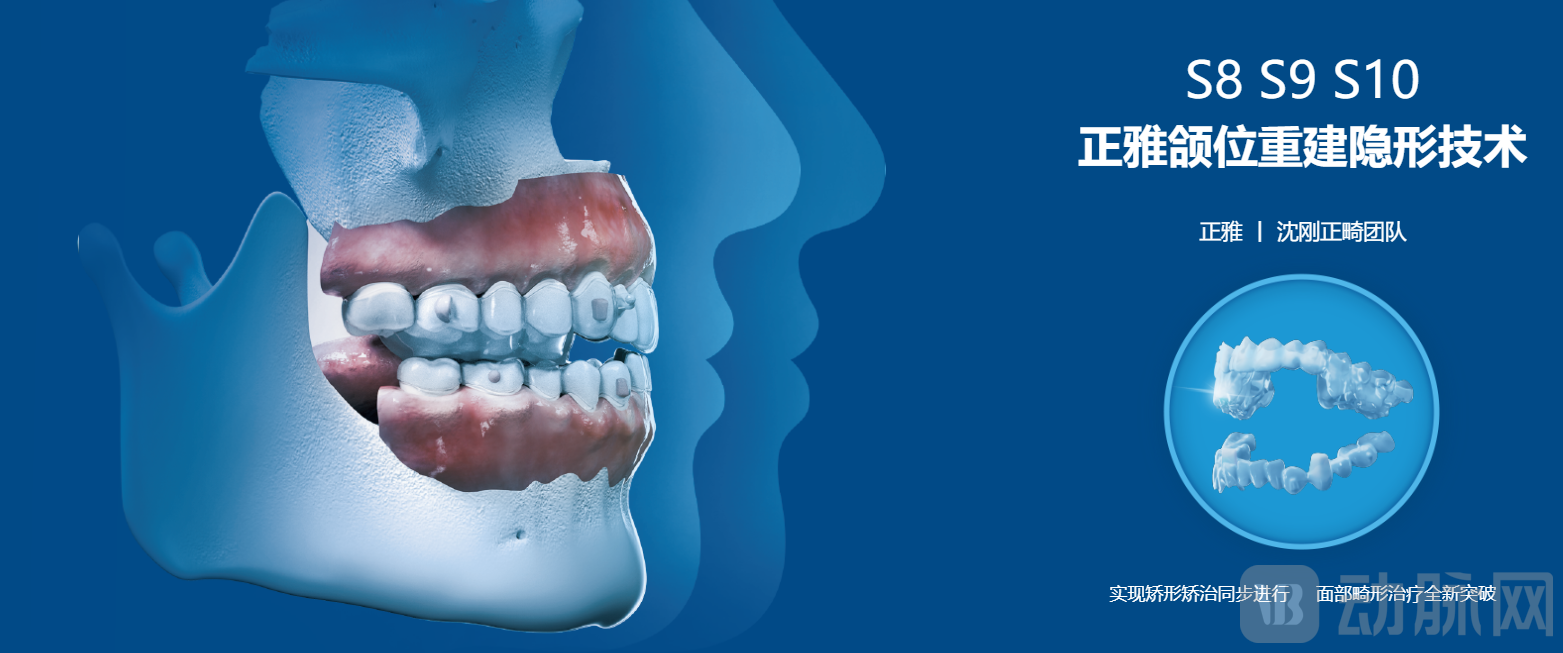
Smartee · Dr. Shen Gang Team's Jaw Position Reconstruction Technique
The Smartee GS product line employs jaw position reconstruction technology to provide three solutions for protrusive, concave, and deviated jaw profiles. It not only directly addresses facial aesthetic issues associated with jaw positioning factors but also intervenes in the treatment of malocclusion accompanied by temporomandibular joint disorders, leveraging jaw position reconstruction to induce adaptive remodeling of the condyle.
“We hope this product can truly address the complex malocclusion issues prevalent among Chinese patients, enabling some individuals who would otherwise require tooth extraction to avoid it or reduce the number of teeth extracted,” said Yao Junfeng. “We have received substantial positive feedback from frontline clinicians on both the Smartee GS product line and our jaw position reconstruction technology.”
Moreover, China’s clear aligner market is also characterized by a low penetration rate among children and adolescents.
According to a report by Frost & Sullivan, in 2019, the proportion of clear aligners used in orthodontic treatment cases among children and adolescents in China was 4.3%, whereas in the United States, the proportion of children and adolescents undergoing orthodontic treatment with clear aligners had reached 15.9%, approximately three times that of China.
A survey conducted by the Orthodontics Committee of the Chinese Stomatological Association, involving more than 20,000 Chinese children and adolescents, revealed that in 2015, the prevalence of malocclusion was 51.84% in the primary dentition group, 71.21% in the mixed dentition group, and 73.97% in the permanent dentition group. The overall prevalence across the three groups reached as high as 67.82%, indicating a substantial demand for pediatric oral health care.
The early orthodontic correction market for children may represent one of the trends toward refined development in the clear aligner sector, and Smartee has recognized the needs of parents in China and keenly capitalized on this trend.
It is understood that,Smartee is set to launch its new early orthodontic product for children—the Smartee Occlusal Guidance Edition. This product is indicated for pediatric and adolescent patients in the primary dentition, mixed dentition, and early permanent dentition stages. Designed to leverage the supportive role of mucosal tissues, the appliance fully covers the oral mucosa, thereby enhancing both treatment efficacy and retention. Furthermore, it enables attachment-free or reduced-attachment protocols during treatment, which helps minimize clinical chair time.
“The market for early orthodontic intervention in children is indeed quite hot right now, but at present, we still need to continue building the theoretical framework,” said Yao Junfeng. He noted that more induction and summarization of fundamental theories are required regarding indications for pediatric patients, so that diagnoses can be more effective and meaningful.
Catering to patient groups across different regions and of various types, Smartee’s series of clear aligner products includes the high-end GS line, capable of addressing complex malocclusions, as well as affordable options suitable for simple cases, thereby meeting market demand through technological differentiation.
Following technological breakthroughs and the transition of products into the production phase, automated manufacturing has become one of Smartee’s key priorities.
In fact, Smartee is among the first companies in China to introduce 3D printing technology into the production of dental medical devices, achieving large-scale manufacturing of personalized custom clear aligners. It is also one of the first brands in China’s clear aligner industry to adopt industrial robots and one of the few with an intelligent, fully automated production line.
AndThis year, Smartee initiated the planning of its Intelligent Manufacturing Production Base (Phase II), becoming the first clear aligner company in China to operate two automated production bases.
The overarching logic behind the construction of Smartee’s automation base is to leverage automation software—including ERP, MES, and industrial automation systems—to achieve an integrated production workflow encompassing both manufacturing and packaging. This approach aims to reduce labor costs, minimize human error, and enhance production efficiency.
During the interview, Yao Junfeng further emphasized that Smartee must master core technologies such as cutting, thermoforming, and recognition in the construction of its automated factory. “We will outsource the assembly of non-core equipment to third parties, but core equipment and core technologies must remain firmly under our own control.”
The advantage of this approach is that it grants greater autonomy and controllability when building fully automated or semi-automated factories in the future.
Compared with traditional production lines, Smartee’s automated manufacturing can reduce the production time for clear aligners to just 6 hours. A single fully automated production line can achieve a daily output of 45,000 clear aligners, delivering greater volume and higher efficiency.
Smartee selected the site for its Phase II intelligent manufacturing production base in China’s “Dental Valley” (Ziyang, Sichuan) also to shorten delivery times.
It is understood that the majority of Smartee’s current production output still originates from its automated manufacturing base in Jiaxing. However, as Jiaxing is located in eastern China, this may lead to extended delivery times for orders in western regions due to logistics and shipping constraints.
China’s “Dental Valley,” located at one of the key transportation hubs in southwest China, is an industrial park specializing in the dental sector. Smartee has chosen this location for its second automated production base.
While pursuing greater speed, Smartee also aims to expand its market footprint and make its products more accessible.
It is reported that,In its international market layout, Smartee primarily adopts a development strategy of symbiotic and mutually reinforcing “own-brand” and “OEM” models.
To date, Smartee has provided private-label design and OEM manufacturing services for multiple overseas brands of clear aligners. Smartee’s products are exported to markets including the United States, Singapore, Spain, Canada, the United Kingdom, Colombia, Saudi Arabia, Egypt, the Philippines, and Thailand, and the company has established a subsidiary in the UK. “Expanding into the international market is one of Smartee’s future development strategies, and proprietary technologies will support its global expansion.”
In terms of product pricing, Smartee adheres to the business philosophy of “making healthcare accessible to the general public” by adopting a differentiated pricing strategy. This approach meets the treatment needs of diverse populations, ensuring orthodontic efficacy while keeping prices more affordable and down-to-earth, with the commitment to enabling everyone seeking orthodontic treatment to achieve a perfect smile.
In addition to pursuing faster delivery times, a larger market footprint, and more accessible products, Smartee also aims for a higher and more pragmatic corporate positioning.
In 2019, Smartee established a strategic partnership with the China Aerospace Foundation, launching a series of collaborative initiatives in areas such as material research and development.
For Smartee, collaborating with China’s aerospace industry represents both a pursuit of the spirit embodied by China’s aerospace sector—namely, indigenous Chinese innovation, global leadership, and a bold exploratory ethos—and an inspiration for advancing its own mission as a domestic brand in invisible orthodontics.
In recent years, the Chinese government has continuously introduced policies to encourage innovation in the medical device industry. Meanwhile, consumers have gained both the capacity and willingness to pursue higher-quality medical devices, making innovation the central theme of the sector. Specifically, in the clear aligner orthodontics industry, Smartee has remained grounded and steadfastly pursued a path of independent innovation—a “difficult yet right” approach—with the aim of leveraging optimal technologies to help patients regain healthy, well-aligned teeth and radiate their most beautiful smiles.