

DPM Files IPO Prospectus: Pioneering Post-Precision Medicine with Molecular Imaging Technology
In recent years, precision medicine has emerged as one of the three most prominent focal points in the medical field. With a continuous influx of new technologies, companies specializing in imaging diagnostics are advocating for precise diagnosis; medical device manufacturers are promoting precise treatment; and chronic disease management firms are advancing personalized precision treatment plans. The precision medicine industry not only enhances human health and optimizes healthcare resource utilization but also generates substantial economic benefits.
DPM (including DPM, Beijing Digital Precision Medical Technology Co., Ltd., and Zhuhai Dipu Medical Technology Co., Ltd.) adheres to the philosophy and goal of “Precision Medicine, Restoring Health,” and is committed to improving surgical treatment and prognostic outcomes for patients with cancer and various other diseases. Its independently developed multi-series high-end intraoperative optical molecular imaging surgical navigation systems and contrast agents have not only received recognition as National Innovative Medical Devices and Beijing Municipal Innovative Medical Devices but have also garnered support from multiple national special programs. The core technologies underlying these products were awarded the Gold Medal at the 43rd Geneva International Exhibition of Inventions and the Gold Medal at the China National Invention Exhibition. The company holds 17 authorized Chinese invention patents, 1 authorized U.S. invention patent, 16 utility model patents, and 18 design patents, totaling 52 patents.
Meanwhile, its core technology-related papers have been published in prestigious international academic journals and mainstream publications, including Nature Biomedical Engineering, Advanced Materials, Theranostics, Journal of Clinical Oncology, and Clinical Cancer Research. Its products have been recognized as innovative medical devices by the National Medical Products Administration (NMPA) and the Beijing Medical Products Administration (Beijing MPA), andVerify the safety and efficacy of the product through superiority registration clinical trials。
Reviewing the historical development of surgical procedures, the performance of the first laparoscopic cholecystectomy in China in 1991 marked the advent of the era of minimally invasive surgery. With technological advancements in medical imaging equipment and surgical instruments, surgical practice has gradually transitioned from “open” to “minimally invasive.” Furthermore, the emergence and application of molecular imaging technology are poised to propel surgical intervention from “minimally invasive treatment” toward “precision treatment.”
Molecular imaging technology is a cutting-edge discipline that applies medical imaging methods to visualize biological and pathological processes at the cellular, molecular, or genetic levels in living organisms, thereby facilitating research on early quantitative and qualitative diagnosis of diseases. Medical molecular imaging enables the visualization of cellular functions and allows for dynamic tracking of molecular transport processes without interfering with the metabolic activities of the organism, significantly advancing the development of precision medicine.
In clinical surgical procedures, molecular imaging technology can be used to visualize the localization of tumors, blood vessels, lymphatic vessels, nerves, and the biliary system. It assists in confirming the location and boundaries of primary and metastatic tumor sites, enables functional preservation of structures such as nerves and parathyroid glands, and facilitates the improvement of conventional treatments for these diseases through molecular- and gene-level interventions, as well as the development of novel biomarkers.Nowadays, as one of the most cutting-edge imaging technologies, molecular imaging is leading the transformation of precision surgical medicine.
For example, the challenges in tumor resection lie in delineating the tumor region and determining the presence of residual tumor tissue. The Department of Hepatobiliary Surgery at the Chinese PLA General Hospital has significantly improved the precision of liver cancer surgery by employing fluorescent molecular imaging. Clinical study data demonstrate that the use of indocyanine green (ICG) fluorescence imaging in liver cancer surgery increased the tumor resection rate by 15%, substantially reduced the one-year recurrence rate by 37.5%, and resulted in a one-year postoperative mortality rate of 0%.
In China, the CAS Key Laboratory of Molecular Imaging began developing medical image processing, molecular imaging systems, and multimodal molecular imaging platforms in 1996. Targeting molecular imaging-guided surgical navigation, the laboratory has successively conducted research on theoretical methods, imaging techniques, system platforms, and equipment prototypes, achieving a series of innovative results and accumulating substantial technical expertise.
2016, CAS Key Laboratory of Molecular ImagingIn response to the national call for the translation of scientific and technological achievements into practical applications,Based on numerouswith independent intellectual property rightsThe research achievements led to the establishment of a technology transfer company, DPM, which is responsible for the industrialization of molecular imaging surgical navigation products and molecular imaging contrast agents. DPM comprises two subsidiaries: Beijing Digital Precision Medical Technology Co., Ltd. (hereinafter referred to as “Digital Precision”), which is responsible for advanced technology R&D; and Zhuhai Dipu Medical Technology Co., Ltd. (hereinafter referred to as “Dipu Medical”), which is responsible for production and sales.。
DPM CEO Chi Chongwei stated, “As a leader in the post-precision medicine era, the company will leverage molecular imaging technology to advance precise diagnosis and treatment in medicine.”
According to DPM, it will enter the field of precision surgery through fluorescence molecular imaging surgical navigation equipment and rely on molecular imaging contrast agents.Building a “Device + Consumables” Closed LoopMeanwhile, DPM will enter the screening field with its magnetic nanoparticle disease screening imaging device.Extending Precision Surgery to Precision HealthField。
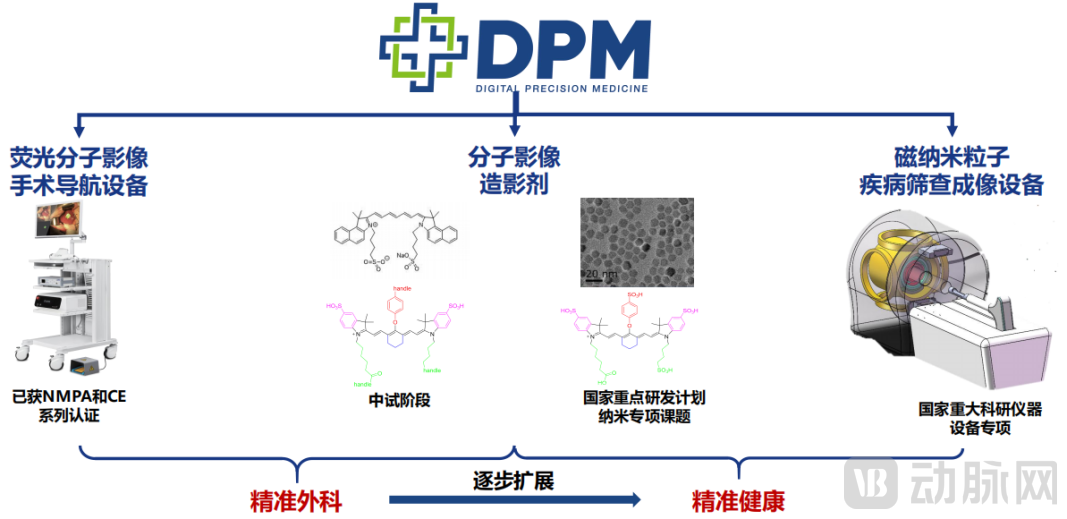
Currently, DPM has launched a variety of fluorescent molecular imaging surgical navigation devices, such asHuiyan Series Products for Minimally Invasive Surgery (Endoscopic Equipment);UltraEye and SmartEye Series for Open Surgery。
Among these, DPM’s independently developed Huiyan series is specifically designed for minimally invasive surgery. Leveraging DPM’s proprietary 4-CMOS leading-edge technology, it provides real-time, precise navigation and expands the surgeon’s field of view. Clinically, the Huiyan series utilizes unique multispectral real-time fusion imaging technology to effectively assess tumors, tissue perfusion, lymphatics, nerves, and blood vessels, thereby providing precise intraoperative assistance to surgeons. Currently, the Huiyan series has been applied across multiple departments, including thoracic surgery, hepatobiliary surgery, obstetrics and gynecology, gastrointestinal surgery, thyroid and breast surgery, urology, pediatric surgery, and neurosurgery.
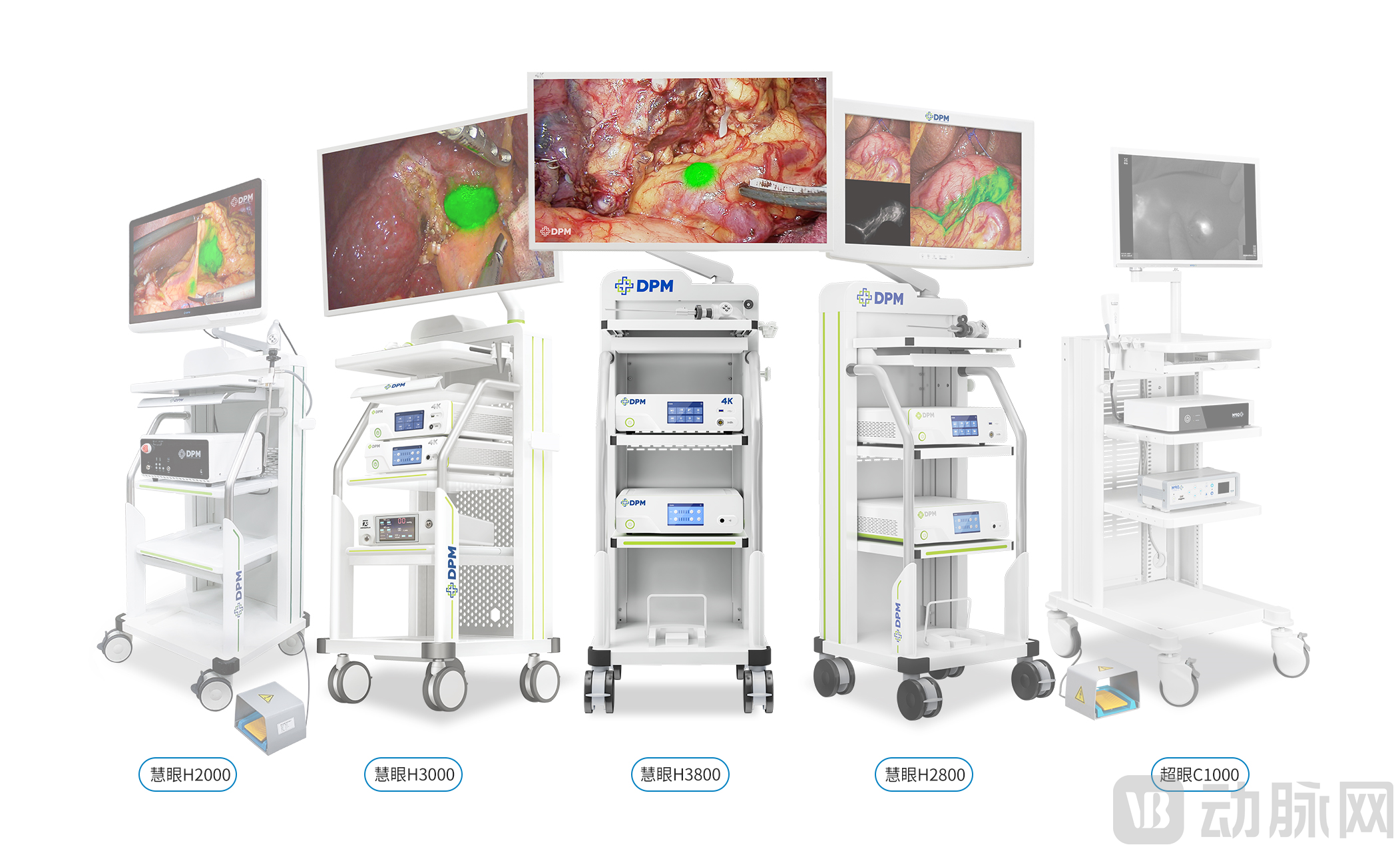
(DPM Series Products)
Compared with similar products on the market, the white-light imaging performance of the Huiyan series is comparable to that of traditional white-light equipment manufacturers, while its fluorescence imaging performance leads internationally. Chi Chongwei, CEO of DPM, stated, “The Huiyan products feature 4K ultra-high-definition resolution, optical continuous zoom, vessel enhancement, smoke removal, and other functionalities, with imaging sensitivity 2–4 times higher than that of competing products. Leveraging advantages such as ultra-high definition and large depth of field, the Huiyan series will enable greater precision in minimally invasive surgery.”
For instance, the precise identification of tiny pulmonary nodules is a clinical issue of significant concern to thoracic surgeons. The team led by Academician Wang Jun from the Department of Thoracic Surgery at Peking University People’s Hospital utilized DPM’s Huiyan series products, employing their fluorescence molecular imaging system for real-time imaging to achieve detailed observation of tiny pulmonary nodules. Clinical study results demonstrated that, using the fluorescence molecular imaging system, physicians could detect minute lung tumor lesions with diameters as small as 1 mm. Notably, 12% of these tiny lesions were detected exclusively through molecular imaging methods. The sensitivity and positive predictive value of the fluorescence molecular imaging system reached 88.7% and 92.6%, respectively.
Meanwhile, DPM has independently developed the SuperEye and SmartEye series of fluorescence molecular imaging surgical navigation systems for open surgeries based on fluorescence molecular imaging technology. These systems are the first of their kind in China and rank among the most advanced globally. Following preliminary preoperative screening with CT, MRI, PET, and other modalities, the SuperEye series provides real-time fluorescence imaging during surgery, enabling precise navigation to lesions. Notably, the SuperEye C1000 Fluorescence Molecular Imager passed the Beijing Innovative Medical Device Product Review in 2020. The SmartEye series offers real-time fluorescence, color, and tissue-specific fused images, thereby enhancing surgical accuracy and enabling more precise localization of lesions and target tissues.
For example, multicenter clinical study data from the SuperEye series of fluorescent molecular imaging systems showed that a total of 99 breast cancer patients were enrolled,The detection rate of sentinel lymph nodes using the fluorescence method was 96%., the detection rate of the traditional blue dye method used in clinical practice is 70%. Thus, higher detection rates, more precise localization, and real-time intraoperative navigation will help clinicians deliver precision therapy and improve patient outcomes.
In addition, DPM is advancing the research and development of targeted fluorescent molecular probes (fluorescent molecular contrast agents) and magnetic nanoparticle-based imaging devices for disease screening. As a new generation of consumables, fluorescent molecular contrast agents will be integrated with fluorescent molecular imaging equipment to create a closed-loop “equipment + consumables” model. DPM has entered the molecular imaging industry through this “equipment + consumables” model and plans to drive industry development using this approach. The magnetic nanoparticle-based disease screening imaging device will serve as an innovative tool in the screening sector, helping users achieve precision health. Leveraging its fluorescent molecular image-guided surgery equipment and magnetic nanoparticle-based disease screening imaging devices, DPM aims to realize the vision of “precision surgery + precision health.”
Overall, in the field of fluorescent molecular imaging, DPM boasts the most comprehensive product portfolio in the surgical molecular imaging market. Its superior clinical efficacy has garnered recognition from numerous prestigious Grade A tertiary hospitals and leading experts. Furthermore, many of its independently developed technologies are pioneering in China and lead globally.
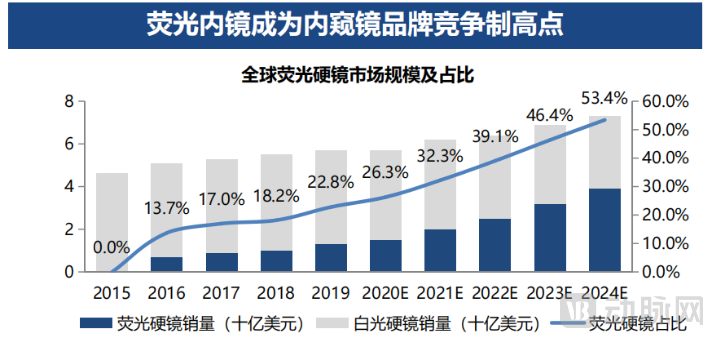
Data shows that the market for fluorescent molecular imaging is experiencing rapid year-over-year growth. Fluorescent endoscopy, in particular, has become a key competitive frontier for global endoscope manufacturers. Industry projections indicate that the share of fluorescent endoscopes will rise from 13.7% in 2016 to 53.4% in 2024.
In the face of the rapidly developing fluorescent molecular imaging industry, DPM has stated that it will lead industry growth by leveraging its continuous innovation capabilities. As a technology transfer enterprise spun off from the Chinese Academy of Sciences’ (CAS) Key Laboratory of Molecular Imaging, DPM not only benefits from technical support provided by CAS but also collaborates with numerous experts both domestically and internationally. The company has already launched a series of fluorescent molecular imaging products, including Huiyan, Zhiyan, and Chaoyan, and is currently expanding its portfolio to include targeted fluorescent molecular probes and magnetic nanoparticle-based disease screening and imaging devices.
According to reports, the majority of DPM’s R&D team hails from prestigious institutions such as the Chinese Academy of Sciences, Beihang University, Beijing Institute of Technology, and Beijing Jiaotong University.
For example, Professor Tian Jie, Chief Scientist at DPM, has twice received the Second Prize of the National Award for Technological Invention and twice received the Second Prize of the National Award for Scientific and Technological Progress. He was appointed as a Chief Scientist of the National Basic Research Program (973 Program) by the Ministry of Science and Technology on two occasions. Since 2014, he has been consecutively listed among Elsevier’s Highly Cited Chinese Researchers in Medical Sciences and has also been recognized in highly cited lists in fields such as medical-engineering interdisciplinary research. Professor Tian has twice served as the principal investigator for the National Major Scientific Instruments and Equipment Development Special Project funded by the National Natural Science Foundation of China, and he has acted as the project leader for the Key Special Project on Nanoscience and Technology under the National Key R&D Program. With a long-standing commitment to research in molecular imaging, medical imaging, and functional imaging, Professor Tian has achieved systematic innovations in theoretical algorithms, key technologies, equipment development, and biomedical applications within these fields.
Chi Chongwei, CEO of DPM, holds a Ph.D. in Pattern Recognition and Intelligent Systems from the Institute of Automation, Chinese Academy of Sciences, and is a Professor-level Senior Engineer. He has long been engaged in research on optical molecular imaging-based surgical navigation methods, system development, and biomedical applications. He has published 37 papers in SCI-indexed journals, with a cumulative impact factor exceeding 300 and an H-index of 25. Additionally, he has published eight academic papers at major international conferences and delivered oral presentations in specialized sessions.
In addition, DPM collaborates with numerous scientists and R&D institutions to undertake key national research and development projects. For instance, DPM partnered with Wang Jun, an academician of the Chinese Academy of Engineering and Director of the Department of Thoracic Surgery at Peking University People’s Hospital, to develop a key project funded by the National Natural Science Foundation of China. It also collaborated with Dong Jiahong, an academician of the Chinese Academy of Engineering and President of Beijing Tsinghua Changgung Hospital, on a major project funded by the National Natural Science Foundation of China.
Thus, DPM possesses R&D capabilities recognized by the Ministry of Science and Technology of China as well as numerous scientists and clinical experts. Chi Chongwei, CEO of DPM, stated, “Leveraging the continuous R&D capabilities of our team, all of the company’s products are independently developed, with clearly traceable intellectual property origins.”
DPM concluded, “In the future, the company will horizontally expand the scope of its technological applications and broaden its product portfolio, while vertically delving into product details to continuously optimize and iterate its offerings, thereby contributing to the advancement of precision medicine.”