

CIOT Explores Greater Potential of Service Robots in Smart Healthcare
In recent years, the surging popularity of medical robots has been evident to all.
According to incomplete statistics from VBInsight, the industrial think tank of VCBeat, nearly 300 financing deals occurred in the medical robotics sector from 2015 to the first half of 2021 (H1 2021), with a total amount exceeding USD 6 billion, showing an upward trend. In the first half of this year alone, financing in this sector reached USD 1.735 billion, surpassing the total financing amount for the entire previous year.
ButAmid the market boom, the medical robotics industry appears to be unwelcoming to startups.
Based on investment and financing data, the number of seed and angel round financing events in the global medical robotics sector has declined year by year, from 11 in 2015 to 5 in 2020 and 4 in the first half of 2021.
In terms of the number of enterprises, according to VBInsight’s “2021 China Medical Robot Commercialization Insight Report,” there are more than 40,000 existing enterprises related to “medical robots (including providers of medical robot components and software),” with over 10,000 startups established within five years. Among them, 400 enterprises have business scopes that include the research, development, and sales of medical robots, but only a handful possess strong profitability.
Furthermore, although medical robots have become a global investment hotspot in recent years, a closer look reveals that capital markets favor the surgical robotics segment. The total funding raised by surgical robotics exceeds the combined financing of rehabilitation robots and medical service robots.
However, among the three categories of medical robots—surgical robots, rehabilitation robots, and healthcare service robots—surgical robots pursue higher degrees of freedom and precision, resulting in significant technological and capital barriers. ButMedical service robots, primarily featuring functions such as temperature measurement, disinfection, and delivery, demonstrate more prominent capabilities in bargaining power with upstream suppliers and market cultivation.
More importantly, such medical service robots have demonstrated significant value in the prevention and control of the COVID-19 pandemic due to their ability to reduce infection risks, alleviate workloads, and improve operational efficiency. They have virtually become standard equipment in hospitals, shopping malls, office buildings, and other settings across first-tier as well as second- and third-tier cities, further enhancing market adoption.
Consequently, a large number of enterprises have sensed the business opportunities and rushed to position themselves in the field of medical service robots.
Zhongzhi Wei’an, which focuses deeply on integrated solutions for commercial service robots in smart buildings, is one such example. The company has consistently explored the broader potential of commercial service robots, achieving scaled deployment across diverse applications. It is reported that Zhongzhi Wei’an has established a nationwide network of over 300 service outlets and serves more than 40,000 clients across various types of buildings in China, covering over 50 scenarios including office towers, hospitals, supermarkets, restaurants, hotels, government service halls, and exhibition centers.
While its product and technical service capabilities have been validated by the market, Zhongzhi Wei’an has also made strategic investments focused on application scenarios for medical service robots.
Rooted in the R&D and manufacturing of service robots, the team behind Zhongzhi Wei’an established joint laboratories with universities to conduct intelligent robotics research prior to the company’s founding. By recruiting industry technical experts and core professionals to build its robotics team, the company began advancing the industrialization of intelligent robots several years ago.
To date, Zhongzhi Weian has filed over 300 patents in the robotics sector and independently developed 11 robotic products, including intelligent visitor reception, welcome and patrol, disinfection spraying, intelligent delivery, temperature-check gatekeeping, indoor cleaning, outdoor patrol, and food delivery robots. These products cover four key areas: guest reception, last-mile delivery, cleaning and disinfection, and security patrol.
Following the outbreak of the COVID-19 pandemic, Zhongzhi Weian urgently implemented strategic deployments and rapidly identified epidemic prevention and control needs across various scenarios. The company established a "Contactless Green Epidemic Prevention Network" technical framework. By tailoring solutions to the specific characteristics of different regions, scenarios, and populations, Zhongzhi Weian developed customized AI robot-based epidemic prevention and control solutions as well as aid programs. It upgraded and launched a range of AI-powered epidemic prevention robots, including those for temperature screening, consultation guidance, intelligent registration, disinfection and sterilization, and medication delivery. These robots can be deployed in various combinations to meet the diverse epidemic prevention requirements of different industries.
It is reported that Zhongzhi Weian’s AI epidemic prevention robots have been deployed in hundreds of healthcare institutions across China, including the Eighth Affiliated Hospital of Sun Yat-sen University in Shenzhen, Peking University Shenzhen Hospital, the Fourth Affiliated Hospital of Harbin Medical University, Wuhan Pulmonary Hospital, Ji’an Hospital of Shanghai Oriental Hospital, the Fourth Hospital of Hebei Medical University, Beijing Jingmei General Hospital, Huizhou First People’s Hospital, and Shenyang Fourth People’s Hospital, thereby helping hospitals strengthen their epidemic prevention barriers.
Specifically, the Zhongzhi Wei’an Intelligent Temperature-Screening Gate Robot integrates “body temperature screening + health code verification,” enabling 24/7 contactless, precise temperature measurement.
Compared with manual temperature measurement by medical staff, this intelligent temperature-screening gate robot can reduce labor costs by approximately 61.5%, decrease individual workload by 83%, and increase screening efficiency from 4 persons per minute to 15 persons per minute, thereby alleviating, to some extent, the shortage of human resources in the healthcare system.
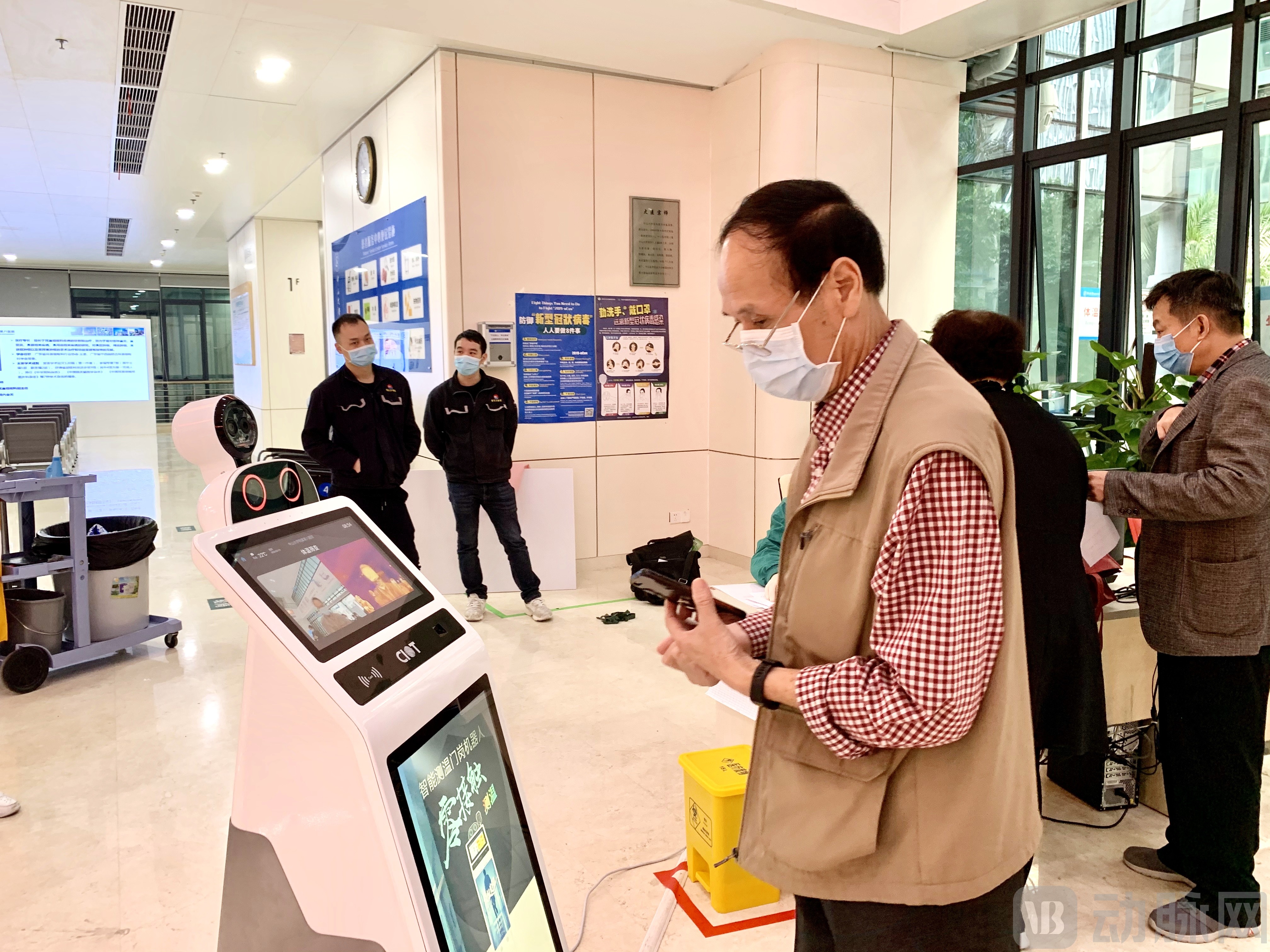
CIIC Weian Intelligent Temperature-Sensing Gate Robot Is in Operation
Furthermore, the Zhongzhi Wei'an Intelligent Temperature-Sensing Gate Robot supports customized services. Among these, the ID card recognition function has been implemented nationwide; the health code verification function has been piloted and promoted in Hubei, Sichuan, Yunnan, Guangdong, Shanghai, Hebei, and other regions; and the person-ID verification function is already live.
It is reported that the R&D philosophy behind the Zhongzhi Weian Intelligent Temperature-Sensing Gate Robot features an integrated edge-cloud design and architecture. Under conditions of large-scale product deployment, it leverages real-time front-end analytical capabilities alongside back-end data processing and AI integration to continuously explore the needs of building scenarios, thereby enabling self-sustaining learning and adaptive application capabilities within the system.
From the design of core modules at the foundational level, to data acquisition, processing, distribution, and analysis at the intermediate layer, and further to application development at the highest level, Zhongzhi Wei’an has strategically laid out its initiatives and conducted extensive explorations. The company has already achieved data interoperability and integration, and is now intensifying its efforts in developing underlying chips and top-level real-time control and operational service systems.
In the early stages of the pandemic, epidemic prevention and control measures at various checkpoints often relied solely on temperature screening. However, the CIIC Weian Intelligent Temperature-Screening Gate Robot not only performs temperature checks but also features facial detection and health code verification. Through a cloud-based data management platform, it can directly identify individuals with abnormal temperatures and access their relevant epidemic prevention data.
In the field of intelligent disinfection and sterilization, Zhongzhi Wei'an has launched two disinfection robots.
One of the models is a disinfection spray robot, capable of performing automatic, efficient, and precise disinfection and sterilization operations according to preset locations or routes. It features autonomous navigation, self-charging, and alerts for operational status, work status, and task status.
This disinfection spray robot has been deployed and put into practical use at the Nantong Municipal Health Commission, Southwest Hospital (the First Affiliated Hospital of Army Medical University), the First Affiliated Hospital of Henan University of Science and Technology, and Wuhan Kanghua Hospital.
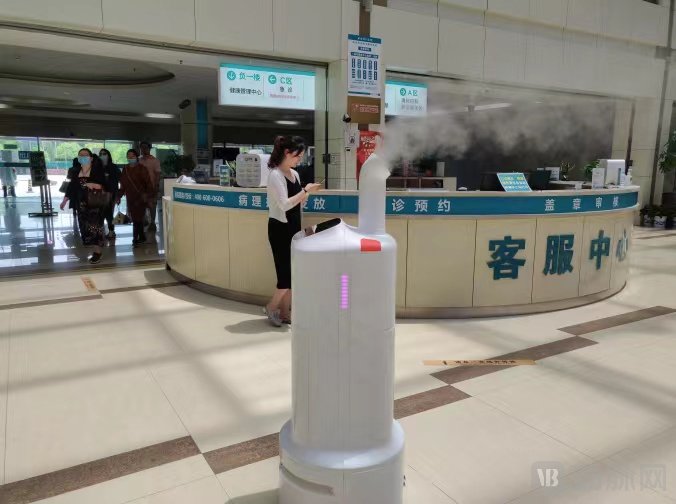
Zhongzhi Weian Disinfection Spray Robot
Another model is a photocatalyst air disinfection robot.
This robot utilizes the proprietary hydroxyl radical air disinfection technology jointly developed by Zhongzhi Wei'an and Caleb Technology. It ensures that hydroxyl radical levels in a 4,000-cubic-meter space reach natural ambient standards within one hour. Furthermore, in a 100-cubic-meter enclosed space, it achieves an 85% inactivation rate of natural bacteria within one hour, increasing to 90% within two hours.
Furthermore, the robot is equipped with multiple safety protection technologies, enabling functions such as slow-speed operation in far-field zones, emergency stop in near-field zones, pedestrian priority, mechanical collision avoidance, fully autonomous indoor navigation, automatic return-to-charge, intelligent obstacle avoidance, autonomous elevator use, and autonomous gate passage.
It is understood that Zhongzhi Wei’an has also established a comprehensive sales channel and operational system covering the whole of China, comprising 37 provincial subsidiaries, 300 prefecture-level general distributors, and 5,000 county-level and industry-specific agency companies. This infrastructure facilitates product promotion and management across various venues, including hospitals, office buildings, shopping malls, restaurants, hotels, government service centers, and exhibition halls.
Currently, the number of Zhongzhi Weian service robots deployed in the market has exceeded 70,000 units, serving over 8 billion people. It is expected that by the end of 2021, the market deployment will surpass 100,000 units, with services provided to 10 billion people.
From the perspective of Tu Jingyi, CEO of Zhongzhi Wei’an, the company’s ability to rapidly respond to epidemic prevention demands triggered by the outbreak was an inevitable outcome of its development. “Years of accumulated expertise in robotics R&D and experience serving diverse sectors have provided Zhongzhi Wei’an with the momentum and confidence to accelerate the construction of a smart healthcare industrial ecosystem.”
The unique circumstances of the COVID-19 pandemic have driven rapid growth in demand for epidemic prevention robots, primarily those focused on temperature screening and disinfection. However, it must be acknowledged that medical service robots in China remain in the early stages of development, facing challenges such as product homogenization, inconsistent quality, and a lack of clear manufacturing specifications and standards.
In this context, a question may linger in the minds of industry professionals:What is the top priority for the medical service robotics industry to move forward in the post-pandemic era?
Is the answer to this question to establish unified industry standards, to focus on research and development and overcome technical challenges, or to expand application scenarios?
Some argue that as medical robots become more deeply integrated with cutting-edge technologies such as artificial intelligence, brain-computer interfaces, and 5G networks, they will evolve toward more precise perception of data, objects, and environments. Additionally, to expand service boundaries and application scenarios, the miniaturization and softening of medical robots may also emerge as a key trend in the industry’s future development.
“We are willing to actively participate in the formulation of industry standards to further promote the standardized and large-scale development of the medical service robot industry,” said Tu Jingyi. He emphasized that facilitating the implementation of industry standards is not the end goal. Another key focus for Zhongzhi Weian in the field of medical services is how to efficiently, professionally, and precisely align with market demands, apply its proprietary technologies in practical settings, effectively reduce the workload of healthcare professionals, improve service efficiency, and drive the “smart” upgrade of the healthcare industry.