

Roche, Takeda, and Eli Lilly Enter the Race: Nearly 50 Companies Compete in the Exosome Therapeutics Boom
In 2013, the Nobel Prize in Physiology or Medicine was awarded to American scientists James Rothman and Randy Schekman, along with German scientist Thomas Südhof, in recognition of their outstanding contributions to elucidating the regulatory mechanisms of vesicular transport between cells. The prestige of the Nobel Prize has continually fueled growing interest in exosome research, driving it to successive new peaks.
In the past two years, exosomes have been “unrivaled in popularity.”
In terms of research热度 in the field of basic scientific research, the number of papers related to exosome research has averaged more than 3,000 per year in recent years; among the review results of the National Natural Science Foundation of China (NSFC) applications in 2020, over two thousand exosome-related projects were funded, firmly securing the "center stage" of NSFC funding.
From the perspective of industrial translation, the number and scale of startups in the exosome field are continuously growing. Nearly 50 companies worldwide are “competing on the same stage,” with a concentrated focus on four major areas: oncology, brain diseases, vaccine development, and gene therapy/rare diseases.
Among them, Exosome Diagnostics is leading the field of exosome diagnostics, having launched multiple products in succession. Codiak BioSciences, a benchmark enterprise in exosome therapeutics, has listed on NASDAQ, with two oncology-focused products already entering Phase I clinical trials. Recognizing the immense potential of exosomes in drug delivery, pharmaceutical giants such as Roche, Takeda, and Eli Lilly have entered the space, resulting in four major collaborations each valued at over $1 billion. The capital market has shown tremendous enthusiasm, generously injecting fresh funds to support the rapid growth of companies in this sector. The overall market presents a thriving landscape of development.
The tiny “bubbles,” once considered merely “cellular garbage bins,” are increasingly being regarded as a key approach to treating a range of potential diseases.
This article will primarily focus on the development of exosomes in the industrial sector.
As a major subtype of extracellular vesicles, exosomes are membrane-bound structures with a diameter of 30–150 nm, composed of native human proteins and lipids. The most frequent comparison is made with microvesicles, another major category of extracellular vesicles.
The key difference between the two lies in their biogenesis: microvesicles are generated through budding, resulting in relatively less stable membrane structures; whereas exosomes are formed via inward budding of the plasma membrane, undergoing an intracellular “packaging” process before being released into the extracellular space. Exosomes exhibit greater structural stability and can encapsulate a more diverse array of cargo.
Most cells secrete exosomes, thereforeExosomes are present in various biological fluids—capable of penetrating tissues, disseminating into the bloodstream, and even crossing the blood-brain barrier (BBB).
By carrying proteins, nucleic acids, lipids, and metabolites, exosomes not only facilitate intercellular communication but also participate in various physiological and pathological processes, including immune responses, viral infections, metabolic and cardiovascular diseases, neurodegenerative disorders, and tumor growth and progression. Therefore,Exosomes hold multifaceted prospects for clinical application—they can serve as drug delivery vehicles, therapeutic agents for disease treatment, novel biomarkers for disease diagnosis, or tools for injury repair in regenerative medicine and aesthetic restoration.
Given the broad application scenarios of exosomes, startups have sprung up like mushrooms after rain, flocking to this sector. Meanwhile, some well-established companies have also initiated projects and begun actively laying out their exosome-related businesses.
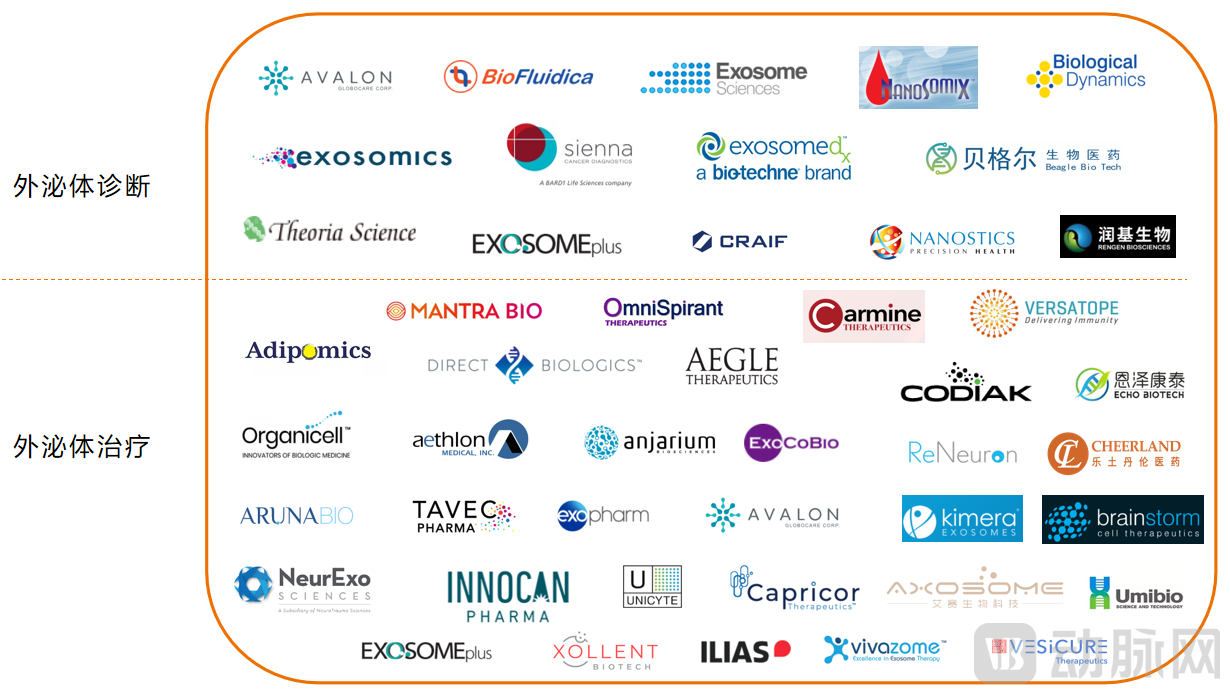
Global Landscape of Exosome-Related Companies: Nearly One-Third Are Engaged in Exosome Diagnostics, While Over Two-Thirds Are Focused on Exosome Therapeutics
According to incomplete statistics from VCBeat,There are currently 46 companies worldwide engaged in exosome-related research. Among them, nearly one-third (14 companies) focus on exosome diagnostics, while more than two-thirds (32 companies) are primarily conducting research on exosome-based therapeutics.Since most companies researching exosome delivery technologies are also developing exosome drug pipelines, we have categorized all enterprises engaged in both exosome delivery and exosome drugs under the field of exosome therapeutics.
By reviewing the relevant business activities of nearly 50 exosome companies worldwide, we have found that exosome-related enterprises are primarily concentrated in nine key areas: oncology (30%), brain disorders (16%), pulmonary diseases (7%), dermatological conditions (5%), vaccine development (13%), aesthetic medicine and skin repair (8%), liver diseases (5%), renal diseases (3%), and gene therapy/rare diseases (13%).
(Editor’s Note: As most companies currently developing exosome-based gene therapies are targeting rare diseases, VCBeat has grouped exosome-focused companies involved in gene therapy and rare diseases into a single category for statistical purposes.)
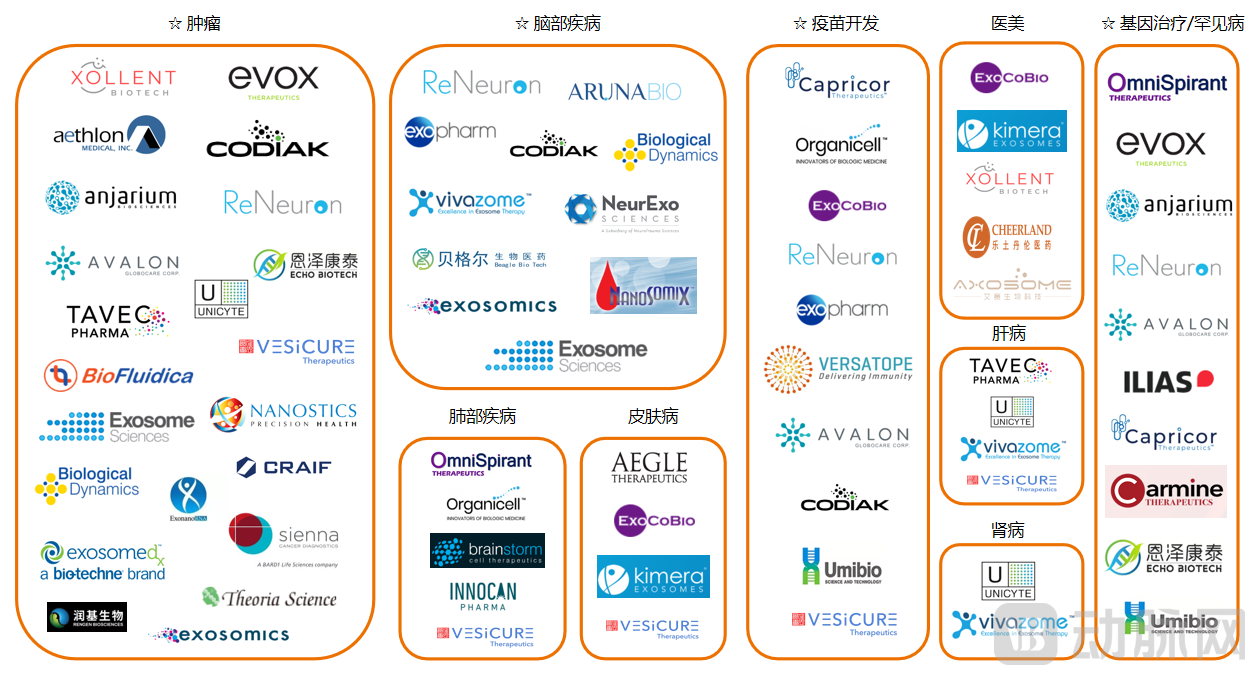
Global Exosome-Related Companies: Business Layout Across Various Subsectors
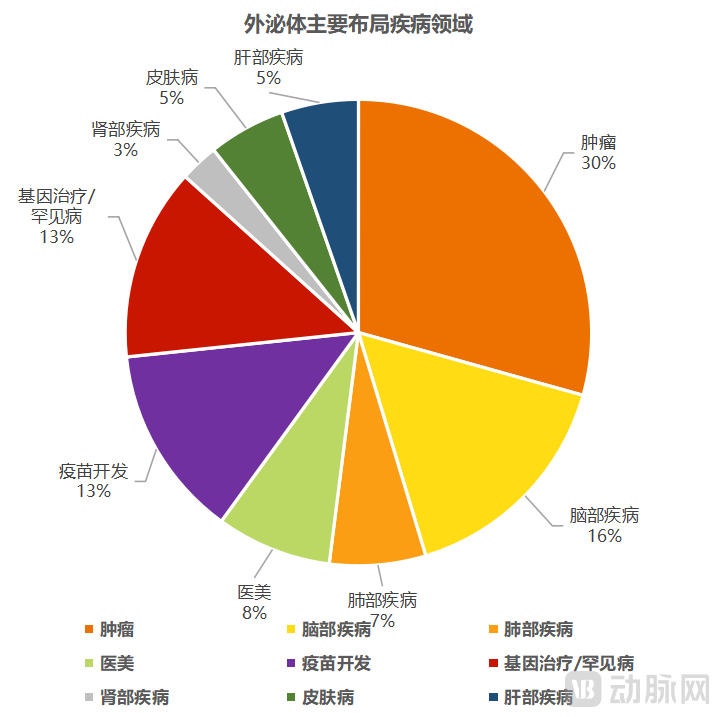
Business Layout of Global Exosome-Related Companies Across Various Subsectors
Among them, the area with the most corporate involvement isOncology (30%), Neurological Disorders (16%), Vaccine Development (13%), Gene Therapy/Rare Diseases (13%)These Four Subfields: A Brief Introduction to the Applications of Exosomes in These Major Areas
Tumor
As mentioned above, since most cells secrete exosomes, these vesicles are present in various biological fluids. Through their cargo of proteins, nucleic acids, lipids, and metabolites, exosomes facilitate intercellular communication and participate in a wide range of physiological and pathological processes, including immune responses, viral infections, metabolic and cardiovascular diseases, neurodegenerative disorders, and tumor growth and progression.
Tumor-derived exosomes, as critical mediators of the interaction between tumor cells and their microenvironment, carry tumor-associated antigens that can be captured and presented by dendritic cells, thereby activating immune cells targeted against the cancer.Therefore, this approach can be utilized for tumor immunotherapy.
In addition, multiple studies have found that, compared with normal cells,Diseased cells, particularly tumor cells, secrete larger quantities of exosomes; exosomal biomarkers in body fluid specimens can, to a certain extent, characterize the progression of tumors.With the rise of the liquid biopsy industry in recent years, exosomes have garnered significant attention as a unique detection target, becoming a major focus in the field of liquid biopsy. They are applied in areas such as early tumor diagnosis and prognostic assessment of treatment efficacy. An article published in Cell in October 2020 demonstrated that exosomes can be used for early tumor diagnosis and source tracing.
Brain Diseases
The blood-brain barrier (BBB), as a critical interface separating plasma from cerebrospinal fluid, plays a vital role in preventing harmful substances and pathogens from entering the brain and maintaining the homeostasis of the cerebral environment. However, every coin has two sides; this same dense "protective" layer impedes effective drug delivery to the brain, making it difficult for many therapeutics to penetrate and exert their pharmacological effects. Consequently, this poses significant challenges to drug development for central nervous system disorders.
Exosomes, composed of natural human proteins and lipids, can freely cross the blood-brain barrier, thereby serving as an ideal drug delivery system for the treatment of central nervous system-related diseases.Furthermore, studies have demonstrated that exosomes facilitate myelination, neurite outgrowth, and neuronal survival within the nervous system, while stimulating tissue repair and regeneration, reducing inflammation, and inhibiting aberrant neurogenesis. Consequently, they have emerged as a prominent therapeutic candidate for the treatment of cerebrovascular and neurodegenerative diseases.
In predictive diagnostics, tumor-specific RNA derived from serum or cerebrospinal fluid exosomes can serve as biomarkers for nervous system tumors, enabling monitoring of disease progression and prognosis prediction.Exosomes secreted by non-tumor cells, such as cerebrovascular endothelial cells and mesenchymal stem cells, hold promise as a novel approach for diagnosing brain tumors and monitoring their prognosis.
Vaccine Development, Gene Therapy/Rare Diseases
With the maturation of technology, nucleic acid drugs have entered a period of rapid development in recent years, and the delivery vectors that are crucial to these drugs have naturally attracted widespread attention. One of the current R&D priorities for exosome applications is how to more successfully transport nucleic acid drugs, which are prone to degradation in vivo, and deliver them precisely and in sufficient quantities to target tissue cells.
Nucleic acid drug delivery vectors are primarily categorized into viral and non-viral vectors. Among these, adeno-associated virus (AAV), a viral vector with a favorable safety profile, is currently the most widely used; while lipid nanoparticles (LNPs), a type of lipid-based carrier, represent the most commonly employed non-viral vectors.As another “promising candidate” in the field of drug delivery, exosomes are by no means inferior to the two commonly used drug carriers, AAV and LNP; instead, they offer numerous advantages.
One aspect is its low toxicity and low immunogenicity.Because they are composed of natural human proteins and lipids, natural exosomes exhibit negligible immunogenicity and toxicity. Even engineered exosomes that have been modified demonstrate minimal immunogenicity and toxicity.
Because LNPs are entirely synthetically produced, they face issues with immunogenicity, making it difficult to use LNPs for large-scale drug delivery. Although AAV also has low immunogenicity, it faces the problem of neutralizing antibodies—patients who have been infected with the AAV virus cannot use gene therapy products delivered via AAV; for patients who have never been infected with the AAV virus, administration can only be done once, otherwise they will face the issue of AAV neutralizing antibodies. Once injected, gene therapy products delivered via AAV will be degraded and trigger a strong immune response.
Second, it features a large spatial capacity, enabling the delivery of a more diverse range of active ingredients.A significant drawback of AAV vector delivery is its small capacity, limited to only 5 kb, which restricts gene loading. Exosomes, as natural carriers for intercellular communication, are rich in various bioactive substances such as nucleic acids, proteins, and lipids. They offer a larger capacity, can accommodate diverse drug molecular structures, exhibit distinct molecular transport characteristics and good biocompatibility, and are capable of loading many different types of molecules and cargo.
Third, it exhibits a certain degree of tissue tropism, enabling targeted delivery.LNPs are entirely synthetic and lack extraneous targeting proteins on their surface, making it difficult to achieve targeted delivery to specific tissues and organs. In contrast, the abundant protein components on the exosome surface confer superior target cell recognition capabilities. By modifying surface molecules to endow exosomes with cellular and tissue targeting specificity, the proteins, RNA, or small-molecule therapeutics loaded within exosomes can be precisely delivered to specific pathological tissues and organs.
Therefore, exosomes are hailed as “naturally domesticated” drug carriers and are considered to have the potential to overcome the bottlenecks associated with in vivo delivery of nucleic acid therapeutics, offering promising prospects for development in vaccine development and the delivery of nucleic acid drugs related to gene therapy.
Given the striking advantages and immense development potential of exosomes in drug delivery, numerous pharmaceutical giants have entered the field, making significant investments in exosome-based delivery systems. These companies are collaborating with exosome therapeutics firms to develop exosome delivery technologies for integration into their own pipelines. VCBeat has compiled a list of major transactions involving substantial financial commitments.
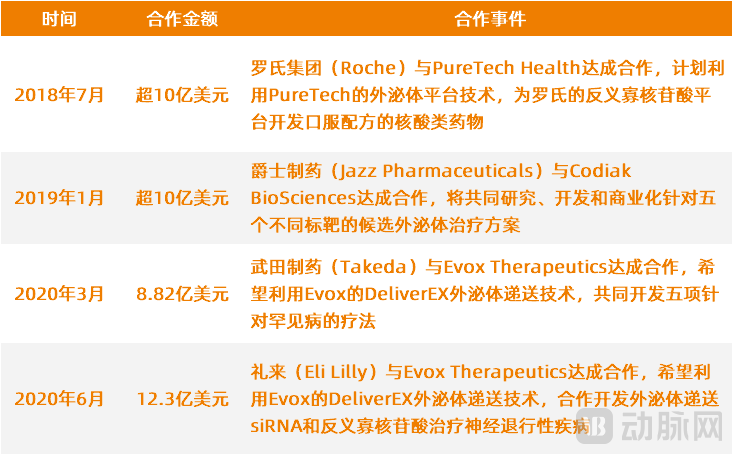
Exosome Drug Delivery Garners Significant Attention from International Pharmaceutical Companies, with Four Billion-Dollar Collaborations Emerging in Succession
On July 20, 2018, Roche Group (Roche) and PureTech Health signed a multi-year collaboration agreement to leverage PureTech’s milk-derived exosome platform technology for the development of orally formulated nucleic acid therapeutics for Roche’s antisense oligonucleotide (AON) platform. Under this agreement, PureTech Health is eligible to receive over $1 billion in milestone payments and royalties.
On January 3, 2019, Irish pharmaceutical company Jazz Pharmaceuticals entered into a strategic collaboration agreement worth over $1 billion with Codiak BioSciences. Under the agreement, both parties will jointly research, develop, and commercialize candidate exosome-based therapies targeting five different targets. All five targets are oncogenes that have been extensively validated in certain hematologic malignancies and solid tumors.
On March 26, 2020, Takeda Pharmaceutical Company Limited (Takeda) entered into an $882 million agreement with Evox Therapeutics. The collaboration primarily leverages Evox Therapeutics’ DeliverEX exosome delivery technology to develop protein replacement therapies and mRNA-based treatments for five rare disease indications, including preclinical studies for Niemann–Pick disease, type C.
On June 9, 2020, Eli Lilly and Evox Therapeutics entered into a collaboration agreement worth $1.23 billion, aiming to leverage Evox’s DeliverEX exosome delivery technology to develop exosome-based therapeutics loaded with siRNA and antisense oligonucleotides (AONs) for the treatment of neurological disorders.
Exosome Diagnostics, founded in 2008, is a leading company dedicated to exosome-based cancer diagnostics and was acquired by Bio-Techne for $250 million in 2018. In January 2016, Exosome Diagnostics launched ExoDX Lung (ALK), the world’s first liquid biopsy product capable of isolating and analyzing exosomal RNA from blood samples, enabling sensitive, accurate, and real-time detection of EML4-ALK mutations in patients with non-small cell lung cancer (NSCLC).ExoDX Lung (ALK) is not only ExosomeDx’s first product but also the first product in the exosome diagnostics industry.
Since then, ExosomeDX has continued to launch a range of liquid biopsy products based on exosome technology—while other companies in the industry were still exploring their product strategies.ExosomeDX has expanded its oncology testing products beyond non-small cell lung cancer to include early screening for diseases such as prostate cancer,Solidifying its benchmark position in the exosome diagnostics industry.
ExosomeDX’s liquid biopsy product for prostate cancer collects exosomes from urine samples. During the 2020 COVID-19 pandemic, ExosomeDX launched a “home-use” version of its Prostate Cancer (EPI) test, which detects exosomes in patient-collected urine samples. This test helps physicians determine whether a prostate biopsy is necessary, thereby reducing unnecessary biopsy costs and avoiding complications associated with invasive procedures, while also guiding clinicians to prioritize early treatment for patients at the highest risk. On March 22, 2021, ExosomeDX announced that its ExoDx™ Prostate (EPI) test kit had received CE-IVD certification in the European Union and would be made available across Europe through various distribution channels.
In the field of exosome therapy, the most representative companies are Codiak BioSciences and EVOX Therapeutics.
Codiak BioSciences: Two Oncology Products Have Entered Clinical Trials
Codiak BioSciences, founded in 2015 and incubated by the prominent biomedical venture capital firm Flagship Pioneering, garnered significant favor from the capital markets during its first five years of operation. Prior to its initial public offering, the company completed four rounds of financing, raising a total of $234.9 million.In October 2020, Codiak officially launched the Phase I/II clinical trial of exo-STING, one of its leading exosome-based product candidates, for advanced solid tumors, and the company successfully listed on the NASDAQ in the same month.
Codiak’s core technologies focus on the manufacturing and analysis of exosomes. For a long period, the production and purification of exosomes have been the major obstacles hindering the clinical translation of exosome technology. In terms of manufacturing, Codiak has identified two naturally abundant exosomal proteins—PTGFRN and BASP1—that can anchor target proteins to either the outer or inner surface of exosomes. Regarding purification, Codiak employs chromatography and filtration techniques instead of traditional ultracentrifugation, thereby enhancing the efficiency and purity of Good Manufacturing Practice (GMP)-compliant exosome production.
Leveraging the engEx platform, Codiak has built a portfolio of drug candidates targeting oncology and neurological diseases. Among these, the most advanced product, in addition to the aforementioned exo-STING which has entered clinical development,Another important candidate product, exoIL-12, targeting early-stage cutaneous T-cell lymphoma, has also entered clinical trials.In December last year, Codiak announced that exoIL-12 had reached its primary endpoint in Phase I clinical trials, marking the first disclosed clinical trial results for an exosome-based drug in the industry.
Evox Therapeutics: Backed by Google, with Takeda and Eli Lilly as Strategic Partners
Evox Therapeutics, founded in 2016, is a UK-based exosome therapeutics development company. In February this year, Evox announced the completion of its £69.2 million (approximately $95.4 million) Series C financing round, led by Redmile Group, with participation from existing Series B investors—including Google GV and Cowen Healthcare Investments—as well as new investors OrbiMed and Invus.
Unlike Codiak, which primarily focuses on oncology and neurological disorders,Evox’s current research focus is on targeting severe rare genetic diseases, such as inborn errors of metabolism (IEM).Leveraging its independently developed DeliverEXTM technology platform, Evox engineers natural exosomes to deliver proteins, mRNA, or DNA into cells, thereby replenishing deficient metabolism-related enzymes for therapeutic purposes.
Currently, Evox is planning to advance its first exosome-based drug pipeline for rare diseases into clinical trials in 2022. Furthermore, as mentioned above, pharmaceutical giants favor the potential of exosomes in drug delivery, with both Eli Lilly and Takeda entering into significant collaborations with Evox.In 2020, Evox signed five collaborations with Takeda focused on rare disease therapies and partnered with Eli Lilly to develop exosome-based delivery of siRNA and antisense oligonucleotides for the treatment of neurodegenerative diseases.
According to incomplete statistics from VCBeat,Currently, there are 12 major companies in the exosome-related industry both domestically and internationally.In addition to two companies (Qinglian Bio and Enser Biotech) primarily engaged in exosome isolation, purification, and testing services, the landscape includes six companies developing exosome drug-delivery platforms and therapeutics, four companies focused on exosome-based diagnostics, and one company (Weina Nucleic Acid Biology) involved in both exosome drug development and diagnostic services.
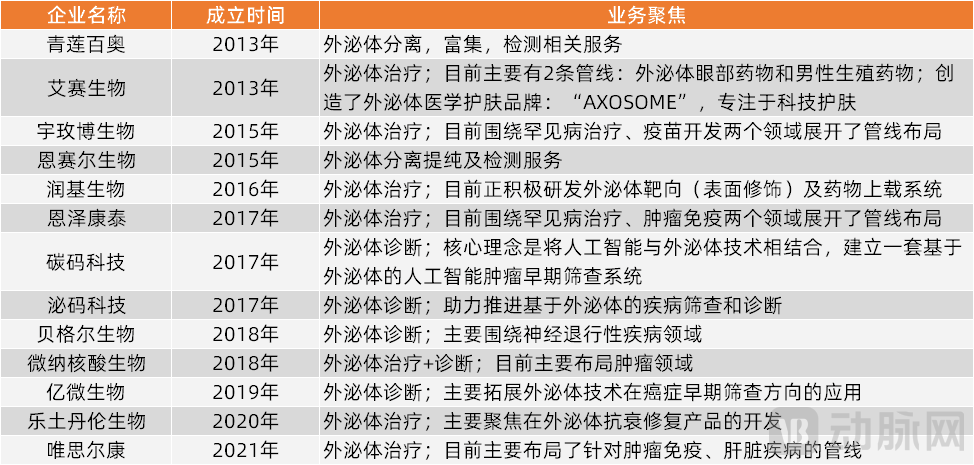
Domestic and International Exosome-Related Companies
Among them, four companies that have publicly disclosed their financing activities in recent years include Aisai Biotechnology, Beigeer Biotechnology, Enze Kangtai, and Weiser Kang. Enze Kangtai and Weiser Kang have been particularly favored by investors, each securing nearly RMB 100 million in funding this year.

Enze Kangtai
As one of the first biotechnology companies in China to focus on the field of exosomes, Enze Kangtai has established a highly efficient platform for exosome engineering, secured core platform-based intellectual property (IP), and developed mature capabilities for large-scale exosome production and high-purity isolation. Through engineered modification of exosomes, Enze Kangtai has significantly increased their loading capacity for specific active ingredients, including peptides, proteins, and nucleic acid drugs, while achieving selective delivery to targeted organs.
Currently,Based on Proprietary Exosome Technology,Enze Kangtai has established its pipeline layout focusing on two areas: rare disease treatment and tumor immunology.In the field of rare diseases, exosome-based protein replacement therapy is utilized to replenish deficient intracellular proteins in patients, thereby achieving therapeutic effects. In tumor immunology, exosomes are employed to activate endogenous immune signaling pathways in immune cells and, in combination with PD-1/PD-L1 monoclonal antibody therapy, restore the body’s normal anti-tumor immune response.
Viscon
As an emerging player in the domestic and international exosome field, Wiscon secured RMB 100 million in angel financing immediately upon its establishment, with participation from prominent investment institutions including Yuesheng Capital, Legend Star, Northern Light Venture Capital, Boyuan Capital, Suzhou Science and Technology Innovation Fund, and Suzhou CSSD Yuanchuang. Currently, leveraging the angel round funds, Wiscon is building its Extracellular Vesicles (EV) platform to lay the foundation for the development of novel exosome-based therapeutics.
Dr. Xu Ke, Founder and CEO of Viscure, introduced that the modEXO engineered exosome drug-loading platform is built upon a deep understanding of exosome technology. Leveraging the low immunogenicity, multifunctionality, and high loading capacity of exosomes, the platform emphasizes dynamic modular design to facilitate tissue- and cell-specific drug delivery, optimize the therapeutic window, enable sustained-release tissue pharmacology, ensure precise dose control, and support personalized diagnosis and treatment plans, thereby meeting the clinical need for precise targeting.Building on the modEXO platform, Visecon will focus primarily on tumor immunology and liver-related diseases as its current key breakthrough areas, while simultaneously expanding the application of exosomes into lung diseases, brain disorders, digestive system diseases, and lymphatic system diseases.