

Domestic ECMO Breakthrough Sparks Surge in China's Critical Care Medical Device Sector
Recently, the ECMO market has seen frequent developments.
First, medical device giant MicroPort Scientific acquired Hemovent for RMB 923 million, bringing an ECMO system into its portfolio. Subsequently, a domestically developed ECMO device, jointly researched and developed by the First Affiliated Hospital of Xi’an Jiaotong University, entered the clinical stage, successfully filling the gap in domestic production.
Prior to the outbreak of the COVID-19 pandemic, the ECMO sector remained largely obscure, with few companies in the supply chain and limited interest from capital markets. Most participants were confined to the manufacturing of ECMO components. China has been striving to overcome challenges in high-end, sophisticated technologies; why, then, has it failed to resolve the bottleneck constraints in this field? Does the entry of the first domestically produced ECMO device into clinical trials mark a promising start for the localization of this industry?
VCBeat will lift the “mysterious veil” on ECMO by examining its technical challenges, domestic and international market players, and future development directions.
The COVID-19 pandemic has brought the “life-saving device” ECMO into the public eye.
In January 2020, Zhongnan Hospital of Wuhan University successfully employed ECMO for the first time to save a critically ill patient with COVID-19. In August 2020, a COVID-19 patient who had received ECMO support for 111 days was discharged after recovery, marking the longest duration of ECMO use among COVID-19 patients worldwide.In 2020, the number of ECMO-assisted cases in China was 6,937, representing a 6.3% increase from the 6,526 cases reported in 2019.
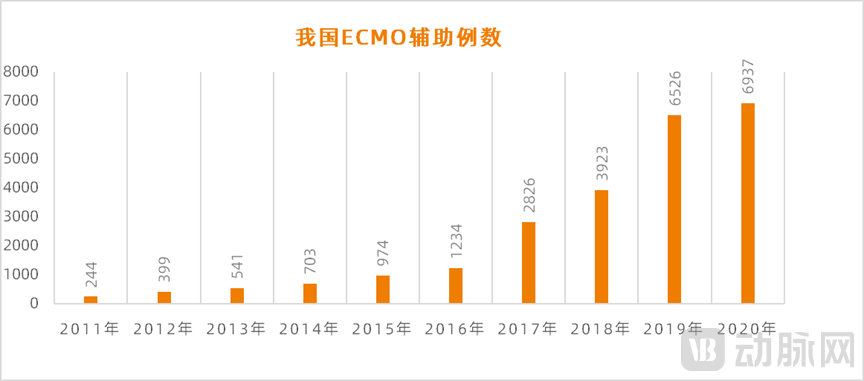 Number of ECMO-Assisted Cases in China Data Source: “Current Status of Extracorporeal Life Support Development in China, 2020”
As the representative of ICU wards for "bringing patients back from the brink of death," is ECMO really that miraculous?
ECMO, Extracorporeal Membrane Oxygenation, also known as "artificial heart and lung," is a novel cardiopulmonary support technology that maintains oxygenated blood supply to human organs and tissues.ECMO can temporarily replace the patient's heart and lungs. Its principle is to draw venous blood out of the body, fully oxygenate it, and then pump it back into the body, thereby reducing the burden on the heart and lungs in cases such as respiratory failure and cardiac arrest.
Based on the circuit’s return pathway, ECMO can be classified into two modes: veno-arterial (VA-ECMO) and veno-venous (VV-ECMO). In VV-ECMO, blood is drained from the central veins, oxygenated, and then returned to the central veins; this mode provides only gas exchange support and is indicated for severe respiratory failure caused by conditions such as acute respiratory distress syndrome (ARDS) and viral pneumonia. In contrast, VA-ECMO involves draining blood from the central veins, oxygenating it, and pumping it back into the arterial system, thereby providing both respiratory and circulatory support; it is indicated for conditions such as cardiogenic shock secondary to myocarditis.
Although ECMO had long remained “obscure,” the technology itself is not new. As early as 1953, Gibbon built his own heart–lung machine and successfully applied cardiopulmonary bypass for the first time in clinical cardiac valve surgery. In the field of critical care medicine, there is a saying: “Once the ECMO starts running, it costs a fortune.” Roughly estimated,The total cost of an ECMO machine is around one million yuan, with a startup fee of 60,000 yuan and daily operating costs starting at 10,000 yuan.
ECMO Operation: The High Cost of Consumables. A complete set of consumables, including the centrifugal pump head, tubing, and oxygenator membrane lung, costs between RMB 40,000 and 60,000. Moreover, if thrombosis or plasma leakage occurs, the entire set must be replaced.
Due to the high cost and technical complexity of treatment, the ECMO market has experienced slow growth, with a relatively low adoption rate. In 2018, the global ECMO market size was approximately USD 270 million. By the end of 2018, there were only slightly over 400 ECMO units in China.
Dr. Chen Yang from HeartGo Medical introduced, “In 2020, there were 500 ECMO centers in China. However, the operation of ECMO requires a qualified team and the accumulation of case experience. Therefore, some centers may perform fewer than 20 ECMO cases per year. In the event of a major public health emergency such as the COVID-19 pandemic, the treatment of a large number of patients still heavily relies on large, experienced centers.”
At the onset of the outbreak, China had only slightly more than 400 ECMO devices; medical teams dispatched from across the province to support Wuhan brought their own ECMO units. After nearly 80 ECMO devices were put into use in Wuhan, the mortality rate among critically ill patients in the city showed a significant downward trend.
Actually,ECMO is solely used for life support and does not provide treatment for the underlying disease itself.For patients with various acute and critical conditions, such as acute myocardial infarction, acute pulmonary embolism, severe pneumonia complicated by respiratory failure, acute cardiopulmonary insufficiency following surgery, and post-organ transplantation, ECMO serves merely as a temporary life-sustaining measure. The ECMO device can temporarily assume the functions of the heart and lungs, allowing these organs to rest adequately while physicians provide comprehensive systemic supportive care. Once the patient’s cardiopulmonary function recovers sufficiently to meet the body’s normal physiological demands, ECMO support is withdrawn.
However, to date, the critical need for life-saving interventions has not been adequately met in China. The primary population requiring extracorporeal membrane oxygenation (ECMO) support consists of patients with severe respiratory failure induced by various primary diseases. China has approximately 330 million individuals with cardiovascular disease, and as a country with high smoking prevalence, it also has a large population of patients with chronic obstructive pulmonary disease (COPD). Compared to the potential number of patients at risk of respiratory failure, China’s ECMO reserve is significantly insufficient, particularly in grassroots and rural areas.
Lin Hengyi, CEO of Kangyang Hengtai, stated, “The lack of widespread first-aid awareness, the immaturity of ECMO technology, the low volume of procedures, and the lagging health insurance policies are all interlinked.” From a corporate perspective, it is essential to first advance ECMO technology and promote first-aid knowledge to drive the operation of the entire chain.
Why Has ECMO Development Been Slow? Apart from Social Factors, It Is Inextricably Linked to Its Own Technical Challenges.
ECMO comprises a complete system, primarily consisting of four components: the power pump, tubing system, monitoring system, and thermostat. Among these, the power pump and the membrane oxygenator are the core components of the system, referred to as the artificial heart and artificial lung, respectively.
The blood pump is the source of circulatory power for ECMO equipment.Currently, most ECMO devices employ next-generation centrifugal pumps, whose core lies in magnetic levitation technology and the design of high-efficiency impellers, aiming to maintain favorable blood compatibility while enhancing pumping efficiency.
AndThe membrane lung performs the core blood oxygenation function in ECMO devices., with its interior composed of hollow microporous fiber membranes. During device operation, patient blood flows along the outer surface of the hollow fibers, while oxygen is infused into the lumen of the fibers. Carbon dioxide in the blood and oxygen within the fibers are exchanged via a pressure gradient, thereby achieving pulmonary gas exchange function.
This necessitates that the membrane lung material possess both excellent gas permeability and long-term hydrophobicity. The raw materials for membrane lungs have evolved from first-generation solid silicone membranes to second-generation microporous hollow fiber membranes. Currently, the third-generation poly(4-methyl-1-pentene) (PMP) hollow fiber membrane is internationally recognized as superior, extending the clinical duration of ECMO use. Globally, Membrana, a subsidiary of 3M, is the exclusive supplier of PMP fiber membranes.
Previously, external attention focused on the monopoly of raw materials for membrane lungs. Admittedly, such a monopoly would, to some extent, constrain downstream companies’ R&D and production; however, this is not the “most pressing priority.”
Lin Hengyi proposed that domestic enterprises should focus on the functionality and stability of ECMO devices. In addition to creating price advantages, domestic substitution must also demonstrate differentiation in clinical outcomes. For instance, some patients may experience brain injury after receiving ECMO therapy; manufacturers could attempt to improve ECMO devices to prevent such complications. Producing membrane lung materials requires substantial investment. From a market perspective, domestic companies do not need to incur such high costs to gain control over these materials.
Chen Yang also believes that domestic companies should adopt a phased approach, first mastering downstream technologies before moving upstream to raw materials. “ECMO manufacturers worldwide face material monopolies. China’s ECMO technology has not yet matured, and relevant teams still require extensive time to coordinate effectively. The current focus remains on R&D aimed at enhancing core performance metrics—such as membrane lung gas exchange efficiency and blood compatibility—with the ultimate goals of achieving integrated pump-lung systems and improving system portability.”
Moreover, in recent years, China has attached great importance to innovation in upstream raw materials. The “2021 Project Application Guidelines for the Key Special Program on ‘High-End Functional and Smart Materials’” proposed the development of monomers for poly(4-methyl-1-pentene) and its hollow fiber membrane materials for artificial lungs, targeting the needs of high-end medical devices and medical protection.
Furthermore, as ECMO constitutes a complete fluid control system, the synergy among its underlying technologies is critical; it is not simply a matter of assembling modules such as centrifugal pumps, oxygenators, and tubing for immediate use. While the manufacturing process of ECMO devices is not inherently complex, the integration of hardware and software, along with long-term system stability, demands rigorous quality management.
During the early stages of research and development, enterprises must comprehensively plan module design and system integration. Parameters such as pump rotational speed, oxygenator flow control, and sensor feedback are managed at the underlying system control level. Optimization of the blood flow path is a core technology in ECMO systems. The occurrence of thrombosis or hemolysis during ECMO support can significantly reduce patient survival rates.
Technology is fundamental; however, from the perspective of clinical application, there is a shortage of qualified personnel to operate ECMO in China, where medical resources are scarce.
Behind ECMO is an entire medical team, typically including surgeons, nurses, and perfusionists, requiring a team of approximately 4–6 members.During ECMO operation, experts are required to provide 24-hour bedside monitoring. The "Management Specifications for the Clinical Application of Extracorporeal Membrane Oxygenation (ECMO) Technology," issued by the National Health Commission of China, sets forth clear regulations regarding medical institutions, personnel, and technical aspects.
Critical care medicine involves complex clinical conditions, requiring physicians to rely on years of experience and continuous learning to ensure high-quality treatment. This type of cognitive expertise is difficult to replicate on a large scale through traditional mentorship or education. To promote the widespread adoption of ECMO in China, it is essential for the government to strengthen systematic training programs, while manufacturers should strive to enhance the intelligence of ECMO devices. By integrating intelligent monitoring features that connect the entire disease management workflow, these advancements can shorten physicians’ learning curves and reduce the complexity of patient management.
The global ECMO market has long been monopolized by the “Big Three”—Maquet, Medtronic, and LivaNova—with most participants merely manufacturing components and lacking the capability to develop complete ECMO systems.
Maquet is one of the world’s largest suppliers of operating room and ICU medical engineering solutions and equipment. The company’s Cardiohelp ECMO system is a compact, lightweight cardiopulmonary support device distinguished primarily by its portability. The Cardiohelp system features an oxygenator membrane coated with Bioline, offering excellent biocompatibility, and is equipped with a comprehensive monitoring suite that reduces the risks of thrombosis and gas embolism. The system can operate continuously for up to 30 days with minimal or no need for circuit replacements during use, thereby lowering treatment costs.
Medtronic, the world’s leading medical device company, features an ECMO system equipped with a new portable LCD touchscreen and two pressure monitors with alarm limits. The device is fitted with a next-generation rechargeable battery that maintains its charge even in standby mode. Meanwhile, Medtronic’s new-generation Nautilus Smart ECMO oxygenator is the only long-duration oxygenator globally with integrated monitoring capabilities, eliminating the need for patients to be connected to external monitoring devices.
LivaNova is the world’s largest cardiopulmonary bypass company. Its ECMO system is designed for ease of use, featuring a function-rich console with simple operation. LivaNova also prioritizes the portability of its ECMO devices; the system can be ready for use within minutes, facilitating patient transport within hospital settings.
In April 2020, the FDA issued guidance,Approved Medtronic and LivaNova’s extracorporeal cardiopulmonary support products for ECMO therapy exceeding 6 hours in the United States to address the COVID-19 pandemic.
While the three industry giants have distinct focuses in their product R&D, a comprehensive view reveals that key development directions include the biocompatibility of ECMO consumables, device portability, and intelligent monitoring.
China's ECMO market has long been characterized by a scarcity of both providers and devices, remaining dominated by the "big three" manufacturers.
Domestic companies involved in heart-lung machines include Tianjin Huikang Medical Equipment Co., Ltd., Xi’an Xijing Medical Supplies Co., Ltd., Xi’an Tongbiao Medical Devices Co., Ltd., Shanghai Xiangsheng Medical Device Factory, Ningbo Feilaier Medical Supplies Co., Ltd., and Shenzhen Hanno Medical Group, among others; however, none of them are capable of manufacturing complete ECMO systems. Notably, Tianjin Huikang was among the first domestic enterprises included in the ECMO section of China’s “Catalog of Urgently Needed Medical Equipment for COVID-19 Prevention and Control.”
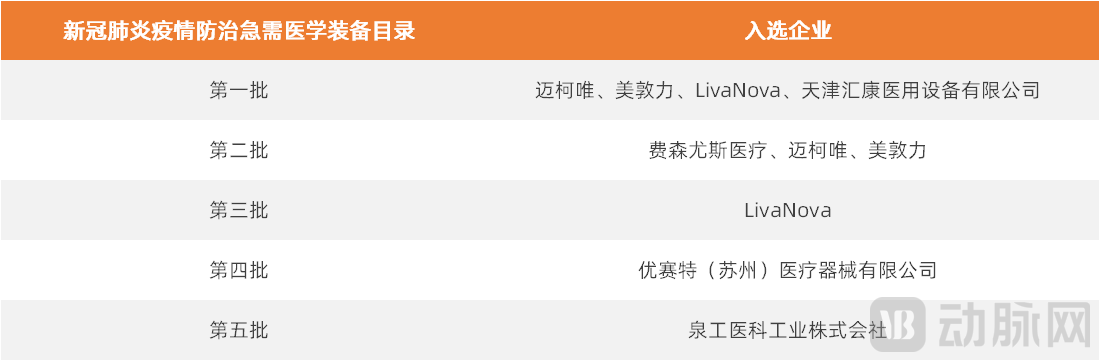
Companies Selected for the “Catalog of Urgently Needed Medical Equipment for COVID-19 Prevention and Control”
It is evident that among all the selected companies, Tianjin Huikang was the only domestic enterprise, and it primarily manufactured auxiliary equipment for ECMO, without involvement in the core components such as centrifugal pumps and membrane lungs.
In China’s burgeoning ECMO market, hospitals, universities, and enterprises are poised for growth. In the realm of ECMO innovation, clinical institutions and academic universities are playing an increasingly prominent role, with medical-engineering collaboration emerging as a win-win strategy.
In March 2020, the team led by Liu Shuqin at Shandong University successfully developedECMO Prototype Using a Fully Magnetically Levitated Heart Pump, featuring low hemolysis, convenient flow regulation, and a compact design. In October 2020, the team signed an agreement with Qingdao Yuyun Health Management Co., Ltd., marking the first step toward bringing the ECMO system to market.
In the same year, the First Affiliated Hospital of Xi’an Jiaotong University collaborated with universities and enterprises to developThe First Domestic ECMO Device with a Long-Acting, Stable Anticoagulant Coating. The final product weighs only about 6 kg, offers a battery life of up to 15 hours, and is priced at just one-third that of imported equipment.
They conducted in-depth design and research and development of ECMO equipment, focusing on anticoagulant coatings for all blood-contacting surfaces, magnetically levitated centrifugal pumps, ultrasonic flow probes, programmable monitoring systems, and membrane oxygenators. According to the team led by Yan Yang at the First Affiliated Hospital of Xi’an Jiaotong University, effectively coating the blood-contacting surfaces of various components with anticoagulant materials is the most direct approach to enhancing the cost-effectiveness and broader adoption of ECMO. In November 2021, the ECMO device developed by the First Affiliated Hospital of Xi’an Jiaotong University entered clinical use for the first time, successfully saving two critically ill patients with severe cardiovascular diseases.
From the corporate perspective, in-house development or acquisition remains the unchanging “keynote.”
In response to clinical needs for treating patients with respiratory failure or those requiring emergency transport, XinQing Medical has developed a device based on its domestically first extracorporeal magnetically levitated artificial heart technology, which has already successfully passed clinical validation.High-Portability ECMO System for Frontline Emergency Care and Transport. The successful development of its magnetically levitated pump for extracorporeal artificial heart has brought better hemocompatibility to the entire ECMO system. This ECMO product was approved and included in the database of the "2020 Emergency Science and Technology Special Project for the Prevention and Control of Coronavirus Infection" published by the Suzhou Municipal Science and Technology Bureau, and is currently in the preclinical research and development stage.
Kangyang Hengtai, based in Zhuhai, has developedThe Complete ECMO System “Shengji-1000”, offering good consumable compatibility and stability, and equipped with a neuroprotection module that provides protective rescue interventions for brain injury during ECMO operation. Currently, Kangyang Hengtai is advancing the FDA certification process for the Shengji-1000 ECMO system.
Furthermore, acquisitions serve as a rapid market entry strategy for enterprises. MicroPort Medical acquired Hemovent for RMB 920 million. Hemovent’s flagship product, the MOBYBOX System, is the world’s first ECMO system that integrates a blood pump and membrane lung into a single unit, and it had previously obtained CE certification. Thanks to its high level of integration, the system weighs less than 2 kilograms and is powered solely by gas pressure, requiring neither an electric motor nor an external power source, thus allowing it to be conveniently carried in a backpack.
Functional differentiation is the current focus, while portability represents the future development trend.
Maquet’s Cardiohelp emphasizes portability, enabling use across various scenarios; Hemovent’s ECMO system weighs less than 2 kilograms; HeartCare Medical is also developing a portable ECMO device.
The significance of portability lies in expanding application scenarios by taking ECMO out of the ICU. ECMO devices are intended for patients with acute and critical conditions who require immediate mechanical support; the time to cannulation significantly influences patient survival rates. Furthermore, given the uneven distribution of ECMO resources across China, inter-hospital transfers are common. Therefore, ECMO systems must meet transport requirements, such as ensuring no hemolysis occurs during prolonged periods of vibration.
Judging from the product R&D trends of multinational giants and the actual application scenarios of portable ECMO devices, portability and integration are likely to be the development direction for domestically produced ECMO equipment in China.
Why discuss the future? This is related to the development stage of China’s ECMO market. Due to earlier intervention, portable ECMO devices have become part of the first-line ECPR (Extracorporeal Cardiopulmonary Resuscitation) protocol for rescuing patients with acute cardiac arrest; however, their development requires more complex integration. For companies in the early stages, the highest priority is to develop domestically produced ECMO devices that ensure superior performance and stability. Nevertheless, there are pioneers who have made portable ECMO devices a key focus of their R&D efforts from the outset.
In summary, it is not critical which specific performance metric domestic manufacturers choose to prioritize, as efforts are being directed from various angles. What truly matters is the successful development of domestically produced ECMO devices that offer stable performance and meet patient needs.
National Investment in Critical Care Medicine: Awake ECMO Drives Industry Development
The decentralization of critical care medicine within China’s national healthcare system is an inevitable trend.
In the late 1970s, critical care medicine was gradually established in China. Particularly since the 1990s, this field has witnessed rapid development across the country. In 2017, departments of critical care medicine were designated as one of the four key areas supported by the national fiscal initiative “Capacity Building Project for Diagnosis and Treatment of Complex and Critical Diseases,” which had a budget of RMB 15 billion. Currently, central hospitals in major cities, county-level hospitals, and even some township hospitals have established independent departments of critical care medicine. The state has made substantial investments in critical care medicine to build a talent reserve for the operation of extracorporeal membrane oxygenation (ECMO).
The development of ECMO depends, to some extent, on the maturity of a hospital’s critical care medicine team and its cross-departmental collaboration. Critical care medicine has an inherent characteristic: since its inception, it has relied on the coordinated efforts of an entire medical team.
Meanwhile, in recent years, clinical practice has advocated for “awake ECMO,” emphasizing that ECMO should be initiated as early as possible while patients remain conscious and capable of spontaneous breathing. The diagnostic approach in the ICU differs from that in conventional departments such as pulmonology and cardiology. While physicians in these specialties typically diagnose based on specific symptoms, patients admitted to the ICU are already in critical condition and require rapid therapeutic intervention. Therefore, clinicians must anticipate disease progression and initiate ECMO at the earliest feasible stage.
Awake ECMO can avoid side effects associated with sedation, endotracheal intubation, and mechanical ventilation, improve patients' quality of life, and promote the clinical application of ECMO.
ECMO Temporarily Included in the Basic Medical Insurance Fund Coverage; Domestically Produced Equipment Expected to Reduce Treatment Costs
In China, ECMO-related costs are not covered by medical insurance.
In January 2020, the Ministry of Finance and the National Healthcare Security Administration jointly issued the “Urgent Notice on Ensuring Medical Security for the Novel Coronavirus Pneumonia Epidemic,” which stated that “drugs and medical service items used by patients that comply with the diagnosis and treatment protocols for novel coronavirus pneumonia formulated by the health authorities may be temporarily included in the scope of reimbursement from the basic medical insurance fund.”
Just one day before this regulation was issued, a pregnant woman from Huanggang, Hubei Province, chose to forgo treatment due to the prohibitive cost of initiating extracorporeal membrane oxygenation (ECMO). With weekly treatment expenses reaching RMB 100,000, the financial burden remains a significant barrier for most patients.
Meanwhile, at the level of commercial health insurance, some policies explicitly include ECMO costs within the scope of reimbursable inpatient medical expenses. While certain medical insurance plans cover artificial organs, the debate over whether ECMO qualifies as an artificial organ has persisted.
In terms of cost, domestic manufacturers can reduce the overall treatment cost of ECMO by lowering production costs and reducing consumable waste. For instance, the ECMO device from the First Affiliated Hospital of Xi’an Jiaotong University, which has recently entered clinical use, is priced at only one-third that of imported equipment.
As previously mentioned, the popularization of ECMO technology, the emergence of domestic brands, talent development, and health insurance coverage form a closed loop. As the first three links are strengthened, China’s focus on critical care medicine and emergency services will intensify, and health insurance may gradually cover ECMO-related expenses.
Under the new normal of epidemic prevention and control, the growth of China’s ECMO market has gradually slowed, yet enthusiasm for ECMO among clinicians and enterprises remains undiminished. This reflects the core principle of critical care medicine: prevention is better than cure. In the aftermath of the SARS outbreak, the COVID-19 pandemic once again underscored the importance of ECMO devices. During the peak of the pandemic, scarce medical resources left little room to support ECMO research and development or its clinical application; now is therefore an opportune time to advance ECMO technology.
We need only exercise patience and wait for more Chinese medical device companies to bear the fruits of innovation.
References:
“Behind the Bottleneck in China’s ECMO Industry” — A Global Technology Map
“The History and Current Status of Critical Care Medicine” — Anqing Association for Science and Technology
"Current Status of Extracorporeal Life Support Development in China, 2020" — Extracorporeal Life Support Professional Committee of the Chinese Medical Doctor Association
“ECMO” Emergency Lifeline: All for the Treatment of Critically Ill Patients — Xinhua News Agency