

Who Is the Strongest Platform in U.S. Mental Health? A Response to Current Challenges in Digital Therapeutics
Editor’s Note: This article is republished from BaoGuan, authored by Mu Zhe Shuo, and reposted with authorization to VCBeat.
Should we focus solely on refining the DTx itself to address clinical efficacy and adherence, or should we forge a new path by creating a “1+1>2” model that integrates Talkspace and Happify?
LifeStance claims to be the largest online mental health platform, Talkspace positions itself as the first publicly traded pure-play online mental health company, and Happify states it is the first to receive regulatory approval for a digital therapeutic in mental health.
What are the differences between them? Is it an either-or choice? And which is ultimately the strongest platform?
In fact, there is a hidden champion that has never come into the view of Chinese researchers. It is Sanvello, a mental health platform formed through UnitedHealth Group’s acquisition and integration in 2017. The company was first introduced in China by Muzhe.
Mental Health (also commonly referred to as psychological health) is an essential requirement for a 100-year life, and a necessary condition for pursuing spiritual fulfillment after achieving material prosperity.
As we age, our legs may remain agile, but our minds must not decline.
With better food and clothing, we have begun to read books and visit exhibitions, but our minds must not deteriorate.
What Are Mental Disorders? Mental disorders encompass a wide range of conditions, including attention-deficit/hyperactivity disorder (ADHD), anxiety, depression, agoraphobia, social phobia, obsessive-compulsive disorder (OCD), post-traumatic stress disorder (PTSD), bipolar disorder, sleep disorders, and cognitive impairments, among others.
These mental disorders were once stigmatized as “broken brains.” However, as society becomes more “civilized,” awareness and attention toward mental illness have increased. Driven by this growing demand, along with the pursuit of commercial opportunities and capital investment, mental health is emerging as the next major trend in digital healthcare.
How many people are affected by mental disorders? How many clinics are there?
Currently, 50 to 70 million people in the United States suffer from mental illness, accounting for 20% of the total population. According to a report by the Kaiser Family Foundation, only half of these individuals received relevant treatment in that year.
On the supply side, 50% of psychological clinics (mental health centers) accept insurance payments (including commercial insurance), while the others require out-of-pocket payment. Moreover, over 95% of these clinics are independent service providers (psychiatrists), resulting in a highly fragmented market. (By comparison, the rate of solo practice among Primary Care Physicians is 31%, and it is even lower for specialists.)
In China, the number of individuals with potential mental disorders is nearly 300 million, assuming a prevalence rate of 20%. Meanwhile, the supply side of psychological counseling remains highly fragmented, and licensing examinations for psychological counselors have even been abolished.
Is psychotherapy reimbursable?
It is worth noting that U.S. health insurance covers mental health care expenses, including Employer Assistance Programs (EAP) sponsored by employers and Medicare Part B (outpatient coverage) under the Original Medicare plan administered by the Centers for Medicare & Medicaid Services (CMS). Therefore, it is common for mental health care costs to be covered by insurance, including both public health insurance and commercial insurance.
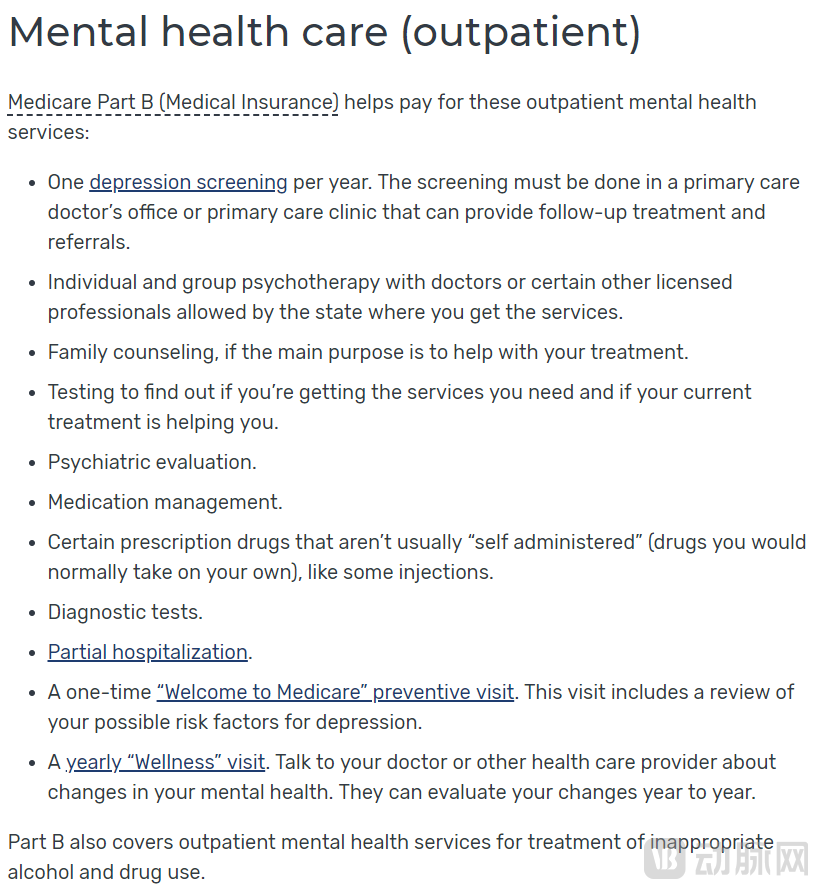
Sources: Medicare Official Website, Mu Zhe Shuo WeChat Official Account
Psychiatric and Psychological Treatment in the United States Has Three Characteristics:
First, demand is stable. Social acceptance is moderate, with the at-risk population accounting for approximately 20%. (Material needs precede spiritual pursuits.)
Second, the supply is fragmented, with most psychologists practicing independently. (Do you remember Dr. Seaver from Growing Pains?)
Third, it is covered by health insurance. Both the Employee Assistance Program (EAP) for the working population and Medicare for retirees provide coverage.。
Lifestance was founded in 2017 and officially listed on the U.S. stock market in June 2021 with a market capitalization of $7 billion.
Founder Michael Lester is a veteran with over 35 years of experience in the health and pharmaceutical sectors, having served as a venture capital partner at Bain Capital and SV Life Sciences, and as founder and CEO of multiple healthcare companies.
The company’s largest shareholder is TPG, holding a 54% stake; TPG is an established fund managing $100 billion. Two other funds, Summit and Silversmith, hold 14% and 6% stakes, respectively. The management team holds only a 17% equity interest.
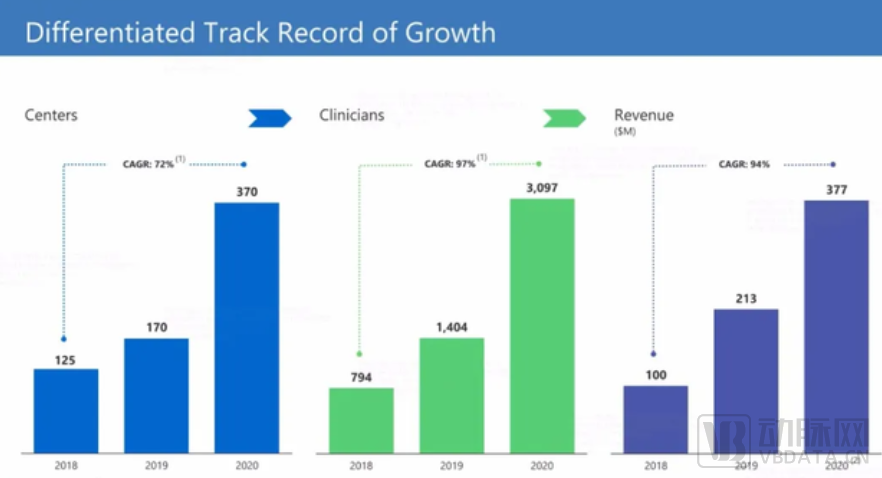
According to the prospectus,The number of LifeStance’s offline clinics (Centers) grew from 125 to 370; the number of mental health clinicians increased from 794 to 3,097, accounting for approximately 0.5% of the 650,000 mental health clinicians in the United States.
The company was established in 2017. In 2018, it operated 125 clinics, including 15 de novo (newly built) centers, with the remainder acquired through mergers and acquisitions. In 2019, it added 45 new clinics, of which 27 were de novo centers. In 2020, it added 200 new clinics, including 78 de novo centers.
Therefore, of the 370 centers, approximately 30% were self-built and 70% were acquired through mergers and acquisitions (via 53 acquisitions). Meanwhile, among the 3,097 psychiatrists, approximately 1,700 were newly recruited.
Source: LifeStance IPO Prospectus, Mu Zhe Shuo Official Account
This is a capital-driven coalition of offline psychological clinics.This is the so-called “pump-and-dump scheme.” The scheme was initiated by the founder and two early-stage funds (Summit and Silversmith), gained momentum after TPG’s entry in April 2020, and reached its peak when the company successfully went public in 2021.
Claiming to be the largest is acceptable,but this accounts for only 0.5% of all psychiatrists. With annual revenue of $370 million, it is already five times the size of Talkspace. This indicates, on one hand, that the market is highly fragmented with substantial room for consolidation, and on the other hand, that under certain conditions, inorganic growth through acquisitions can be significantly faster than organic growth.
However,The company’s DNA dictates that Lifestance will ultimately become an aggregator of offline mental health clinics.It is possible to build an online platform for distributing patient traffic, but the capacity ceiling—where each physician serves 100 patients per year, with each contributing $1,000 annually—is difficult to break through. (See the company’s prospectus.)
Talkspace was founded in 2012.The company has entered the field of psychotherapy with its unique “Text Therapy” approach,Commonly known as "chat companionship," this service allows users to consult with specific remote therapists via unlimited text messages, voice calls, and video sessions. Therapists formally providing consultations on the platform hold at least an LMHC credential, i.e., Licensed Mental Health Counselor.
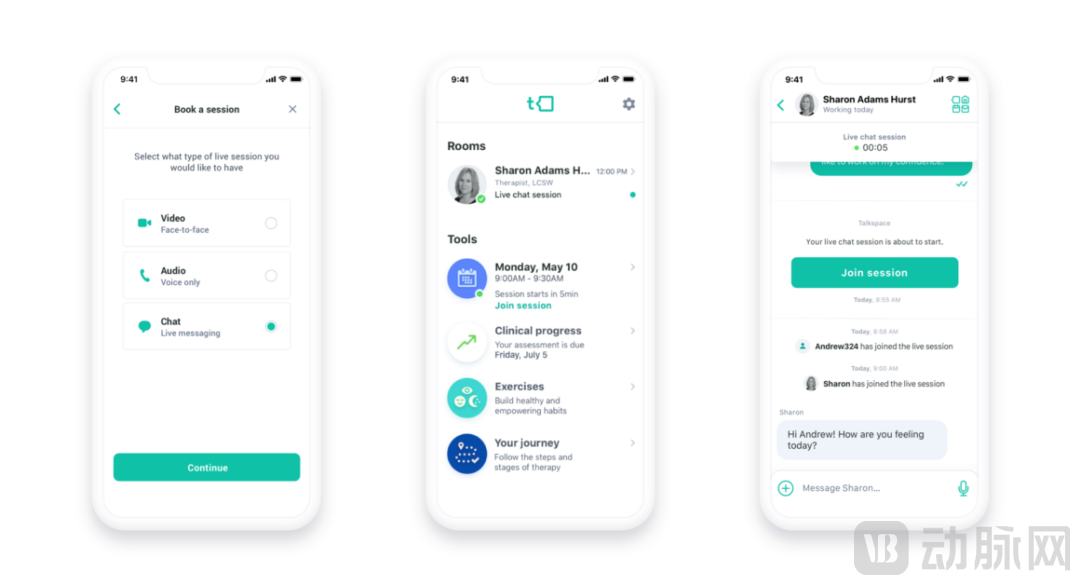
Sources: Talkspace, Mu Zhe Shuo Official WeChat Account
Talkspace’s development model is very similar to the trajectory of “Internet hospitals” in China.. In essence, it is a form of “part-time affiliation” and “online appointment add-on” for offline physicians, whereby they earn “extra income” by providing text, voice, and video consultations during both working and non-working hours.
The pain points addressed are:Past issues included the need for appointment-based queuing, round-trip travel, and the inability to provide on-demand responses.Enhanced convenience and privacy have improved user experience and uncovered some latent, unmet needs. For instance, individuals experiencing mild work-related stress who previously had no intention of consulting a psychologist can now easily and quickly try out a “companion chat” service.
Talkspace's Business Model,It has not led to an overall improvement in efficiency, but rather encroached upon the time resources of existing psychiatrists.Unless companies can achieve breakthroughs in semantic understanding, knowledge bases, and intelligent Q&A systems, thereby transforming the vast amount of knowledge embedded in dialogues into intellectual property (IP), their offerings will remain mere “add-on” services.
For mental health conditions such as depression and anxiety, the theoretical basis of Digital Therapeutics (DTx) is Cognitive Behavioral Therapy (CBT). This is a treatment regimen that has been practically applied in offline psychotherapy for many years.
But the fundamental change lies in software replacing human guides, thereby breaking through efficiency bottlenecks.Traditionally, a psychiatrist’s annual capacity is limited to serving 100 patients, whereas the number of clients served by software depends on server processing power; the cost difference between serving 100 users and one million users is minimal.
CBT focuses on challenging and altering helpless cognitive distortions (thoughts, beliefs, attitudes, etc.) and behaviors to improve emotional regulation. The three key concepts—Thoughts, Feelings, and Behavior—are central throughout the process. Specific techniques include goal setting, meditation, and self-suggestion.
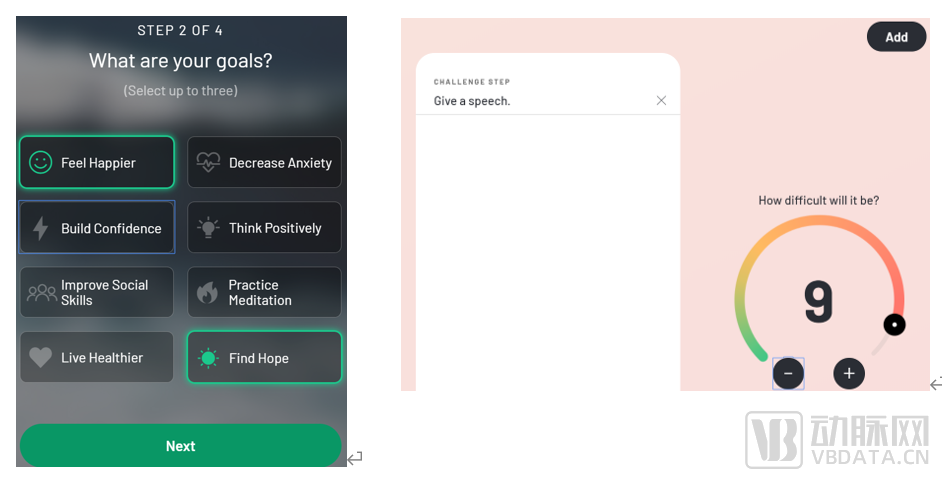
For example, "complete small goals" on the software.
By setting personal goals, such as “building confidence,” related tasks emerge under the objective of “confidence,” for example, delivering a speech. Initially perceived as having a difficulty level of 9, the task was ultimately completed independently, revealing that it was not as difficult as anticipated, with an actual difficulty rating of approximately 6."In terms of 'action,' tasks/goals are accomplished; in terms of 'mindset,' fear of difficulty is alleviated; in terms of 'feelings,' one becomes happier."
Source: Mu Zhe Shuo WeChat Official Account
This rests on two premises:
First, it can achieve therapeutic effects equivalent to those of human psychiatrists, which addresses the common question from many investors: “Have clinical trials been conducted?”
Second, it is crucial to ensure high adherence in completing designated tasks; otherwise, even effective interventions will be rendered futile. Relying solely on gamification or user experience itself still poses significant challenges.
The question arises:
Should we focus solely on refining DTx itself to find solutions for clinical efficacy and adherence? Or should we blaze a new trail by creating a “1+1>2” model that integrates Talkspace and Happify?
UnitedHealth Group’s mental health platform, Sanvello, actually provided the answer long ago.
UnitedHealthcare (UHC) is currently the most prominent benchmark in China’s insurance market. On its website, under the Mental Health Program section, two services are recommended: Talkspace and Sanvello. Notably, Sanvello is a subsidiary of UnitedHealthcare, making it an in-house offering.
Sanvello, formerly known as Pacifica Labs, was founded in 2014,Positioning: Based on cognitive behavioral therapy and mindfulness meditation, it is used to control and manage various mental and psychological disorders.
After more than four years at the helm, founder Dale Beermann sold both himself and the company to UnitedHealth Group in 2018, continuing to serve as Sanvello’s Chief Technology Officer for over two years. Most of the company’s management positions were subsequently assumed by executives from Optum, UnitedHealth Group’s services arm. Following the acquisition, Sanvello experienced rapid growth, currently reaching 40 million users and ranking as the leading app for stress and anxiety management.
Source: UnitedHealthcare official website (uhc.com), Mu Zhe Shuo WeChat Official Account
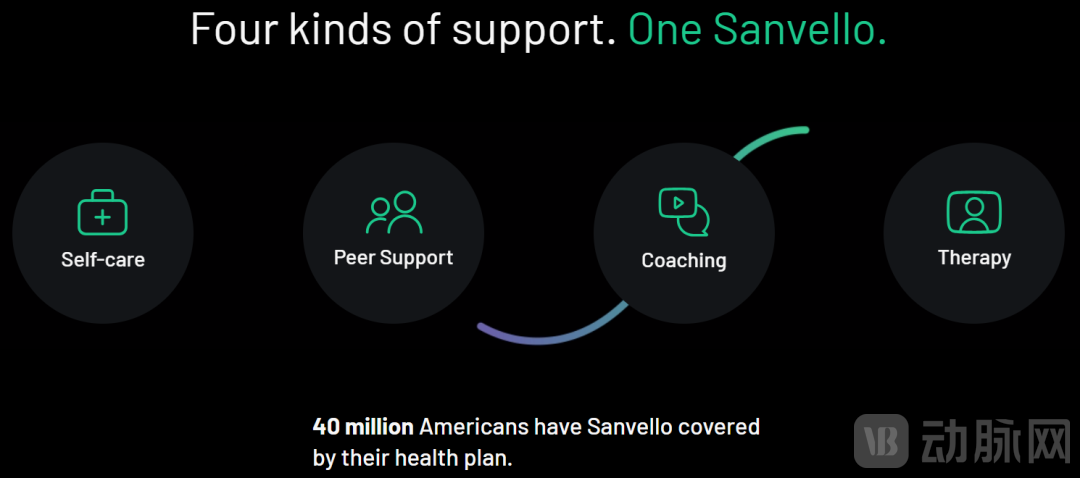
What is most commendable is Sanvello’s four-tier progressive model, which consists of:
1)Self-Care: Use tools independently to complete tasks under daily guidance.
2)Peer Support: Mutual Aid Among Friends: An anonymous chat group where users share their stories and comments on topics such as workplace stress and academic pressure, similar to Douban or Weibo.
3)Coaching: Private Training Companion: Provided by Sanvello, offering 1-on-1 counseling with licensed human therapists through text, voice, and video sessions.
4)Therapy Physician Opinion: Provided by Sanveollo, 1-on-1 consultations with doctors/experts via video visits allow for the prescription of medications.
These Four Progressive Tiers,Efficiency Improvement After Customer Segmentation: Mild cases are managed with software and social engagement, moderate cases rely on personal coaching and supervision, and severe cases depend on physicians and pharmacotherapy. This represents a typical business model innovation: rather than stubbornly pursuing clinical trials for digital therapeutics (DTx), it addresses challenges through multi-tiered approaches; instead of fixating on adherence to training tasks, it leverages social interaction and operational strategies to overcome barriers.
Behind business model innovation lies profound wisdom and insight:
First, products that offer only functionality without emotional appeal cannot achieve consumer-grade influencer status.
The story of Naobaijin is, “No gifts this holiday season—except Naobaijin.” The story of U.Loveit milk tea is the warmth of being “held in your hands.” Every consumer-facing viral brand needs an emotional connection. Purely functional “small goal” tasks fail to evoke any emotion. This is where a personal coach comes in, offering daily comfort with “What’s on your mind today?” and daily encouragement with “It’s another beautiful day!”
Second, it is difficult to achieve effective results through complete self-help without supervision from others.
The role of a private coach extends beyond providing daily emotional support to include daily supervision. This involves overseeing the completion of daily tasks, mood logging, and posts on platforms such as Hope Space. Individuals at potential risk for depression and anxiety should ideally engage with a mental wellness coach on a near-daily basis, complementing this support with “small goal” tasks and “mindfulness” exercises to achieve the desired outcomes.
Third, focusing solely on single-threaded tasks without fostering group resonance makes it difficult to generate strong user stickiness.
Humans are social animals, so single-player RPGs are certainly not as engaging as multiplayer interactions. The multiplayer interaction in Peer Support is user-generated content (UGC), representing the most effective way for community organizations to sustain engagement. Making friends is driven by novelty-seeking, while posting is a form of emotional release.
Fourth, it is difficult to generate profit with DTx tasks alone, without follow-up on prescription drugs.
This point requires no explanation.
Recently, there have been many differing opinions on digital therapeutics for mental health. Some argue that pure software solutions cannot be effective; others claim that moving offline psychotherapists online lacks innovation; and some assert that the U.S. commercial insurance payment model is not applicable in China.These comments are correct, but also one-sided.
For those of us engaged in strategic research and early-stage investment, what we sometimes lack is not conceptual models or leading case studies, nor rational analysis and data support, but rather the imagination to envision the future, and the confidence that remains unwavering even when faced with a pessimistic present.
“Pessimists are right; optimists succeed.” is not the summary of this article.
“My destiny is in my own hands, not in the heavens.” This is the essence of this article, aligning with our long-standing advocacy for “proactive prevention.”
The author shares this article with fellow digital therapeutics entrepreneurs for mutual encouragement, and as a response to the VillageMD Challenge.