

Delu Health Files for IPO, Aims to Enhance Treatment Adherence and Transform Patient-Clinician Communication with Five National Patents
In early October, the General Office of the National Health Commission issued the “Notice on Printing and Distributing Five Specifications, Including the Specification for Pharmaceutical Outpatient Services in Medical Institutions,” and provided an interpretation.
These five standards include: Specifications for Pharmaceutical Outpatient Services in Medical Institutions, Specifications for Medication Reconciliation Services in Medical Institutions, Specifications for Medication Education Services in Medical Institutions, Specifications for Pharmaceutical Care Services in Medical Institutions, and Specifications for Home-based Pharmaceutical Services.
This notice provides definitions for various pharmaceutical care services, clarifies the scope of applicable medical institutions, stipulates the basic requirements for delivering such services, and outlines aspects including service recipients, work content, quality management, and evaluation and improvement.
Chen Lizhi, founder of Delu Technology, was quite enthusiastic when mentioning this notice to the author: “We currently do not lack effective treatment regimens; however, there has been a persistent gap in the out-of-hospital implementability of these regimens and in tracking their adherence, with reliance limited to brief instructions during clinical visits or patients’ recollection from outpatient consultations.”The release of this policy also underscores the need for a comprehensive suite of services to make our treatment processes actionable and traceable.”
Delu Tech, founded in 2020, focuses on innovating the information channels between patients and healthcare providers, offering better solutions for information channel services to healthcare providers.
"The executability of treatment plans forms the foundation of therapeutic activities, while data feedback serves as the cornerstone of personalized medicine and real-world research. In simple terms, Delu Technology has established precisely such an information channel."Internet healthcare has significantly improved the accessibility of medical technologies and pharmaceuticals; what we are doing is enhancing their executability.”Chen Lizhi explained what Delu Technology does in this way.
In medication therapy management, discharge medication education and pharmaceutical outpatient clinics serve as the “last stop” before patients leave the hospital, while home medication adherence represents the most frequent activity throughout the entire treatment cycle. However, the development of information channels between patients and both “hospital pharmaceutical services” and “community pharmaceutical services” remains severely lagging.
Chen Lizhi, a clinical pharmacist by training, has identified several persistent issues through years of research and practice: Patients rely on memory for medication instructions. On one hand, patients experience daily doubts and confusion regarding each dose; on the other, dispensing pharmacists provide hurried verbal instructions at the pharmacy counter. Compounding the problem are the mixed-quality information and advertisements available online, along with unofficial “online consultations.” Furthermore, follow-up visits depend on recollection: critical home-based data—such as precise medication timing, test results, and dietary records—are only captured and utilized based on patients’ imprecise memories during follow-up appointments.
“Currently in China, including worldwide,”Medication adherence for many chronic diseases is very poor, potentially as low as 40%. While adherence for certain specific conditions may reach 45%, for others it may fall below 30%.“This essentially means that the treatment plans provided by hospitals or physicians, whether sound or flawed, are not being effectively implemented. Before addressing this figure, debates over treatment protocols or between traditional Chinese and Western medicine are futile. If medication adherence could be increased by just one percentage point, it would likely yield a societal contribution equivalent to that of a new drug worth hundreds of millions of dollars,” stated Chen Lizhi, emphasizing the critical importance of patient medication adherence.
And this is merely the improvement in clinical outcomes that can be achieved by enhancing patients’ medication adherence.
Chen Lizhi disclosed to the author that, with the service support of Delu Technology, patient satisfaction among pregnant women with hypothyroidism at Wuxi Maternity and Child Health Care Hospital increased from 90 to 92, while satisfaction with medical staff rose from 86 to 90. Patient awareness of rational medication use improved from 69% to 75%, and the proportion of patients with high medication adherence increased from 11% to 15%.
In the document “Notice on Issuing Five Specifications, Including the Specification for Pharmaceutical Outpatient Services in Medical Institutions,” mentioned by Chen Lizhi, we can see the emphasis placed by national authorities on these previously overlooked aspects.“Pharmaceutical care is an integral component of clinical services in healthcare institutions and plays a significant role in promoting rational drug use, improving the quality of medical care, and ensuring medication safety for patients.”
The Notice clearly defines five services: pharmaceutical outpatient services, medication education services, medication reconciliation services, pharmaceutical care services, and home-based pharmaceutical services.
Pharmacy outpatient services refer to a range of specialized services provided by pharmacists to patients in the outpatient setting. Pharmacists engaged in pharmacy outpatient services are subject to relatively high qualification requirements, and pharmacy outpatient services are incorporated into the unified management of medical institutions’ outpatient departments.
Medication education services are the most common form of pharmaceutical care, referring to the process by which pharmacists provide patients with guidance on rational drug use and disseminate knowledge about safe and effective medication practices. These services are delivered in flexible and diverse formats, without restrictions on the setting.
Both medication reconciliation services and pharmaceutical care services are targeted at inpatients requiring pharmacotherapy. Medication reconciliation is primarily implemented at critical transition points, such as hospital admission, inter-departmental transfer, or discharge, during which pharmacists evaluate and compare medication histories to provide recommendations for adjusting medication regimens. In contrast, pharmaceutical care spans the entire course of drug therapy for inpatients, offering more comprehensive and continuous pharmaceutical services.
Home-based pharmaceutical care primarily refers to doorstep pharmaceutical services provided by pharmacists for patients undergoing medication therapy at home, including health education, medication assessment and counseling, and household medicine cabinet management.
The notice points out that, given the differences in functional positioning, pharmacists’ service capabilities, and actual conditions among medical institutions at all levels and of various types, medical institutions that meet the relevant conditions are encouraged to actively provide pharmaceutical care services, and they shall comply with the corresponding service standards in the course of service delivery.
Furthermore, the Notice also sets forth new requirements for medication therapy management (MTM) activities across medical institutions at all levels and in community settings, including the development of information systems, enhancement of personnel competencies, and exploration of new service models.
Driven by favorable national policies, pharmaceutical care clinics are poised for rapid growth, with more hospitals launching such services, thereby driving up demand for related information systems and other support services.
In response, Chen Lizhi stated,“Future healthcare informatization will no longer focus merely on process optimization; instead, it will center on digitizing specific diagnosis and treatment stages, extending from in-hospital to out-of-hospital settings, breaking through the confines of in-hospital systems, and covering the entire patient care journey. This is precisely the future-oriented healthcare informatization service that Dede Technology is currently developing and aspires to deliver.”
“Large tertiary hospitals, specialized medical centers, rehabilitation centers, community health service centers, clinical trial sponsors, innovative pharmaceutical companies, decentralized elderly care institutions, healthcare services for government officials, insurance companies… Any scenario involving information channels will inevitably necessitate innovation.”
According to reports, Delu Technology is currently focusing on innovating Medication Therapy Management (MTM), leveraging MTM as an entry point to revolutionize the information channel between patients and healthcare providers.
Specifically, Delu Technology is advancing the innovation of information channels between patients and healthcare providers by adopting a “One Cloud, Two Centers” architecture.At the patient center, healthcare providers are empowered to deliver services to patients via mobile phones and smart pillboxes, adopting a model where data is exchanged for services and services are driven by data. At the healthcare provider center, data is stored in a secure and compliant manner, facilitating multidisciplinary professionals to connect with patients for personalized treatment. In the cloud, Delu provides cloud-based services—including data processing, research statistics, an educational resource library, and an AI-enhanced human-staffed call center—to support the operation of information channels.
According to the introduction,Delu Technology adopts a SaaS-based business model, providing practical, user-friendly, and rapidly deployable treatment management solutions to healthcare providers—ranging from primary health service departments to top-tier hospitals, and from elderly care and community settings to sponsors of new drug clinical trials—through modular “building block” service combinations.
Delu Technology flexibly combines modules such as patient-facing mini-programs, mobile apps, smart pillboxes, specialty-specific data middle platforms, pharmaceutical care outpatient workstations, prescription review systems, telephone follow-up centers, online consultation platforms, remote support from tertiary hospitals, electronic Case Report Forms (eCRF), Adverse Drug Reaction (ADR) warning and tracking, and quantitative pharmacology-based individualized dosing calculations. This modular approach is tailored to factors including customer service target demographics, disease characteristics, staffing configurations, and data requirements, enabling rapid deployment and long-term support.
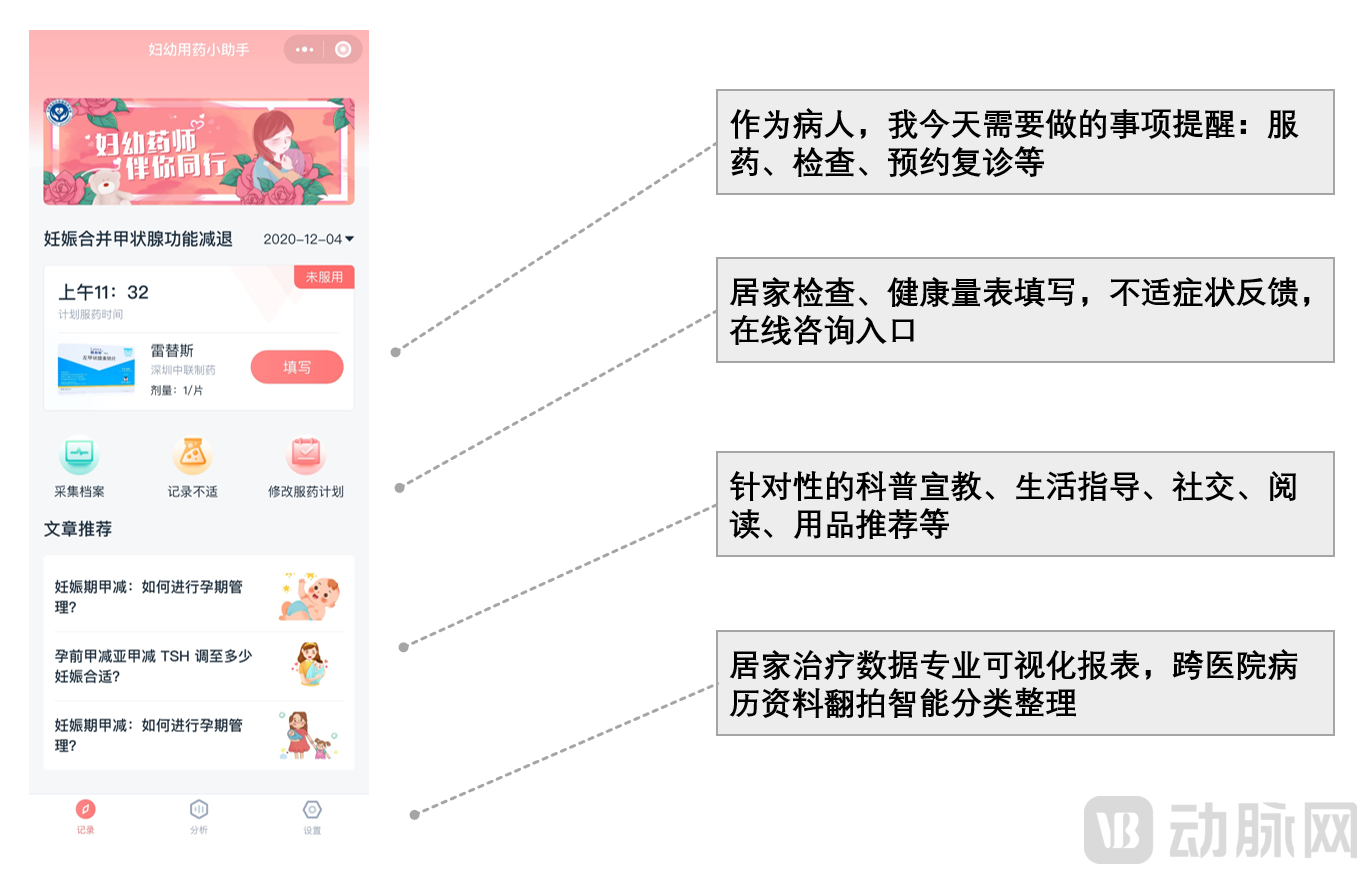 Figure: Example of the Delu Technology Patient-Side Mini Program
When it comes to smart pillboxes, Chen Lizhi shared with the author some stories from the design process.
During his graduate studies and work at Shanghai Changhai Hospital, Chen Lizhi’s research focused on quantitative pharmacology, primarily concerning the use of immunosuppressants following transplantation. The administration of immunosuppressants is akin to walking a tightrope; both excessive and insufficient dosing can lead to serious complications. Through quantitative pharmacology, Chen Lizhi and his colleagues developed an algorithm that predicts blood drug concentrations based on individual patient characteristics, which has proven highly effective.
However, during practical application, Chen Lizhi and his colleagues found that the biggest obstacle was the lack of relatively accurate records of medication administration times.Including some Phase III clinical trials, as well as the currently most prominent real-world studies, the lack of accurate records of out-of-hospital events remains the greatest shortcoming.
To capture data on medication adherence timing, devices such as smart home pill dispensers are required. However, existing products on the market are designed with a purely consumer-oriented mindset, rendering them largely ineffective in clinical settings. Many smart pill dispensers feature multiple compartments, yet fail to hold even a single day’s prescribed medication for a patient. Consequently, Chen Lizhi’s team had no choice but to develop their own hardware.
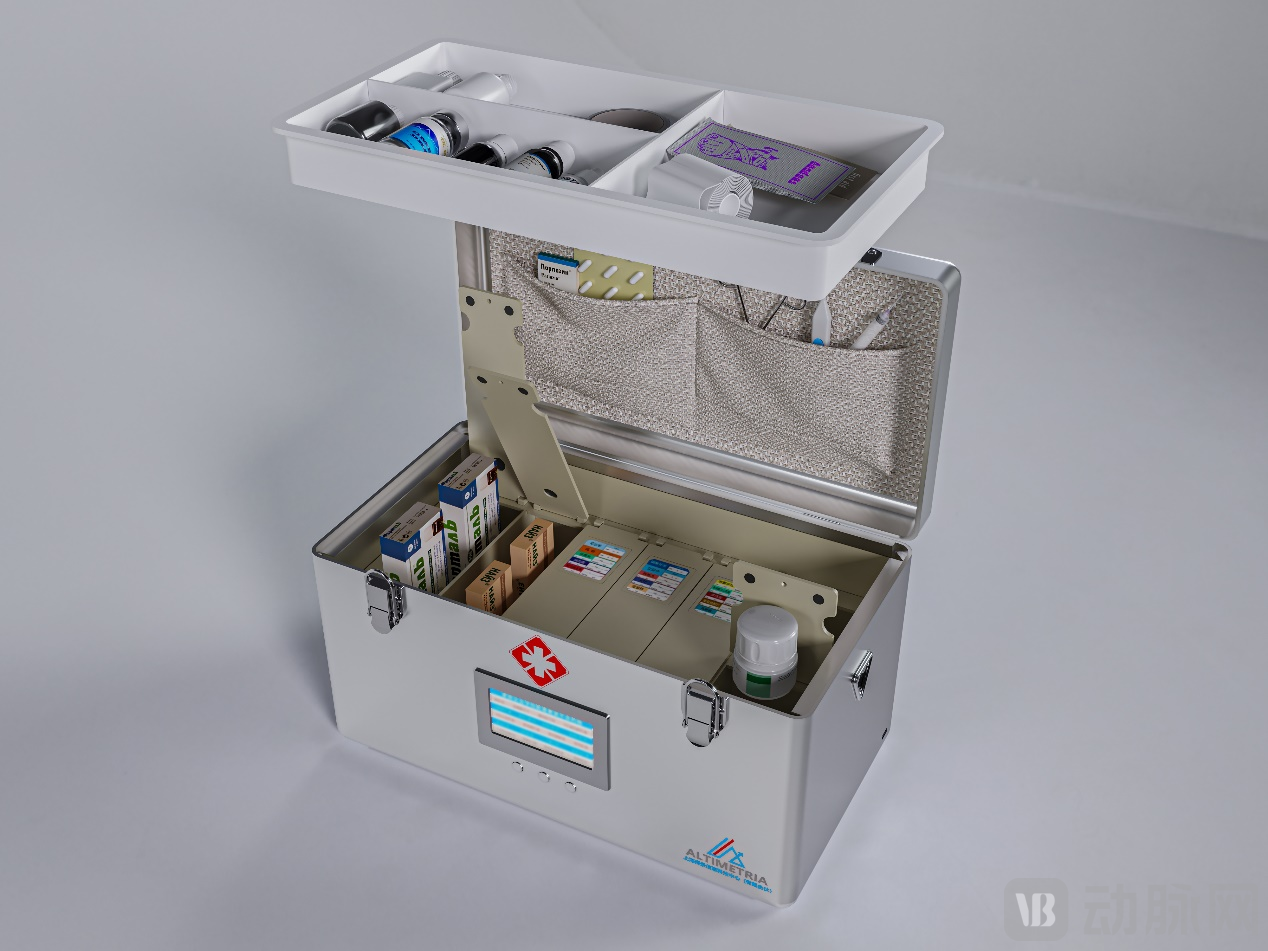
Figure: Delu Smart Medicine Box, designed to store a one-month supply of medications for common chronic disease patients without removing the original packaging, provides category-specific reminders, guidance, and tracking, while also serving as a household medicine cabinet.
“The work undertaken by Delu may not appear particularly ‘glamorous,’ but doing it well requires a strong interdisciplinary team,” said Chen Lizhi. “Our team comprises experts with backgrounds in clinical medicine, clinical pharmacy, clinical trial statistics, natural language processing, and consumer-facing product architecture and development, complemented by practical experience across hospitals, pharmaceutical companies, CxOs, and internet enterprises.“The hospitals we serve previously undertook in-house system development, investing substantial time and financial resources, only to abandon the efforts due to poor usability. This outcome stemmed from the absence of a professional multidisciplinary team and scientifically grounded process management.”
“This may seem like a small and simple matter, but in reality, it involves numerous details that require careful design. From the quality of service, user experience, and scientifically accurate health education reminders on the patient side, to the convenience, ease of operation, and efficient data collection on the hospital side, as well as the robust cloud-based data support, these intricate design elements and the required software and hardware capabilities truly test the quality of both the product and the service,” said Chen Lizhi.“Beyond this, perhaps the greatest challenge lies in the relatively weak institutional drive within hospitals. However, with the recent introduction of new policies on pharmaceutical care services and the establishment of pharmacist outpatient service fees in certain regions, we believe that now is a strategic window to seize the initiative in setting service standards.”
To date, nearly one year after its establishment, Delu Technology has filed five national invention patents, one utility model patent, and several other intellectual property rights, including trademarks and copyrights. Additionally, it has assisted partner institutions in completing numerous intellectual property filings.Our clients include Shanghai Changhai Hospital, Wuxi Maternity and Child Health Care Hospital, Baoshan District Renhe Hospital, Wuhu Hospital of Traditional Chinese Medicine, and many other institutions.Delu is currently preparing for its seed funding round, aiming to expand its team’s service capacity and promote the outcomes of its benchmark projects to more institutions.
When discussing future plans, Chen Lizhi stated that Delu’s short-term focus will be on deepening benchmark projects and rapidly replicating its standardized service model. In the long term, Delu plans to introduce third-party services—such as online follow-up consultations, long-term prescription management, medication delivery, home-use smart medical devices, in-home nursing and cleaning services, and insurance—on top of its service platform.
While providing higher-quality service solutions,Delu Tech aims to build an information channel between healthcare providers and patients, enhancing patient treatment adherence and data feedback through improved services. This data-driven approach further strengthens the service capabilities of healthcare providers, creating a positive feedback loop. “Ensuring that every treatment plan achieves its intended efficacy.”