

TopGen Biotech Achieves Industry-Leading Cancer Testing Volume with Over 5,000 Monthly Orders
“Making precision medicine accessible” is not only a slogan but also the core vision of Shanghai Topgen Biopharm Company Limited (hereinafter referred to as “Topgen Biopharm”), a business development model, and its strategic pathway toward contributing to the national goals of common prosperity and public health.
Shanghai Topgen Biopharm’s core business focuses on cancer genetic testing and personalized medication guidance for chronic diseases. Its operations span more than 30 provinces, municipalities, and autonomous regions across China. The company has established over 40 co-built laboratories and collaborates with more than 1,100 pharmaceutical companies. It has completed nearly one million genetic tests to date, including approximately 150,000 cancer genetic tests, laying the foundation for what is emerging as the largest cancer testing network in China.
According to the latest "2019 National Cancer Report" released by the National Cancer Center, there were nearly 4 million new cases of malignant tumors and 2.33 million deaths in China in 2015. Over the past decade, the incidence rate of malignant tumors has maintained an annual increase of 3.9%, while the mortality rate has seen an annual rise of 2.5%. The scale of expenditure on cancer treatment and its proportion in medical insurance spending continue to grow, placing a significant burden on the nation.
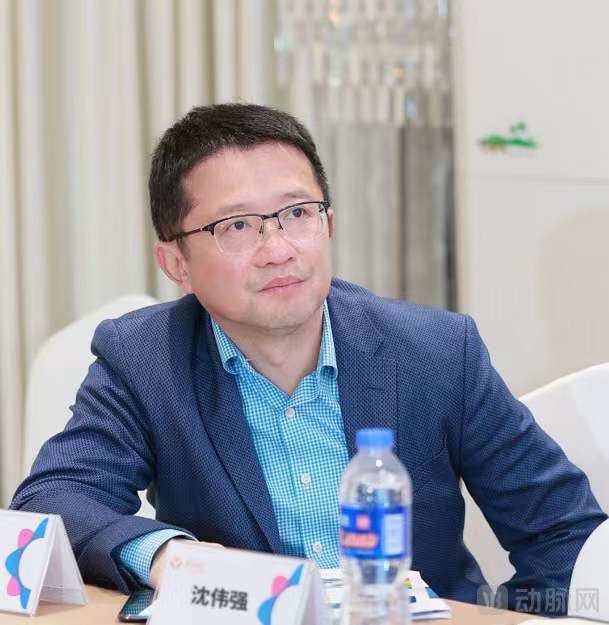
Shen Weiqiang, Founder, Chairman, and CEO of Topgen Biopharm
However, cancer incidence is positively correlated with increased life expectancy; in a sense, the high prevalence of cancer is an inevitable consequence of population aging. In this regard, Shen Weiqiang, founder, chairman, and CEO of Shanghai Topgen Biopharm Company Limited and a participant in the first cohort of the “Huijiu Ivy” Accelerator Program, stated that only by focusing on cancer prevention, treatment, and control can we optimize cancer care expenditures and maximize patient benefits amid the overarching trend of national aging, thereby serving as a critical pathway toward achieving the national goal of “common prosperity and shared health.”
The “prevention, treatment, and control” framework, novel oncology drugs, and genetic testing are inextricably linked. Mr. Shen stated that while new cancer therapies—such as targeted agents, PD-1 inhibitors, and immunotherapies—offer greater patient benefits compared to traditional treatments, genetic testing is a prerequisite for determining the efficacy of these novel approaches.
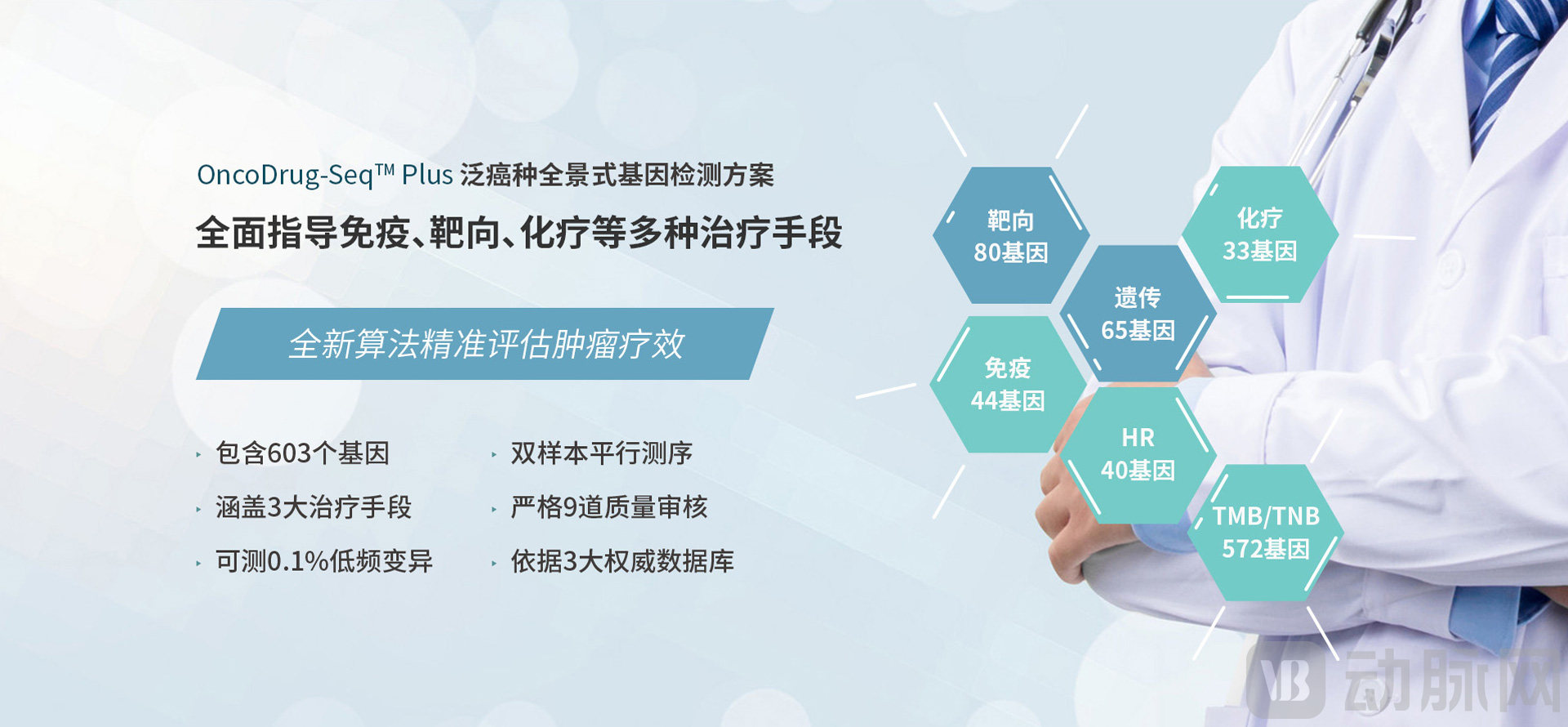
Covering cancer indications for existing new drugs, with over 100 active products; pioneered the first NGS kit for thyroid cancer
Topgen Biopharm focuses on Companion Diagnostics (CDx) and Minimal Residual Disease (MRD) monitoring, which are the most critical assays for the “treatment” and “control” aspects of novel cancer therapies. The former assesses the efficacy and suitability of proposed new drugs, while the latter enables precise monitoring of cancer recurrence and guides management of drug resistance.
Specifically, Topgen Biopharm’s cancer testing products largely cover cancer types for which new drugs are currently available, including common cancers such as lung cancer, gynecological cancers, gastrointestinal cancers, thyroid cancer, melanoma, glioma, hematologic malignancies, and pan-cancer indications. With over 100 active products, the company ranks among the industry leaders in both product diversity and performance.
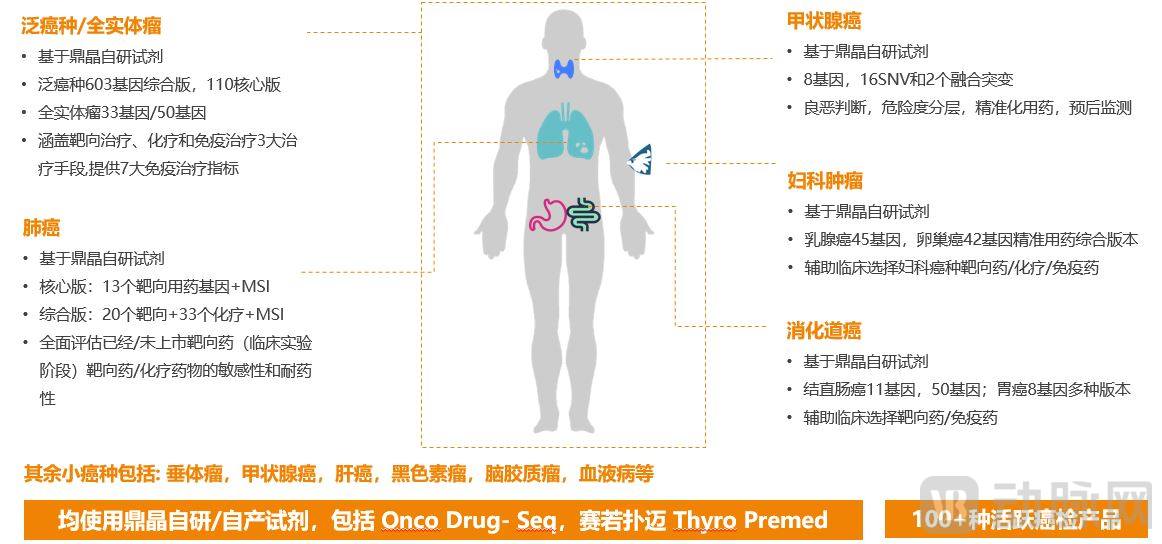
Among the leading companies in cancer genetic testing, each has its strong product lines. Dingjing Biotechnology is at the forefront of the industry in thyroid cancer genetic testing. Its revenue scale, technical indicators, and academic achievements in thyroid cancer detection are all among the top in the industry. The company’s NGS kit for thyroid cancer, which detects 8 genes, 16 SNVs, and 2 fusion mutations, is a domestic innovation. It has already obtained the inspection certificate and is expected to begin enrolling 1,000 clinical trial participants in early 2022, with anticipation of receiving Class III medical device certification by the end of 2022. Additionally, it is reported that the company's first IVD kit to receive Class III medical device certification—a chronic disease-related hyperlipidemia statin medication guidance test—has completed clinical trials involving 1,000 cases and submitted registration applications, expecting approval in early 2022.
Historically, clinical screening for thyroid cancer relied solely on cytological examination via fine-needle aspiration biopsy to determine the benign or malignant nature of thyroid nodules. However, this approach is associated with a high rate of inconclusive results and necessitates regular follow-up biopsies, leading to poor patient compliance and significant time costs. With the support of Topgen Biopharm’s NGS-based multi-gene testing for thyroid cancer, the accuracy of clinical diagnosis for thyroid nodules can be substantially improved, achieving a diagnostic confirmation rate of nearly 86%. This enables physicians to formulate targeted treatment plans for patients at the initial consultation.
Furthermore, Topgen Biopharm’s MRD (Minimal Residual Disease) detection technology for prognostic monitoring in cancer patients achieves a sensitivity of one in a thousand, with 100% reproducibility at this sensitivity level, placing it at the forefront of the industry. The company will soon launch MRD products for lung cancer and gastrointestinal cancers. Meanwhile, Topgen Biopharm is expanding into areas such as gynecological HRD (Homologous Recombination Deficiency), where it holds leading technical reserves.
Billion-Yuan Cancer Genetic Testing Market: Shanghai Topgen Biopharm Holds Over 15% Market Share, with Annual Revenue Reaching Hundreds of Millions of Yuan
In terms of its business model, while Shanghai Topgen Biopharm Company Limited is seeking regulatory approval for its NGS cancer testing kits, its LDT laboratory genetic testing services continue to generate robust cash flow to support the company’s operations and R&D. All high-value NGS cancer test kits used in its LDT business are independently developed and manufactured by Shanghai Topgen Biopharm.
Under the LDT model, Shanghai Topgen Biopharm Company Limited has entered into exclusive cooperation agreements with hospitals, establishing in-house laboratories within select partner institutions to conduct relevant testing services. Approximately 10% of these tests are covered by medical insurance, while the majority of the remaining tests are paid out-of-pocket by patients and collected by the hospitals on behalf of the company. For hospitals without co-established in-house laboratories, samples can be sent via an outsourced model to the company’s external central laboratory for testing and report issuance. This outsourcing network covers more than 1,100 Grade IIIA hospitals across China.
The company’s LDT revenue is of exceptionally high quality, with its NGS technology platform accounting for over 70% of total revenue and large-panel tests contributing more than 30%. Oncology testing collectively represents over 85% of total revenue, and thyroid cancer testing alone has generated millions in revenue for Shanghai Topgen Biopharm.
It is reported that Shanghai Topgen Biopharm Company Limited has experienced rapid revenue growth in recent years, with a CAGR exceeding 60%. Its annual revenue has reached the scale of hundreds of millions of RMB, characterized by high quality. In terms of order volume, the company maintains a monthly average of approximately 5,000 cancer testing orders, ranking first in the industry with a market share of nearly 20%. In terms of order value, due to the characteristics of its settlement model, its market share is approximately 10%, placing it among the top 10 players in the industry.
In 2020, the total market size for cancer genetic testing (NGS + PCR) in China was approximately RMB 7 billion, with the NGS segment accounting for an estimated RMB 3 billion. According to Frost & Sullivan’s research report, the overall NGS market is projected to achieve a compound annual growth rate of over 30% in the next decade. Specifically, the market for cancer companion diagnostics is expected to exceed RMB 50 billion by 2030, while the market for cancer prognosis monitoring could reach RMB 120 billion. However, the current penetration rate of comprehensive cancer genetic testing in China stands at only around 5%. Regarding this phenomenon, Shen Weiqiang, founder of Shanghai Topgen Biopharm Company Limited, a leading enterprise in the industry, provided the following analysis:
From a macro perspective, the adoption rate of new drugs, regulatory compliance of cancer detection LDTs (laboratory-developed tests), inclusion in reimbursement catalogs, and subsequent coverage by medical insurance are all critical milestones in the process of increasing overall market penetration. Encouragingly, under top-level design frameworks, these factors are rapidly evolving in favor of participants in the cancer detection sector. From a meso perspective, a nationwide network for testing products and services serves as an intermediate layer connecting patients with product offerings. From a micro perspective, product performance, diversity, and accessibility constitute the solid foundational support.
Shen Weiqiang, the founder, also noted that nearly half of Topgen Biopharm’s revenue comes from non-tier-1 cities. Its hospital co-construction model focuses on tertiary hospitals in second- and third-tier cities, effectively strengthening the mid-tier market. By combining the high specificity and sensitivity of its products with proprietary technologies such as molecular barcoding, amplification, and bioinformatic noise reduction, and leveraging a pricing strategy that emphasizes broad accessibility, the company has truly made precision medicine “within reach.”
Since 2020, numerous companies in the cancer genetic testing sector have gone public, and primary market financing has remained robust. Shanghai Topgen Biopharm Company Limited also completed its Series C financing in 2020. Regarding the future landscape of the industry, founder Shen Weiqiang stated that the market potential is substantial, reaching hundreds of billions of RMB. Given the integration of its technology with offline services, multiple listed companies are bound to emerge in the capital markets. At present, there is no significant disparity among companies in terms of revenue scale or product diversity, indicating that all players are still on a level playing field.
Currently, Topgen Biopharm is undergoing its Series D financing round and plans to complete its capitalization pathway next year, with both the Hong Kong and mainland Chinese capital markets under consideration. Founder Shen Weiqiang concluded by stating that achieving capitalization is a solid step in the company’s journey to “make precision medicine accessible,” but it is by no means the end goal. With revenues reaching the billions and market valuation in the tens of billions, making precision medicine accessible remains the company’s mission within the trillion-yuan cancer screening market.
About Huijiu Ivy Accelerator Camp
The “Huijiu Ivy” Accelerator is jointly launched by Huijiu Lecture Hall, the Ivy Society, and AstraZeneca. Its operational team is a promoter and practitioner of domestic healthcare entrepreneurship services, with six years of dedicated experience in operating startup accelerator programs.
This program is designed for CEOs of growth-stage startups in the healthcare and wellness sector, creating an open and supportive entrepreneurial “community” that integrates core startup resources—including industry connections, financing, and talent—to ensure founders do not have to navigate their journey alone and can avoid common pitfalls.
The first cohort’s recruitment was completed in just 1.5 months, with 60 high-quality participants selected; both the caliber and size of the cohort have earned industry recognition. Recruitment for the second cohort is about to begin—outstanding entrepreneurs are welcome to join.