

National Mental Health Center Launches Official Website and Industry Leader Secures Over RMB 200 Million in Funding, Signaling New Growth Opportunities in China's Mental Health Sector
On December 2, the official website of the National Center for Mental Health and Psychiatric Prevention and Control was launched. This center is a public institution directly affiliated with the National Health Commission of China and serves as a national-level professional body established in 2021 to specialize in mental health and psychiatric prevention and control. The center’s responsibilities include conducting research on theories, policies, standards, and planning related to mental health and psychiatric prevention and control; carrying out epidemiological surveys, monitoring, and assessments in the field of mental health and psychiatry; and promoting the training of professionals in mental health and psychiatric care.
In fact, the establishment of new specialized institutions is merely one manifestation of the state’s high priority on mental health. In recent years, multiple policy documents, including the Healthy China Action (2019–2030), have provided support and encouragement for mental health services.
However, the opportunities brought by policy are only one side of the story. Mental health care must still confront several long-standing issues: on the supply side, there is a significant shortage of qualified psychological counselors, and services are fragmented with poor continuity; on the demand side, public awareness of mental health issues remains insufficient. Therefore, even with top-level design providing industry guidance, these challenges must be overcome by market participants, and the breakthroughs needed represent precisely where commercial opportunities lie.
So, as the core participants in the industry, how should mental health service providers break through the aforementioned challenges? And what are the industry prospects after overcoming these hurdles? It is understood that Jiandan Xinli (Simple Psychology), which recently completed a new round of financing exceeding RMB 200 million, has carried out extensive practical explorations and achieved profitability at scale. This round of financing was led by Prosperity7 Ventures, the diversified venture capital fund under Saudi Aramco, with increased investment from existing shareholder Changling Capital and participation from New Enterprise Associates (NEA). VCBeat interviewed Jiandan Xinli’s founder and CEO, Jian Lili, and Jiang Xiaodong, Managing Partner of Changling Capital, among other industry insiders, to jointly discuss industry strategies and opportunities.
Psychological counselors are the core force in providing mental health services, with professional qualification certification previously administered by the Ministry of Human Resources and Social Security. However, the lack of practical competence among certified counselors has created a significant gap in the supply of mental health services, thereby undermining the overall quality of care within the industry.
According to statistics, from the launch of the pilot program for the National Vocational Qualification Assessment of Psychological Counselors by the Ministry of Human Resources and Social Security in 2003 until its conclusion in May 2018, the national certification process for psychological counselors spanned 16 years. During this period, more than 4 million person-times participated in training and examinations, and over 1.4 million individuals obtained the National Vocational Qualification Certificate for Psychological Counselors at Level 3 or Level 2. The most significant contribution of the national assessment system was the large-scale popularization of psychological knowledge and the cultivation of a certain number of mental health service professionals urgently needed by society. However, a prominent issue has been that certified counselors generally received insufficient training and lacked practical competency.
At that time, professional qualification certification emphasized standardized examinations and did not mandate supervised practice or clinical supervision. However, for mental health services, which involve significant case-to-case variability, accumulating clinical competence through supervised practice and receiving supervision is particularly crucial. Countries with well-developed mental health service systems, such as the United States and the United Kingdom, have established requirements for both supervised practice and clinical supervision.
For example, certification for psychological counselors in the United States requires obtaining a master’s degree, completing a program accredited by the Council for Accreditation of Counseling and Related Educational Programs (CACREP), accumulating no fewer than 100 hours of supervised practice and no fewer than 3,000 hours of professional practice, and demonstrating adherence to ethical standards.
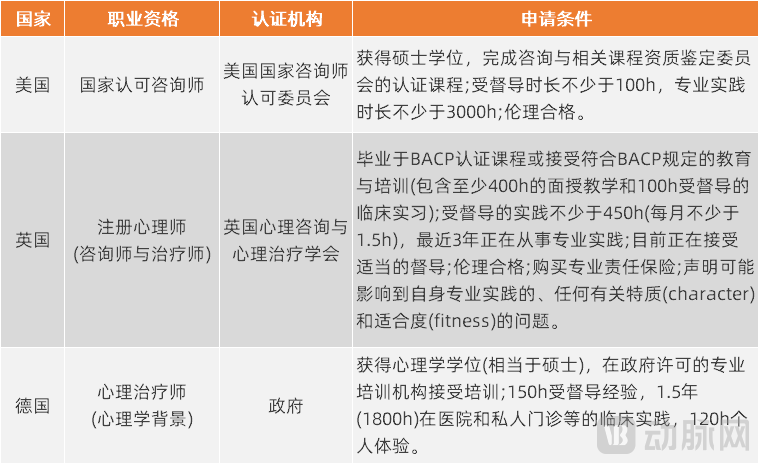
Certification Methods for Psychological Counselors and Therapists in Selected Countries, Source: Chinese Mental Health Journal
Currently, in terms of enhancing service capacity on the supply side and supplementing resources, the Registration System for Clinical and Counseling Psychology Professionals and Institutions of the Chinese Psychological Society has established higher requirements for the practical competencies of psychological counselors. As enterprises, they can achieve this through “self-sustaining capability building.”
Jiandan Xinli’s approach is to launch a “Psychological Counselor Training Program,” drawing on the professional curricula, internship frameworks, and supervision systems of developed countries to enhance counselors’ competencies and optimize service delivery.
Jian Lili introduced that when Jiandan Xinli was founded in 2014, the psychological counseling industry lacked standards and suffered from severe information asymmetry. As a result, professionally trained counselors struggled to gain recognition and lacked the essential support required for clinical practice.
Simple Psychology first established entry standards for psychological counselors on its platform and has continuously iterated and upgraded these standards over the years, implementing multi-dimensional assessments and long-term management of counselors’ professional competencies. Meanwhile, Simple Psychology provides practitioners with practice tools, a professional community, and specialized training. “This approach has not only earned our counselors a strong reputation within the industry but also, through years of data accumulation, given the platform core advantages in cultivating mental health professionals, precisely matching users with appropriate services, and tracking intervention effectiveness.”
In 2017, Jiandan Xinli established “Jiandan Xinli Uni,” a professional psychology education brand. This initiative was launched in response to the lack of degree-based education for psychological counselors in China, as most training institutions offered only coursework without providing effective internship and supervision opportunities.
To enhance service capabilities on the supply side and augment resources, Simple Psychology launched a two-year “Psychological Counselor Training Program” under Simple Psychology Uni, modeled after the professional curricula, internship, and supervision systems of developed countries and regions. The program features phased internships, supervision, and in-person intensive training, while providing graduates with “conditional” full-time internship platforms and practice opportunities, thereby establishing a clear career development pathway for counselors. Furthermore, Simple Psychology Uni collaborates with domestic and international academic institutions, such as the Oxford Centre for Cognitive Therapy and the Cambridge Comparative Cognition Laboratory, to deliver training programs. These educational initiatives target the practical shortcomings encountered by counselors in their professional practice, with the ultimate goal of enhancing counselor competency.
In addition to continuously cultivating talent, Simple Psychology has also vigorously developed digital therapeutics across multiple service scenarios to address the shortage of supply-side resources and make mental health services more accessible to the general public. Jian Lili introduced that, building on years of accumulated professional expertise, Simple Psychology has developed digital interventions targeting various conditions and scenarios, including anxiety, depression, and sleep disorders. Furthermore, the company has established a gamification team to enhance user adherence to these digital intervention tools.
As a digital mental health management platform, Jiandan Xinli not only provides digital assessments, precision interventions, and long-term tracking and management; its advantage lies in integrating “impersonal” digital interventions with online and offline platform services, significantly enhancing the effectiveness and adherence of digital interventions. Furthermore, based on evidence-based research, it continuously cultivates mental health professionals who can effectively collaborate on digital intervention projects. “The purpose of our educational initiatives is to strengthen capabilities at the front end of the industry, ensuring we have sufficient expert and digital resources to provide users with high-quality, full-cycle mental health management services.”
Another obstacle on the supply side is service fragmentation and insufficient systematization. This is mainly reflected in several aspects:
First, there is insufficient linkage between mental health services and psychiatric services. Psychological counseling and other non-medical interventions are provided by social institutions, while psychiatric diagnosis and treatment are conducted in medical facilities. There is no mature referral mechanism between medical and non-medical institutions. For many patients, however, both clinical treatment and counseling are necessary interventions.
“In the early stages of the market, there was a significant gap between mental health services and psychiatric diagnosis and treatment,” said Jian Lili. Jiandan Xinli (Simple Psychology) has been exploring integrated collaboration between psychiatry and psychological counseling to provide users with one-stop services. Over the past few years, Jiandan Xinli has established green channels with public hospitals and physicians across various regions, offering referral services to users in need. In 2021, Jiandan Xinli opened its first psychological outpatient clinic in Beijing, initially addressing local users’ needs for psychiatric diagnosis and treatment. During the same period, the company was also preparing to launch an internet hospital, aiming to create a closed-loop system for psychiatric and psychological services and better support users in comprehensive, full-cycle mental health management.
Second, there is insufficient integration between online and offline services. In recent years, many internet-based psychological service platforms have provided online service channels for psychological counselors and counseling institutions, playing a significant role in improving industry efficiency; however, the convergence of online and offline services remains shallow.
Jian Lili believes that in the field of mental health, people have not only professional needs for psychiatric care and psychological counseling but also widespread public demands for community activities and enhanced well-being. As a service platform, it is crucial to integrate online and offline components—including clinical diagnosis and treatment, psychological counseling, digital interventions, community engagement, support groups, and content—by transitioning from “lightweight popular science education” to “comprehensive, high-touch services.”
To this end, in 2021, Jiandan Xinli (Simple Psychology) launched three mental health service centers named “Jiandan Forest” in Beijing and Shanghai, integrating offline and online platforms to establish a secure mental health service system for users. Within “Jiandan Forest,” multidisciplinary collaboration among psychiatrists, psychological counselors, and group therapists enables the development of effective treatment plans for users. Furthermore, by synergizing with the services, content, and digital interventions offered on its online platform, “Jiandan Forest” provides users with long-term, sustainable, and trackable digital mental health management services.
Third, services lack systematic integration. Currently, when users seek mental health and psychological services, the fragmented nature of service providers often limits them to finding practitioners who offer single-dimensional interventions targeting only a specific “symptom,” rather than providing a comprehensive solution. In other words, service providers intervene solely on the individual issues of the client, while neglecting their environmental context and the individuals with whom they share close relationships within that environment.
“Unlike common physical ailments, individuals with mental health concerns often struggle to identify suitable interveners or intervention methods based on their own knowledge.” Jian Lili cited an example: for instance, when an adult seeks help due to interpersonal conflicts, the underlying causes of this symptom may vary. It could simply indicate a need to improve interpersonal skills, represent an expression of psychological trauma, or stem from a neurological disorder. The platform needs to help the individual understand “what is wrong” with them in order to provide targeted “treatment.”
To deliver precise interventions, Jiandan Xinli has added “Psychological Assessment” services to both its online and offline platforms. Through self-assessments, structured interviews with licensed counselors, and digital recording and tracking management, the service helps users understand their issues and clarify health goals. Based on a comprehensive understanding of each user, it facilitates the formation of personalized care teams and provides effective service content. Furthermore, through professional expertise combined with digital management approaches, Jiandan Xinli offers long-term mental health management to enhance the effectiveness of its services.
It is worth noting that, leveraging years of service experience, Simple Psychology has made substantial efforts in service standardization, digital management, and digital interventions to build a one-stop solution for users. Furthermore, it feeds insights from front-line service back into the training and education of mental health professionals, continuously updating its educational system to cultivate future talent with professional competence and the ability to collaborate using technology and digital interventions.
“Healthy China Action (2019–2030)” points out that public awareness of common mental disorders and psychological behavioral issues remains relatively low, with even greater deficiencies in knowledge of prevention and treatment and proactive help-seeking behavior; stigma persists among some patients and their families.
In 2021, the article “Current Status and Characteristics of Mental Health Literacy among Chinese Citizens,” published in Acta Psychologica Sinica, also indicated that the mental health literacy of Chinese citizens is at a moderate-to-low level. Here, mental health literacy refers to the knowledge, attitudes, and behavioral habits that individuals develop to promote their own and others’ mental health and to cope with mental disorders in themselves and others. Overall, some individuals are unaware of their mental health issues; others recognize the problems but do not believe they can be resolved through professional help; and still others, despite having the intention to seek help, refuse to pursue professional assistance due to stigmatizing attitudes toward mental illness, as well as misunderstandings of and resistance to psychiatric treatment.
Although some have likened depression to a “common cold of the mind” to underscore its prevalence, mental health issues do not, unlike the common cold, readily convey to the public the clear sense that “I am ill.”
According to statistics, the prevalence of depression in China is 2.1%, and the prevalence of anxiety disorders reaches 4.98%, with 16%–17% of the population suffering from various mental and psychological issues. While these figures appear substantial, it is crucial not to overlook the fact that if public awareness of mental health issues does not improve, these large numbers will remain mere statistics. This is because individuals who do not proactively seek external help or whose conditions are not identified by others will not become potential clients for mental health service providers. This also means that public awareness of mental health issues directly influences the user base size of the mental health industry.
In enhancing public awareness, continuous health science communication that aligns with the principles of effective dissemination is the most effective approach.
The newly established National Center for Mental Health and Psychiatric Disease Prevention and Control has designated science popularization as one of its core functions. Within the industry, brands such as DXY Doctor and Jiandan Xinli have emerged, leveraging new media as their primary platform for health education; the former addresses broad public health issues, including mental health, while the latter focuses specifically on mental health.
Taking Simple Psychology as an example, the platform promotes professional psychological knowledge through original content in various formats, including articles, videos, audio recordings, and comics, across its app and social media channels such as WeChat, Weibo, Zhihu, and Ximalaya. This approach not only enhances public awareness of mental health issues on a societal level but also drives monetization and conversion: individuals who recognize their own mental health concerns through this educational content may seek further assistance via Simple Psychology. Currently, the Simple Psychology app has reached 6 million registered users, while its new media matrix has accumulated over 6 million followers.
The "2020 Public Mental Health Insights Report" released by Jiandan Xinli (Simple Psychology) shows that, with the widespread dissemination of mental health knowledge and the impact of the COVID-19 pandemic in 2020, public attention to mental health has increased significantly compared to previous years. Specifically, 78.34% of respondents considered mental health issues important and reported regularly following related news or content, marking a notable increase from 50.5% in 2016. The frequency with which the public browses mental health-related content is also relatively high: 28.23% of respondents stated that they browse such content at least once daily, while 33.78% do so every two to three days.
“Healthy China Action (2019–2030)” sets forth requirements for improving residents’ mental health literacy. It is believed that, with the concerted efforts of industry stakeholders, public awareness of mental health issues will accelerate.
Currently, the B2B market for mental health services is also experiencing rapid growth (in this article, “B2B” broadly refers to non-individual entities such as governments, enterprises, schools, and social organizations). According to statistics from VCBeat, during the two-and-a-half-year period from 2019 to the first half of 2021, the China Government Procurement Network disclosed approximately 96 winning bid announcements for psychological service-related projects (excluding projects with low business relevance), showing an overall upward trend in volume. Among these, government agencies, schools, and hospitals were the primary purchasers. Procurement amounts were mostly in the range of hundreds of thousands of yuan, with the highest exceeding one million yuan.
In recent years, driven by policy guidance and heightened public health awareness, governments, schools, enterprises, and insurance companies have accelerated the development of mental health service systems, creating substantial market growth opportunities. In 2021, Jiandan Xinli (Simple Psychology) entered into strategic partnerships with major health management firms such as iKang Group and Lejian Group, delivering scalable B2B services to large corporations and internet companies.
In recent years, JianDanXinLi has achieved rapid growth by leveraging its precise insights into the industry. Through its strategic layout in online and offline mental health services, education and training, and B-end services, the company has achieved scalable profitability via a diversified payer base, with revenue continuing to grow steadily. Following this round of financing, JianDanXinLi will further upgrade its service capabilities in a systematic manner and advance the digital transformation of its platform.
Aysar Tayeb, Executive Director of Prosperity7 Ventures (the diversified venture capital fund of Saudi Aramco), believes that many countries around the world are currently facing significant challenges posed by mental health issues. With strong national prioritization, Chinese companies have the opportunity to establish a globally leading mental health system by enhancing digital mental health platforms and maintaining scaled-up growth on the supply side.
“In the past, the mental health industry faced two fundamental problems: interventions were initiated too late, and there were too few intervention methods. Over the past five years, public awareness of mental health has increased at least tenfold; however, given the large population affected by mental health issues, there is substantial room for industry growth.” Jiang Xiaodong believes that, in particular, integrating consumer-oriented mental health services with rigorous medical practice, and combining online and offline services to create a comprehensive Online-Merge-Offline (OMO) model, can provide users with long-term psychological care.
Jiang Xiaodong also noted that companies with solid accumulation on the supply side, such as Jiandan Xinli (Simple Psychology), will not only continue to tap into the potential of the consumer (C-end) market but also provide scalable services to more business (B-end) clients as the B-end market grows, thereby creating additional growth drivers.
The establishment of the National Center for Mental Health and Psychiatric Prevention and Control signifies that mental health and psychiatric care are of comparable importance. In the field of psychiatric care, there are already private listed institutions such as Kangning Hospital. With supportive policy environments and endogenous industry dynamics driving growth, how long will it take for a listed company to emerge in the mental health sector? It is worth anticipating.