

Shenzhen SiBionics Secures Nearly RMB 1 Billion in Funding as Its 14-Day, Finger-Prick-Free, Smartphone-Connected CGM Gains Market Approval and Files IPO Prospectus
Sibionics
Medical Device R&D and Manufacturing Company
The products developed by Shenzhen Sibionics Co., Ltd. (hereinafter referred to as "Sibionics")Continuous Glucose Monitoring (CGM) System — Sibionics CGM received its Class III medical device registration certificate on November 4, becoming China’s first continuous glucose monitoring product that offers 14-day use without fingerstick blood calibration and features direct smartphone connectivity.
Recently, Shenzhen Sibionics Co., Ltd. held the product launch event for its Sibionics CGM in Shenzhen.The launch event, themed “Silicon-Based Glucose Monitoring: Composing a Splendid Chapter,” featured a main venue in Shenzhen and 51 offline satellite venues. Dozens of industry experts attended, including Professor Ji Linong, Director of the Department of Endocrinology at Peking University People’s Hospital; Professor Zhao Jiajun from Shandong Provincial Hospital; Professor Zou Dajin from Shanghai Tenth People’s Hospital of Tongji University; Professor Ji Qiuhe from Xijing Hospital of Air Force Medical University; and Professor Li Qiang from Shenzhen University General Hospital.
CGM enables continuous glucose monitoring, providing more comprehensive glucose data compared to traditional capillary blood glucose testing. Recommended for clinical use by multiple domestic and international guidelines, CGM has become a new trend in the glucose monitoring market.
Sibionics CGM is China’s first calibration-free, smartphone-connected continuous glucose monitor, suitable for individuals with type 1 diabetes, type 2 diabetes, prediabetes, and those at high risk.Its characteristics are mainly reflected in three aspects:
First, it boasts high accuracy.According to the results of a multicenter, prospective clinical trial led by Shandong Provincial Hospital and participated in by Sun Yat-sen Memorial Hospital, Sun Yat-sen University, and Shenzhen University General Hospital, its core accuracy metric, the Mean Absolute Relative Difference (MARD), was 8.83%, placing it at a leading level in the industry.
Furthermore, other clinical performance metrics—including the concordance rate against the 20/20% reference criteria, the proportion of data points in Zones A and B of the Clarke Error Grid, the proportion of data points in Zones A and B of the Consensus Error Grid, accuracy of hyperglycemia and hypoglycemia alerts, sensor stability, sensor reproducibility, sensor lifespan, ease of use, and product safety—are no inferior to those of internationally marketed products.
Second, direct smartphone connectivity enables real-time, continuous, and comprehensive monitoring for 14 days.Sibionics CGM can fully store all monitoring data for 14 days and wirelessly transmit it to the user's mobile device via Bluetooth. The data is automatically displayed in real time, eliminating the need for manual scanning.
The device enables continuous 24-hour monitoring throughout its 14-day wear period, representing the longest operational duration currently achievable among comparable products. In addition to real-time glucose data, comprehensive monitoring information provides a more objective reflection of key metrics such as glucose trends, glucose variability, and Time in Range (TIR), ensuring that no hyperglycemic or hypoglycemic events are missed, including even subtle nocturnal hypoglycemia.
Third, enhanced user experience: no finger-prick calibration required, one-step application, and fully disposable.Sibionics CGM is the first domestically produced, fingerstick-free calibration CGM to receive approval. "Fingerstick-free calibration technology" means that users no longer need to perform CGM calibration by regularly collecting capillary blood from their fingertips using a traditional glucometer throughout the 14-day wear period, significantly reducing the pain and infection risk associated with repeated finger pricks.
The applicator used for sensor attachment has also undergone a complete redesign for improved usability, featuring proprietary “one-click application” technology. By simply pressing the button on the top of the applicator, users can achieve automatic sensor insertion, which reduces pain and enhances the safety of device usage. Furthermore, as a fully disposable, single-use product, it further improves the user experience.

Source: Sibionics
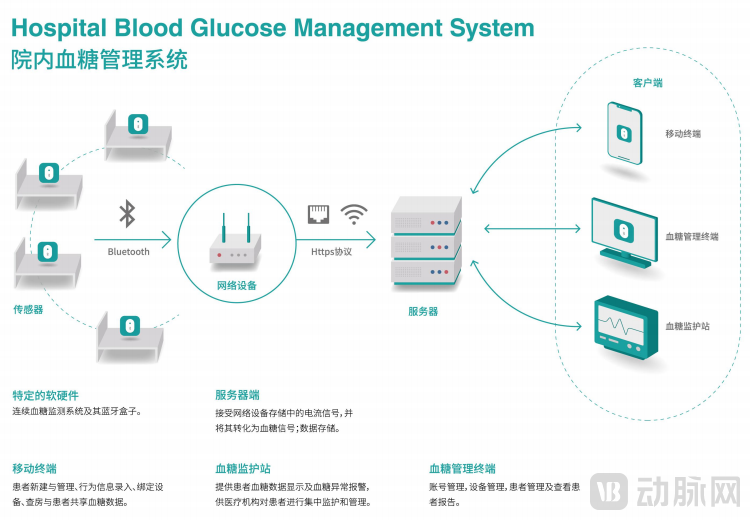
In addition to professional and user-friendly hardware design, Sibionics has also developed customized software based on specific scenarios.The usage scenarios for the Sibionics CGM system include both medical institutions such as hospitals and clinics, as well as self-use by patients at home.
In-hospital settings,A blood glucose management system for healthcare institutions, designed to manage inpatient blood glucose data. It helps physicians gain a comprehensive understanding of changes in patients' conditions, assess the severity of metabolic disorders in diabetic patients, and formulate rational glucose-lowering regimens.
Source: Sibionics
In home settings,Users can monitor blood glucose levels via a mobile application, receive recommendations on diet, exercise, and sleep, and enable remote data sharing and collaborative disease management among family members by authorizing access to relatives’ apps. The personal user app also supports the generation of blood glucose reports compliant with clinical guidelines, facilitating further consultation with healthcare professionals.
Furthermore, the Silicon-based Dynamic CGM can work in synergy with Sibionics’ “Fundus Image-Assisted Diagnostic Software for Diabetic Retinopathy” in health examination settings.This AI-assisted diagnostic product obtained its Class III medical device license in August 2020, making it one of the first AI-assisted diagnostic software programs for fundus examination approved for market launch in China. It has now been upgraded to the all-new Aishitong™ Fundus Screening System, which assists physicians in efficiently conducting comprehensive screening for a wide range of fundus diseases, including pathologies and signs associated with age-related macular degeneration (AMD), hypertension, diabetes, and glaucoma.
Shenzhen Sibionics Co., Ltd. stated that it aims to integrate the technical strengths of its team in hardware development and artificial intelligence algorithm development. While continuously iterating its CGM products to provide users with a high-quality hardware experience, the company leverages AI algorithms and mobile internet technologies. Furthermore, by utilizing the Silicon Base Yinchuan Internet Hospital platform, it provides convenient and professional medical services to patients, their families, healthcare professionals, and other stakeholders across various blood glucose management scenarios both inside and outside hospital settings.
Shenzhen Sibionics, established in 2015, is headquartered in Shenzhen.
When discussing the original intention behind the establishment of Sibionics, Han Mingsong, Executive Vice President of Shenzhen Sibionics Co., Ltd., stated that the team aims to empower the entire medical process—including monitoring, early screening, disease diagnosis, and health management services—with innovative medical devices and technologies.
Shenzhen Sibionics Co., Ltd. holds the corporate vision of: “Guided by innovation, centered on public well-being, and driven by product development, we remain focused and determined in our innovative explorations and create value through persistent advancement.” Since its inception, the company has maintained a distinct orientation toward core, hard-tech capabilities.
In terms of team organization, the company’s core team currently comprises a group of scientists with backgrounds in science and engineering from prestigious domestic and international institutions, including Caltech, the University of Washington, Princeton University, Tsinghua University, and Peking University. The company has over 400 employees, with more than 50% engaged in research and development. Their strong educational backgrounds and industry experience have laid a solid foundation for product development.
In terms of technology and products, Sibionics holds independent intellectual property rights over its core technologies.The company has secured over 100 patented technologies, establishing three foundational technology platforms to empower its products: integrated circuit design (chip design), development processes for active medical implants, and artificial intelligence with healthcare big data.
On the other hand, the company focuses on the research and development and industrialization of active medical implants and medical artificial intelligence,Three of its products have entered the National Special Approval Channel for Innovative Medical Devices, including the Diabetic Retinopathy Analysis Software (approved), the Continuous Glucose Monitoring System (approved), and the Artificial Retina (in clinical trials).Furthermore, Sibionics is currently integrating technologies for the development of active implantable devices and artificial intelligence algorithms to create a new generation of intelligent magnetically controlled capsule gastroscopy systems.
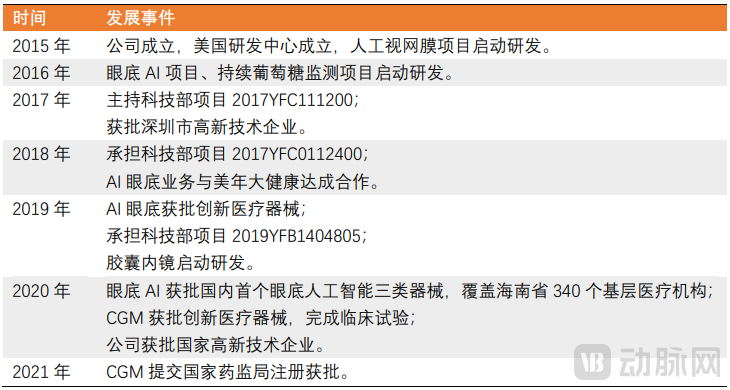
In just five years, three products have entered the national approval channel for innovative medical devices, reflecting the company’s technology-driven nature.
Source: Sibionics
Shenzhen Sibionics was recognized as a High-Tech Enterprise of Shenzhen in 2017 and as a National High-Tech Enterprise in 2020. Since its establishment, the company has undertaken three key R&D projects under the National Key Research and Development Program of the 13th Five-Year Plan initiated by the Ministry of Science and Technology of China, serving as the lead institution for one of them.
Han Mingsong stated that, upholding the philosophy of “Technology, Seeing the Unseen,” Shenzhen Sibionics Co., Ltd. aims to continuously innovate its foundational technologies and develop innovative medical products, thereby benefiting public health with the most accessible costs and superior services.
Diabetes, as one of the fastest-growing health issues in the 21st century, poses a severe threat to global health. According to data from the International Diabetes Federation (IDF), approximately 463 million adults worldwide had diabetes in 2019, and this number is projected to reach 700 million by 2045. The IDF estimates that global annual healthcare expenditures on diabetes amount to $760 billion, with more than 50% of these costs attributed to the treatment of complications.
According to data from reports by Huachuang Securities, China's CGM market was valued at RMB 160 million in 2019, is projected to grow to RMB 3.97 billion by 2025, and is expected to surpass RMB 10 billion by 2030. Based on projections assuming that penetration rates among different patient groups reach peak levels by 2040, the annual cost of CGM usage drops to RMB 3,000, and the patient growth rate remains constant during this period, the market size of China's CGM industry is expected to reach RMB 89.6 billion by 2040.
China is a country with a high burden of diabetes. According to a survey article published online by a relevant research team in the international medical journal BMJ, the prevalence of diabetes in China is 12.8%, affecting approximately 130 million people. Achieving better glycemic control would yield significant benefits for both individual patients and the national healthcare insurance system.
This is also the original intention behind Shenzhen Sibionics Co., Ltd.’s development of the Sibionics Dynamic CGM: to provide diabetes patients with higher-quality blood glucose management products by combining expert experience with advanced technology.
Han Mingsong told VCBeat that, in the future, Shenzhen Sibionics’ continuous glucose monitoring (CGM) system may engage in corresponding collaborations with commercial partners such as Huawei and Lepu Medical. Regarding the future development direction of Shenzhen Sibionics, he stated that while continuing to develop hardware products, the company will leverage data to empower health management and services, thereby enhancing the core competitiveness of both its products and the enterprise.
Since its establishment over six years ago, Shenzhen Sibionics Co., Ltd. has raised nearly RMB 1 billion in funding. It is reported that the company’s Series C++ financing round is nearing completion.
The CGM industry is still in its early stages of development. Faced with a vast population of diabetes patients, it is poised for explosive growth in the future. Continuous glucose monitoring represents a blue-ocean market worth hundreds of billions. In the years to come, high-market-cap industry leaders are certain to emerge; it remains to be seen who will dominate this competitive landscape.