

From Studio to Operating Room: Noitom Powers Digital Transformation in Orthopedic Surgery with HoloSight System
“In my company, there is a laboratory spanning several dozen square meters. We partition it off from the office area with heavy drapes. Within this lab, I possess an entirely new world. With just a few lines of code and several all-nighters spent debugging equipment, motion capture technology enables the virtual world to interface seamlessly with the real world.”
Six years ago, Noitom was invited to appear on a CCTV program. Dai Ruoli, the company’s co-founder and CTO, took center stage in a light purple shirt and simple jeans, recounting the company’s entrepreneurial journey in calm and measured tones.
A modest environment, a few lines of code, all-nighters, and a new world blending the virtual with the real—Dai Ruoli’s simple and straightforward description reveals Noitom team’s dedication to technology and their absolute passion for their future endeavors.
At that time, it had been only three years since the founding of Noitom.
That year, Noitom’s motion capture technology took the stage at the CCTV Spring Festival Gala, powering the debut of “Yangyang,” the first virtual host of the gala, before audiences across China. Behind the scenes in filmmaking, it provided virtual previsualization support for the major Chinese production *Mojin: The Lost Legend*. Going further afield to Hollywood, it contributed crowd simulation and virtual character animation to the acclaimed series *Game of Thrones*, helping the visual effects team win the Emmy Award for Outstanding Special Visual Effects that year.
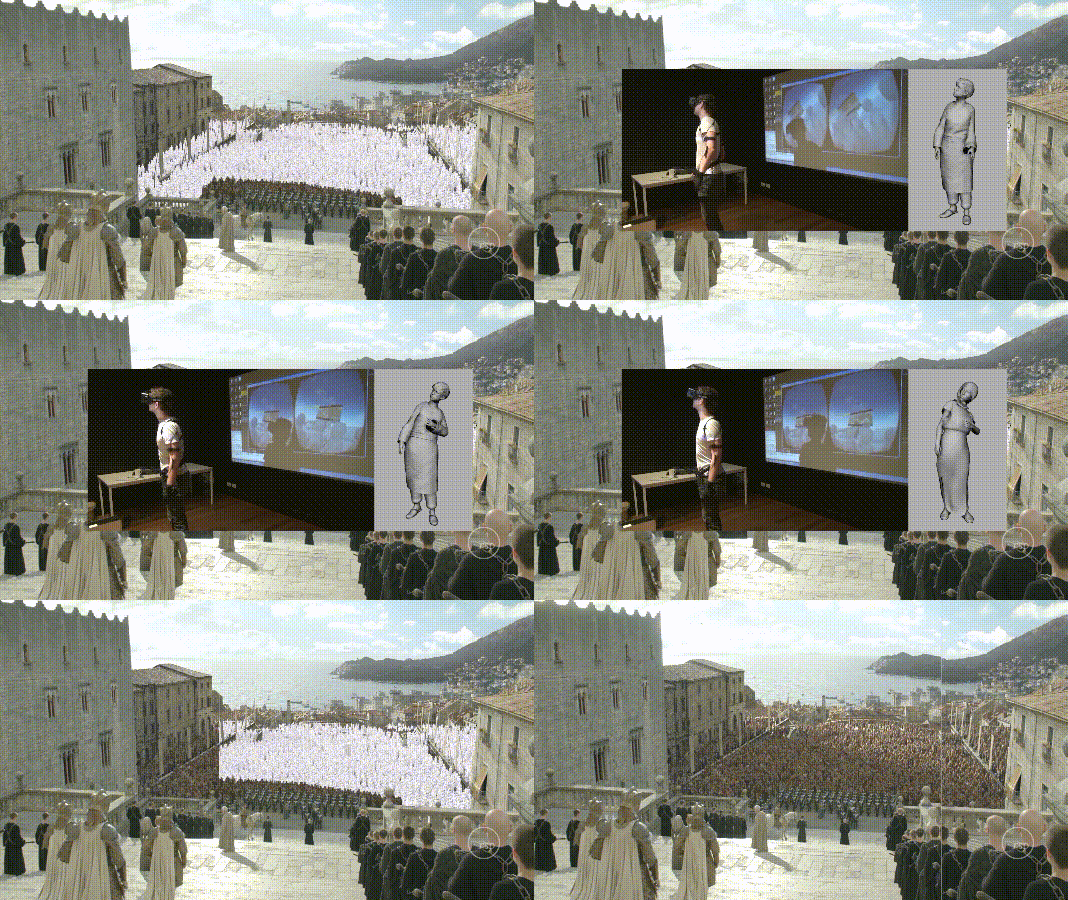
Six years on, Noitom has rapidly developed by leveraging its leading edge in motion capture technology, becoming one of the few innovators worldwide to possess a full-spectrum motion capture technology portfolio and provide full-stack solutions.Not only has it achieved numerous accomplishments, but the laboratory has also evolved from a mere partitioned area separated by cloth curtains into an entire independent zone. Meanwhile, the company’s scale has expanded from its sole base in Beijing to a global presence, with branches and representative offices established in cities such as Shenyang, Sanya, Miami, Los Angeles, and Tokyo.
Turn Around
Alongside breakthroughs in technological R&D, Noitom has been continuously expanding its application domains.
From its initial focus on film, television, and game development and production centered around “studio” environments, Noitom has gradually expanded into diverse sectors such as cultural and pan-entertainment experiences, sports assessment and training, industrial simulation, and virtual instruction. Leveraging its proprietary technology as a core competitive advantage, the Noitom team is steadily pushing beyond its established boundaries.
This year, Noitom achieved a long-standing significant goal: applying its core technological capabilities in the medical field.With a strategic pivot, Noitom ventured into the vast frontier of life sciences, collaborating with top-tier medical expert teams to jointly develop the Holosight “Transparent Orthopedics” Minimally Invasive Intelligent Visualization System.
This is not a rash strategic decision.
Liu Haoyang, Co-founder, Chairman, and CEO of Noitom, told VCBeat:“Since the company’s inception, healthcare has always been a ‘towering edifice’ in our strategic roadmap. Yet this field demands rigorous precision, underpinned by robust technological foundations. Our courage to venture into this vast domain stems not only from the solid technical infrastructure we have built over many years, but also from the vision and support of medical experts.”
At a VR-themed technical exchange,Professor Tang Peifu, Professor Chen Hua, and other orthopedic experts from the Department of Orthopedics at the Chinese PLA General Hospital keenly recognized the immense clinical value of Noitom’s technology in orthopedic applications.
Experts believe that, since Noitom’s positioning and tracking technology can align the positions of virtual objects with those of real-world objects, applying this system during minimally invasive surgery may enable precise perception and monitoring of subcutaneous bones.
Traditional orthopedic surgery has a major pain point: it relies heavily on the experience of orthopedic surgeons.In traditional surgical settings, surgeons cannot directly visualize the patient’s bone anatomy in three dimensions. Consequently, they must rely on strong spatial imagination and extensive experience, performing repeated measurements and comparisons on X-ray images to complete the procedure. Throughout this process, surgical precision is closely tied to the surgeon’s level of experience.
Precise sensing and intelligent analysis of human and object motion are Noitom’s core technologies.Applying the technological expertise accumulated and validated across various fields over the years to the medical sector, and further developing this visualization system, would provide significant benefits to both physicians and patients.
Not only does it shorten surgical duration and reduce procedural complexity, but it also significantly decreases the number of intraoperative X-ray images required in minimally invasive surgeries, thereby lowering the risk of iatrogenic injury to both physicians and patients. More importantly, this visualization system reduces reliance on surgeons’ individual experience, enabling a broader range of doctors and hospitals to perform these procedures and treat patients effectively.
Medical Expedition
Under the guidance of the expert team led by Professor Tang Peifu and Professor Chen Hua at the Department of Orthopedics, Chinese PLA General Hospital, Noitom identified its starting point based on urgent clinical needs through a medical-engineering collaboration approach,Clarified the strategic focus in the healthcare market and established a strategic roadmap for transitioning “Human Digital Twin” technology from research to clinical practice.
Holosight “Transparent Orthopedics” Minimally Invasive Intelligent Visualization System is Noitom’s first core product launched in this field.
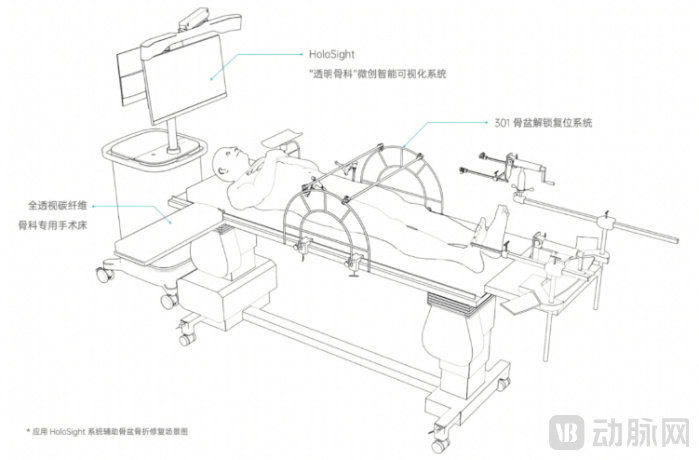
This system not only utilizes high-precision optical positioning and tracking technology combined with mixed reality technology,Real-time display of bone position and posture in 3D model format on the computer terminal. It also assists doctors in surgical planning and formulating surgical plans by flexibly adjusting the position and angle of planning lines.
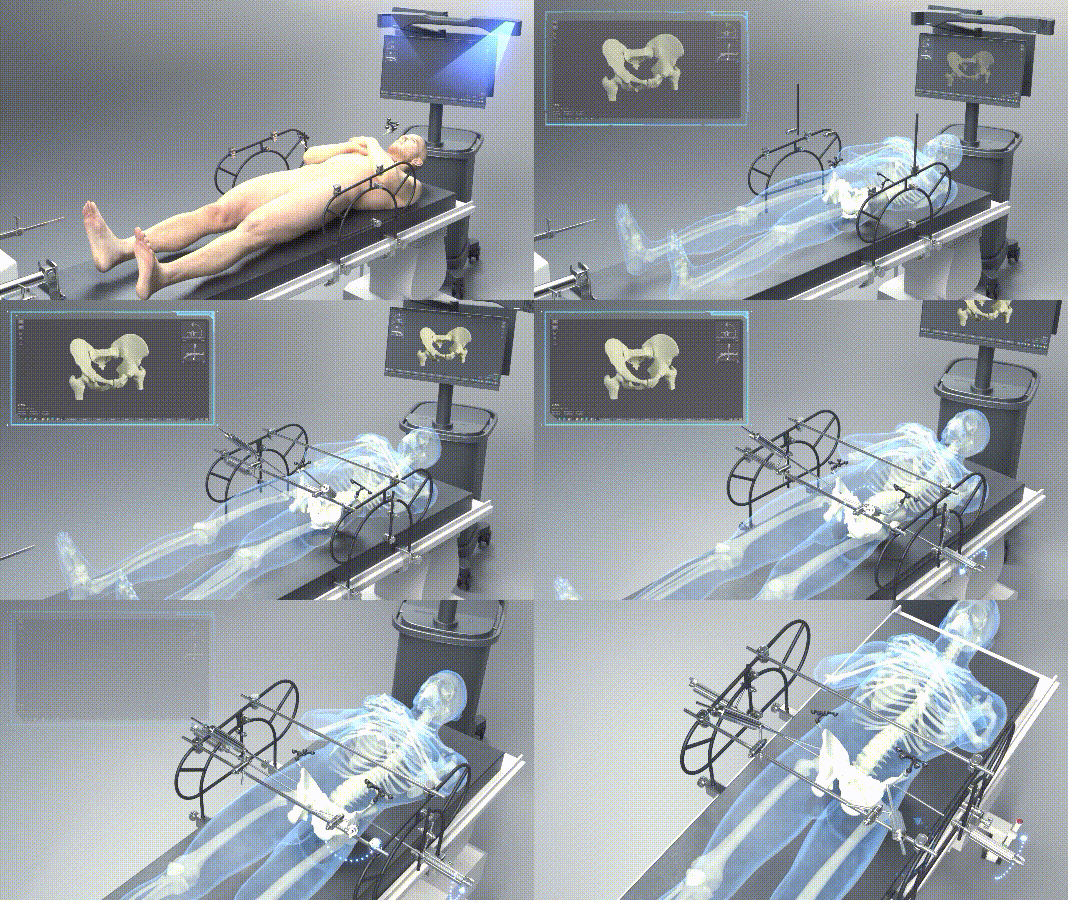
In the closed intraoperative environment, Noitom leverages Mixed Reality (MR) technology to achieve precise alignment of bones, surgical instruments, and 3D digital models. By accurately tracking and displaying in real time the entire process of bone reduction and fixation during surgery, the system enables 3D visualization of the minimally invasive procedure (allowing surgeons to observe the 3D digital model from any perspective), thereby facilitating surgical execution.
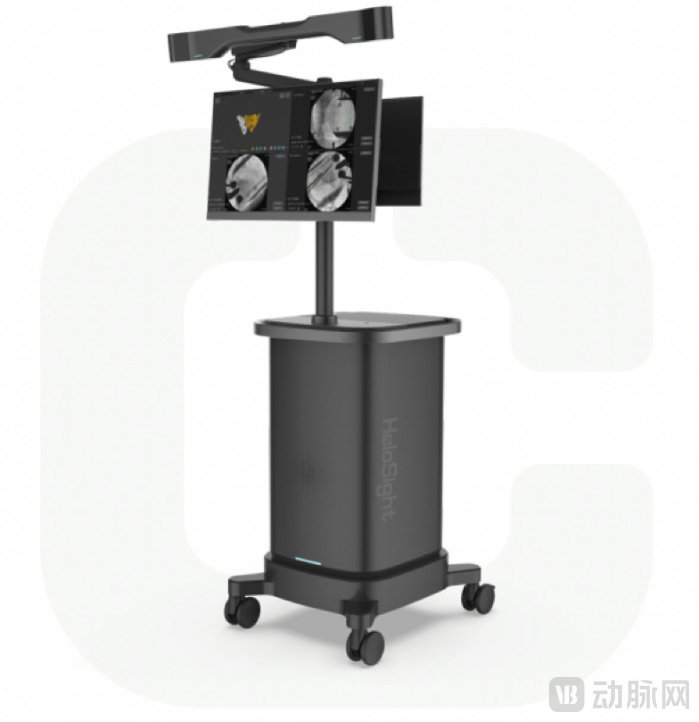
For the screw placement phase in orthopedic surgery, Noitom leverages medical digital imaging and high-precision dynamic tracking technology to display the relative positional relationship between the guide and the bone in real time during the procedure.Assist physicians in planning optimal screw placement trajectories, providing corresponding entry points and angles. Enable real-time dynamic monitoring of the needle insertion path, ensuring perfect alignment between the actual screw position and the planned trajectory.
Moreover, the system is equipped with a remote synchronous observation and surgical guidance system.This system provides a reference for the standardized and compliant execution of surgical procedures, while also facilitating remote observation and learning for junior physicians, thereby shortening the learning curve. Furthermore, the system supports real-time remote synchronization and cross-location connectivity during surgeries, enabling physicians to monitor surgical progress and provide timely intraoperative guidance.
Addressing the pain points of traditional orthopedic treatments, such as significant iatrogenic injury and prolonged surgical duration,Noitom’s “Transparent Orthopedics” solution reduces surgical time to one-third of the original duration and requires only a few intraoperative X-ray images.For physicians, its dynamic 3D visualization guidance system significantly reduces the difficulty of procedural operations.
Noitom is leveraging technology migration to perfectly realize visualized assistance throughout the entire workflow of minimally invasive orthopedic surgery, overcoming the significant reliance on fluoroscopy in current clinical non-invasive or minimally invasive orthopedic procedures, thereby greatly accelerating the adoption of minimally invasive techniques in clinical orthopedics.
Professor Tang Peifu and Professor Chen Hua’s team successfully applied this technology to highly challenging surgeries for complex pelvic fractures, publishing the paper “A Case of Intelligent Monitoring System-Assisted Closed Reduction in the Treatment of Complex Pelvic Fractures.” The study confirmed that this technology enables real-time, precise three-dimensional dynamic monitoring and reduction of fractures while significantly reducing radiation exposure. The system achieves a spatial resolution accuracy of 0.2 mm/500 mm and an angular accuracy of 0.2°.
Through close collaboration between Noitom and its subsidiary, Shenyang Dongya Medical Research Institute Co., Ltd., Noitom’s Holosight “Transparent Orthopedics” minimally invasive intelligent visualization system has obtained medical device registration certification. The system has already undergone clinical validation in multiple hospitals across China and is poised to launch commercially, entering more operating rooms to support surgeons.
Value
The orthopedics sector offers vast market potential, with significant opportunities for both orthopedic surgical visualization systems and orthopedic surgical robotic systems.
According to statistics from Guosheng Securities, the volume of orthopedic surgeries increased from 1.7 million cases in 2012 to 2.9 million cases in 2016, with a compound annual growth rate (CAGR) of 13.8%.
With the deepening of population aging, the volume of orthopedic surgeries is projected to increase to 4.7 million cases in 2021, primarily driven by trauma surgeries, at a compound annual growth rate (CAGR) of 10.9% (Report from China Business Industry Research Institute).
In the face of extensive market demand, technological advancements in orthopedic surgery have their own urgency.The craze for orthopedic surgical robots has emerged as the times demand, but the current market situation is not as optimistic as imagined.
On one hand, factors such as the high learning curve for physicians, low patient awareness, and high surgical fees have kept China’s orthopedic surgical robots in the market introduction and cultivation phase, resulting in low penetration rates.Taking Tinavi, the leading domestic orthopedic surgical robot manufacturer in China, as an example, its orthopedic surgical robots had performed 5,371 procedures by 2019, with a penetration rate of only 0.14%.
On the other hand, although the number of admissions to county-level hospitals in the field of orthopedics has increased significantly in recent years(According to relevant statistics, from 2011 to 2016, the compound annual growth rate (CAGR) of admissions for trauma-related fracture surgeries at county-level hospitals was 14.30%, while the CAGR of admissions for spinal lumbar disc diseases at county-level hospitals was 37.30%.) However, with an average price tag in the tens of millions, orthopedic surgical robots far exceed the financial capacity of primary healthcare institutions.
Faced with the vast market potential and challenges in the orthopedics sector, Noitom has identified the opportunities within and established a clear positioning for its own value.
In Liu Haoyang’s view, the significance of 3D dynamic navigation in orthopedics lies not in making orthopedic surgeries appear “sophisticated,” but rather in enabling ordinary hospitals and physicians to perform surgeries with high quality.
Existing orthopedic surgical robot systems on the market use robotic arms to replace surgeons’ hands. However, for surgeons, robotic arms cannot match the dexterity of human hands. Meanwhile, robotic arms also bring high procurement and maintenance costs, making it difficult for surgical robot systems to be adopted at primary healthcare institutions.
Noitom has chosen a differentiated path: temporarily setting aside expensive robotic arms to focus on orthopedic surgical visualization systems, empowering surgeons’ “brains” and “eyes” to preserve manual dexterity while enhancing the precision of surgical navigation.
More importantly, building on its independently developed 3D visualization technology, which has long been recognized across numerous fields both domestically and internationally,Holosight’s “Transparent Orthopedics” Minimally Invasive Intelligent Visualization System boasts highly competitive cost advantages and a pricing structure that aligns with the needs of primary healthcare institutions, while delivering clinical application value equivalent to that of surgical robots.
Currently, Noitom has further penetrated the primary healthcare market through measures such as training and clinical assistance.Noitom will continue to prioritize the translation of new technologies into clinical applications, aiming to promote affordable healthcare and expand its efforts in this direction.
As Liu Haoyang stated, “True digital orthopedic surgical products should return to clinical needs, collaborate with leading medical experts, rely on the integration of medicine and engineering, build open platforms through independent innovation, and empower primary-care hospitals.”
Retrospect and Outlook
The timeline rewinds once again to six years ago.
That year, Dai Ruoli stood on the stage of CCTV and said,“I aspire to be a ‘porter,’ bringing as much beneficial technology as possible into our daily lives—our clothing, food, housing, and transportation—to the best of my ability. Even if our technologies bring only a slight change to the world, it will still be a shining moment in our brief lives.”
Noitom’s simple and pure dream, fueled by its year-after-year pursuit of technological innovation and day-by-day perseverance and dedication, has undergone a metamorphosis akin to a butterfly emerging from its chrysalis, ultimately becoming a reality.
On Noitom’s official website, we can find its stated mission and vision: Noitom will provide digital solutions tailored to the needs of various industries, and through continuous exploration and innovation, strive to make motion measurement and motion capture more widely accessible technologies, ensuring that every user in need can benefit from them.
From digital media technologies in the studio to the Holosight system now entering the operating room, Noitom has remained true to its original aspiration, continuously advancing and deepening its market penetration.Implementing their strategic plan to transition “Human Digital Twins” from technology to clinical practice.
Noitom Has Taken the First Step—Can the Future Be Far Behind?