

HarmoniGene Launches Liver Screening Product 'Laisining' in Jilin Province Liver Cancer Screening Program
On December 9, 2021, the “Academic Exchange on Early Screening for Liver Cancer and Prevention and Control of Hepatitis, and Training Conference on In-Hospital Screening Management for Hepatitis C” was held at the First Hospital of Jilin University (hereinafter referred to as “Jilin University First Hospital”). In 2022, Jilin University First Hospital will continue to promote the implementation of the National Major Public Health Special Project “Early Diagnosis and Treatment of Cancer,” which it has led since 2019, as well as the Major Public Health Special Project “Jilin Province Liver Cancer Screening Program,” funded by the Department of Finance of Jilin Province and the Health Commission of Jilin Province. As a project supporter, Genetron Health actively participated with its “cfDNA whole-genome sequencing-based multi-dimensional early screening product for liver cancer—Laisining,” leveraging cutting-edge technology to facilitate early screening, early diagnosis, and early treatment of liver cancer in Jilin Province.
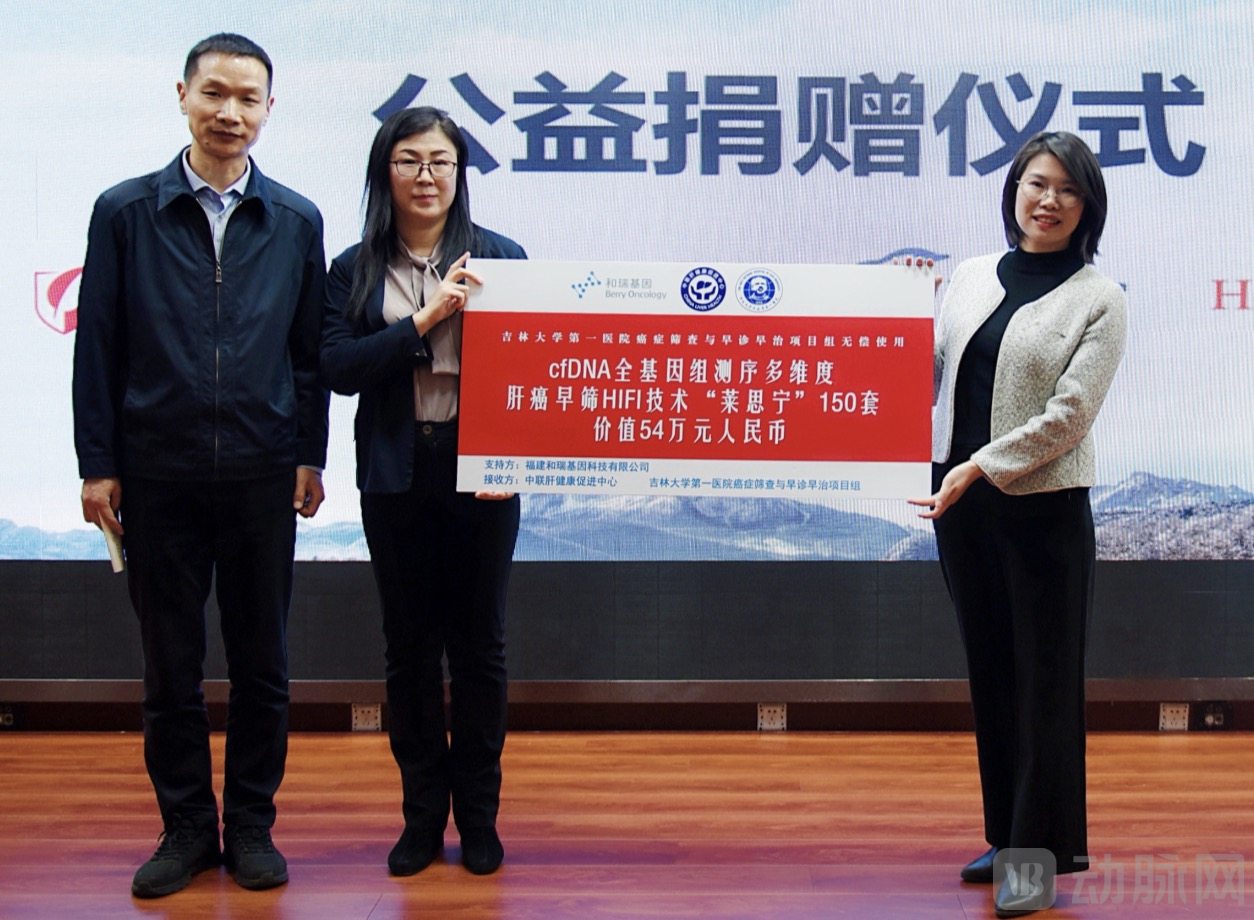
Figure: Huirui Gene Donates Laishining, a Multi-dimensional Early Screening Product for Liver Cancer Based on Whole-Genome Sequencing of cfDNA
The event was moderated by Professor Lv Guoyue, Secretary of the Party Committee of the First Hospital of Jilin University. Attendees included Director Wang Chi from the Disease Control and Prevention Division of the Jilin Provincial Health Commission, Director Gao Yutang of the Changchun Municipal Health Commission, and Director Li Mingyang of the China Liver Health Promotion Center, among other leaders. Invited experts, including Professor Chen Wanqing from the Office of Early Diagnosis and Treatment at the National Cancer Center and Professor Jiang Jing from the Department of Clinical Research at the First Hospital of Jilin University, delivered academic presentations.
“Jilin Province Liver Cancer Screening Program” is one of the key public welfare initiatives implemented by Jilin Province to advance the “Healthy China 2030” strategy. Since its launch in 2019, and with strong support and coordination from health commissions at all levels and centers for disease control and prevention, the program has provided free hepatitis B and hepatitis C screening to residents in grassroots communities through community hospitals and township health centers. It also facilitates early diagnosis and treatment of detected early-stage liver cancer and related conditions, thereby playing a positive role in reducing the incidence and mortality rates of liver cancer and extending patient survival.
To fully leverage the combined efforts of the government, medical institutions, public welfare organizations, and innovative enterprises, and to enable more individuals at high risk for liver cancer to undergo regular and early screening, Huirui Gene will support the advancement of grassroots cancer early screening initiatives in Jilin Province through product donations, technical support, and patient education. By promoting the concept of early cancer screening, we aim to increase the rates of early detection, diagnosis, and treatment of liver cancer, thereby shifting the focus of cancer care toward earlier intervention.
Hepatocellular carcinoma (HCC) is the second most common malignant tumor in China, with a mortality rate surpassed only by lung cancer. In 2020, there were approximately 391,000 HCC-related deaths, accounting for 13% of all cancer deaths [1]. The majority of patients are diagnosed at intermediate or advanced stages upon presentation to hospitals, and the costs associated with HCC treatment have become a substantial public health economic burden.
If liver cancer patients can be detected at the very early or early stage and receive curative treatment, their 5-year survival rate can be significantly improved, national healthcare expenditures reduced, and the burden on patients’ families greatly alleviated. Laisining is the first clinical-grade product for early screening of liver cancer in China to adopt cell-free DNA (cfDNA) whole-genome sequencing (WGS) technology. With stable and reliable performance, it achieves sensitivity and specificity as high as 95.42% and 97.91%, respectively. It can detect very early and early-stage liver cancer 6–12 months in advance, thereby providing patients with a critical window for early diagnosis and treatment. Currently, it serves as an effective complement to existing liver cancer screening methods such as serum biomarkers and imaging techniques.
In his report, Professor Wu Yanhua from the Department of Clinical Research at the First Hospital of Jilin University stated that the “Jilin Province Liver Cancer Screening Project” previously employed a sequential approach. This involved an initial screening for high-risk populations based on participants’ prior serum test results for the five hepatitis B markers and hepatitis C antibody, followed by re-screening using a combination of serological markers and abdominal ultrasound. As of December 2021, over 11,000 individuals had undergone initial serological screening, with more than 6,800 proceeding to free clinical screening. Over the three-year period, the project identified a total of 166 liver cancer cases. The integration of “Laisining,” a multi-dimensional early liver cancer screening product based on whole-genome sequencing of cell-free DNA (cfDNA), enables further stratification, health management, and allocation of medical resources for high-risk individuals requiring clinical diagnosis and treatment, through non-invasive liquid biopsy technology. It is also expected that this molecular testing approach will facilitate the detection of additional early-stage liver cancer cases.
Shen Yingsheng, Secretary of the China United Liver Health Promotion Center, stated in his report that, to date, under the guidance of the National Administration of Disease Control and Prevention and the Chinese Center for Disease Control and Prevention, we have collaborated with multiple organizations to conduct extensive public education and free screening initiatives for the elimination of hepatitis B and hepatitis C. Moving forward, while continuing hepatitis B and C screening efforts, we will place particular emphasis on early screening for liver cancer. We look forward to partnering with representative companies in the cancer early-screening sector, such as Genecast, on more early-screening projects to accelerate the adoption of emerging liquid biopsy technologies in liver cancer early detection. This will help address the limitations of traditional techniques, leverage the advantages of high sensitivity and specificity, and achieve a breakthrough improvement in survival rates among liver cancer patients in China.
1. “Consensus on Secondary Prevention of Primary Liver Cancer (2021 Edition)” Xiao J, et al. Global liver disease burdens and research trends: Analysis from a Chinese perspective. J Hepatol. 2019 Jul;71(1):212-221.