

CANbridge Pharmaceuticals, Founded by Vice Chairman of China Alliance for Rare Diseases, Rings Bell on HKEX as Domestic Rare Disease 'Blue Ocean' Market Emerges
Recently, the National Healthcare Security Administration held a press conference to announce the results of the 2021 adjustments to the National Reimbursement Drug List (NRDL). During the 2021 NRDL price negotiations, seven drugs for rare diseases were included in the list, including the highly anticipated nusinersen sodium injection for the treatment of spinal muscular atrophy (SMA).
During a negotiation session concerning drugs for spinal muscular atrophy (SMA), representatives from the national medical insurance authority and the pharmaceutical company engaged in discussions for an hour and a half. The corporate negotiators held eight internal consultations before both parties finally reached an agreement, successfully including nusinersen sodium injection in the national reimbursement drug list. Earlier this year, the price of this notoriously expensive medication had dropped from RMB 700,000 to RMB 550,000 per vial. Following this intense “heart-to-heart price negotiation,” the company’s offer decreased from an initial quote of RMB 53,680 per vial to below RMB 33,000 per vial, securing its inclusion in the national medical insurance coverage.
Following these negotiations, related topics such as “the sky-high-priced drug costing 700,000 yuan per dose included in the national medical insurance,” “the medical insurance negotiators’ ‘soul-searching’ price cuts,” and “no small patient group should be left behind” rapidly trended on social media.
Today, a rare disease unicorn enterprise founded personally by the Vice Chairman of the Chinese Alliance for Rare Diseases also went to Hong Kong to ring the opening bell. Are rare diseases no longer rare? Has the hundred-billion-yuan blue-ocean market for rare disease drugs arrived? Let us take a glimpse through Canbridge (HKEX stock code: 1228), a pharmaceutical company focused on the field of rare diseases.
CANbridge, founded by Dr. Xue Qun in 2012, is dedicated to the development and commercialization of drugs for rare diseases and specialized therapies for rare cancers, and was among the first companies to implement the Marketing Authorization Holder (MAH) system for biologics.
Since its establishment, CANbridge has completed seven rounds of financing in less than a decade, raising a cumulative total of approximately $270 million. The investor roster includes prominent professional institutions and well-known pharmaceutical companies such as RA Capital, Casdin Capital, Yaly Capital, Qiming Venture Partners, Tigermed, and WuXi AppTec.
As an early investor in CANbridge, Chen Kan, Executive Director at Qiming Venture Partners, stated“The team led by Dr. Xue Qun possesses extensive experience in the clinical development and commercialization of new drugs, with a deep understanding of the biopharmaceutical ecosystems in both China and the United States. CANbridge’s core competitiveness and competitive moat lie in its expertise in the clinical development of rare diseases, as well as its experience and strategic insights into the commercialization of orphan drugs. We hope that CANbridge will emerge as a leader in rare disease treatment in China, establishing an ecosystem for rare disease care and orphan drug R&D, driving the development of the entire rare disease industry, advancing the evolution of regulatory policies and the implementation of medical insurance coverage, and addressing the significant unmet needs of the vast population of rare disease patients in China.”
In addition to being backed by major institutions and well-known pharmaceutical companies, the founder of CANbridge also has an impressive background.
Dr. Qun Xue, the founder, has over 22 years of industry experience in the healthcare and pharmaceutical sectors. Prior to founding CANbridge, Dr. Xue worked at Genzyme Corporation in the United States for ten years, where he held senior executive positions across multiple key departments. As the inaugural General Manager, he played a pivotal role in establishing Genzyme China and led the successful launch of several specialty drugs for hematologic malignancies and rare metabolic disorders, including Fabrazyme and Cerezyme.
In June 2012, Dr. Xue Qun also served as an Investment Partner at Tullis Health Investors, where he was primarily responsible for providing investment advice on portfolio companies and maintaining and enhancing the firm’s brand and market position, thereby accumulating extensive experience in business management and investment operations.
In addition to his role as an entrepreneur, Dr. Xue Qun serves as Vice Chairman of the Chinese Alliance for Rare Diseases, Deputy Director of the Shanghai Rare Disease Foundation, Vice Chairman of the R&D Professional Committee of the China Pharmaceutical Innovation and Promotion Association, and a member of the Leadership Committee of the Peking University Health Science Center–University of Michigan Medical School Joint Institute. Dr. Xue is also a member of the BayHelix Association, a mentor for the Termeer Foundation, and the founder of the BayHelix Boston Chapter.
As a founder with experience in both the clinical development and commercialization of new drugs, and who is well-versed in the biopharmaceutical ecosystems of both China and the United States, he naturally has an in-depth understanding of pharmaceutical innovation.When professionals partner with specialized institutions to handle specialized tasks, efficiency is naturally doubled. In less than a decade, CANbridge has grown into a rare-disease unicorn pharmaceutical company and successfully rang the opening bell on the Hong Kong Stock Exchange today.
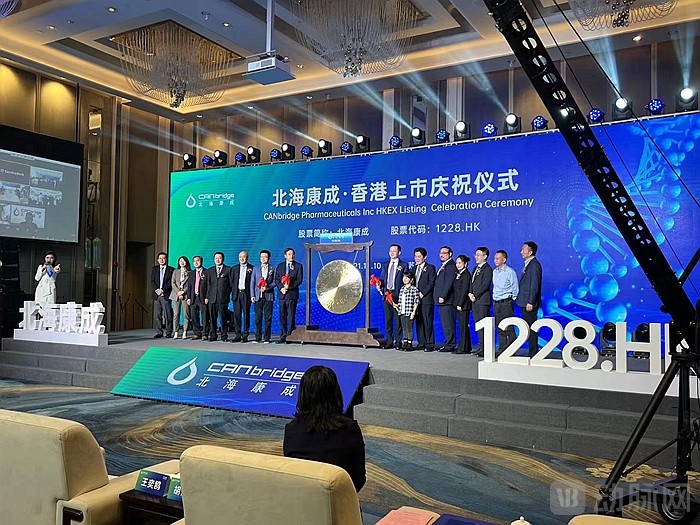
For this IPO, CANbridge is expected to offer a total of 56.251 million shares globally, including 5.626 million shares for the Hong Kong public offering and 50.625 million shares for the international offering, with an additional 15% over-allotment option. The offering price is HK$12.18 per share, and the joint sponsors are Morgan Stanley and Jefferies.
The IPO is expected to raise HK$685 million. After deducting issuance expenses, over 45% of the net proceeds will be allocated to the research and development and manufacturing of the Company’s core product, CAN008, while 24% will fund the major products and candidate products in its pipeline. The specific allocation of funds is as follows:
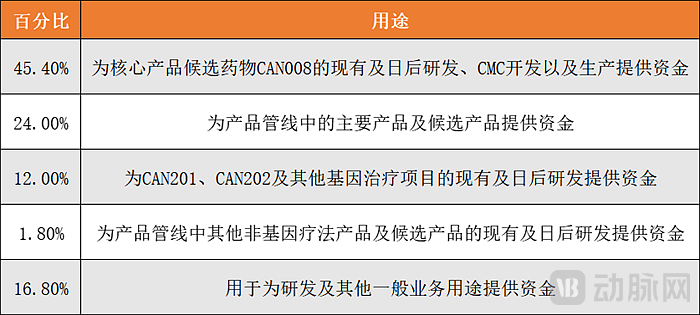
Use of IPO Proceeds, Based on the Prospectus as a Whole
What makes CANbridge’s products so compelling that the company has invested such significant effort in their development? Let us begin by examining the rare disease sector, which is CANbridge’s primary focus.
When it comes to rare diseases, they are not as rare as people might think. The rare disease market is an important segment of the pharmaceutical market.According to Frost & Sullivan data, there are approximately 7,000 rare diseases worldwide, with about 80% being genetic disorders. Three-quarters of cases manifest during childhood, and the mortality rate before age five is 30%. Rare diseases are estimated to affect 3.5% to 5.9% of the global population.
The global rare disease drug market is projected to grow from $135.1 billion in 2020 to $383.3 billion in 2030, representing a compound annual growth rate (CAGR) of 11.0% from 2020 to 2030. China’s rare disease drug market is also expected to surge from $1.3 billion in 2020 to $25.9 billion in 2030, with a CAGR of 34.5%, significantly higher than the concurrent CAGRs in the United States and other regions worldwide (10.5% and 10.0%, respectively).
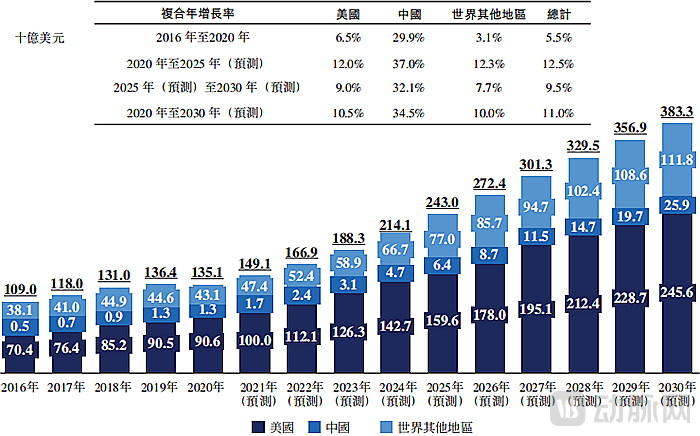
Breakdown of the Rare Disease Drug Market (Source: Prospectus)
However, China’s rare disease drug market accounted for only 0.4% and 1.0% of the global rare disease market in 2016 and 2020, respectively. Given China’s vast population, this market share is disproportionately low. The true “iceberg” beneath the tip represents the core market that rare disease companies will ultimately tap into.
This phenomenon stems from the lack of a comprehensive rare disease ecosystem in China’s current healthcare landscape. Hospitals and physicians often lack the systematic approaches, technical tools, and awareness necessary for diagnosing rare diseases, leading to frequent misdiagnosis and treatment as common conditions. Furthermore, since only a small number of rare diseases are covered by medical insurance in China, this has dampened the enthusiasm of some pharmaceutical companies to invest in the research and development of new drugs for rare diseases.
On the other hand, in terms of the number of recognized conditions, governments and various institutions may set separate thresholds based on local needs, depending on the definition of rare diseases used. Among the 7,000 rare diseases worldwide, China’s “First Batch of Rare Diseases Catalog,” formulated and released in 2018, includes only 121 of them. According to a research report published by the Economist Intelligence Unit in 2020, China is considered the single largest market for rare diseases, with the world’s largest population of rare disease patients.
With the release of China’s first National List of Rare Diseases in 2018, domestic attention to this blue-ocean market has been steadily increasing. The Chinese rare disease drug market and its ecosystem are expected to experience explosive growth over the next decade.
In the face of this explosive growth, what advantages does CANbridge, as a pioneer in developing therapies for rare diseases in China, possess to help it unlock the blue-ocean market for rare diseases in China and even globally? These can be summarized into three key advantages.
1. Product Portfolio Advantages:
13 Pipeline Assets Addressing Unmet Medical Needs in Rare Diseases and Rare Oncology Indications
CANbridge has established a comprehensive product portfolio specifically targeting diseases with validated mechanisms of action, including biologics and small-molecule solutions, to address unmet medical needs in rare diseases and rare oncology indications.
Currently, CANbridge has built a comprehensive pipeline comprising 13 drug assets. The pipeline specifically includes three marketed products, four candidates in clinical development, one candidate preparing for an Investigational New Drug (IND) application, two candidates in the preclinical stage, and three gene therapy products in the lead identification phase. Despite its breadth, CANbridge’s product pipeline remains well-organized, consistently centered on a single theme: orphan drugs for rare diseases.
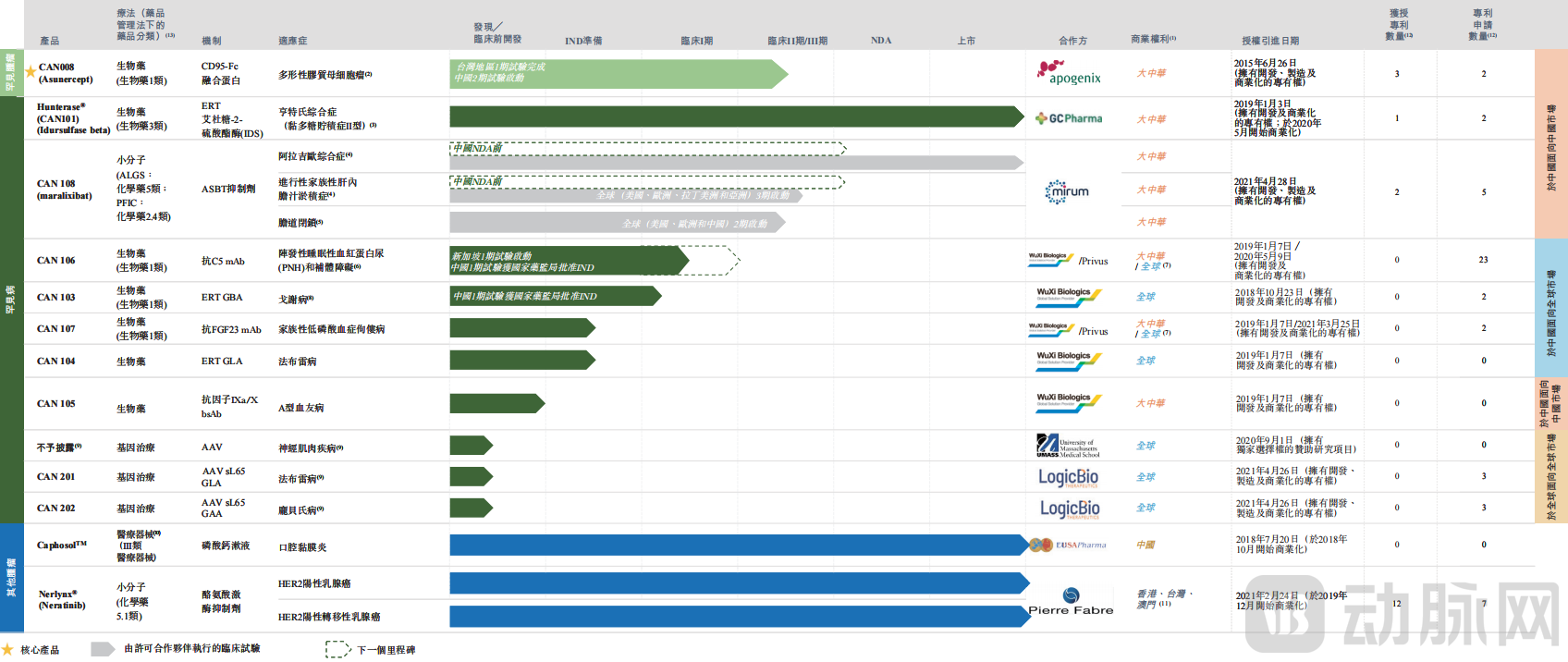
Pipeline Projects, Source: Prospectus
2. Platform Advantages:
Cultivating both internal capabilities and external partnerships, with collaborations established with WuXi AppTec, LogicBio, UMass, and others
CANbridge has established an internal biopharmaceutical platform covering preclinical research, clinical development, and commercialization. Additionally, it has engaged in global collaborations with leading biopharmaceutical companies such as GC Pharma and Apogenix to develop proprietary technologies. The overseas clinical data from these partner companies also facilitated CANbridge’s success in obtaining a clinical trial exemption for CAN101 and clinical trial approval for CAN008 in China.
CANbridge has also established a strategic partnership with WuXi Biologics to develop biologics for the treatment of lysosomal storage diseases (LSDs), as well as other genetic metabolic disorders and complement-mediated diseases. Through collaborations with leading healthcare companies and institutions such as LogicBio Therapeutics and UMass, CANbridge is advancing the development of gene therapies. In the field of gene therapy, CANbridge is currently establishing CMC operations and translational research capabilities in the Greater Boston area by setting up an adeno-associated virus (AAV) process development laboratory and a pilot-scale manufacturing facility.
3. Rare Disease Platform:
Covers the entire spectrum of drug development, from preclinical research and clinical development to treatment and commercialization.
CANbridge has established a rare disease platform that facilitates the rapid advancement of product development and market access in China and globally. This platform encompasses all facets of drug development, including preclinical research, clinical development, treatment, and commercialization. Through integration, the platform oversees every stage of the drug development process, enabling products to accelerate from preclinical research to commercialization.
During the Preclinical Research Phase, CANbridge accelerates its R&D process through collaborations with CRO/CMO partners. CANbridge also plans to conduct early-stage R&D of gene therapies in the United States and is currently establishing an AAV research and process development laboratory in the Greater Boston area, which is expected to open in 2022. In addition, CANbridge plans to establish a China research base in Suzhou for preclinical studies, CMC, and early-stage research, with further expansion as projects advance into later stages. The Suzhou facility is expected to open in 2023.
In the clinical development phase, CANbridge had administered the first dose in its Phase 2 clinical trial in China for first-line treatment of patients with GBM (anti-glomerular basement membrane disease) in October 2021. In February this year, CANbridge initiated a Phase 1 clinical trial of CAN106 in healthy volunteers in Singapore, and obtained IND approval from the National Medical Products Administration (NMPA) for its Phase 1 study in PNH (paroxysmal nocturnal hemoglobinuria) in July 2021. Leveraging overseas data from the Phase 2 study of CAN008 completed by its partner Apogenix, CANbridge also obtained NMPA approval to conduct a Phase 2 clinical trial in China, with the first patient dosed in October 2021.
in terms of production capacity and manufacturing,, CANbridge has accelerated its progress through collaborations with third parties such as WuXi Biologics, GC Pharma, and LogicBio Therapeutics. In addition, the manufacturing facility built by the company in Suzhou features multiple production lines, primarily dedicated to supporting the production of CAN008 and other pipeline products.
In terms of commercialization, CANbridge has established its main operational centers in Beijing and Shanghai, with additional offices across other regions of China. Currently, CANbridge has formed a commercialization team for its late-stage drug candidates, which can be rapidly expanded to over 300 members within the next five years in line with business growth, thereby achieving comprehensive coverage of China’s rare disease market.
Given these advantages, how is CANbridge faring in its current development? Let’s take a closer look:
In the field of rare diseases, CANbridge has seven biologics, small-molecule products, and product candidates for the treatment of Hunter syndrome (MPS II) and other lysosomal storage disorders (LSDs), complement-mediated disorders, hemophilia A, metabolic disorders, and rare cholestatic liver diseases, including Alagille syndrome (ALGS), progressive familial intrahepatic cholestasis (PFIC), and biliary atresia (BA).
In addition, among CANbridge’s three marketed rare disease products, its first commercialized rare disease product, Canalsum® (CAN101), is the first and only approved enzyme replacement therapy (ERT) for the treatment of MPS II (mucopolysaccharidosis type II) in China.
MPS II is an X-linked recessive lysosomal storage disorder caused by insufficient or absent activity of iduronate-2-sulfatase (IDS). In patients with MPS II, glycosaminoglycans (GAGs) accumulate in nearly all human organs and tissues. This accumulation of GAGs leads to cellular engorgement, organomegaly, tissue damage, and dysfunction of organ systems.
Patients are asymptomatic at birth, with initial symptoms typically appearing between 18 months and 4 years of age. Patients with the severe form usually die before the age of 25. In other patients, MPS II symptoms may attenuate at any age; these cases are distinguished from the severe form by a slower disease progression, absence of central nervous system degeneration, and longer survival.
Global treatment guidelines and expert consensus recommend enzyme replacement therapy (ERT) as the standard of care, as ERT effectively clears accumulated glycosaminoglycans (GAGs), improves mobility, delays disease progression, and controls symptoms and clinical manifestations (e.g., organomegaly, and decline in cardiac, respiratory, and skeletal function).
Hezris, an enzyme replacement therapy (ERT) drug licensed from GC Pharma by CANbridge, is currently the only ERT approved in China for the treatment of MPS II. With an estimated over 8,000 patients nationwide in 2020, the treatment demand remains significantly unmet; therefore, relevant Chinese authorities have included MPS II in the National Catalogue of Rare Diseases as a target disease category.
Currently, Hairuisi has obtained clinical validation and marketing authorization in more than 10 countries worldwide.
The other two marketed products are neratinib and Kangpushu.
Neratinib is a potent, irreversible tyrosine kinase inhibitor that inhibits tumor growth and metastasis by blocking the pan-HER family (HER1, HER2, and HER4) and downstream signal transduction pathways, and is indicated for the treatment of HER2-positive breast cancer. CANbridge holds the exclusive distribution rights authorized by Pierre Fabre in Hong Kong, Taiwan, and Macau.
Kangpushu is an oral rinse indicated for symptoms such as temporary or persistent dry mouth and throat dryness (reduced salivary secretion, xerostomia). It can be used as an adjunct to standard oral care for the prevention and treatment of oral mucositis caused by radiotherapy or high-dose chemotherapy. Kangpushu has demonstrated favorable clinical efficacy and safety data in the prevention and treatment of oral mucositis and has been approved for marketing in 48 countries worldwide. CANbridge holds the exclusive commercialization rights for the Greater China region, licensed from EUSA Pharma.
In the field of rare tumors, CANbridge is developing its core candidate, CAN008, for the treatment of glioblastoma multiforme (GBM). GBM is a rapidly growing malignant glioma that arises from the malignant transformation of glial cells or their precursor cells, which support the health of neurons in the brain. It is the most common type of malignant glioma in adults.
Approximately 45% of gliomas are glioblastoma multiforme, classified as Grade IV (the most severe) astrocytomas—the most common and aggressive form of brain cancer. In these tumors, a majority of cancer cells are actively proliferating and spreading at any given time. The global five-year survival rate is approximately 5.5%, while in China it is below 5%.
According to data from Heffernan and Sirianni (2018) and Cheng’s study (2020), nearly all nervous system cancers are brain cancers. Glioblastoma multiforme (GBM) accounted for 46.6% of the total incidence of brain cancer in China, reaching 54,700 cases in 2020, with a compound annual growth rate (CAGR) of 2.0% from 2016 to 2020.
Given factors such as the growing aging population in China, ionizing radiation, and air pollution, the number of new GBM cases is projected to rise to 59,800 in 2025 and 64,400 in 2030, with compound annual growth rates of 1.8% and 1.5%, respectively.
To address this challenging and substantial market, CANbridge rapidly established the CAN008 pipeline. In 2018, CANbridge completed Phase I clinical trials of CAN008 in Taiwan. Supported by clinical data obtained from prior overseas studies, the company successfully bridged CAN008 to Asian patients with newly diagnosed glioblastoma (GBM).
Currently, CANbridge has obtained Investigational New Drug (IND) approval from the National Medical Products Administration (NMPA) to conduct a Phase 2 clinical trial of CAN008 as first-line therapy, and administered the first dose in this Phase 2 trial for first-line treatment of patients with glioblastoma multiforme (GBM) in mainland China in October 2021.
The comprehensive layout of the pipeline and the advancement of various R&D initiatives naturally require substantial investment.
CANbridge reported net losses of RMB 218 million, RMB 846 million, RMB 157 million, and RMB 344 million in 2019, 2020, and the six months ended June 30, 2020 and 2021, respectively.
However, unlike other innovative biopharmaceutical companies, CANbridge possesses a certain “self-sustaining capability.” Its revenue is primarily derived from the sales of three approved and marketed products: CAN002 (Kangpushu), neratinib (CAN030), and Hairyis (CAN101). The revenues generated from these three commercialized products amounted to RMB 1.5 million, RMB 12 million, RMB 1.9 million, and RMB 12.2 million in 2019, 2020, and for the six months ended June 30, 2020 and 2021, respectively.
Based on the above information, it is easy to summarize that CANbridge has three core channel strategies: introducing orphan drugs that are already available abroad but not yet in China to address unmet needs and drive market growth; developing proprietary products to substitute imported orphan drugs already present in the Chinese market; and developing proprietary products to address unmet needs for rare diseases that remain unresolved worldwide.
Looking ahead, CANbridge will continue to advance preclinical research, clinical development of candidate products, as well as the approval, manufacturing, and commercial launch of its core products, while expanding the commercialization of approved products in China and overseas. We look forward to this rare disease “unicorn” helping to establish an ecosystem for rare disease treatment and orphan drug R&D, driving the development of the entire rare disease industry, promoting the evolution of regulatory policies and the implementation of medical insurance policies, and addressing the unmet needs of the vast number of rare disease patients in China.