

Biaodian Bio: Building Nucleic Acid Biobanks to Tackle Standardization Challenges
In recent decades, the field of biomedical research has witnessed leapfrog breakthroughs, advancing human understanding of disease and health to the molecular level. The application of technologies such as high-throughput analysis and rapid DNA sequencing has enabled the extraction of vast amounts of life-and-health-related information from biological samples, gradually bringing biobanks, as a critical biological application system, into the public eye.
As entities that collect, process, store, and distribute biospecimens and related data for basic, translational, and clinical research, biobanks are of undeniable importance. By providing support for uncovering the causes and manifestations of disease onset and progression, as well as for developing new drugs and diagnostic and therapeutic interventions, biobanks serve as a critical source and key link in realizing translational medicine and precision medicine. Consequently, *Time* magazine has listed biobanks among the “10 Ideas Changing the World.”
Nowadays, the United States, Europe, and international health organizations have all invested substantial funds in building biobanks. China established the Chinese National Immortalized Cell Line Repository as early as 1994, and the launch of the Natural Science and Technology Resource Sharing Platform Construction Project in 2003 further promoted the development of biobanks.
However, the relatively independent construction and management of biobanks, coupled with the lack of a unified standard support system, have led to waste of human, financial, and material resources. This has also hindered the progress of biobank development in China to some extent, resulting in limited corporate interest in this sector.
Suzhou Punctuation Biotechnology Co., Ltd. (hereinafter referred to as “Punctuation Bio”), established in 2017, has chosen this lesser-known direction and innovatively launched the “Origin Nucleic Acid Library” for hospital pathology departments. This system can process various types of collected clinical specimens through standardized methods, with significant differences from conventional biobanks in terms of sample preservation methods and costs.
In this niche sector with few corporate players, how has Punctuation Biotechnology exerted its efforts and achieved growth? What factors have supported its development? In this article, VCBeat seeks to answer these questions through a conversation with Li Yan, founder of Punctuation Biotechnology and a participant in the “Huijiu Ivy” accelerator program.
Standardize Samples at the Source
In recent years, the construction of biobanks in China has witnessed rapid development, with tumor biobanks accounting for a significant proportion. This trend is closely linked to the fact that cancer is one of the most common diseases and leading causes of disease-related mortality both in China and globally.
The high incidence of cancer and the rapid advancement of gene sequencing technology have continued to heat up China’s tumor genetic testing market, exposing Li Yan, who works in this industry, to some of its chaotic practices.
Throughout the entire process of tumor genetic testing, preliminary specimen collection serves as the foundation for project implementation. However, most hospitals primarily outsource tumor genetic testing to third-party diagnostic laboratories, where standardized requirements for procedures such as sample collection and transportation are lacking, indirectly leading to certain non-compliant practices.
It is precisely for this reason that Li Yan sought to delve into the standardized and normalized preparation of biological samples, ensuring from the source that testing quality is controllable and verifiable. Against this backdrop, he officially founded Punctuation Biotechnology in 2017.
The ability to venture into this largely unexplored field is clearly underpinned by the team’s solid professional background and accumulated expertise.
It is understood that prior to founding Punctuation Biotechnology, Li Yan not only possessed experience in product design and market development within the fields of tumor genomics and pharmacogenomics—enabling timely responses to market demands—but also had accumulated several years of clinical work experience. Furthermore, most of the other core members of Punctuation Biotechnology have many years of research project experience in biochemistry, molecular toxicology, disease diagnosis, and related fields, thereby fully ensuring the development of Punctuation Biotechnology’s nucleic acid sample bank.
In addition to its accumulated expertise in specialized disciplines, the team’s original commitment to industry development has further strengthened Punctuation Biotechnology’s resolve to deepen its engagement in this field. The Punctuation Biotechnology team has long been committed to providing reliable, cost-effective personalized diagnostic solutions for the millions of cancer patients diagnosed each year, thereby ensuring that patients have the right to information, the right to choose, and the right to shared decision-making throughout the diagnosis and treatment process. To achieve this goal, it is only logical to focus efforts at the source—namely, on sample collection and management.
Building High-Quality, Low-Cost Biobanks Based on Core Sample Processing Technologies
From a procedural perspective, the establishment of a biobank is primarily divided into three major components: standardized sample processing, biological sample storage, and informatized sample management. Among these, standardized sample processing is the most critical and core task in biobank construction.
To prevent sample contamination and degradation during transportation, Punctuation Biotechnology adopts an on-site sampling and processing model. After being converted into nucleic acids using proprietary sample processing technologies, all specimens undergo quality control inspection and are subsequently stored at room temperature in the hospital’s pathology department. Compared with traditional paraffin block archives and conventional biobanks, converting samples into nucleic acid form allows for significantly longer storage stability at room temperature.
Regarding sample storage, the storage method generally has a significant impact on both the viability and quality of samples, thereby determining their potential for subsequent use.
Therefore, conventional biobanks predominantly employ cryogenic storage methods. During freezing, factors such as storage containers, cooling rates, and equipment maintenance must be carefully considered, resulting in persistently high management costs for these biobanks. Although paraffin-embedded tissue block libraries can be stored at room temperature with low maintenance costs, the DNA within the samples gradually degrades over time, inherently limiting their effective preservation duration.
Nucleic acid samples prepared using Punctuation Biotechnology’s processing method have been verified to remain stable for several years, or even over 10 years, at room temperature. This significantly reduces maintenance and transportation costs during storage, while also preventing sample loss caused by repeated freeze-thaw cycles during use.
In terms of sample informatization management, Punctuation Biotechnology has also made corresponding arrangements.
Given China’s large population base, the corresponding scale of pathological sample resources is substantial and highly diverse. Therefore, integrating clinical information, sample data, and testing results through an information management system is clearly indispensable.
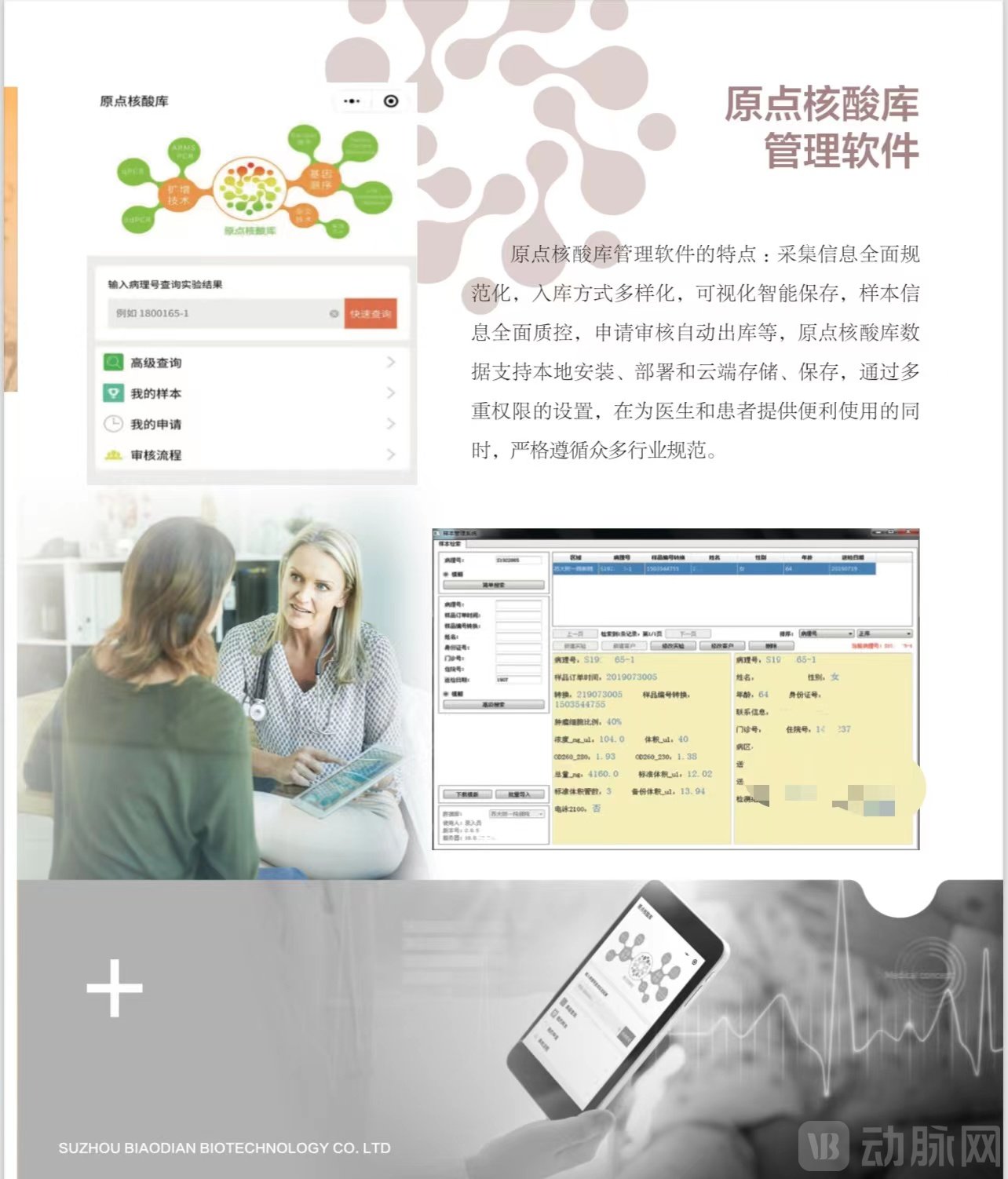
Based on this, Punctuation Biotechnology’s Origin Nucleic Acid Library Management Software enables comprehensive and standardized data collection, diverse sample intake methods, visualized intelligent storage, and thorough quality control of sample information. While providing convenience to hospitals and patients, the software strictly adheres to industry regulations at all times.
Leveraging Technological Platforms to Benefit Multiple Stakeholders
By optimizing every stage of biobank development, Punctuation Biotechnology delivers benefits to multiple stakeholders.
From the patient’s perspective, standardized processing and management of specimens enhance the accuracy and reliability of test results while reducing testing costs. Furthermore, nucleic acid sample banks enable multiple aliquots of the same sample to be stored and retrieved on demand, providing physicians with greater flexibility in determining treatment plans.
From the hospital’s perspective, the establishment of a nucleic acid sample bank not only provides sample support for clinical and scientific research but also enhances the level of sample quality control. Furthermore, the operational and management costs of a nucleic acid sample bank are relatively low, helping to avoid energy waste.
Of course, as a service-oriented platform company, Punctuation Biotechnology’s clientele is not limited to addressing the pain points of hospitals and patients; it also provides services to third-party testing companies, jointly promoting the development of the testing industry.
From the perspective of the team at Suzhou Punctuation Biotechnology Co., Ltd., the Origin Nucleic Acid Library serves as the foundational cornerstone for the company’s future development. Ensuring the accuracy of genetic testing at its source, overcoming significant challenges, and safeguarding clinical diagnosis and treatment constitute the team’s mission and responsibility, as well as their starting point.
Looking ahead, Punctuation Biotechnology has set clear objectives. The company will intensify its marketing efforts for nucleic acid sample banks, extend its services to target tertiary hospitals, and establish a nationwide operational platform for nucleic acid biobanking. Furthermore, through academic promotion, the establishment of expert consensus, and multi-stakeholder collaboration to formulate industry standards, Punctuation Biotechnology aims to leverage its technical advantages in sample processing to become the most professional specialist in tumor sample processing.
Meanwhile, Punctuation Biotechnology will continue to increase its investment in R&D, bringing more high-quality sample processing and management technologies to market. To align with its current development plan, the company currently requires financial support to accelerate technology development and the rapid expansion of its market channels.
About the “Huijiu Ivy” Accelerator Camp
The “Huijiu Ivy” Accelerator Program is jointly launched by Huijiu Lecture Hall, the Ivy Society, and AstraZeneca. Its operations team is a pioneer and practitioner in domestic health entrepreneurship services, with six years of dedicated experience in running startup accelerator programs.
This initiative targets CEOs of high-growth startups in the healthcare and wellness sector, fostering an open and supportive entrepreneurial “community.” It integrates core startup resources—including industry networks, financing, and talent—to ensure founders do not have to navigate their journey alone and can avoid common pitfalls.
The first phase of recruitment was completed in 1.5 months, with 60 high-quality participants selected; both the quality and quantity of participants have been widely recognized by the industry. The second phase of recruitment is about to begin, and outstanding entrepreneurs are welcome to join.