

Scaling Challenges and Product Selection Dilemmas: How to Overcome Key Hurdles in the Synthetic Biology Industry?
Since the turn of this century, synthetic biology has experienced both moments in the spotlight and periods of decline from its once-exalted status. In recent years, with the continuous emergence of high-throughput sequencing and gene-editing tools, the application boundaries of synthetic biology are being constantly expanded. Meanwhile, it is also evident that synthetic biology presents potential windows of opportunity for social and economic benefits.
Addressing the industrialization challenges of synthetic biology and the future development of platform models, the 2021 China Renaissance Healthcare and Life Sciences Leaders Summit was honored to invite young, capable pioneers and entrepreneurs in the field to jointly discuss the mission inheritance and future prospects of synthetic biology.
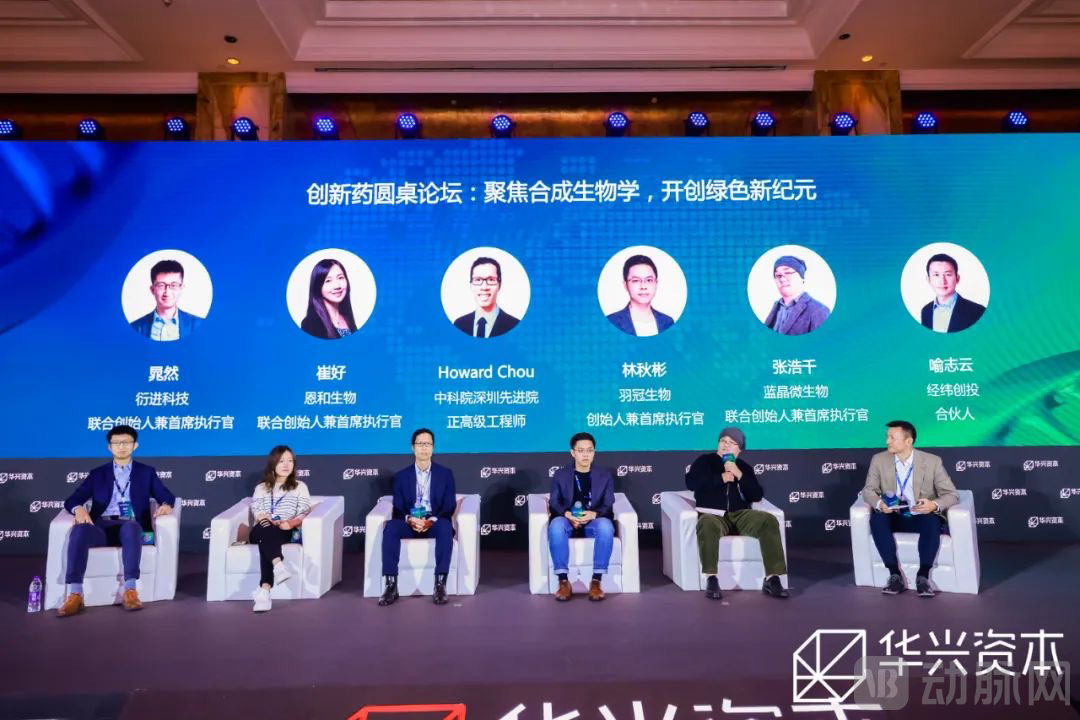
Forum Guests:
Chao Ran | Co-founder and CEO of Yanjin Technology
Cui Hao | Co-founder and CEO of Enhe Bio
Lin Qiubin | Founder and CEO of Yucrown Bio
Zhang Haoqian | Co-founder and CEO of Bluepha
Howard Chou | Senior Engineer, Shenzhen Institute of Advanced Technology, Chinese Academy of Sciences
Forum Moderator:
Yu Zhiyun | Partner at Matrix Partners China
Yu Zhiyun:Let us begin by reviewing the history and schools of thought in synthetic biology. Initially, there were three main groups: one focused on DNA synthesis, another on genetic circuits—which included some researchers who crossed over from electrical engineering—and a third dedicated to metabolic engineering. The field of synthetic biology has since made significant strides. First, we would like to invite our guests to provide an overview of synthetic biology. Has the concept of synthetic biology seen any recent expansions? Which school of thought do you align with more closely?
Chao Ran:Synthetic biology is often understood in a broad sense as the use of biological systems to synthesize specific compounds. In essence, however, synthetic biology is a methodology—an engineered approach to life science. It applies engineering principles of modularity and standardization to establish a series of abstraction layers for biological systems and their manipulation, thereby standardizing complex problems and deconstructing intricate biological systems in an assembly-line fashion. Our company aligns with this definition of synthetic biology by developing foundational tools to empower this methodology. We primarily leverage robotics, AI algorithms, synthetic biology, and high-throughput molecular biology to acquire data and perform high-throughput engineering of microbial genomes, enabling the production of high-value-added compounds. Ultimately, our practical applications lie in bio-chemical manufacturing, which involves metabolic engineering and fermentation engineering.
Cui Hao:I believe that synthetic biology entails the engineering of biological systems, encompassing a broad scope that extends beyond biosynthesis itself. Most members of our team come from industry, sharing a similar understanding of this field and recognizing its need for extensive interdisciplinary support. At the foundational level, enhancing the engineering rigor of biological systems is essential, making informatics and large-scale computational capabilities indispensable; consequently, the overall technical requirements are quite demanding. Furthermore, we are fully aware of the inherent uncertainties in biological systems, and thus aim to address many challenges through high-throughput experimental approaches. Meanwhile, we place significant emphasis on the quality and throughput of the resulting data, as well as on whether these data can truly facilitate effective learning and model optimization.
Howard Chou:I believe that the field of synthetic biology has always been driven by a mission: to rationally design organisms and create new life forms using standardized, engineering-based technologies. This is also the core philosophy we uphold at the Shenzhen Institute of Advanced Technology. Our research primarily focuses on three directions: first, addressing energy challenges; second, tackling issues related to new materials; and third, therapeutic applications. We consider these three areas to be critical societal challenges that require solutions, not only within synthetic biology but across various other fields as well.
Lin Qiubin:Synthetic biology differs from traditional biology in that it predominantly adopts a “bottom-up” approach to studying biological systems—namely, designing and creating functional biological systems based on our understanding of biology. This aspect is what I find most compelling about synthetic biology. Our company takes a distinct path from conventional synthetic molecule-based approaches; we are engaged in the redesign and engineering of various pathogenic microorganisms to develop innovative therapeutics for infectious diseases and cancer, with the aim of addressing challenges that traditional biopharmaceuticals cannot resolve through the means of engineering biology.
Zhang Haoqian:The concept of synthetic biology emerged around 2000 and gained significant traction in the United States starting around 2007. As the term “synthetic biology” can be somewhat difficult to grasp, a newer expression—“engineering biology”—has been introduced to effectively encapsulate its meaning. Here, “engineering” denotes standardization, mathematical modeling, and data analysis; applying these principles to the design and modification of biological systems constitutes synthetic biology. We have observed an interesting trend: over the past three decades, traditional petrochemicals have failed to deliver any new materials at scale. Meanwhile, with societal development, demand for new materials continues to expand across numerous sectors, including consumer goods, healthcare, and electronics. Recognizing this as a promising opportunity for innovation and entrepreneurship, we have made the design, development, and manufacturing of novel molecules and materials using synthetic biology our primary focus.
Yu Zhiyun:Like any emerging industry, synthetic biology has experienced its ups and downs as an industrial sector. Take Amyris, for example: founded 18 years ago, the company initially aimed to produce biofuels but found itself in a precarious position. It was only in the past two years, by pivoting into fine chemicals such as food ingredients and fragrances, that it managed to turn things around. This raises two questions: First, what technical barriers must synthetic biology companies overcome to transition from laboratory research to industrial-scale production? Second, how should product candidates be selected, in the opinion of our panelists?
Zhang Haoqian:Translating laboratory research achievements into commercially viable products is highly challenging. The laboratory phase addresses only 30% or even less of the issues involved in product commercialization, with the remaining 70% concentrated in three other areas: manufacturing processes, engineering, and market adoption. We believe these three elements are intrinsically interconnected.
In terms of process development, for instance, a company in the same clean energy sector proceeded with large-scale plant construction before its manufacturing process was fully validated, which severely hampered its subsequent growth. Similarly, with biosynthetic polymers, issues may not be apparent at the upstream stage; however, after downstream processing, it becomes evident that monomers produced via biological methods differ from those obtained through traditional chemical synthesis, resulting in final products whose quality fails to meet customer requirements.
Engineering challenges are unique to Western companies. For U.S. firms, scaling up production and manufacturing is heavily constrained, not only by a lack of production factors but also by limitations in talent, energy, and other resources.
In terms of the market, product selection is the most critical factor. The lifecycle of consumer goods typically spans three to four years, whereas the development of new products in synthetic biology requires approximately five years and an investment of $50 million from start to finish. If the wrong product is chosen—such as one with strong cyclicality or one that becomes obsolete after a three- to four-year trend—the resulting losses can be substantial. Therefore, while many focus their attention and efforts on early-stage strain development, this phase actually accounts for only 30% of the entire commercialization process. The remaining 70% is determined by process development, engineering, and marketing, all of which present significant challenges.
Howard Chou:The greatest challenge in synthetic biology lies in process scale-up. Whether in the United States or China, it is rare to successfully scale a bioprocess from laboratory-scale trials to full production. This is because most professionals in the field come from academic backgrounds without industrial experience, leading to various difficulties during industrialization. While academics are often familiar with strain development, strains typically account for only 5%–10% of the entire product pipeline. Numerous issues arise after fermentation. For instance, how to achieve separation and purification at the lowest cost, and how to ensure polymer quality when monomers are further processed into polymers.
There are several unwritten rules in our industry. First, for food additives, the quality requirements are not stringent; it suffices that they pose no threat to human life. Second, for pharmaceuticals, meeting human safety thresholds is generally considered acceptable. However, polymer development is different: customers often demand parts-per-billion (PPB) quality standards, a level few companies are willing to undertake. Therefore, team formation must be aligned with product selection from the outset. If developing polymers, in addition to personnel skilled in strain development, it is essential to include experts capable of converting monomers into materials; otherwise, successful product development will be extremely challenging.
Product selection is another area that often causes confusion. Synthetic biology is frequently compared to the chemical industry, where products are relatively inexpensive. If a new process is developed to produce an identical product, it is initially difficult to achieve cost competitiveness. This challenge can only be overcome by achieving a breakthrough in a specific technical step, which represents a significant hurdle for synthetic biology. As a highly interdisciplinary field, synthetic biology requires expertise not only in microbial strains but also in fermentation, purification, and potentially materials science. Consequently, building a large, capable team and selecting the right products are critical. Whether considering the current technological capabilities of the industry or those of the team itself, overcoming product-related bottlenecks is essential.
Lin Qiubin:We focus on the application of synthetic biology in the biopharmaceutical sector. While process scale-up is a critical direction for chemical manufacturing, it is not our primary concern. Our workflow involves the design and engineering of pathogenic bacteria in the early stages, followed by process development, fermentation, and production. However, the required scales differ significantly. A fermentation volume of 50–100 L is fully sufficient to meet the sample demands for Phase I and II clinical trials. Therefore, process scale-up is not a key factor for us.
Pharmaceutical development imposes specific requirements on drug candidates, with the ultimate feasibility of engineered strains becoming viable therapeutics being the most critical issue. Whether developing treatments for pathogenic bacteria or probiotic-based therapies for gut-related disorders, numerous factors regarding the strain itself must be carefully considered. Elements that may pose safety risks in humans, such as pathogenic proteins and lipopolysaccharides (LPS), require deliberate design modifications and thorough evaluation. Additionally, other potential risks must be taken into account; for instance, engineered strains may impact the host’s indigenous microbiota. Therefore, a key distinction between engineered microbial strains and conventional chemical products lies in treating the strain itself as a pharmaceutical agent during development.
Product selection is also quite distinctive, as pharmaceutical development involves considering numerous factors. For instance, what are the genuine clinical needs? Why does this product require modification using synthetic biology technologies? If conventional biopharmaceutical approaches can address the issue, why should we undertake complex biosynthetic processes? I believe a promising entry point lies in applying synthetic biology or engineering methods to design and modify solutions for challenges that are unachievable or particularly difficult to address through traditional biopharmaceutical approaches, which may yield superior outcomes.
Yu Zhiyun:Ginkgo Bioworks in the United States has recently been targeted by short sellers. The company’s vision is to become a foundry for synthetic biology. As we know, the foundry model has achieved unprecedented success in the semiconductor industry. What are your views on the future of the foundry model in synthetic biology? Must synthetic biology companies develop their own products?
Cui Hao:The semiconductor model works because it is underpinned by downstream products and markets, with specialization occurring only after the entire industry chain has been proven viable. Therefore, I believe product priority remains essential; the ecosystem can only gain momentum when the product delivers genuine value. Secondly, while our team currently focuses largely on upstream strain design, many industrial challenges encountered downstream can also be addressed through upstream approaches. Thus, holistic thinking is paramount at the outset of any project. In many cases, the core issue is cost—not technical infeasibility, but prohibitively high downstream costs.
As a platform-based company, we have always aimed to refine our entire platform through product development. In our collaborative projects, our partners bring extensive experience in industrialization and mass production, allowing us to gradually implement and leverage the platform for these initiatives. After all, a platform’s versatility and general applicability can only be realized through active operation and real-world use—a principle we have consistently upheld.
Secondly, why is a multi-product portfolio necessary? Because many downstream products of synthetic biology require time for both application development and market cultivation. If a company focuses on only one product, it may not survive. While existing markets may involve substituting chemical-based products, pricing is not always smooth at every stage of this industry. However, for later-stage projects, the R&D cycle can basically be controlled within 3–5 years to achieve industrialization. Therefore, we hope to build an integrated platform spanning R&D, production, and sales through the successful commercialization of these projects.
Zhang Haoqian:In our collaborations with partners across various fields, we have frequently encountered a common scenario: much of the product and market know-how that is considered common knowledge within a particular industry is often entirely new to us. Consequently, each molecule or material may represent a distinct business opportunity. Nevertheless, we have also observed that the key elements required for product research and development tend to be similar within the same industry.
Returning to the platform itself, its purpose is to empower as many products and corporate partners as possible. Taking cosmetics companies as an example, their innovation requires solutions targeting ingredients and formulations. If the platform provides formulation solutions, cosmetics companies would certainly be willing to adopt them. However, if the platform offers only raw materials, leaving cosmetics companies to develop formulations on their own, it would not be considered a high-quality platform. We believe that platforms are segmented by industry tracks, such as the cosmetics track and the pharmaceutical track, where customer needs within each niche segment are highly convergent. As long as the platform extends from pure upstream biological R&D into downstream areas such as manufacturing processes, it becomes a highly valuable and reusable asset.
Secondly, automation is essential for the efficient operation of any platform. The Atlantic reported a striking set of figures: in China, there are an average of 19 robots per 1,000 workers, whereas in the United States, the same number of workers is supported by 176 robots—nearly a tenfold difference. I believe this gap is even more pronounced in the biopharmaceutical sector. Automation is an imperative for every biotechnology company in this era, regardless of whether it leverages synthetic biology. It is critical to both R&D platforms and future corporate growth.
Chao Ran:Our industry is undergoing a maturation process, in which building professional teams and establishing specialized research paradigms are essential. The industrial revolution potentially brought about by synthetic biology, as we discuss today, stems primarily from new paradigms that accelerate the entire R&D process and shorten product development cycles—this is the goal all of us in the field strive to achieve. To accomplish this, it is not enough to merely automate specific segments, expand team size, or enhance interpersonal collaboration efficiency. We also need a profound upgrade in research paradigms to boost effectiveness on the R&D side. Such engineering-oriented methodologies can be applied not only to strain development but also to process research, industrial management, and product selection, with even stronger enabling effects upstream. We should not spend another five to ten years simply reinvesting to replicate large-scale traditional fermentation enterprises based on existing laboratory R&D processes. Instead, we aim for biotechnology R&D to evolve toward rapid iteration akin to smart hardware development, enabling swift translation from ideas to processes and products. This is the future state we anticipate.
This is precisely why we are committed to upgrading our methodology and empowering our operations with advanced tools. From a business model perspective, I view this as a tactical issue; different stages require the adoption of different tactics. In fact, we are leveraging certain products to drive our platform’s R&D, thereby refining its capabilities. These products also serve to validate the efficacy of synthetic biology in the market. It is certainly insufficient to discuss abstract methodologies without practical implementation; without practice, the methodology itself remains inadequate. However, if we focus solely on practice without considering the future, we will never achieve an upgrade in our methodology.
Yu Zhiyun:Let’s delve deeper into the technical aspects. Our workflow involves three levels of engineering: strain-level, enzyme-level, and process-level. Of course, these three are not independent but interconnected. From a global perspective, at which level do you think our existing technologies have achieved significant breakthroughs? And where are the bottlenecks?
Cui Hao:A portion of our team specializes in enzyme engineering. Initially, as long as an enzyme exhibited even minimal activity, the challenges were primarily considered engineering-related, with a typical enzyme engineering R&D cycle completed within three to six months. We identified the most significant challenge: discrepancies between results obtained from microplate assays and those from bioreactor fermentations. While the cost per well in a microplate amounts to only tens of dollars, the comprehensive cost for even a 2-liter fermentation tank can reach thousands of dollars. Consequently, it is impractical to evaluate the performance of thousands of strains in such bioreactors, given the differing growth environments between microplates and bioreactors. Therefore, apart from standard bioinformatics-based design, our efforts have been predominantly focused on downstream process development.
Howard Chou:Enzymes and microbial strains are gradually seeing new breakthroughs. Since the advent of AlphaFold and AlphaFold2, determining the structures of 60–70% of enzymes is no longer a significant challenge. Let us first discuss microbial strains. In recent years, there have been many advances in this area. Previously, engineering a microbial strain in the laboratory required considerable effort, and modifying non-model strains was even more difficult. Now, CRISPR/Cas9-based tools consist of several standardized modules; by simply introducing them, we can rationally engineer the strain, thereby accelerating our capability for microbial strain improvement. Tools for enzyme and microbial engineering are already abundant; the bottleneck lies in screening. How to integrate screening methods with high-throughput and automated platforms has long been a dilemma facing our industry. Although automation and high-throughput technologies have developed remarkably, if screening methods fail to keep pace, increasing throughput alone becomes meaningless.
Process development is the area with the least accumulated experience in our industry and currently represents the primary barrier to entry, mainly due to this lack of expertise. It is exceedingly rare to successfully translate a compound or product from synthetic biology from the laboratory scale to commercial-scale production while achieving economic viability. This is because each product presents unique technical hurdles that vary across different stages of process development. Unlike the IT industry, a standardized process cannot be applied to solve the challenges of two or three different products. Consequently, teams are built almost exclusively to support one or two selected products, making it difficult to pivot to other products. Since graduating from university, I have observed that the industry largely stalls at the process development stage. Key challenges include how to scale up after successful laboratory synthesis, how to address discrepancies between laboratory and scaled-up processes, and ultimately, how to achieve successful scale-up that remains economically viable. These constitute the major difficulties we face in process development.
Chao Ran:It is evident that a multitude of tools have emerged across these three domains. However, in the realm of process development, the physical models and research methodologies—encompassing textbook-level theories such as reactor design and downstream purification techniques—were already established two to three decades ago during the first wave of the biotechnology boom. The current surge in biotechnology has driven significant technological advancements, including progress in molecular biology. Furthermore, with the integration of synthetic biology tools, the engineering of strains and enzymes has become considerably more accessible.I believe the primary challenge now lies in effectively integrating these three domains to establish comprehensive data connectivity, thereby enabling the design of optimized workflows and experiments. This is a key area of our focus. Data obtained from microplate assays are often difficult to reproduce in fermenters. Therefore, it remains highly challenging to enhance downstream throughput and leverage limited downstream capacity to maximize data value, which in turn provides feedback for upstream design and process condition optimization. We are currently extending automated platforms and generalized automation modules into downstream processes to create more robust data feedback loops and learning models. I consider this initiative to be essential.
Another aspect is the tools for process development. Our equipment remains highly traditional; our laboratory-scale and pilot-scale fermenters may not have been upgraded for decades, relying on legacy designs. This results in significant labor consumption and uncertainty. In contrast, some large biopharmaceutical companies in the United States have specialized teams and laboratories dedicated to process development, making it a reproducible workflow for them. However, this model has not been effectively replicated in China, likely due to a lack of such specialized teams. Whether we should establish such teams and whether better approaches exist are areas that warrant exploration and experimentation.
Disclaimer: This article reflects solely the views of the guest speaker and does not represent the opinions of China Renaissance Holdings Limited (“China Renaissance”). China Renaissance makes no representations or warranties as to the accuracy or completeness of the content herein, which is provided for your reference only. China Renaissance shall not be liable for any direct, indirect, or consequential losses incurred by any person arising from the use of the materials contained in this article.