

Building Trust in the Longevity Era: How Premium Senior Care Institutions Can Overcome Industry Crises

Taikang Community
Chain养老机构
As they approached their eighties, Wang Changsong and Qin Liya (pseudonyms), a couple based in Nanchang, Jiangxi Province, began considering placement in an elderly care facility. However, during their visits to local facilities, they repeatedly encountered news reports about such institutions abruptly shutting down or absconding with funds.
Frequent negative media coverage has made it difficult for Wang Changsong and his wife to choose a senior care facility. Coupled with their failure to find a high-quality institution that meets their expectations, the couple’s plan to move into such a facility has never truly been put on the agenda.
In fact, the hesitation to make decisions due to negative industry impacts, as seen in the case of Wang Changsong and his wife Qin Liya, is not an isolated incident. Aging is a process experienced by nearly everyone, characterized by a decline in the body’s ability to adapt to its environment. It is precisely for this reason that everyone hopes to enjoy a peaceful and comfortable retirement in their later years. Especially with the rise of the silver economy, professional elderly care services have become more accessible than ever.
Driven by the trend of population aging, the elderly care market has continued to expand in recent years. However, behind this growth, an increasing number of unprofessional and non-compliant enterprises have established elderly care institutions, leading to frequent irregularities such as operators absconding with funds and elder abuse. Consequently, the industry has repeatedly found itself at the center of public controversy.
190 million—this is the current number of people aged 65 and above in China, corresponding to a senior care market valued at trillions of yuan. Amidst this vast market, how can we promote the positive development of the industry?
What Are the Pain Points of the Gradually Rising Silver Economy?
From the perspective of social value, elderly care institutions are a crucial component of the social welfare system for the elderly. Amidst the impact of the “silver tsunami,” these institutions are playing an increasingly vital role. Furthermore, at the press conference held on the 9th of this month by the State Council Information Office regarding the “Opinions of the Central Committee of the Communist Party of China and the State Council on Strengthening Elderly Care Work in the New Era” (hereinafter referred to as the “press conference”), Hao Fuqing, head of the Department of Social Development under the National Development and Reform Commission, pointed out the need to cultivate service brands and establish a group of “high-quality elderly care service brands” with national influence, characterized by strong innovation, excellent quality, and standardized practices, so as to guide the clustered development of the aging industry.
From a commercial perspective, the market size of China’s elderly care industry reached RMB 6.91 trillion in 2019 and is projected to exceed RMB 10 trillion by 2022. Driven by rising socioeconomic standards and shifting attitudes toward aging, an increasing number of seniors are choosing to reside in elderly care institutions.
Driven by the demand for services and the expansion of market space, an increasing number of enterprises are entering the elderly care industry, gradually becoming a strong complement to public elderly care institutions.
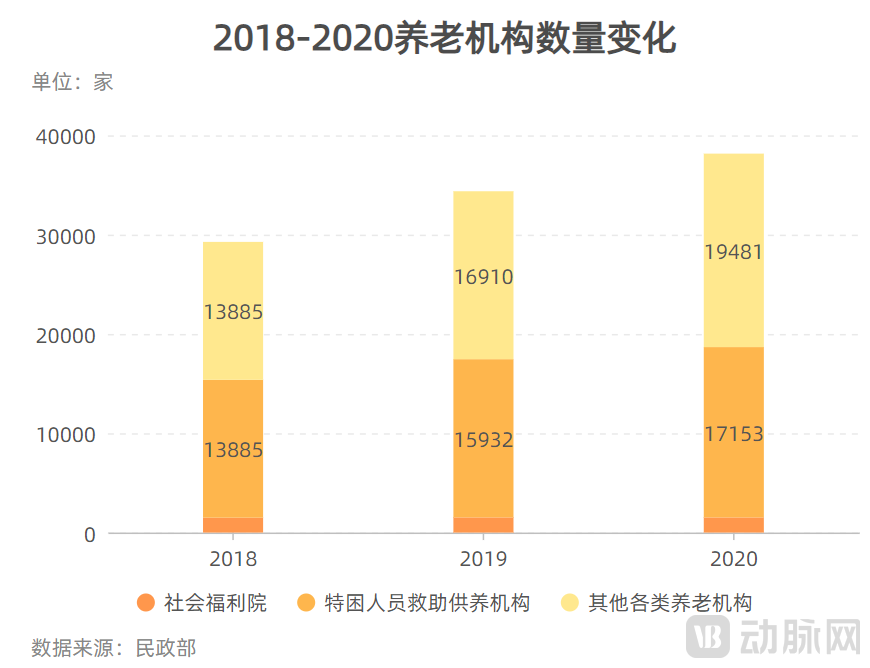
However, behind the booming market development, the industry also faces public skepticism. For instance, in recent years, incidents of elderly care institutions absconding with funds—exposed in cities such as Changsha and Nanchang—have resulted in the loss of hundreds of thousands of yuan in pensions for many seniors, sparking widespread social discussion.
The underlying reasons are twofold: on one hand, the industry is still in its early stages, with relevant regulations and oversight failing to fully keep pace with current development trends. Consequently, entry barriers remain relatively low, leading to an influx of numerous unprofessional entities and making it difficult to guarantee service quality.
On the other hand, elderly care institutions require substantial fixed-asset investments and have long payback periods, placing significant strain on their cash flow and operational capabilities. To alleviate operational pressures, some institutions have resorted to collecting deposits from seniors under the guise of fundraising or selling various discount cards, thereby creating the risk of sudden closure or absconding with funds.
Behind these incidents, it is evident that most non-compliant institutions exploit elderly individuals’ demand for comprehensive services in elder care facilities. They lure seniors into traps by making guaranteed promises regarding move-in incentives and discounted rates through misleading promotional campaigns.
It is precisely due to these factors that irregularities in elderly care institutions have emerged repeatedly. In response to these issues, relevant policies have continuously strengthened regulatory oversight. Notably, the Measures for the Administration of Elderly Care Institutions, which came into effect on November 1, 2020, explicitly stipulates that civil affairs departments shall strengthen supervision and inspection of the services and operations of elderly care institutions. Furthermore, localities such as Beijing, Chongqing, and Nanjing have enacted industry-specific regulations through local legislation or rules.
Why Are High-Quality Nursing Homes So Hard to Find?
Although certain non-compliant practices by industry players currently pose significant obstacles for seniors when selecting elderly care institutions, they are not the sole limiting factor. Influenced by the concept of consumption upgrading, most seniors take a comprehensive approach when choosing an elderly care facility, evaluating factors such as service offerings, hardware facilities, the professionalism of the nursing team, and humanistic qualities.
From the current perspective, the supply structure of elderly care institutions in China is unreasonable. Taking the case of Mr. Wang Changsong and his wife in Nanchang, Jiangxi Province, although there are a large number of elderly care institutions on the market, most of them are public nursing homes that meet basic elderly care needs. The proportion of elderly care institutions providing nursing services is relatively low, and high-quality integrated medical and elderly care services have long been absent.
Fortunately, this issue is now receiving attention.
At the same press conference, Li Banghua, head of the Elderly Care Services Department under the Ministry of Civil Affairs, stated that by 2025, nursing-care beds in elderly care institutions across China should account for 55% of the total. In light of this, elderly care institutions featuring integrated medical and elderly care services are clearly more likely to gain recognition from both the market and the general public.
Moreover, among the elderly care institutions already in operation, most still suffer from a scarcity of service offerings and inadequate provision of facilities. This not only significantly diminishes the quality of daily life for seniors but also hinders these institutions from delivering more advanced levels of care.
Furthermore, another significant issue in the operation of elderly care institutions is the shortage of professional talent. It is not uncommon for the elderly to care for their peers, and most staff members receive limited professional training. The absence of a comprehensive training system to support services makes it difficult to ensure service quality, thereby preventing elderly care institutions from leveraging their inherent advantages.
It is evident that, on one hand, market irregularities have eroded public trust in elderly care institutions; on the other hand, most facilities currently available struggle to comprehensively meet the multifaceted needs of seniors. Due to these compounding factors, many elderly individuals, like Mr. Wang Changsong and his wife, have put their plans to move into elderly care institutions on hold.
Nanchang, Jiangxi: The First to Create a Model for High-Quality Elderly Care Services
In response to industry pain points, companies within the sector are actively striving for change, such as by establishing standardized, high-quality elderly care service systems. As a representative enterprise in the industry, Taikang Insurance Group has been committed to excellence in building high-quality retirement communities since its elderly care initiatives began to take shape in 2007. Its subsidiary, Taikang Community, has now expanded to 24 cities across China, with eight campuses in seven cities currently open and operational, providing high-quality retirement living for over 5,000 seniors.
Recently, the footprint of Taikang Community is also set for further expansion.
Taikang Community’s first high-end senior living community in Nanchang, Jiangxi Province, Taikang Community·Gan Garden, is scheduled to officially open on December 18. Leveraging its backing by a Fortune Global 500 company, precise market positioning, and professional service teams, the Gan Garden Experience Center has attracted a large number of reservations from seniors and their families since its opening last November. The booking rate for the initial batch of available units stands at approximately 77%, reflecting local residents’ demand for high-quality elderly care institutions and their trust in Taikang Community.
Taikang Community’s senior living communities have always been characterized by their large scale, comprehensive amenities, and international standards, features that are also embodied in the newly launched Gan Garden.
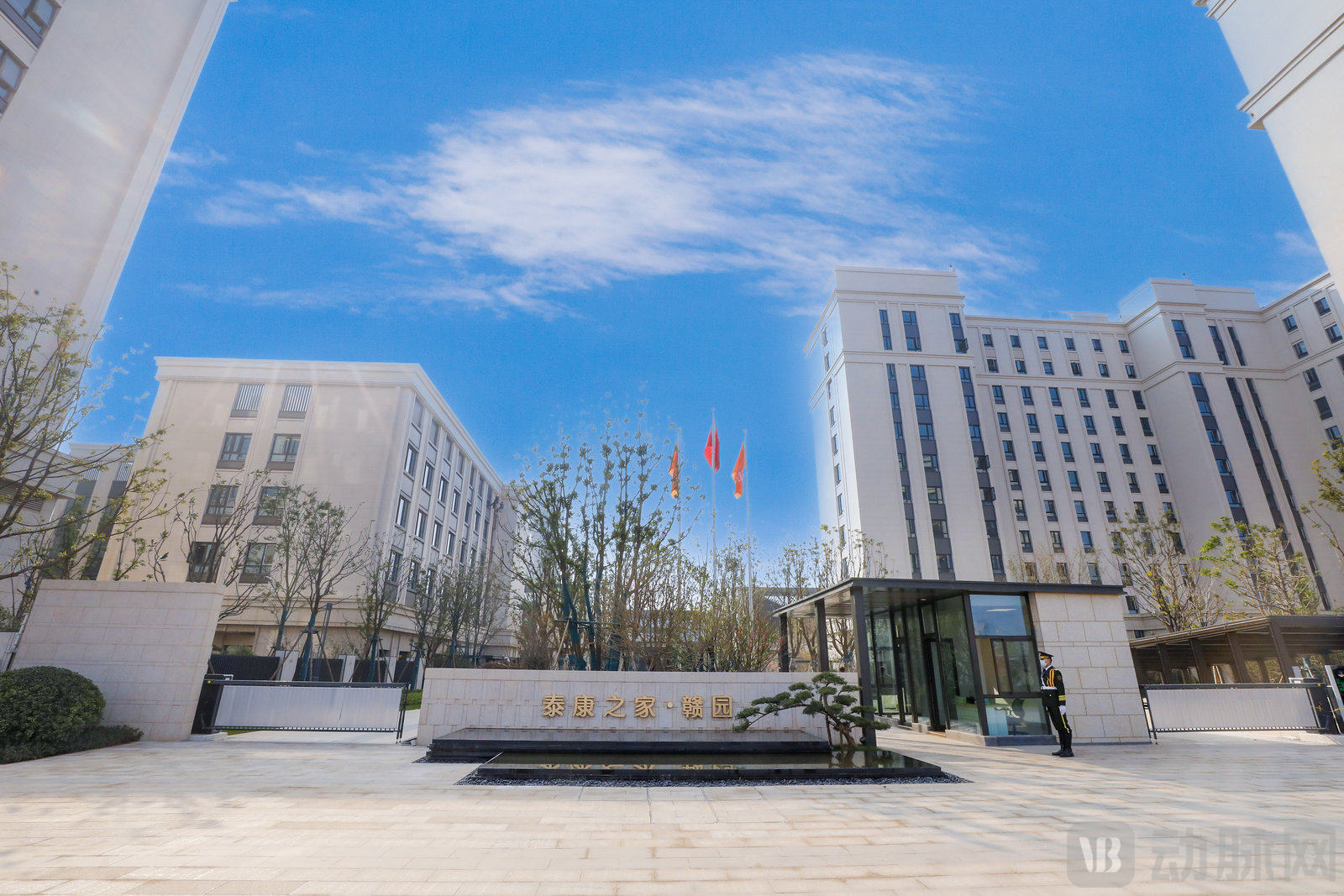
(Image source: Provided by the company)
First, in terms of scale, the total investment in the construction of Ganyuan amounts to RMB 2.4 billion, with a above-ground floor area of approximately 181,000 square meters. It can provide around 1,200 elderly care units and is equipped with a secondary-level rehabilitation hospital and over 100 medical beds, thereby achieving the integration of medical care and elderly care.
In terms of community functions, Taikang Community · Ganyuan also adopts the “1+N” multidisciplinary service model, providing seven major categories of services for senior residents, including daily living assistance, dining, cultural and recreational activities, and long-term care, thereby ensuring comprehensive and professional care for seniors.
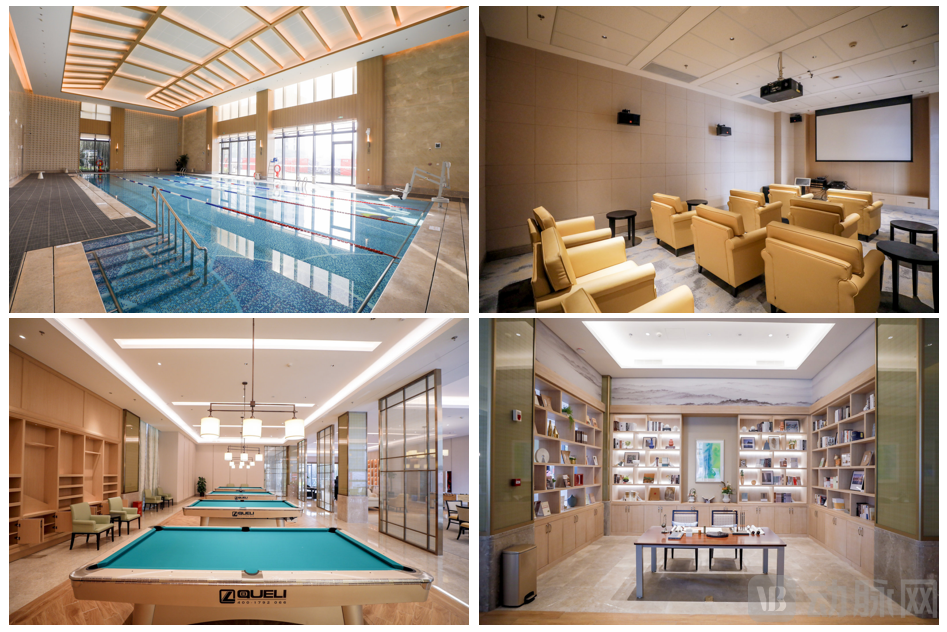 The community is equipped with a swimming pool and an audio-visual room, providing seniors with enhanced cultural and recreational services. (Image source: Provided by the company)
In site selection, Gan Garden has also given full consideration to the overall ecological environment and surrounding amenities. In terms of transportation, the area benefits from a well-developed transport network, including high-speed rail, metro lines, and urban expressways, ensuring close connectivity to the city. Moreover, nearby facilities such as parks, exhibition centers, and tourism complexes are already operational, maintaining strong social integration. Additionally, abundant medical resources are available in the vicinity, including major hospitals such as the Provincial Maternal and Child Health Hospital, the Provincial Children’s Specialized Hospital, the Provincial Hospital of Traditional Chinese Medicine, and the Municipal First Hospital, as well as tertiary hospitals integrating traditional Chinese and Western medicine. These external medical assets can effectively synergize with the community’s internal rehabilitation hospital.
In terms of internal design, Taikang Community · Ganyuan fully integrates local living culture and climatic features. The overall architectural structure is dominated by the Gan-style architecture, characterized by blue bricks and gray tiles, presenting a simple and elegant aesthetic. In addition to standard age-friendly design in its functional layout, the community is equipped with an outdoor mist cooling system and indoor heating, effectively addressing the high temperatures in summer and the humid cold in winter typical of the Nanchang region.
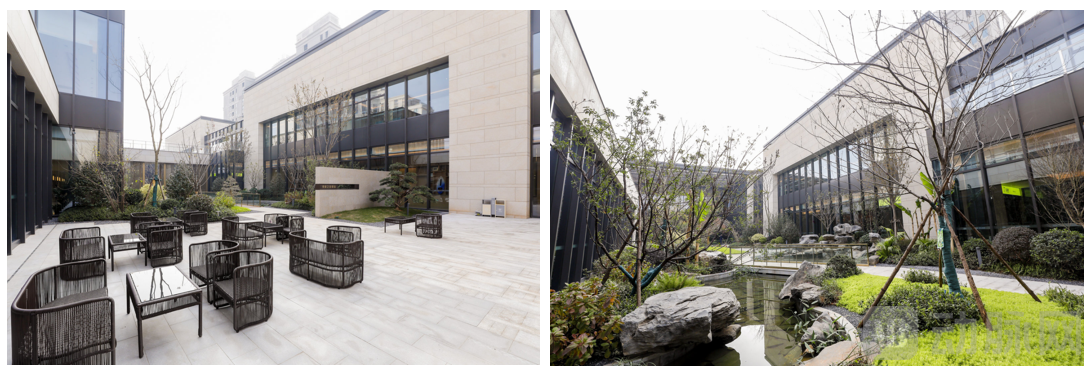
Courtyard Design within the Community: Overall Style Is Simple, Rustic, and Elegant (Image Source: Provided by the Enterprise)
The above is merely a glimpse of Taikang Community · Ganyuan. Within the community, extensive cultural and recreational facilities are provided to meet residents’ spiritual needs and help more seniors realize their self-worth.
In fact, prior to the establishment of Gan Garden in Nanchang, Jiangxi Province, the region already had a substantial number of elderly care institutions; however, there was a significant shortage of facilities specializing in health and nursing care. The emergence of Gan Garden has undoubtedly filled this gap.
Furthermore, under local traditional views on elderly care, moving into a nursing home often carries a negative connotation and is perceived by children as an act of “filial impiety.” This mindset has significantly influenced elders’ decisions regarding nursing home placement. The establishment of Taikang Community · Ganyuan aims to reshape public perceptions of high-quality elderly care by introducing a novel lifestyle model, thereby challenging entrenched traditional views and setting a benchmark for the development of premium elderly care services in the region.
From a macro perspective, institutional elderly care in China currently consists primarily of welfare homes and nursing homes established by local governments, as well as various nursing facilities developed with private capital. However, most privately built nursing homes suffer from insufficient elderly care facilities, a shortage of supporting medical services, and the ability to provide only basic daily living assistance. In contrast, Taikang Community, by establishing a comprehensive, high-quality service system, has undoubtedly fulfilled seniors’ aspirations for a fulfilling later life.
Against the backdrop of China’s deepening population aging, the development of eldercare services is not only a matter of individual well-being but also a societal imperative. We hope to see more enterprises like Taikang Community emerge in the future, leveraging high-quality services to drive positive industry growth and enable Chinese seniors to enjoy happier, more dignified later years.
(At the request of the interviewees, Wang Changsong and Qin Liya are pseudonyms.)