

Post-85s Entrepreneur Builds China's Largest Hair Transplant Chain, Achieves IPO with Over HK$8 Billion Market Cap
China’s Largest Hair Transplant Provider Successfully Lists on Stock Exchange.
Today, Yonghe Medical Group Co., Ltd. (hereinafter referred to as “Yonghe Medical”) officially listed on the Main Board of The Stock Exchange of Hong Kong Limited. Its issue price was HK$15.80, and the opening price was HK$15.76. As of press time, Yonghe Medical’s share price stood at HK$16.54, representing a 4.68% increase, with a real-time market capitalization of HK$8.6 billion.
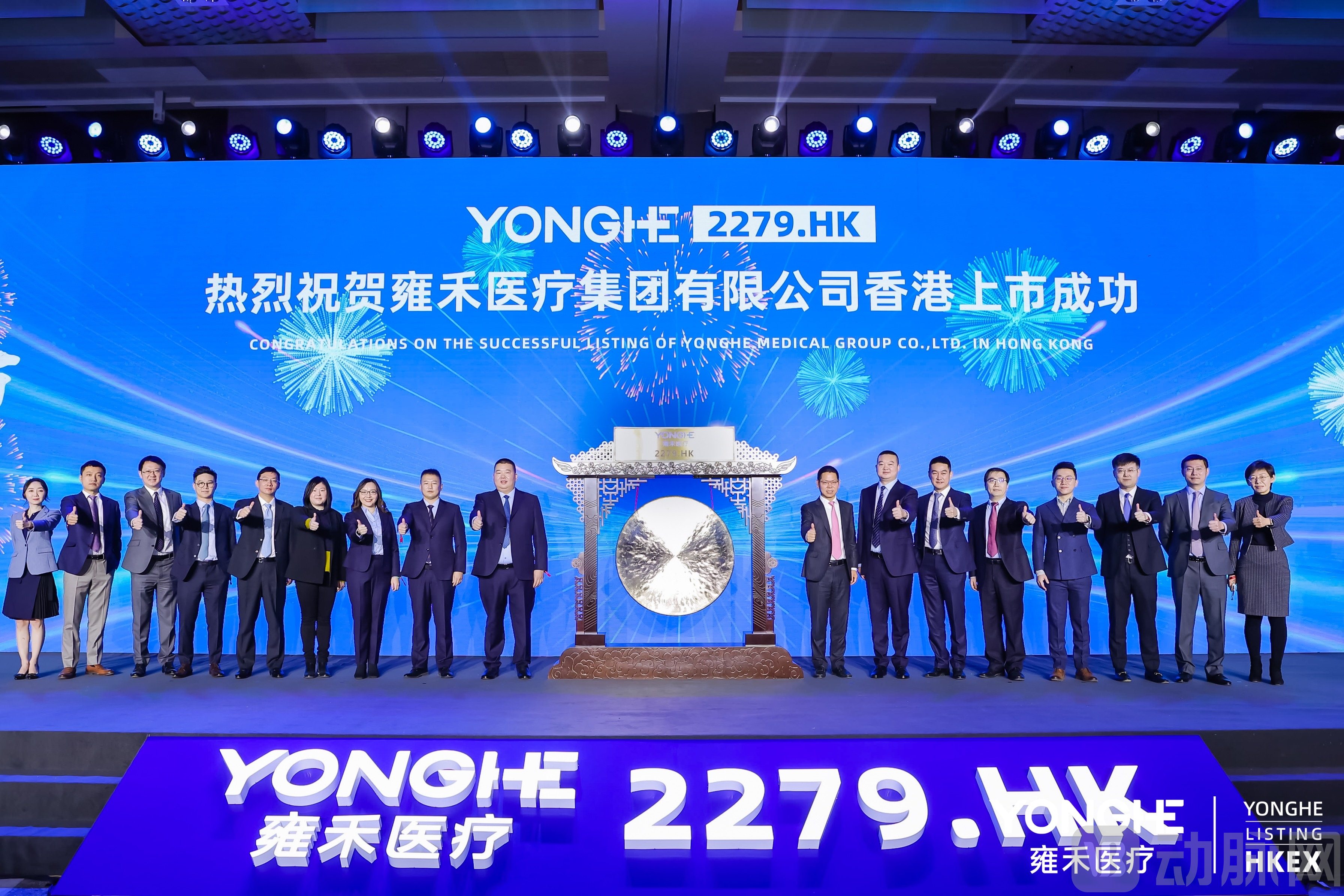
Founded in 2005, Yonghe Medical has become the leading enterprise in China’s hair health sector, with business operations encompassing alopecia outpatient clinics, pharmacological treatments, the Savin Hair Health Center, and the Hafada Wig R&D and Production Center, among others. According to data from Frost & Sullivan,Among all hair medical service providers in China, Yonghe Medical ranks first based on various key financial and operational indicators, including total operating revenue, number of registered physicians, and number of patients undergoing hair transplant procedures in 2020.
According to the prospectus, Yonghe Medical’s revenue continued to climb from 2018 to 2020, reaching RMB 934 million, RMB 1.22 billion, and RMB 1.64 billion, respectively. In terms of gross profit, the company maintained a high level of over 70% from 2018 to 2020.
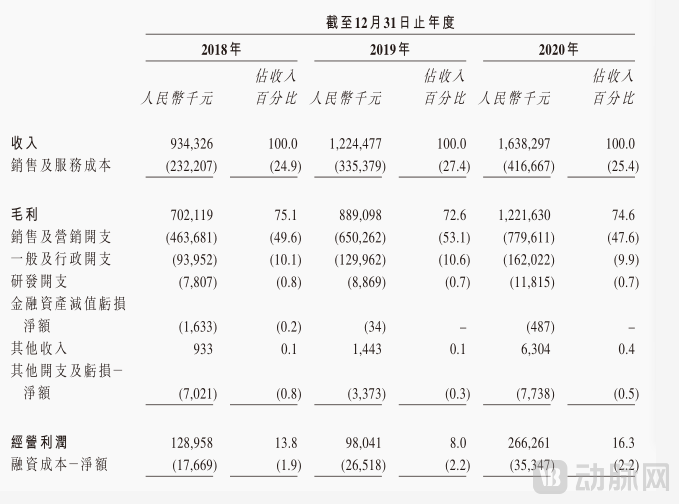
(Yonghe Medical Financial Statements; Source: Prospectus)
In terms of specific business layout, the prospectus shows that Yonghe Medical has operated 53 medical institutions in 50 cities across China, making it the largest and most widely covered chain hair transplant medical institution in China. Moreover, it is also leading the industry in terms of the growth rate of new store openings.
Notably, Yonghe Medical has assembled the largest medical team in the industry, comprising approximately 1,200 professionals, including 229 registered physicians and 930 nurses—a figure that exceeds the combined total of the second- and third-largest players in the sector.
On the other hand, despite its high gross profit margins, Yonghe Medical has been plagued by low net profit margins. Its net profit as a percentage of revenue stood at 5.73%, 2.9%, 9.97%, and 3.84% in 2018, 2019, 2020, and the first half of 2021, respectively.
After 16 years of development, why was Yonghe Medical able to take the lead in going public? What is its founding story? How is its business structured? What are the growth prospects and challenges facing the hair transplant industry? Are there any emerging trends? Can the hair transplant industry produce major high-performing stocks? In response to these questions, VCBeat will provide an in-depth analysis below.
The Entrepreneurial History of Yonghe Medical Is the Development History of China’s Private Hair Transplant Industry.
In the late 1990s, the spring breeze of China’s market economy swept across the country. At that time, Zhang Yu, a young man born in the post-1985 generation who had just graduated from Dazhuang Junior High School in Si County, Suzhou City, Anhui Province, decided to venture into Beijing. He successfully secured a position at a magazine publisher, working in advertising sales for cosmetic and plastic surgery services.
As Zhang Yu spent more time working at the magazine, she gradually identified a business opportunity: among clients placing advertisements in media outlets, medical aesthetic institutions accounted for an increasing share of orders. This trend indicated that the medical aesthetics industry was booming, presenting promising prospects for market entry.
However, the medical aesthetics industry is vast, encompassing numerous specialized segments such as plastic surgery and orthodontics, most of which present high professional barriers. Consequently, Zhang Yu decided to enter the hair transplantation sector, which had lower entry barriers and was largely untapped at the time.
This is because, in the 1990s, awareness of hair transplantation among individuals with alopecia in China was very low, resulting in limited demand. Furthermore, from an industry perspective, relevant technologies and standards for hair transplantation had not yet been established, leading to limited supply and placing the market in its nascent stage.
In 1999, Zhang Yu officially embarked on his journey in the hair transplantation industry by renting a room of less than 10 square meters near the Yonghe Temple. In addition to recruiting doctors, Zhang Yu, leveraging his marketing expertise, also engaged in offline advertising to attract customers.
After years of trial and error, Zhang Yu accumulated substantial experience, gradually turning his business around. Looking toward long-term development, Zhang Yu recognized that brand value and the establishment of industry standards would constitute a core competitive barrier. Consequently, he registered the “Yonghe” brand in Beijing in 2005. In 2010, Yonghe formulated China’s first hair transplantation industry standard to be reported by China Central Television (CCTV) and became the country’s first hair transplant medical service provider to obtain ISO certification. Since then, Yonghe Medical has gained increasing prominence within the hair transplantation industry.
As can be seen, in the early stages of the venture, Zhang Yu led Yonghe Medical’s core team to focus primarily on two initiatives: first, conducting user education and expanding brand influence through marketing and promotional efforts; second, establishing industry standards for hair transplantation and developing a replicable business model.
Subsequently, Yonghe Medical entered a period of rapid development. In 2013, Yonghe Medical expanded its business operations across China, operating exclusively through company-owned stores. In 2014, it introduced five guarantee service agreements to assume risks for patients before and after surgery, and in the same year, it publicly disclosed the entire hair transplantation procedure to enhance industry transparency. In 2017, the company launched the “Yongxiang” brand to enter the high-end, personalized hair transplantation market. In 2020, Yonghe Medical formed a strategic partnership with Ping An and launched the industry’s first hair transplantation insurance product.
To date, with RMB 1.4 billion in hair transplant revenue, 229 registered physicians, 51 hair transplant medical institutions, and a service volume of over 50,000 hair transplant patients, Yonghe Medical has become the largest hair transplant medical service provider in China.
During this process, the most notable event was CITIC Private Equity Funds’ investment in Yonghe Medical in September 2017. Hailed as a “benchmark for industrial investment,” this move quickly became a major development in China’s hair transplant industry. It signaled that the hair transplant business had gained recognition from mainstream institutional investors, thereby propelling the entire industry onto the path of capitalization.
After more than two decades of entrepreneurial journey, Zhang Yu, a young entrepreneur born in the 1980s, has finally reached his moment to ring the bell for his company’s IPO.
As a “headline business,” the hair transplant market holds considerable imaginative potential.
According to the survey on hair loss population released by the National Health Commission in 2019, the number of people suffering from hair loss in China has been rising sharply in recent years, exceeding 250 million, i.e.On average, 1 in 6 people experiences hair loss., with approximately 163 million males and 88 million females. Among them, 63.1% of the hair loss population in China is under the age of 35. Receding hairlines have become a common phenomenon among those born in the 1980s and 1990s, indicating substantial market demand.
To address the pain points of this population,Yonghe Medical has established two core businesses: hair transplant medical services and medical hair care and maintenance services.These two business segments correspond precisely to the two major subsectors within the hair restoration medical services industry.
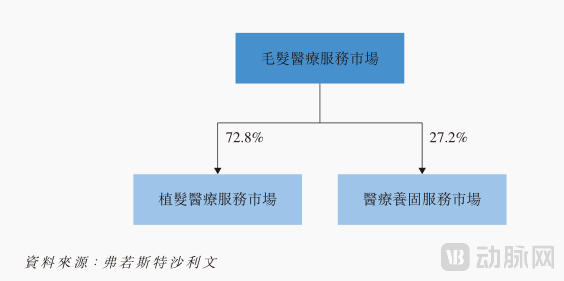
(Yonghe Medical’s Business Composition; Source: Prospectus)
First, hair transplant medical services primarily address the need of patients with hair loss to regain their hair; this segment accounts for the majority of revenue and represents Yonghe Medical’s core competitive business.
The core barriers to entry in this business segment lie in two areas: the supply of specialized hair transplant medical professionals and reliable hair transplantation technology.
From the physician’s perspective, hair transplantation requires meticulous precision through micro-incisions, surpassing that of traditional surgical procedures; consequently, it demands a high level of professional competence and clinical experience from healthcare providers.
From a technical perspective, indicators that assess the quality of hair transplantation techniques include minimal scalp trauma, rapid recovery, favorable therapeutic outcomes, high postoperative hair density, and natural hair growth direction. Evolving along these lines, hair transplantation technology has gradually transitioned from Follicular Unit Extraction (FUE) to the current micro-needle hair transplantation technique.
Furthermore, in terms of diagnostic and therapeutic capabilities, the multifactorial etiology of hair disorders imposes high demands on the comprehensive medical service capabilities of hair transplantation institutions. Additionally, as a medical service, China’s hair transplantation market is subject to stringent regulation; therefore, all providers of hair transplantation medical services must obtain valid medical licenses.
Based on these dimensions, Yonghe Medical has been continuously accumulating strengths in talent pipeline development and technological innovation, thereby gradually expanding its market space and achieving an annual revenue growth rate of over 30%. In 2020, it captured an 11% market share in China’s hair transplant medical services sector.
Furthermore, medical hair care and maintenance services primarily provide long-term care solutions for patients with hair issues (excluding hair loss). This segment has emerged as a new pillar business for Yonghe Medical, with its share of total revenue surging significantly from 1.2% in 2019 to 24.1% in the first half of 2021.
This segment of the business can be understood as an extension of hair transplant services, serving as a supplement to pre- and post-operative medical care. It provides treatments, including pharmaceuticals and medical devices, for individuals suffering from folliculitis or in the early stages of hair loss.
The core logic of this business segment lies in the development of related products and service solutions, thus requiring a multidisciplinary approach involving fields such as endocrinology and dermatology.
To this end, Yonghe Medical has collaborated with several leading universities in China on research and development. Examples include joint efforts with Sun Yat-sen University to develop solutions for immune rejection in hair follicle transplantation, novel small-molecule drugs for preventing anxiety-induced hair loss, multifunctional hair transplant surgical beds, and mild foaming shampoos, which have already yielded preliminary results.
It is worth noting that although the average transaction value for hair transplant procedures is high, their low frequency and limited user stickiness have historically meant that clinics operate on a one-off transaction basis, with nearly all customers churning afterward and necessitating renewed customer acquisition efforts. Yonghe Medical’s strategic expansion into medical-grade hair care and maintenance services, however, has unlocked new growth opportunities. The underlying logic lies inMedical wellness and maintenance services are more frequent than medical hair transplant services, with higher user stickiness. Leveraging high-frequency services to drive low-frequency ones will help Yonghe Medical achieve stable and sustained revenue.As of now, Yonghe Medical holds a 5% market share in China's medical hair restoration and maintenance services sector.
As can be seen, Yonghe Medical has achieved commendable growth, driven by the rapid expansion of the industry, the effective establishment of its business model, and its accumulated technological expertise.
However, among the factors driving Yonghe Medical’s annual revenue growth rate to exceed 30%, one factor cannot be overlooked, namelyWith the backing of capital, Yonghe Medical has also accelerated its chain expansion strategy.: Currently, Yonghe Medical has established a presence in 52 cities across China.
It is worth noting the industry background that, in the healthcare services sector, establishing a chain-based layout is no easy task. The reason lies in the fact that,For chain expansion to proceed smoothly, two core capabilities are essential: standardization and replicability.The significance of standardization lies in ensuring a relatively consistent service experience for hair transplant patients across all clinics, thereby enhancing brand reputation. The value of replicability is that, given China’s vast geography and market, hair transplant clinics can be effectively established in areas with high patient concentration, with each individual clinic striving to achieve profitability.
However, the unique nature of healthcare services lies in the fact that the supply of doctors, as a core resource, is both constrained and heterogeneous, making standardization and scalability difficult to achieve.Yonghe Medical has established a set of recruitment standards and training systems for physicians; on the patient side, it has built a customer service system that provides 24-hour consultation services; in terms of technological application, Yonghe Medical has obtained six invention patents for medical technologies to enhance its overall technical capabilities. The establishment of these systematic standards has facilitated Yonghe Medical’s chain expansion.
In terms of cost reduction and efficiency enhancement, Yonghe Medical is accelerating the application of new technologies. The underlying rationale is that once chain institutions reach a certain scale, they need to implement appropriate information technology infrastructure to reduce costs and improve efficiency, thereby strengthening their competitive moat. According to the prospectus, in addition to traditional SaaS software systems, Yonghe Medical is actively introducing new technologies, such as automated hair follicle detectors and robotic arms for hair follicle transplantation, to enhance standardization and service efficiency.
In summary, positioned within the rapidly growing consumer healthcare segment of hair medical services, Yonghe Medical has leveraged its chain-based model to achieve economies of scale. By driving low-frequency hair transplant services with high-frequency hair care and maintenance offerings, and by employing new technologies to reduce costs and enhance efficiency, the company has established a closed-loop business model.
However, behind the rapid growth lie hidden concerns: high gross margins but low net profits. The prospectus shows that although the gross margin exceeded 70%, Yonghe Medical’s net profit margin in the first half of 2021 was only 3.84% after deducting other costs (the figures for 2018 to 2020 were 5.73%, 2.9%, and 9.97%, respectively). What does this indicate?
A joke widely circulated on the internet goes like this: When a reporter asks a programmer what the most expensive thing they own is, the programmer replies, “My hair.” This is because programmers are a high-risk group for hair loss; once they become bald and opt for hair transplant surgery, they face exorbitant per-customer costs.
According to Yonghe Medical’s prospectus, the number of patients receiving “hair transplant medical services” increased from 35,000 in 2018 to over 50,000 in 2020. The average expenditure per patient remained largely stable in 2019 and 2020, at approximately RMB 27,800.This means that the average transaction value for hair transplant medical services is around RMB 27,800.
However, with such a high average transaction value per customer, where do the costs come from?According to the prospectus, apart from labor costs and store rent, most of the funds were primarily spent on customer acquisition and marketing.
Data shows that in 2020, marketing expenses accounted for 47.6% of Yonghe Medical’s total revenue, nearly half. In other words, for every 2 yuan earned, Yonghe Medical spent nearly 1 yuan on marketing. From an industry perspective, according to previous research by VCBeat, the average comprehensive customer acquisition cost in the hair transplant industry exceeds 2,000 yuan per person.
This inevitably raises concerns about the hair transplant industry.: Due to current overreliance on marketing, coupled with the persistently high labor costs of scarce medical professionals and rental expenses, the hair transplant industry is prone to engaging in intense price wars under survival pressure, thereby eroding corporate profits and even triggering vicious competition.
As the first publicly listed company in the hair transplant industry, Yonghe Medical’s IPO has undoubtedly given a “shot in the arm” to the entire sector:Hair transplantation has emerged as a new niche segment in medical services favored by the capital market, opening up new financing channels for more high-quality hair transplant companies in the future.
It is worth noting that in China’s healthcare services sector, the ophthalmology and dental care segments have been validated as the primary areas capable of rapid “land-grab” expansion: in these two fields, Aier Eye Hospital has achieved a 21-fold increase over ten years, while Topchoice Medical has recorded a 28-fold growth over the same period.
Can the hair transplant industry produce major bull stocks? This requires a return to the industry’s fundamentals.
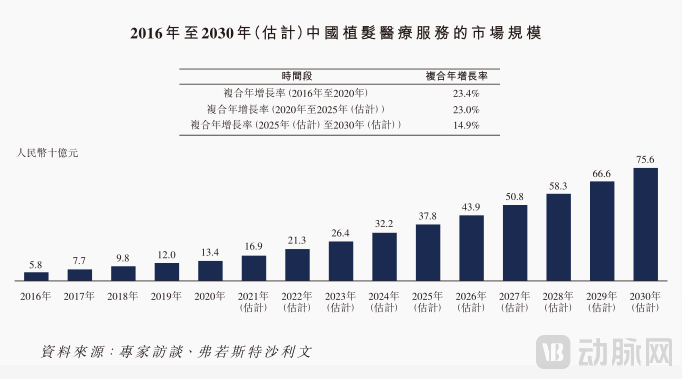
First, in terms of industry growth, according to Frost & Sullivan’s projections, China’s hair transplant medical services market will grow from RMB 13.4 billion in 2020 to RMB 37.8 billion in 2025, representing a compound annual growth rate (CAGR) of 23%. As the saying goes, “big waters nurture big fish,” suggesting significant potential for expansion for institutions such as Yonghe Hair Transplant.
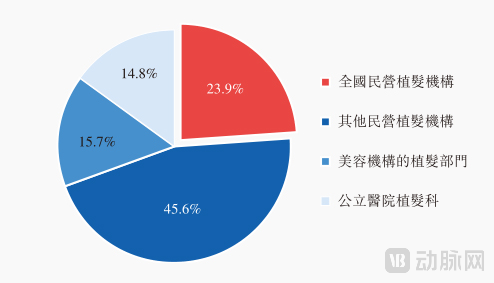
In terms of industry competition, the sector has currently coalesced around four main types of market participants.. First, the hair transplant departments of public hospitals such as Shanghai Changzheng Hospital and Southwest Hospital; second, the hair transplant departments of private medical aesthetic and plastic surgery institutions represented by Yimeier and Xiduo; third, private non-chain hair transplant institutions represented by Hengbo; and fourth, national private chain hair transplant institutions represented by Yonghe Medical, Biliansheng, Xinsheng Hair Transplant, and Damai.
(Image source: Yonghe Medical's prospectus)
According to the prospectus, large chain hair transplant institutions, including Yonghe Medical, Biliansheng, Damai, and Xinsheng Hair Transplant, collectively account for approximately 23.9% of China’s hair transplant market share. Local non-chain specialized hair transplant clinics, due to their vast numbers, hold approximately 45.6% of the market share. The hair transplant departments of comprehensive medical aesthetic institutions account for approximately 15.7% of the market share. Public hospitals’ hair transplant departments account for the remaining 14.8% of the market share.
Since 2017, when Yonghe Medical and Biliansheng successively secured large-scale financing exceeding RMB 100 million each, the hair transplant chain industry has rapidly gained momentum.: Bolstered by capital infusion, the hair transplant industry has ignited a marketing war, with advertisements saturating streets and alleys, ushering in a major reshuffling of the market. Small and medium-sized hair transplant clinics are in a precarious position, while large-scale institutions are continuously transforming through technology adoption, strategic upgrades, and marketing iteration.
To date, large chain hair transplant institutions have undoubtedly achieved significant results and gradually expanded their scale and strength, which has undoubtedly promoted the development of the entire industry.
Throughout this process, four key insights warrant industry reflection: first, building brand equity; second, continuously innovating products and services; third, extending business models toward industrial diversification; and fourth, gradually reducing reliance on marketing.Therefore, the long-term prospects for the hair transplantation industry remain substantial, although numerous challenges still need to be overcome in the current landscape.
More importantly, during the growth phase of the hair transplant industry, the sector must not rely solely on marketing-driven customer acquisition to expand its market size. It must also prioritize the sound and sustainable development of the industry as a whole, thereby continuously delivering superior hair transplantation and hair care experiences to patients.
After all, hair transplantation is not merely a business; it is also a “top priority” concerning the appearance of 250 million people.