

Forum on Intelligent Manufacturing Empowering High-End Medical Devices Held in Nanjing, Promoting Deep Integration of Two Key Sectors
12Month9On the afternoon of [Date], the “Forum on Smart Manufacturing Technologies Empowering the Development of High-End Medical Devices,” hosted by the Organizing Committee of the World Intelligent Manufacturing Summit and co-organized by the Yangtze River Delta National Technology Innovation Center and the Jiangsu Industrial Technology Research Institute, was held at the Nanjing International Expo Convention Center. This forum was one of the events under the “Technology Demonstration and Industrial Application” segment of the summit.
The forum brought together more than 100 participants, including academicians from China and abroad, scholars and experts from universities and research institutions, entrepreneurs, investors, and technical professionals. The forum was moderated by Gu Zhongze, Director of the Institute of Biomaterials and Medical Devices at the Jiangsu Industrial Technology Research Institute.
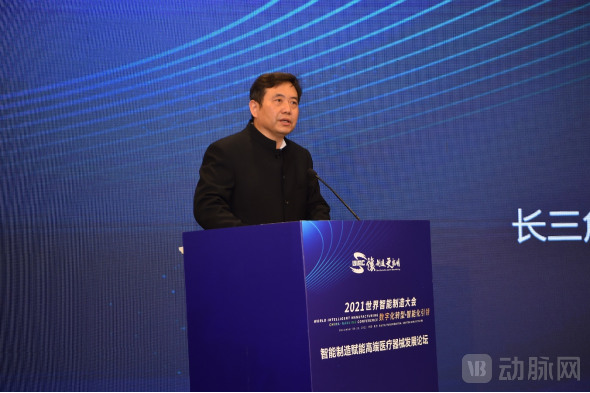
Hu Yidong, Deputy Director of the National Technology Innovation Center for the Yangtze River Delta and Secretary of the Party Committee of the Jiangsu Industrial Technology Research Institute (JITRI), delivered an address. He stated that the medical device industry is a vital sector concerning national welfare and people’s livelihoods, a key focus area within advanced manufacturing clusters, and a crucial safeguard for advancing the Healthy China initiative. How medical device enterprises adapt to the sweeping trends of informatization, intelligence, networking, and digitalization reflects their core competitiveness. Supporting these enterprises in achieving transformation and upgrading through intelligent manufacturing is also a significant mission of JITRI and the National Technology Innovation Center for the Yangtze River Delta.
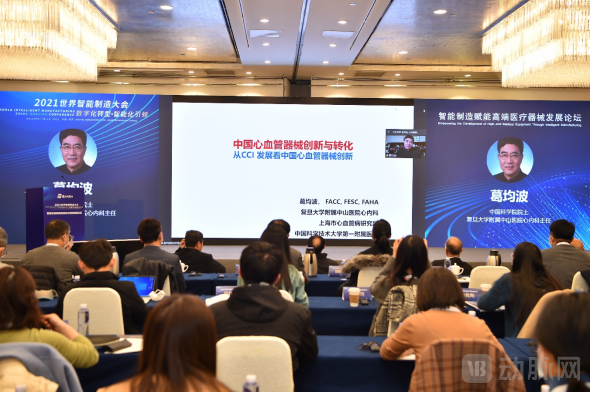
Academician of the Chinese Academy of Sciences and Director of the Department of Cardiology at Zhongshan Hospital, Fudan University, Ge Junbo delivered an online keynote report titled “The Path of Innovation in Cardiovascular Medical Devices in China.” Academician Ge proposed that clinicians are the main drivers of medical innovation. Drawing on the development journey of the China Cardiovascular Physicians Innovation Club (CCI), which he spearheaded, he introduced how the organization helps clinicians incubate innovative projects by building a comprehensive cardiovascular innovation ecosystem.
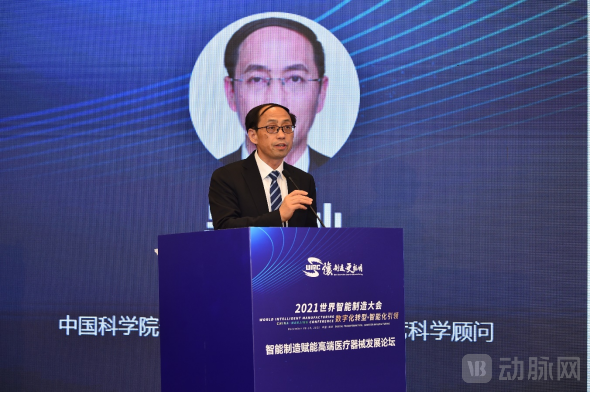
Academician Wu Yican, a member of the Chinese Academy of Sciences and the International Academy of Nuclear Energy, delivered a keynote report titled “Precision Radiotherapy for Tumors and the R&D and Innovation Practice of the Qilin Knife.” Academician Wu pointed out that radiotherapy is a primary strategy for treating malignant tumors. Currently, China’s tumor radiotherapy equipment market is monopolized by foreign brands, and the “import substitution” of high-end medical devices has become a national strategy. He introduced the journey undertaken by his academician team in developing the “Qilin Knife” precision radiotherapy system, covering basic and key technology research, product development, and industrial translation.
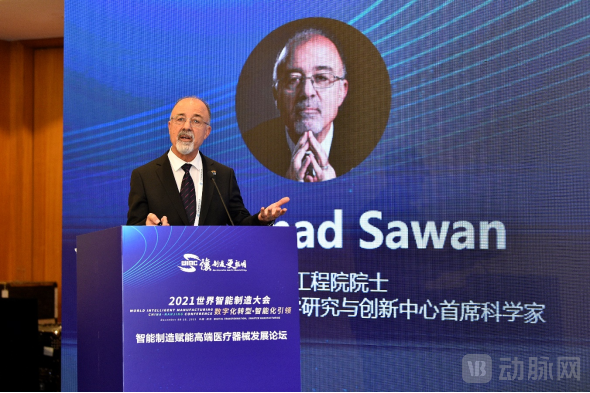
Mohamad Sawan, a Fellow of the Canadian Academy of Engineering and Chief Scientist at the Center for Biomedical Research and Innovation, School of Engineering, Westlake University, delivered a keynote presentation titled “Wearable and Implantable Bioelectronic Devices for Enhancing and Restoring Critical Functions.” The presentation highlighted the team’s recent advances in brain-computer interfaces and artificial intelligence, focusing on the diagnosis, prediction, and treatment of neurodegenerative disorders and other brain-related diseases.
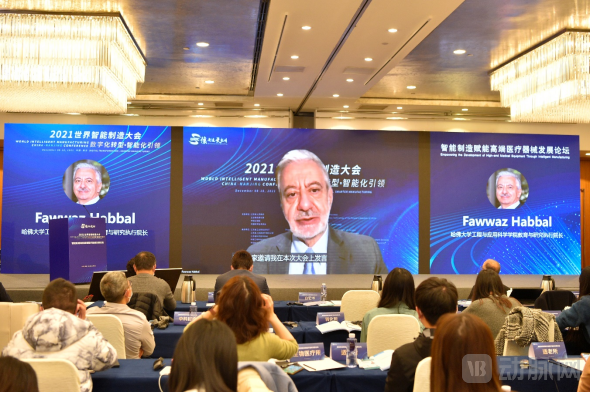
Fawwaz Habbal, Executive Dean for Education and Research at the Harvard John A. Paulson School of Engineering and Applied Sciences, delivered a keynote address titled “Prospects for the Impact of Artificial Intelligence on Manufacturing” via video conference. Habbal posited that the manufacturing sector is undergoing a profound collective transformation, with boundaries between various manufacturing technologies becoming increasingly blurred, as are those between manufacturing and retail. He emphasized that proximity to consumers is paramount.
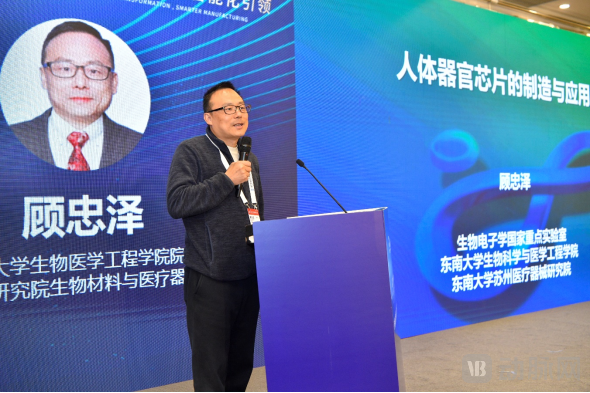
Gu Zhongze, Dean of the School of Biological Science and Medical Engineering at Southeast University and Director of the Institute of Biomaterials and Medical Devices at Jiangsu Industrial Technology Research Institute (JITRI), delivered a keynote report titled “Fabrication and Applications of Human Organ-on-a-Chip.” The report highlighted organ-on-a-chip technology as a transformative frontier capable of replacing animal and clinical experiments in drug screening and personalized diagnosis and treatment. The institute has conducted research on core key technologies related to human organ-on-a-chip systems, including biomaterials, chip design and fabrication, automated imaging, and AI-based analysis, and has implemented industrialization projects.
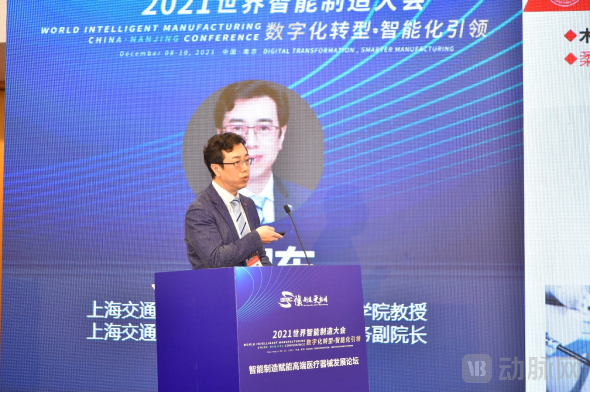
Chen Weidong, Executive Vice Dean of the Medical Robotics Institute at Shanghai Jiao Tong University, delivered a keynote report titled “Collaborative Innovation Driving the Development of the Medical Robotics Industrial Ecosystem.” The report summarized the current status and trends of the medical robotics industry both in China and abroad, analyzed the bottlenecks and challenges hindering technological and industrial advancement in this field, and, drawing on case studies of research commercialization from the Medical Robotics Institute at Shanghai Jiao Tong University, explored recommendations and strategies for fostering the growth of the industrial ecosystem.
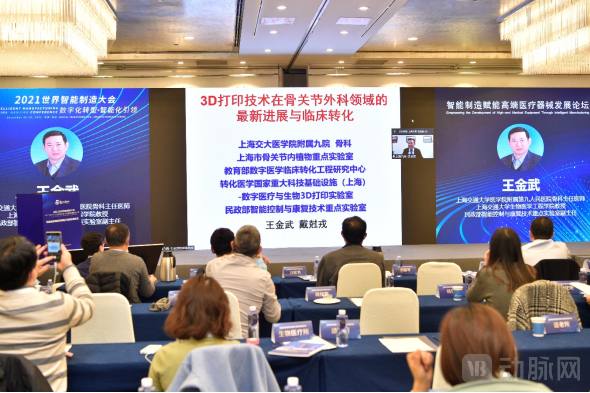
Wang Jinwu, Chief Physician of the Department of Orthopedics at Shanghai Ninth People’s Hospital affiliated with Shanghai Jiao Tong University School of Medicine and Professor at the School of Biomedical Engineering of Shanghai Jiao Tong University, delivered an online special report titled “Latest Advances and Clinical Translation of Digital Medicine and 3D Printing Technology in Orthopedics.” Drawing on clinical cases, the report introduced how 3D printing technology provides patients with “tailor-made” personalized and precise treatment through digital means, thereby resolving the contradiction between personalized medical needs and standardized products.
Zheng Yuqing, a researcher at the School of Electronics Engineering and Computer Science, Peking University, delivered an online video presentation titled “Stretchable Electronic Skin Based on Novel Photochemical Technology.” The research team achieved, for the first time, fully direct photolithographic patterning of organic conductive, semiconductive, and dielectric materials, thereby overcoming the long-standing key technical barriers that have hindered the practical industrial production and application of electronic skin.
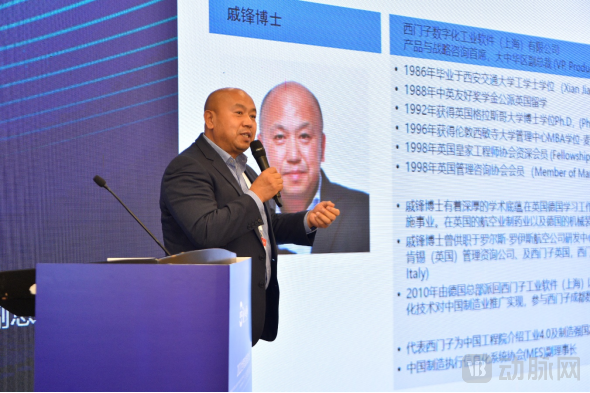
Qi Feng, Vice President of Greater China at Siemens Industrial Software Co., Ltd., delivered a keynote speech titled “Accelerating Digital Transformation and High-Quality Growth for Emerging Medical Device Manufacturers.” Siemens’ end-to-end digital twin solutions for the medical industry empower medical device companies to build a comprehensive digital compliance framework spanning R&D design, simulation and verification, and manufacturing.
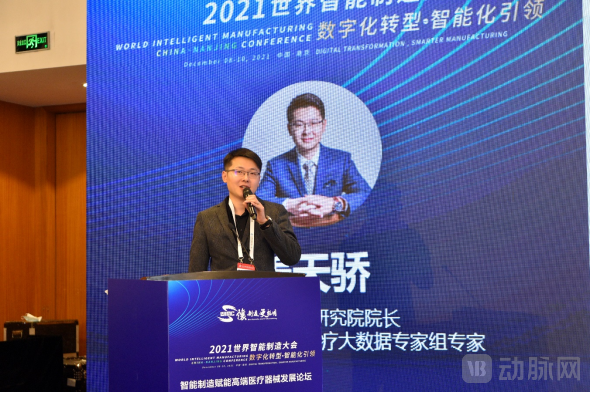
Jiang Tianjiao, Dean of VCBeat’s Eggshell Research Institute, delivered a keynote address titled “Charting the Course for High-End Medical Devices: From ‘Technological Innovation’ to ‘Value Creation.’” He argued that, amid the overarching trend of healthcare cost containment through medical insurance controls, value creation in the medical device sector requires strategic positioning across three key areas: innovation, consumption, and digitalization.
As China entered the 14th Five-Year Plan period, the domestication, high-end development, and branding of medical devices in the country have accelerated further, with intelligent manufacturing technologies playing an increasingly prominent role in driving industrial upgrading. With a global perspective, this forum thoroughly explored how intelligent manufacturing technologies currently and future empower the medical device industry, as well as the opportunities and challenges involved. It facilitated coordination and collaboration among research institutions, clinical organizations, and industry enterprises in the Yangtze River Delta region and Jiangsu Province, jointly promoting the deep integration of intelligent manufacturing with the medical device industry.