

Future Doctor Merges into Yilian, Expanding the Footprint of Serious Digital Healthcare

Medlinker
Chronic Disease Management Platform Provider
Recently, it was reported that Future Doctor has been merged into Medlinker. VCBeat confirmed this with Medlinker: “Future Doctor (formerly Penguin Almond) has been merged into Medlinker Group and has become a business division of the group. Wang Shirui, CEO of both Medlinker and Future Doctor, will continue to serve as the Group’s CEO. Martin, former President of Future Doctor, has been appointed Vice President of Medlinker Group, overseeing the Future Doctor business division.”
This is alsoMedlinker publicly acknowledges for the first time that it has completed the integration of Future Doctor.“The acquisition of Future Doctor by Medlinker” has finally been settled.
What impact will the integration of Future Doctor have on Medlinker? How will Wang Shirui’s vision for serious healthcare be realized through the group? In the internet healthcare industry, what development trajectory lies ahead for serious healthcare, as represented by Medlinker?
Let us begin our analysis with the topic of “Future Doctor being merged into Medlinker.”
Organizational Restructuring: Medlinker Expands Its “Serious Healthcare” Footprint
In late April this year, Medlinker had already undergone a round of organizational structure adjustments.
At that time, Medlinker established a Department of Disciplines, which comprised Division I, Division II, and Division III. The heads of these three divisions all reported directly to the CEO, Wang Shirui. The primary responsibilities of the Department of Disciplines were to drive discipline development, establish multiple disease management centers, standardize and optimize online disease management processes, empower physicians, and serve patients.
“Standardizing and optimizing the online disease management process” is a core focus in Medlinker’s development., is also a critical point in the development of internet healthcare.——To make internet-based healthcare more widely accepted by both patients and physicians, and to effectively address the challenges faced by patients, it is imperative to establish a standardized online disease management framework tailored for both parties.
The establishment of the Academic Department, followed by the formation of the “Medlinker Academic Committee,” signals Medlinker’s commitment to investing in serious healthcare and online disease management.
In June, Medlinker established the “Medlinker Academic Committee,” with Cheng Shujun, a renowned expert in tumor etiology and academician of the Chinese Academy of Engineering, and Liu Lisheng, former president of the World Hypertension League and a distinguished cardiologist, serving as chief advisory experts. The Medlinker Academic Committee also brings together dozens of discipline leaders and expert professors who have dedicated many years to research in various disease areas, covering multiple specialties including oncology, endocrinology, infectious diseases, cardiology, and ophthalmology.
At the founding conference, Wang Shirui stated, “For internet hospitals to achieve genuine, long-term development, standardized and authoritative disease management protocols are essential. After the initial accumulation of advantageous online resources, internet healthcare now urgently needs to integrate with authoritative medical knowledge to further strengthen disciplinary development.”
In building a disease and health management pathway that covers the entire patient lifecycle, Medlinker’s online discipline construction has now become even more powerful.
VCBeat had previouslyByIt points out that factors such as the structural changes brought about by public hospitals launching internet hospitals, the necessity of establishing an offline presence to integrate with medical insurance, the need for differentiated strategies amid intensifying competition from tech giants, and the serious nature of disease diagnosis and treatment are driving internet healthcare companies to further accelerate their offline expansion.
Medlinker, which had previously built its core advantage on online disease management standards, has now incorporated the Future Doctors Business Unit, undoubtedly strengthening Medlinker’s “offline” component.—Future Doctor covers 16 cities including Beijing, Shanghai, and Shenzhen, with a diverse portfolio of business formats encompassing general practice clinics, specialty clinics, surgical centers, and corporate infirmaries.
Following the integration of WeDoctor into Medlinker Group, it will undoubtedly bridge Medlinker’s online and offline operations, establishing a true closed-loop management system. This will empower every stage of the “prevention, diagnosis, treatment, and rehabilitation” healthcare service framework—which covers the entire patient disease journey—with integrated “online + offline” capabilities, thereby further enhancing physician efficiency, improving patient care, and ensuring accountability for ultimate patient outcomes.
From the perspective of Medlinker’s “landscape,” the collaboration between the two parties can achieve a synergistic effect where 1+1>2, further expanding the potential for healthcare services.
Leveraging Complementary Strengths to Build Rigorous Healthcare Accountable for Patient Outcomes
According to data from an iiMedia Research industry report, Medlinker currently has over 1.4 million registered physicians and a total of 950 self-operated and partnered pharmacies.Years of accumulation have enabled it to offer online services across 20+ medical specialties., covering multiple fields including oncology, cardiovascular and cerebrovascular diseases, diabetes, chronic kidney disease, infections, psychiatry and psychology, gynecology, dermatology, gastroenterology, neurology, and traditional Chinese medicine.
Medlinker’s decision to adopt such an online strategy is closely tied to its CEO, Wang Shirui.
ThisThe M.D.-Trained Leader, in an interview in early October last year, he spoke candidly to VCBeat: “If we look toward the future, we are heading toward an endgame, toward a so-called apex. Everything we do is essentially oriented around that apex. No matter which slope we ascend, the endgame exists. This is something I am becoming increasingly convinced of.”
This is more than just an exposition of one’s life philosophy. Wang Shirui, who possesses a strong sense of finality and clear purpose, also applies this same mindset to contemplating healthcare and the role played by Medlinker as an industry participant—
“First, define the ultimate endpoint within your reach, or define the industry’s ultimate endpoint in the future. The clearer you see it and the more clearly you can describe it, the clearer your path toward it will become, and the clearer your milestones will be.”
Medlinker’s clear grasp of the “endgame” ensures that each of its strategic moves signals industry trends—this holds true for both chronic disease management and serious medical care.
Wang Shirui clearly understands that the essence of healthcare is to extend human lifespan. His approach to achieving this goal is to comprehensively address all diseases, aiming to control and cure them. “As long as we can manage diseases one by one with greater efficiency and better patient experience than before, thereby helping people live longer, I will have reached the pinnacle in my heart.”
The integration of Future Doctor into Medlinker appears to be a strategic move by Wang Shirui, who possesses a strong sense of the endgame, to reach the final destination.In terms of business alignment, Wang Shirui has served as the CEO of both Medlinker and Future Doctor for many years, seemingly exploring the path to the end goal from two distinct dimensions.
For Medlinker—
On the one hand, Future Doctor’s offline clinic network can serve as a robust complement to Medlinker’s online disease management services, further enhancing Medlinker’s offline medical service chain.As offline touchpoints, Medlinker’s online users can enjoy the convenience offered by Future Doctor’s offline clinics. For instance, when a physician issues a blood test order online, patients can complete the testing at the nearest Future Doctor clinic. Furthermore, scenarios requiring offline facilities and equipment support—such as imaging examinations, medication dispensing, and even hemodialysis and surgery—can all be completed within the Medlinker Group ecosystem through integration with Future Doctor.
On the other hand, the integration of Future Doctor has not only enhanced Medlinker’s offline services but also opened up possibilities for Medlinker to expand into more medical specialties in the future.For example, departments that were previously highly dependent on offline resource support, such as dentistry and ophthalmology, can leverage Future Doctor’s network of offline specialty clinics to develop their online presence after the integration with Future Doctor. This will enable Medlinker to further expand its horizontal layout of online departments and achieve effective patient management.
For Future Physicians—
For offline medical service institutions, out-of-hospital patient management and the continuity of the doctor-patient relationship chain remain persistent challenges.Upon completion of the integration, Medlinker’s online disease management system will provide clinic physicians with more professional and efficient out-of-hospital management tools, thereby enabling every physician to achieve their goal of delivering whole-course patient management.After patients complete offline medical services, they are further served through online medical services. Leveraging Medlinker’s disciplinary construction advantages and disease management SOPs accumulated across various disease areas, long-term disease management and follow-up are conducted.
Leveraging complementary strengths to create a full-lifecycle disease management service that covers patients both online and offline, as well as inside and outside the hospital, and taking responsibility for patient outcomes—this is one of the reasons why Medlinker is moving towards groupization and incorporating the Future Doctor Business Unit.
Medlinker Upholds the Banner of Serious Healthcare, Deepening Disease Management
In Wang Shirui’s view, the essence of healthcare is to extend human lifespan. This has gradually become Medlinker’s mission—to extend the healthy lifespan of all humanity by one year.
Compared to internet healthcare companies primarily based on the pharmaceutical e-commerce model,Medlinker, long accustomed to being “left on the sidelines,” has gradually carved out a unique path by providing patients with disease management services that span the entire life cycle.
Perhaps also due to optimism about Medlinker’s unique development model, the company has secured multiple rounds of financing to date from top-tier investors including Tencent, Sequoia China, and China Renaissance.
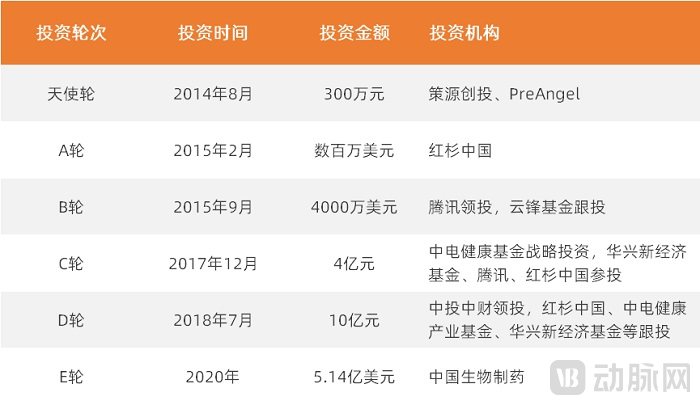 Medlinker’s Financing History, Chart Compiled by VCBeat
Notably, the low-profile Medlinker has not publicly disclosed that it completed its Series E financing in 2020. The 2020 annual report of Sino Biopharmaceutical revealed that it had invested $514 million in Medlinker. This also implies that Medlinker’s valuation had approached $4 billion by 2020.
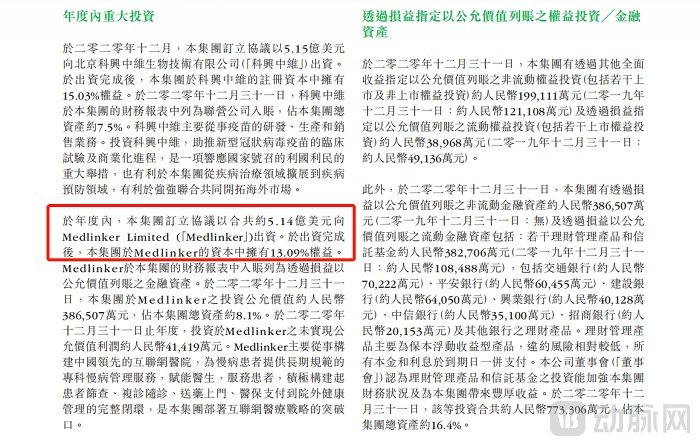 Image source: Sino Biopharmaceutical 2020 Annual Report
Nowadays,With the integration of Future Doctors and Medlinker’s continuous business growth over the past two years, Medlinker’s valuation may warrant a reassessment.
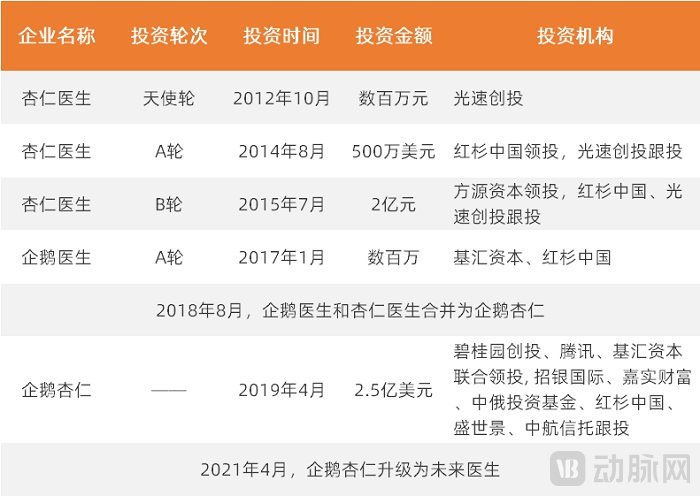
Past and Future of Doctors, Graphic by VCBeat
However, these are merely the outcomes of Medlinker’s commitment to rigorous medical practice. What deserves greater attention is how Medlinker is advancing in this process and what its future plans entail.
It is worth noting that, compared with light consultations, the difficulty of online disease management may not merely represent a change of one order of magnitude—Online disease management often entails long-term, dynamic adjustments and multidisciplinary integration—perhaps this is also why most internet healthcare companies shy away from it.Effective online patient management requires sustained attention, with timely follow-up and adjustments as the patient’s clinical course evolves, to provide comprehensive care.
To enhance disease management, Medlinker has adopted a two-pronged strategy: first, horizontally expanding the range of covered diseases; and second, vertically improving service standardization, conducting in-depth research on specific diseases, and continuously advancing digital discipline construction.
In terms of disease coverageIn April 2018, Medlinker established its first internet hospital department—the Department of Infectious Diseases—and simultaneously launched its self-developed hepatitis C patient management system. In October of the same year, the first hepatitis C patient was discharged after achieving a complete cure. This milestone marked Medlinker’s entry into chronic disease management, expanding its disease management services to broader fields.
In order toBetter Provision of Online Disease Management ServicesMedlinker has equipped doctors and patients with dedicated management teams. By leveraging medical assistants and health managers to support physicians, Medlinker provides a series of post-diagnosis, out-of-hospital management services for patients, including medication guidance, psychological counseling, and lifestyle interventions. These services help assess patients’ conditions, establish health records, implement stratified management for different patient groups, and develop targeted follow-up plans and management pathways, thereby enabling more effective control or cure of patients’ conditions.
In fact, disease management is by no means easy to achieve.
In terms of vertically improving service standardization, Medlinker, under the guidance of multidisciplinary experts and in conjunction with clinical guidelines and clinical pathways, has developed online management Standard Operating Procedures (SOPs) for each disease type, thereby establishing professional, standardized, and effective internet-based disease management.Meanwhile, Medlinker continues to collaborate with experts and academic leaders to develop expert consensus statements on the online management of specific diseases, providing the industry with technical operational standards and reference guidelines. For instance, in partnership with the Diabetes Professional Committee of the China Health Care Association for the Elderly and Professor Xiao Xinhua from the Department of Endocrinology at Peking Union Medical College Hospital, along with more than ten other authoritative experts in China, Medlinker released the country’s first “Expert Consensus on Standardized Management of Diabetes in Internet Hospitals.” This June, it further established the Medlinker Academic Committee in collaboration with numerous leading figures in the field.
To monitor changes in patients' conditions in real time and achieve full-cycle management, Medlinker is strengthening and enhancing its cloud-based capabilities, including Cloud Laboratory, Cloud Imaging, Cloud Pharmacy, and Cloud Medical Insurance.For instance, in March this year, Medlinker entered into a strategic partnership with KingMed Diagnostics to collaborate on “Internet + disease testing” and “Internet + disease management,” jointly creating an integrated cloud laboratory service solution for chronic disease management. In early June, Medlinker partnered with Panorama Medical Imaging on its “Cloud Imaging” business to jointly build an out-of-hospital medical imaging ecosystem, streamline patients’ imaging examination processes, and improve physicians’ diagnostic efficiency.
The expansion of Medlinker’s physician network adds more offline touchpoints, facilitating the establishment of online disease management SOPs across more specialties and further promoting the implementation of serious medical care scenarios within its healthcare ecosystem.Medlinker will continue to deepen the standardization of disease management, while further widening the gap with peers by establishing authoritative diagnostic and treatment protocols and offering the most comprehensive disease management solutions.
Policy-Driven Industry Reshuffling and the Rise of Serious Healthcare
Medlinker’s vision for rigorous medical care is to aggregate high-quality resources—including medical services, diagnostic testing, and screening—leveraging technology to provide physicians with professional tools and standardized protocols. This approach aims to enhance the management and treatment of a broader patient population, ensuring patients receive more authoritative clinical care and more comprehensive disease management throughout their care journey.Disease management involving core medical care is what Medlinker has been committed to from the very beginning, rather than merely staying at the level of online consultations, online inquiries, and information dissemination like other platforms.
Through its early-stage strategic layout and the future integration of physicians, Medlinker may further engage in the chain of prevention, diagnosis, treatment, and rehabilitation, enabling it to advance with greater stability and solidity.Ultimately, their goal is to improve patients’ quality of life and uphold their dignity through disease management.
In fact, this is not merely Medlinker’s vision.
In late October this year, the National Health Commission released the Detailed Rules for the Supervision of Internet-Based Diagnosis and Treatment (Draft for Comments). These “Detailed Rules” not only set forth meticulous requirements for institutions, personnel, services, and quality and safety related to internet-based diagnosis and treatment, but also firmly prohibit practices that have emerged in the industry, such as AI-generated prescriptions, dispensing medications before issuing prescriptions, and pharmaceutical kickbacks.
Under the new round of regulations on internet-based medical consultations outlined in the “Detailed Rules,” the industry may undergo a reshuffle, with non-compliant players facing risks of rectification or shutdown. Conversely, this presents favorable opportunities for enterprises that prioritize physicians and medical practices, adhere to rigorous clinical standards, and maintain compliant business operations.
Meanwhile, industry giants such as JD Health have taken the lead in establishing the “Internet Healthcare Expert Committee” in December to better promote high-quality development of the internet healthcare sector, advance specialized innovative research and the translation and application of scientific achievements in internet healthcare, and enhance service delivery capabilities.
It seeks to gradually establish standards, guidelines, and a framework for online medical consultations.
And this may once again underscore the “correctness” of adhering to rigorous medical standards and establishing robust norms for online diagnosis and treatment.
What has enabled Medlinker to persist on the path of serious healthcare—a route that may appear narrow and winding but is in fact a broad avenue—may well require us to return to the figure who embodies a sense of finality. In an interview last October, Wang Shirui mentioned, “Every great endeavor begins with an unwavering belief: staying true to one’s original aspiration and keeping one’s feet firmly on the ground.”