

Elvie Files for IPO Following $97.5M Series C Funding Round

Elvie
Female Intelligent Medical Product R&D Manufacturer
Wearable Breast Pumps on the Runway? Yes, You Read That Right. This was a scene from the 2018 London Fashion Week, where British startup Elvie officially launched its second product—the silent wearable breast pump—as model Valeria Garcia, who was still breastfeeding, walked the runway for fashion brand Marta Jakubowski while wearing the device.

There is no doubt that this is a brand product marketing campaign, but it also brings to the forefront an often-overlooked reality: how can we better support women in addressing their physiological and social challenges, particularly those related to their health? Elvie is a FemTech company founded precisely to address women’s health needs.
FemTech (Female Technology) is a relatively new concept proposed in 2016 by Danish female entrepreneur Ida Tin, founder of the menstrual and ovulation tracking app “Clue.” FemTech encompasses categories such as software, diagnostics, products, and services related to women’s health. At its core, it leverages technological solutions to address pain points in scenarios including reproductive health, pregnancy and postpartum care, pelvic floor and urinary health, and general wellness. According to estimates released this June by Frost & Sullivan, a leading international consulting firm, the global FemTech market is projected to reach $1.15 billion by 2025.
A discovery during pregnancy revealed to Tania Boler a gap in the women’s health market.
For much of her career, Boler has been fostering dialogue around taboo health topics, ranging from HIV to maternal health and sexuality education. An internationally recognized expert in women’s health, she holds dual degrees from the University of Oxford and Stanford University, earned a Ph.D. in sexual and reproductive health, and has held leadership positions at the United Nations and major global non-governmental organizations.
During her pregnancy, Boler learned through her French husband that it is very common for women in France to attend pelvic floor rehabilitation courses after childbirth. In fact, postpartum pelvic floor rehabilitation is a mandatory practice for women in France and is subsidized by the government, although not all countries have similar arrangements. It was this discovery that made Boler realize that, despite having fifteen years of experience in women’s health, she knew nothing about her own pelvic floor muscles.
As a crucial muscle group in the female body, the pelvic floor muscles are often described as a “hammock” that firmly supports organs such as the urethra, bladder, vagina, uterus, and rectum, thereby maintaining their normal positions for proper function. Laxity or injury to the pelvic floor muscles may lead to issues such as urinary incontinence and pelvic organ prolapse. Pregnancy and childbirth frequently cause damage to the pelvic floor muscles in women. One-third of women will experience pelvic floor problems at some stage in their lives, with the prevalence among pregnant women and new mothers being even higher, reaching up to 80%.
After consulting with researchers, Boler discovered that the most reliable way to encourage women to adhere to pelvic floor muscle training was to provide them with real-time biofeedback therapy—a technology almost exclusively available in hospital settings. This insight marked the beginning of Boler’s entrepreneurial journey: developing an engaging, convenient, and effective pelvic floor trainer and accompanying app that delivers real-time biofeedback to users.
Elvie currently has two star products—Elvie Trainer and Elvie Pump.
Most hospital-based pelvic floor rehabilitation therapies utilize specialized equipment to deliver electrical or magnetic stimulation, inducing muscle contractions. Patients perform Kegel exercises (invented in 1948 by gynecologist Dr. Arnold Kegel) in coordination with the feedback signals from the device, thereby improving pelvic floor muscle health.
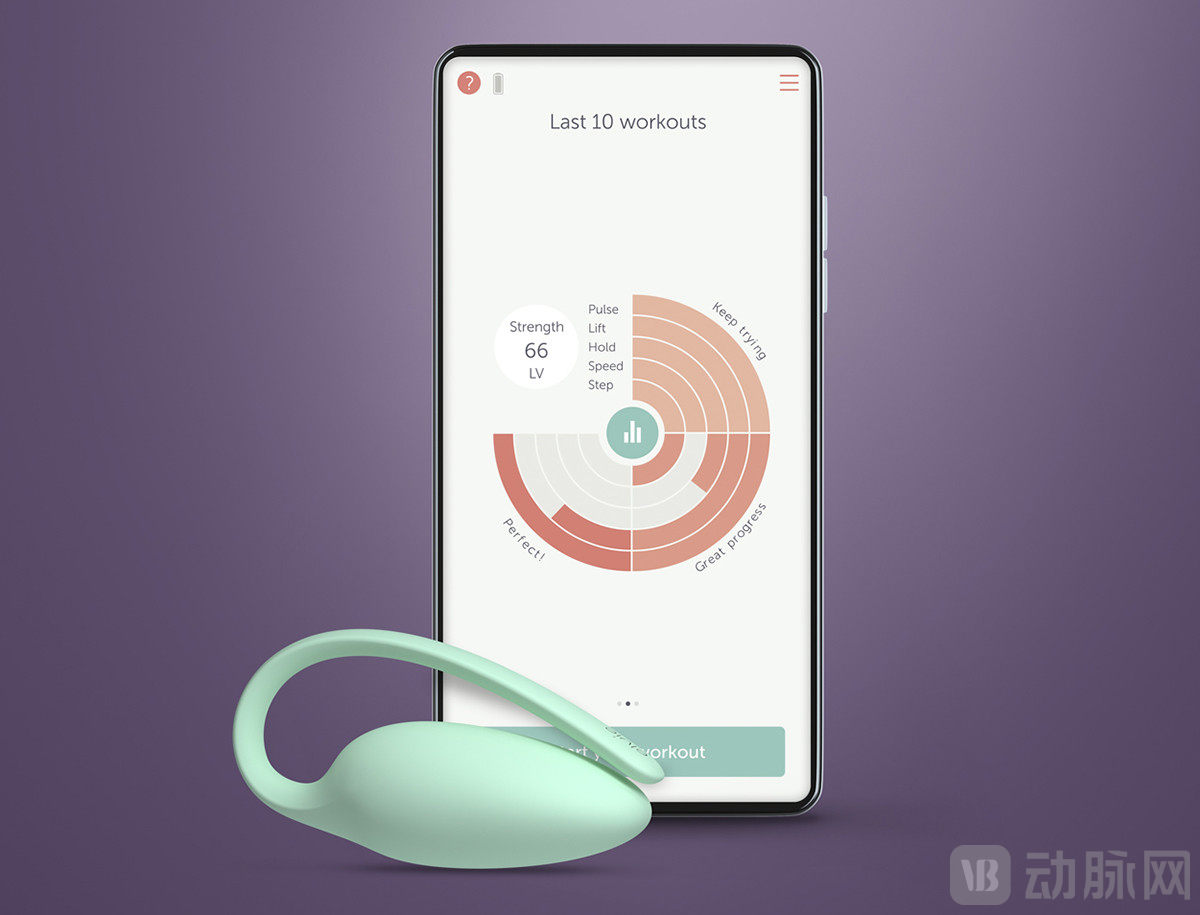
The Elvie Kegel trainer operates on a similar principle as an intravaginal device. Guided by instructions on its mobile app, users perform Kegel exercises (invented in 1948 by gynecologist Dr. Arnold Kegel) in a gamified format, with each session lasting only five minutes. The app leverages patented biofeedback technology to actively monitor the user’s exercise posture and intensity, ensuring effective training through correct technique. The product is priced at $199. In 2018, Elvie partnered with the UK’s National Health Service (NHS), enabling patients to access the device free of charge within the NHS system.
Elvie’s second product is the market’s first silent, wearable breast pump. Discussing the rationale behind its launch, Tania stated that previous breast pumps were often painful and difficult to use, even making women feel like dairy cows.
Elvie Pump is a wireless, bra-fitting electric smart breast pump designed to address pain points such as complex operation, poor user experience, and inconvenience associated with traditional breast pumps. It enables mothers to express milk more flexibly and easily, regardless of their environment—such as public spaces or workplaces—thereby avoiding the embarrassment often associated with pumping. The Elvie smart breast pump features two modes: “Stimulation” and “Natural Milk.” It automatically switches modes when it detects a decrease in milk flow and pauses automatically when the collection bottle is nearly full. Users can monitor and analyze their pumping progress and data via a mobile app, including total pumping time, total volume expressed, and the output rate for each breast, gaining clearer insights into their pumping habits. The Elvie smart breast pump is priced at $499.99 for a double set (or $279.99 for a single unit), which is consistent with the pricing of comparable products from its market competitor, Willow.
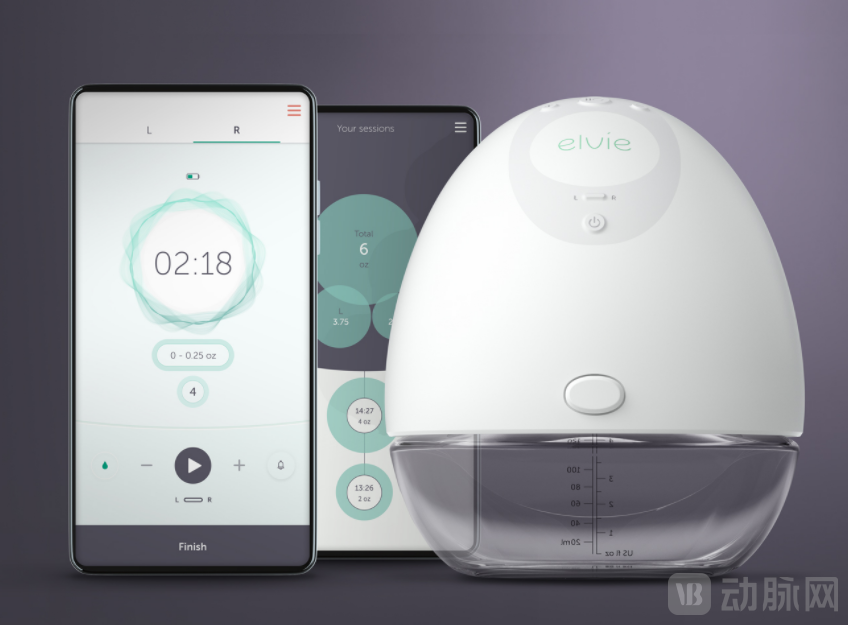
Designed by a former Dyson engineer, the product was launched in 2018 and was named one of TIME Magazine’s 100 Best Inventions of 2019.
VCBeat has found that Elvie has also launched an e-commerce platform in China. Its Kegel trainer is priced at RMB 1,880, positioning it in the mid-range among similar devices that combine electrical stimulation with Kegel exercises. The single-unit smart breast pump is priced at RMB 2,599, placing it in the high-end segment of the wearable breast pump category.
In October 2020, Elvie launched two new breastfeeding products—the wearable manual breast pump Elvie Curve and the Elvie Catch, designed to address maternal milk leakage—thereby providing support to women at every stage of the breastfeeding journey.
Elvie was founded in 2013. According to media reports, it became profitable within six months of its establishment and generated $1 million in revenue through direct-to-consumer (DTC) sales in 2016. Elvie currently operates in 59 countries worldwide.
In July 2021, Elvie secured £58 million ($80 million) in Series C funding, led by London-based investment firm BGF. In September, it raised an additional $17.5 million in a Series C extension, bringing the total Series C financing to $97.5 million. In 2019, Elvie raised $42 million in Series B funding, which was the largest investment in the FemTech sector at that time. To date, Elvie has raised approximately $151.9 million in total. Additionally, media reports indicate that Elvie obtained undisclosed financing from HSBC UK in 2020, with plans to use the funds to expand into the U.S. and Chinese markets.

Elvie’s Historical Funding Rounds (Source: Crunchbase)
BFG stated that Elvie’s business grew sixfold in 2019; although impacted by the COVID-19 pandemic in 2020, its business nearly doubled and was poised to double again in 2021.
Daina Spedding, an investor at BGF, stated: “BGF is pleased to lead this investment round in Elvie. We regard Elvie as a premier innovator in the Femtech sector, with strong potential market vitality and genuine global impact. As an all-female deal team at BGF and a leading investor in women-led scale-up companies, we admire Elvie’s vision, robust performance, and R&D capabilities, which have delivered tangible positive impacts on women’s lives. We are delighted to support Tania and her outstanding team in driving new product innovation and sustained global growth.”
Why Has Elvie Attracted Capital Attention? In fact, women’s health has long been a niche sector, often overlooked by the majority. This may be attributed to the social taboos surrounding many women’s issues—many people, including women themselves, view openly and freely discussing their personal challenges as shameful. In the healthcare sector, this results in a lack of recognition and understanding of women’s true needs; consequently, even products designed specifically for women often lack a female perspective in their design and technological considerations.
As the founder herself is a woman, Elvie’s products naturally resonated with female needs from the outset of their design and positioning. Its success may well lie in addressing women’s physiological, psychological, and social needs. From a physiological perspective, the products aim to improve, satisfy, and resolve women’s inherent health concerns. Psychologically, women are holding themselves to higher standards for their health. The growing presence of women in gyms and yoga studios, along with the booming postpartum recovery market, reflects this trend. As millennials have become the primary consumer demographic, women’s pursuit of health and beauty is no longer about pleasing others or merely achieving a certain body shape; rather, it stems from an inner, more empowered “her” strength. This may explain why, according to media reports, when Elvie launched its pelvic floor trainer in 2015, it targeted boutique gyms across London rather than hospitals. Furthermore, from a design standpoint, Elvie’s two flagship products feature strong aesthetic appeal, attracting consumers who value both functionality and visual elegance. On a social level, we live in an era where women’s economic participation is expanding and their professionalization is increasing. However, balancing family and career roles presents growing challenges, particularly for postpartum women returning to the workforce. Elvie’s smart breast pump makes breastfeeding more discreet, enabling women to face their work lives with greater comfort and confidence.
Simon King, Investment Director at Octopus Ventures, once stated: “For decades, the design of healthcare products has rarely addressed women’s physiological needs. Only recently has a sector emerged that is not only innovative but also driving technological hardware forward in a manner akin to star brands like Apple and Tesla, to address and seize the issues and opportunities related to women’s physiological needs.”