

Shenda Endoscopy: A 40-Year Pioneer Driving Domestic Substitution in China's Endoscopy Market
According to the China Statistical Yearbook, the average annual wage in 1999 was 8,346 yuan. In the same year, the Liaoning Yearbook recorded that Shenda Endoscope’s sales revenue reached 15 million yuan. At that time, the company had only 170 employees.
Roughly estimated, each employee generates approximately RMB 88,235 in annual revenue. This figure is nearly ten times the national average annual wage.
What Does Shenda Endoscope, Which Achieved Such a Remarkable Feat 20 Years Ago, Look Like Today?
The endoscopy sector is heating up,
Over 100 Million in Financing Rounds Keep Coming
Driven by population aging, rising health awareness, and continuous technological advancements, the demand for medical services is further increasing. According to Frost & Sullivan, the global market size for medical endoscopes is projected to reach USD 39.6 billion by 2030. Meanwhile, China’s domestic market is expected to grow from RMB 23.1 billion in 2020 to RMB 62.4 billion by 2030.
The continuous expansion of the market size, coupled with the heightened emphasis on nosocomial infection control by hospital infection management departments during the pandemic, has ushered in a new wave of entrepreneurship in the endoscopy sector.
According to data from Tianyancha, a total of 1,269 newly established companies broadly related to the endoscopy sector were registered from January 2020 to the end of November 2021.
Capital is also flooding into this hot sector, with large-scale financing rounds exceeding 100 million yuan frequently emerging in the endoscopy field.
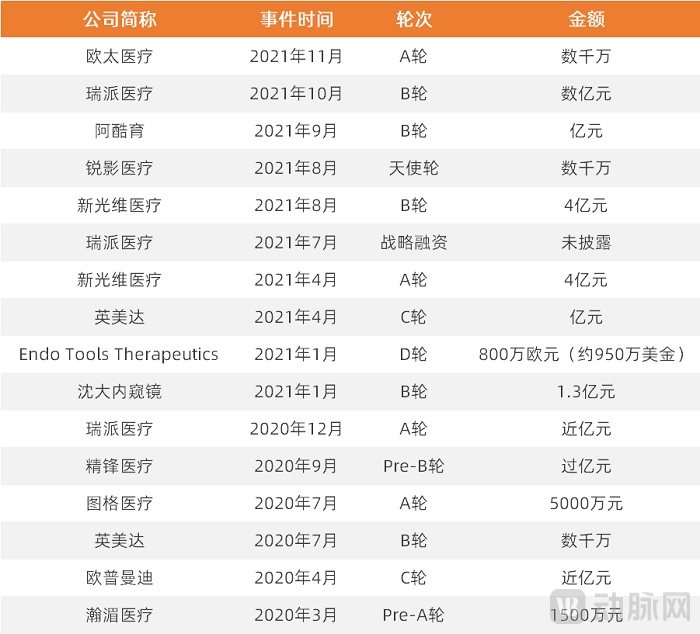
Chart compiled by VCBeat based on public information
The capital markets are undoubtedly eager to see the next IPO in the endoscopy sector.
Reality has lived up to expectations, as the endoscopy sector witnessed significant milestones this year: Xin Guangwei Medical submitted its prospectus for an IPO on the Hong Kong Stock Exchange, and Aohua Endoscopy listed on the STAR Market. However, it remains uncertain which endoscopy company will be the next to submit a prospectus for an IPO.
As capital continues to invest in and observe the endoscopy market,We also observed among the funded companies a well-known, established endoscopy enterprise—Shenda Endoscope.
In January this year, Shenyang Shenda Endoscope Co.,Ltd. completed a Series B financing round amounting to RMB 130 million, co-led by JINDING CAPITAL and Shanghai Creation Investment, with Hangshi Investment participating as a follow-on investor.
Shenyang Shenda Endoscope Co.,Ltd. stated that this round of financing “will be primarily used for the research, development, and upgrading of new products, channel construction, and the continued establishment of a leading domestic brand in rigid endoscopy.”
For Shenyang Shenda Endoscope Co.,Ltd., the IPO has been put on the agenda.
As a company established in the 1980s, Shenyang Shenda Endoscope Co.,Ltd. has repeatedly filled gaps in China's endoscopy industry.
Investors in Shenda Endoscope’s latest funding round stated, “Shenda Endoscope boasts substantial technical expertise and robust capabilities in innovative R&D and upgrades within the domestic rigid endoscope sector. Leveraging its distinctive product solutions and forward-looking industrial upgrading, the company is poised to become a leader in technological innovation and minimally invasive applications in the import substitution of domestically produced endoscopes.”
What “technological accumulation and innovative R&D” has this nearly 40-year-old company developed to attract follow-on investment from capital markets?
How did Shenyang Shenda Endoscope step by step make its way from an era of industry void to where it is today?
Guided by questions and curiosity, we took a closer look at Shenda Endoscope, seeking to lift the veil on this company that rarely speaks to the outside world.
VCBeat interviewed Jiang Shouwang, Chairman of Shenyang Shenda Endoscope Co., Ltd., and CTO Chen Chong, to hear their stories about the company’s past and future.
China’s First Endoscope Makes Its Debut,
Laying the Foundation for the Development of Shenda Endoscopy
When discussing the company’s development history, Jiang Shouwang, Chairman of Shenyang Shenda Endoscope Co., Ltd., mentionedAnother foundational figure is Jiang Kerang, the founder of Shenda Endoscope, who was honored with the title of “Scientist with Outstanding Contributions” and received the State Council’s Special Allowance.
Jiang Kerang, born in 1935, graduated from the Department of Philosophy at Liaoning University in 1959.
"How could a philosophy major possibly understand the repair and manufacturing of such precision instruments?"
In fact, Jiang Kerang underwent a prolonged “learning period.” Largely self-taught, he began by repairing optical instruments such as geodetic levels, theodolites, leveling instruments, and microscopes, gradually shifting from repair to assembly and design. Soon, the clock and instrument cooperative where he worked was reorganized into the Shenyang Dadong Optical Instrument Factory, and he became its chief technical officer.
Coming into contact with endoscopes may have been a coincidence, but for Jiang Kerang, ultimately choosing this path was perhaps not merely a matter of chance.
In 1975, Jiang Kerang met Wang Tingrui, Director of the Department of Gynecology at the Military Region’s 202 Hospital. At that time, Director Wang was conducting research on hysteroscopes. The only reference material available to him was a photograph published in an American journal of obstetrics and gynecology, depicting an unrefined prototype developed by a U.S. family planning research center. Following this photographic model, Jiang Kerang made repeated attempts, addressing challenges related to materials, structural design, and lens processing step by step. After numerous failures, he ultimately achieved success.
In 1976, the X-G3 hysteroscope was successfully developed and passed appraisal, filling a gap in China’s endoscopy field.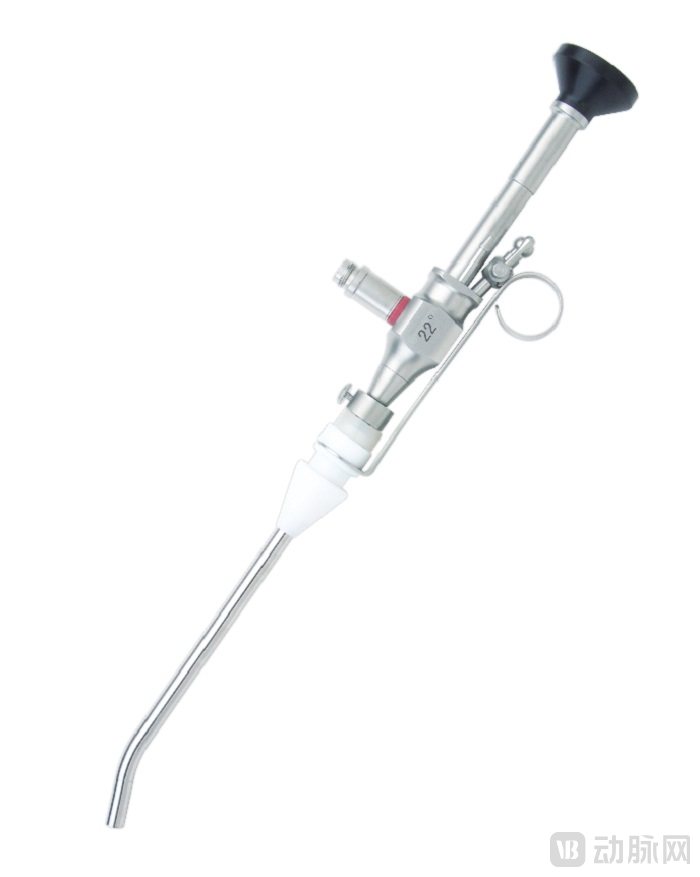
Shenda Endoscope's "XG-5/XG-5A Hysteroscope"
Various awards also came in quick succession. In 1978, he was honored with the National Science Conference Award.
But he did not stop there; subsequently—
Arthroscopic Endoscope, Third Prize for Major Scientific and Technological Achievements of Liaoning Province, Second Prize for Scientific and Technological Achievements of the Chinese People's Liberation Army;
YJ-1 Type Amnioscope, Third Prize for Scientific and Technological Achievements of Shenyang City;
……
For Jiang Shouwang, Chairman of Shenyang Shenda Endoscope Co., Ltd., the inventions and innovations made by founder Jiang Kerang laid the foundation for the company’s development.Looking back after nearly 40 years, the development of Shenda Endoscope can be roughly divided into the following stages:
Phase I: 1985–1990.This period marked the time when Shenda Endoscope established its industry standing. Jiang Kerang, an inventor, helped solidify Shenda Endoscope’s position in the industry through his independently developed products, including flexible hysteroscopes and other models.
Phase II: 1991–2000.Shenda Endoscope embarked on a path of multi-departmental product expansion, gradually extending from gynecology to urology, and pioneered the launch of products such as "ureteroscopes" in China. Its related urological endoscopic products received support from the Chinese Urological Association at the time, leading to rapid sales growth. Shenda Endoscope also developed a comprehensive urology portfolio, including cystoscopes, resectoscopes, ureteroscopes, and other ancillary products.
Phase III: 2001–2018.Shenda Endoscope has gradually established its market position. Since 2001, Shenda Endoscope has progressively expanded its product portfolio to cover more than ten clinical specialties, including gynecology, urology, otolaryngology, general surgery, proctology, and neurosurgery, thereby building a robust product pipeline and achieving widespread adoption in numerous hospitals. As of 2018, Shenda Endoscope had obtained over 60 registered patents in related fields. During this period, the establishment of Shanghai Jiawang Endoscope Technology Co., Ltd. in Shanghai laid the foundation for Shenda’s electronic endoscopy business.
Phase IV: 2018–Present.While consolidating its endoscope development technologies, Shenyang Shenda Endoscope Co., Ltd. strives to benchmark against the leading products of internationally renowned companies, aiming to achieve domestic substitution of imported products through industrial upgrading.
As a veteran endoscope manufacturer, Shenda Endoscope has witnessed many glorious moments. In addition to designing China’s first endoscope and filling an industry gap, Shenda Endoscope is committed to developing superior products to ultimately achieve import substitution with domestically produced alternatives. Throughout this journey from inception to refinement, Shenda Endoscope has gradually built its own competitive advantages and technological barriers.
Multiple pipeline products advancing in tandem,
Multiple Patents Build R&D Barriers
Shenda Endoscope currently manufactures over 2,000 varieties and specifications of rigid endoscopes and related accessories, meeting the needs for minimally invasive surgeries in urology, gynecology, general surgery, orthopedics, otolaryngology, proctology, and neurosurgery.
Jiang Shouwang pointed out, “Shenda Endoscope’s sole objective is to become a world-class endoscope manufacturer.”
The fact that he could make such a statement, and that Shenda Endoscope has been able to navigate across multiple departments and build a product portfolio covering nearly all clinical specialties, is closely tied to the competitive advantages it has gradually established.
Jiang Shouwang stated, “Endoscope manufacturing itself involves the integrated application of multiple disciplines. Shenyang Shenda Endoscope has been engaged in this field for nearly 40 years, accumulating extensive advantageous experience.”
First, Shenyang Shenda Endoscope Co.,Ltd. has established a presence in the rigid endoscopy field and accumulated a substantial portfolio of endoscopic intellectual property rights.“From product R&D to industrialized production, we have accumulated extensive experience in product development and manufacturing, establishing a relatively comprehensive system of independent intellectual property rights.” Currently, Shenyang Shenda Endoscope Co., Ltd. holds more than 60 product registration certificates and over 60 patents, with patent coverage extending to the European Union, the United States, Japan, and other countries and regions. This not only builds competitive barriers for Shenda Endoscope but also serves as a “passport” for its expansion into overseas markets.
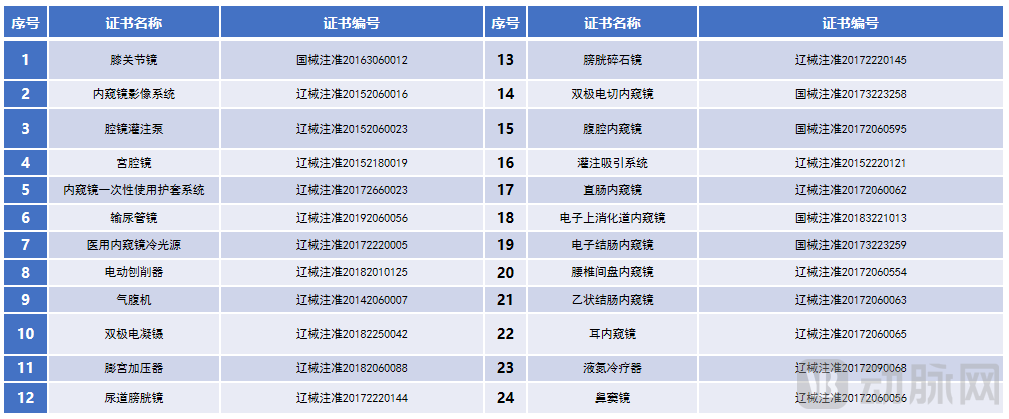
Medical Device Registration Certificates for Shenda Endoscopes
Chen Chong, CTO of Shenyang Shenda Endoscope Co.,Ltd., added, “Shenda Endoscope is one of the few companies that covers the entire industrial chain, from product design and process engineering to structural design and mass production, with Shenda Endoscope holding independent intellectual property rights throughout."This has established Shenda Endoscope's technological and product barriers."
Second, the clinical efficacy of Shenda endoscopic products has been empirically validated.Over the past nearly 40 years, Shenda endoscopes have been adopted by a large number of hospitals at all levels. “In the 1980s and 1990s, when we were promoting endoscopes, most doctors did not know how to use them; nowadays, nearly every department utilizes endoscopic technology,” Jiang Shouwang pointed out. He also noted that, compared with high-priced imported endoscopic equipment from abroad, the development of domestically produced endoscopes has effectively ensured accessibility for hospitals with limited budgets. Currently, clinical feedback from physicians at various hospitals using Shenda endoscopes has been largely positive. With continuous improvements in technology and quality, he believes that the penetration rate of domestically produced endoscopic equipment in tertiary hospitals will further increase.
Currently, Shenyang Shenda Endoscope is also actively expanding into numerous innovative fields., including ultra-high-definition endoscopes (Shenyang Shenda Endoscope has mastered core processes unique in China, such as laser welding, sealing, and bonding of micro-lenses; currently, the gap between Shenda endoscopes and top international brands lies in the processing technology for aspheric micro-lenses), neurosurgical endoscopes, micro-probe digestive ultrasound endoscopes, confocal microscopy endoscopes, HD 4K endoscopic camera systems, and fluorescence imaging systems.
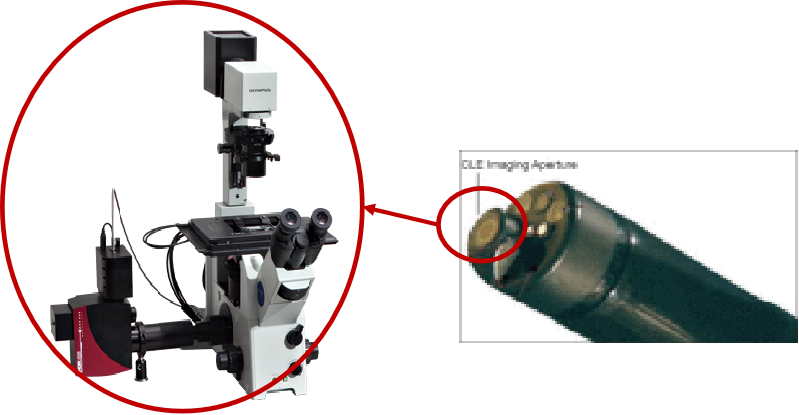
In confocal endoscopy products, the "microscope" is integrated into the tip of the endoscope.
Taking confocal endoscopy products as an example, they are composed of a confocal laser microscope and a traditional electronic endoscope. With the application of contrast agents, these devices acquire confocal images using low-power lasers. This technology can magnify tissue up to 1,000 times and is widely applicable for the early diagnosis of tumors in natural cavities such as the digestive and respiratory systems. It enables real-time, high-resolution histopathological studies by obtaining histological images of surface and subsurface (mucosal layer) structures in vivo, without the need for sampling biopsies. While helping to improve biopsy accuracy, this product can also reduce the rate of missed diagnoses, demonstrating considerable development potential.
For CTO Chen Chong,Shenda Endoscopy’s advantages in its product pipeline are evident.。
First, in the traditional endoscope manufacturing and operations sector, Shenda Endoscopes maintains a high level of market share and clinical physician satisfaction.“Shenda endoscope products are often the preferred domestic brand for many hospitals and doctors when purchasing endoscopic equipment.”
Second, Shenyang Shenda Endoscope Co., Ltd. has made innovative strides in a wide range of products, including image processing units and confocal endoscopes.Shenyang Shenda Endoscope Co.,Ltd. has been continuously innovating and investing in the endoscopy field for many years, accumulating a substantial reserve of innovative technologies while expanding its R&D team. Some of its products have completed development and entered the clinical registration testing phase.
Behind its multi-product pipeline strategy, Shenyang Shenda Endoscope places greater emphasis on responding to clinical needs.
Starting from clinical needs,
Collaborating with Multiple Research Institutes
Perhaps from Jiang Kerang, the founder, inventing the first endoscope product, we can already see the early signs of medical-engineering collaboration in the development of Shenda Endoscope.
Shenyang Shenda Endoscope, with years of development in the endoscopy field, has always adhered to starting from clinical needs and developed endoscopic products that meet doctors' clinical requirements through medical-engineering collaboration.
To better develop products that meet clinical needs, Shenda Endoscope frequently collaborates with renowned hospitals, medical experts, or research institutes during its R&D process, achieving deep integration of industry, academia, and research.
Regarding Hospital Physicians, for example, Shenyang Shenda Endoscope Co.,Ltd. has collaborated with experts and professors such as Academician Gu Ying from the PLA General Hospital (301 Hospital) in Beijing, Wang Ningli, Dean of the School of Ophthalmology at Capital Medical University, He Zhisong, Chief Physician of the Department of Urology at Peking University First Hospital, Wu Anhua, Director of the Department of Neurosurgery at China Medical University, and He Dalin, Director of the Department of Urology at the Affiliated Hospital of Xi'an Jiaotong University School of Medicine, to carry out endoscope research and development projects relevant to various clinical departments.
In terms of research institutesFor example, Shenyang Shenda Endoscope Co., Ltd. collaborated with the Suzhou Institute of Biomedical Engineering and Technology, Chinese Academy of Sciences, to jointly develop the “Confocal Microendoscope” and the “Microprobe Digestive Endoscopic Ultrasound Imaging System”; partnered with Dalian University of Technology to develop the “Multifunctional High-Frequency Electrosurgical Unit”; and worked with the Shenyang Institute of Automation, Chinese Academy of Sciences, and Beihang University on the “Research and Development and Clinical Application of a Single-Port Laparoscopic Surgical Robot System.”
OverseasShenyang Shenda Endoscope Co., Ltd. has also collaborated with a German research institute on the R&D of projects titled “Design of Initial Optical Systems for Laparoscopes and Development of High-Precision Micro Aspheric Lens Technology” and “Design of Initial Optical Systems for Arthroscopes and Development of High-Precision Micro Aspheric Lens Technology.”
CTO Chen Chong introduced that, in order to better develop high-end endoscopic equipment,Shenda Endoscope has been strengthening its team building and increasing R&D investment.To better cultivate talent, they have chosen to build their own talent pipeline through a mentorship model in which experienced employees guide new hires. Meanwhile, as the endoscopy field requires interdisciplinary professionals, Shenyang Shenda Endoscope Co., Ltd. is also actively recruiting talent from various domains, including optics, mechanics, electronics, and digitalization.
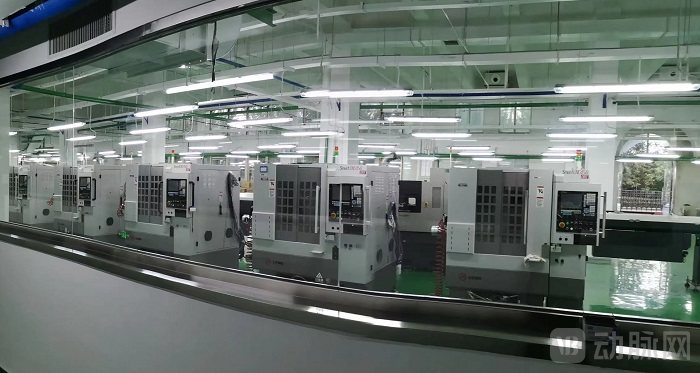 Shenda Endoscope Production Workshop
Chen Chong mentioned that collaboration with research institutes falls into two models: commissioned R&D and joint R&D.
“We primarily rely on independent R&D, with our research directions often aligned with clinical needs or cutting-edge academic trends in the clinical field. Centered on clinical needs, we upgrade the performance of our existing products and strategically plan and expand our future product portfolio.” He specifically noted, “Our collaborations with research institutes are also driven by clinical needs and leverage Shenyang Shenda Endoscope’s own strengths in R&D.”
Looking back,The expansion of Shenda Endoscope’s historical product pipeline has invariably been driven by alignment with clinical needs.“We initially entered the fields of gynecology and urology precisely because of the large patient populations and their urgent needs. At that time, there was a lack of domestic companies offering endoscopic products to meet these demands.” Today, Shenda’s endoscopic product portfolio covers nearly all parts of the human body. When developing products for specific departments, “Shenda Endoscope (still) proactively establishes relationships with department heads, conducts market research, focuses R&D efforts on enhancing product functionality and performance, and determines product positioning,” introduced Chen Chong.
Closely following the trends of consumable-based solutions and domestic substitution,
Committed to Building a Leading Endoscopy Enterprise
The impact of the pandemic has led the Hospital Infection Control Department to place greater emphasis on nosocomial infections.
In fact, the industry has long been studying the potential for cross-infection associated with endoscopes. Due to their complex structure,Incomplete sterilization and cleaning often lead to cross-infection among patients, while the processes of cleaning, drying, and disinfection significantly increase hospital operational costs. These factors collectively limit the clinical application of reusable endoscopes.
Shenyang Shenda Endoscope Co., Ltd. has undoubtedly also recognized the existence of this issue.
In 2017, Shenda Endoscope obtained the Class III medical device registration certificate for its “Internationally Pioneering ‘Disposable Endoscopic Protection System’.”This system has successively received the titles of “National High-Tech Industrialization Demonstration Project” and “Key New Product of the State.”
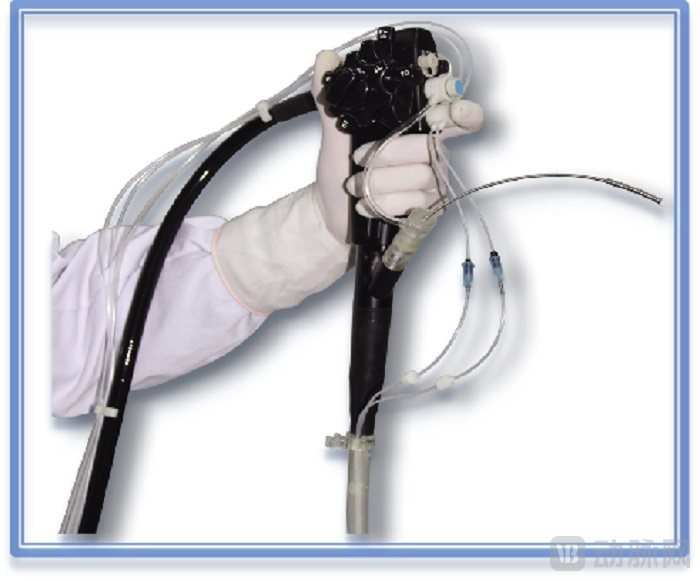
Shenda Endoscope’s “Disposable Endoscopic Protection System”
Currently, the electronic duodenoscope under development by Shenyang Shenda Endoscope Co., Ltd. is compatible with a single-use protective system.By ensuring that the electronic duodenoscope remains completely isolated from the patient's body cavities and bodily fluids, cross-infection resulting from disinfection failure can be effectively prevented.
Currently, single-use endoscopes will undoubtedly be a major trend in the development of endoscopy.
In addition to having started developing the “world’s first single-use endoscopic protection system” as early as 2017,Shenyang Shenda Endoscope is also strategically positioning itself in the disposable endoscope market, having completed its technological reserves to achieve product development based on consumables.Its disposable cystoscopy pyeloscopy system is expected to obtain the Class III medical device registration certificate in 2023.
Amid the current trend of domestic substitution for imported medical devices, Shenyang Shenda Endoscope Co., Ltd. has undoubtedly recognized the potential impact of this opportunity.
“Import substitution for rigid endoscopes represents a differentiated upgrade. What we aim to provide physicians is a comprehensive solution, not just a standalone product,” pointed out Chen Chong.
Currently, the endoscope market in tertiary hospitals remains dominated by imported products. Jiang Shouwang also frankly acknowledged the quality advantages of imported products, noting that this is a goal that Shenyang Shenda Endoscope Co., Ltd. continuously strives to achieve. “Over the past two years, Shenda Endoscope has undertaken extensive efforts, including collaborations with domestic and international experts and renowned research institutes. Some of our products have already entered the clinical approval stage. To achieve domestic substitution, we must first ensure that our products reach world-class standards.”
This year, Shenyang Shenda Endoscope Co., Ltd. has continued to accelerate its collaborations with research institutes. Notably, its joint project with the Department of Gastroenterology at Beijing 301 Hospital on photodynamic therapy for cancer treatment has entered the clinical approval stage.
In response to the digitalization trend, Shenda Endoscope is further strengthening its efforts in areas such as “Shenda Cloud,” which collects patient diagnostic images and performs advanced intelligent processing.
With rising health awareness and advancements in medical technology, people will place greater emphasis on the early detection of lesions and adopt minimally invasive treatments. The advantages are evident—smaller incisions, shorter surgical times, fewer side effects, and lower costs. And micro-Endoscopic treatment requires the use of endoscopes. Currently, 90% of the endoscope market is occupied by foreign companies. The rigid endoscope market is mainly monopolized by German and Japanese enterprises, with prices 6-10 times higher than domestic products. There is a huge space for import substitution in domestic products.
Jiang Shouwang mentioned that Shenyang Shenda Endoscope, having consolidated its technological strengths, will also continuously respond to increasingly fierce market competition through product upgrades, by“Refine our product portfolio and enhance product functionalities to achieve international first-class quality, strive for industry leadership, and realize the domestic substitution of imported products.”